BUITENPLAATS ELSWOUT PARK
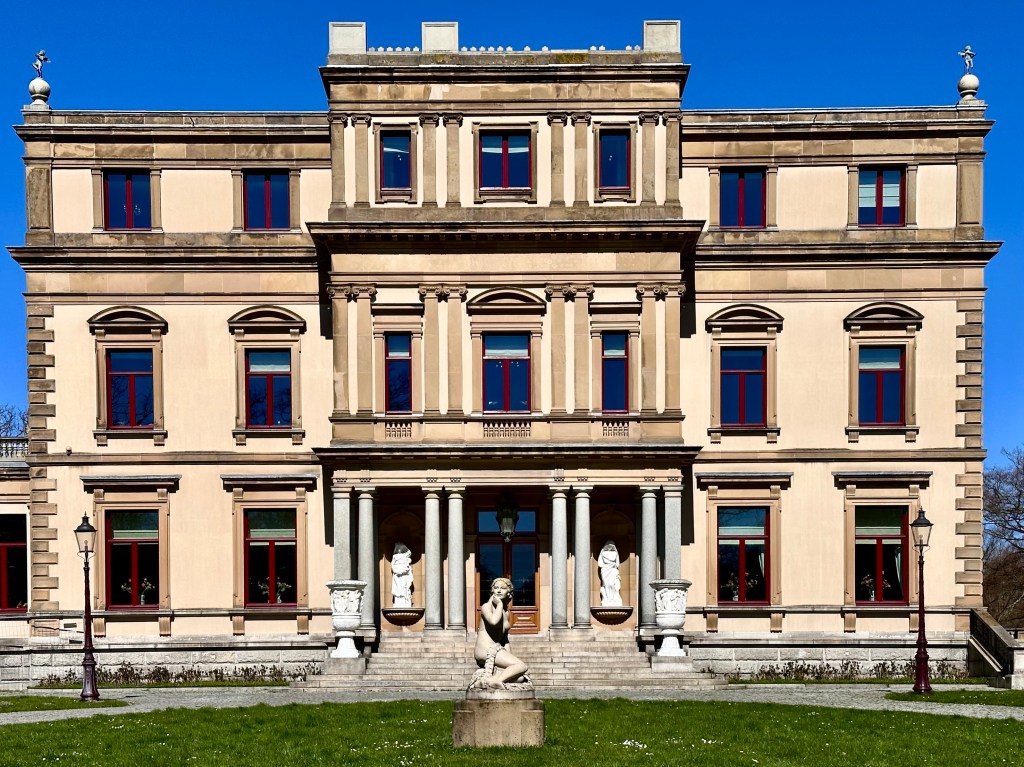
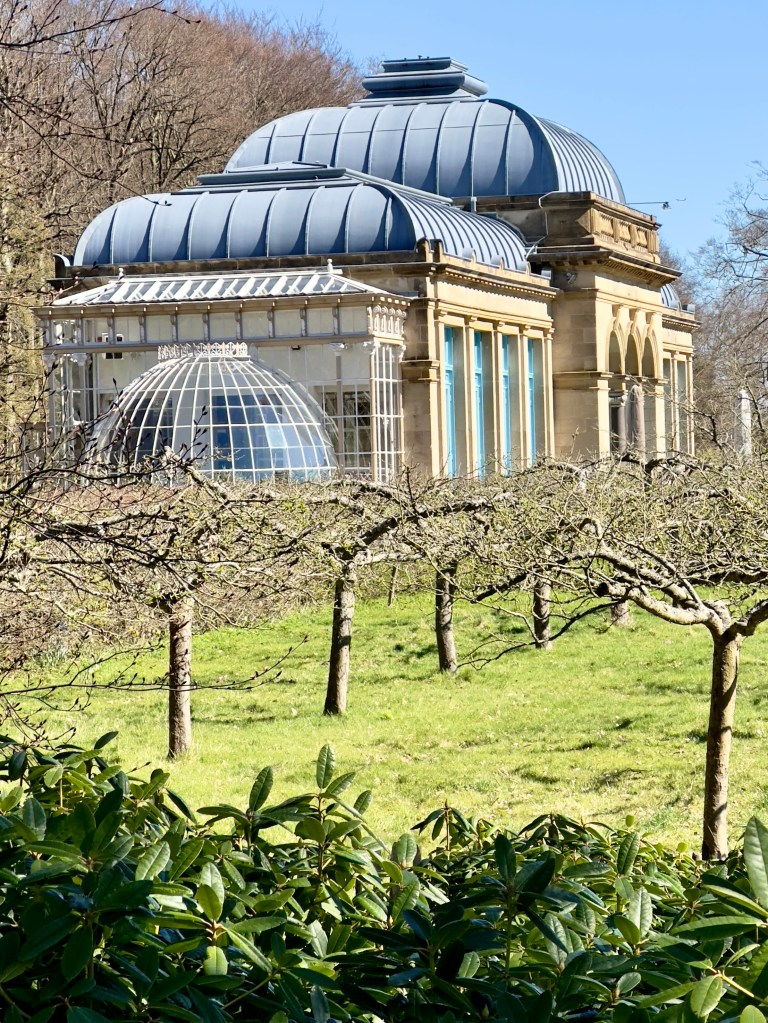
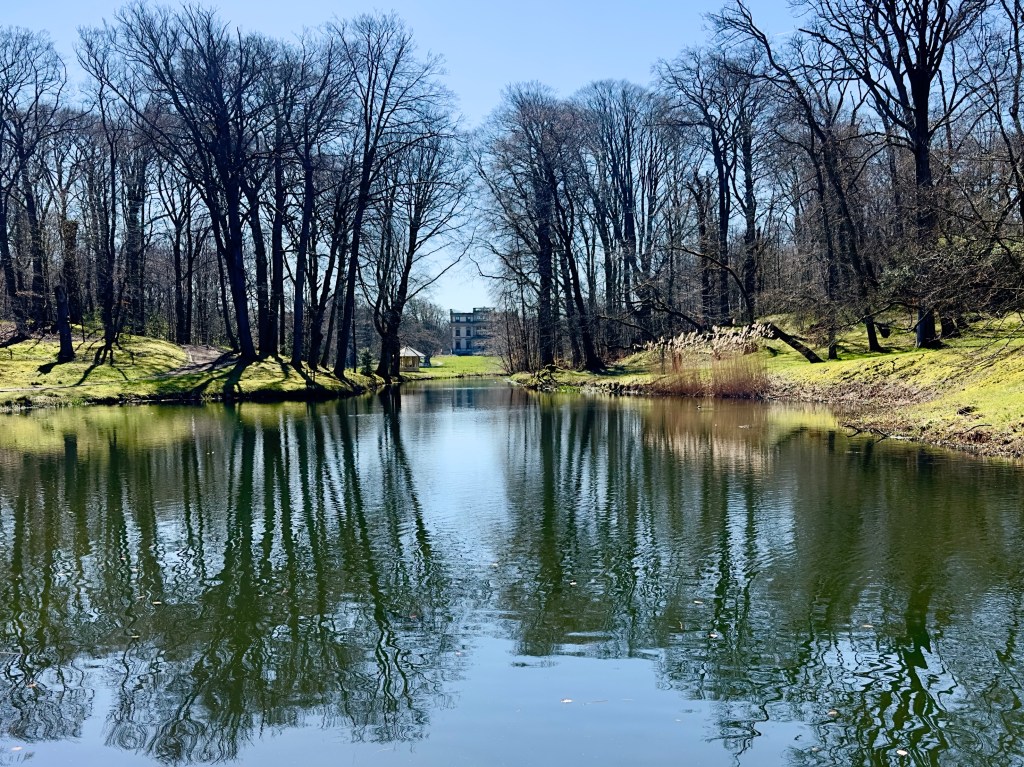
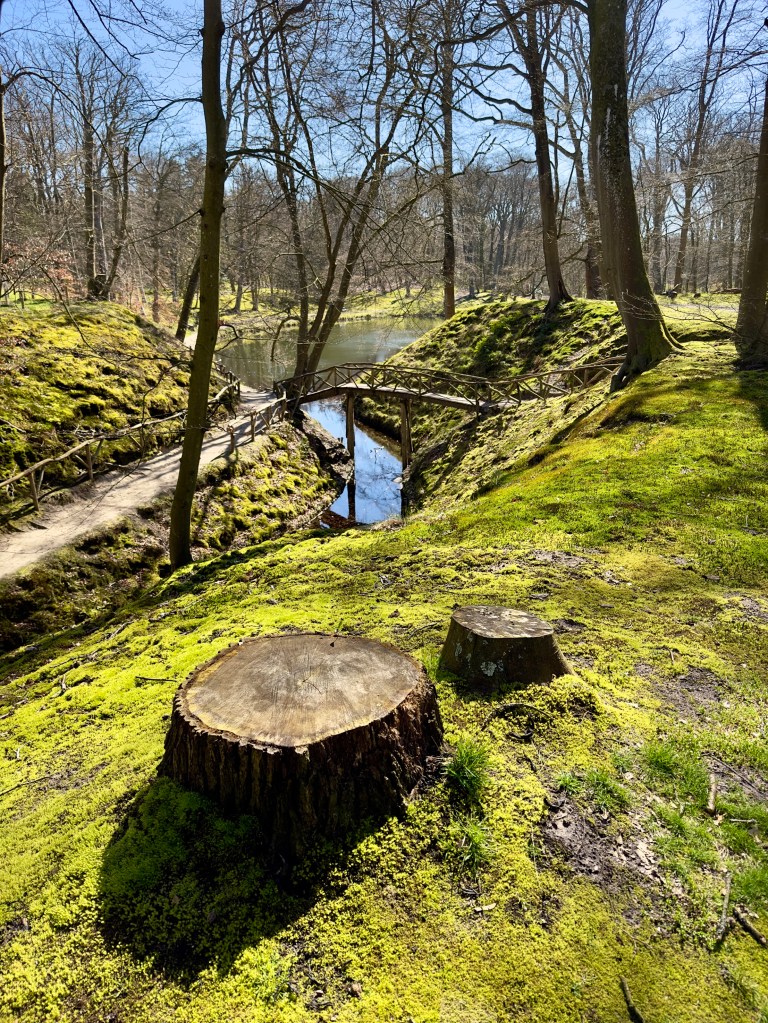
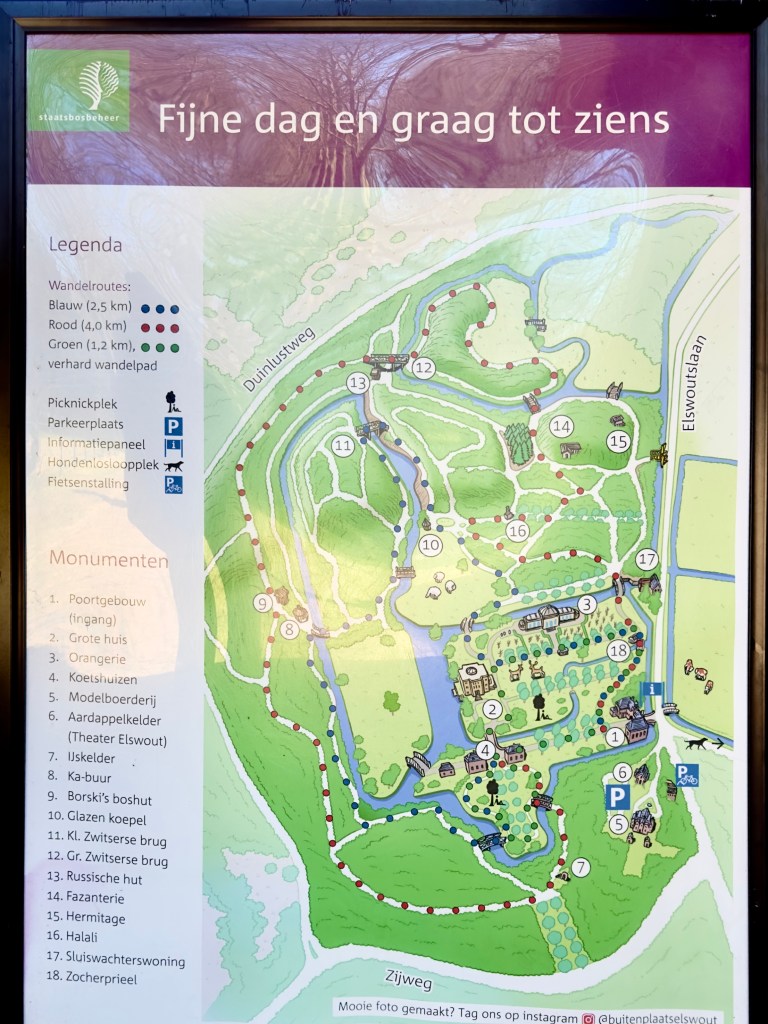
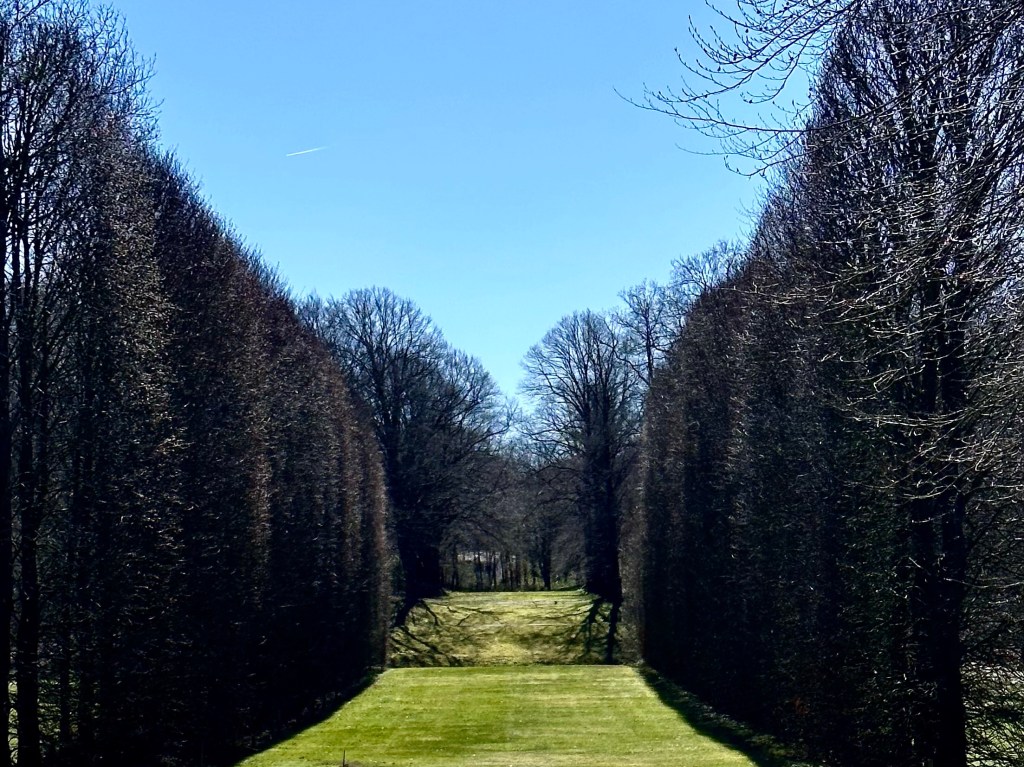
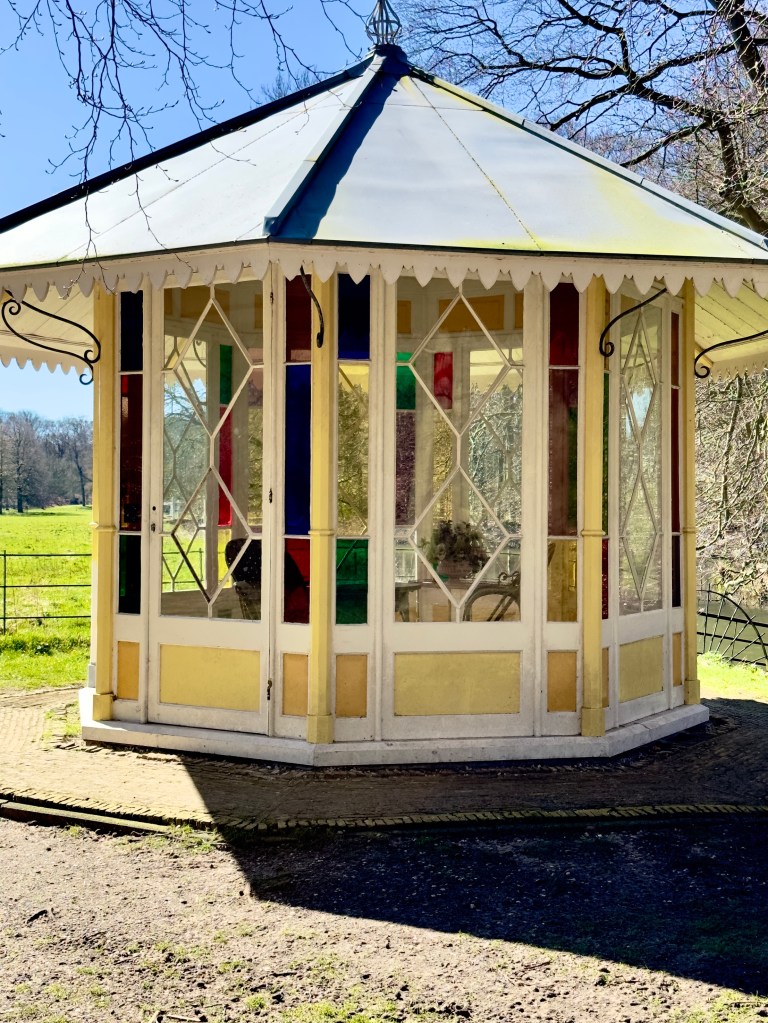
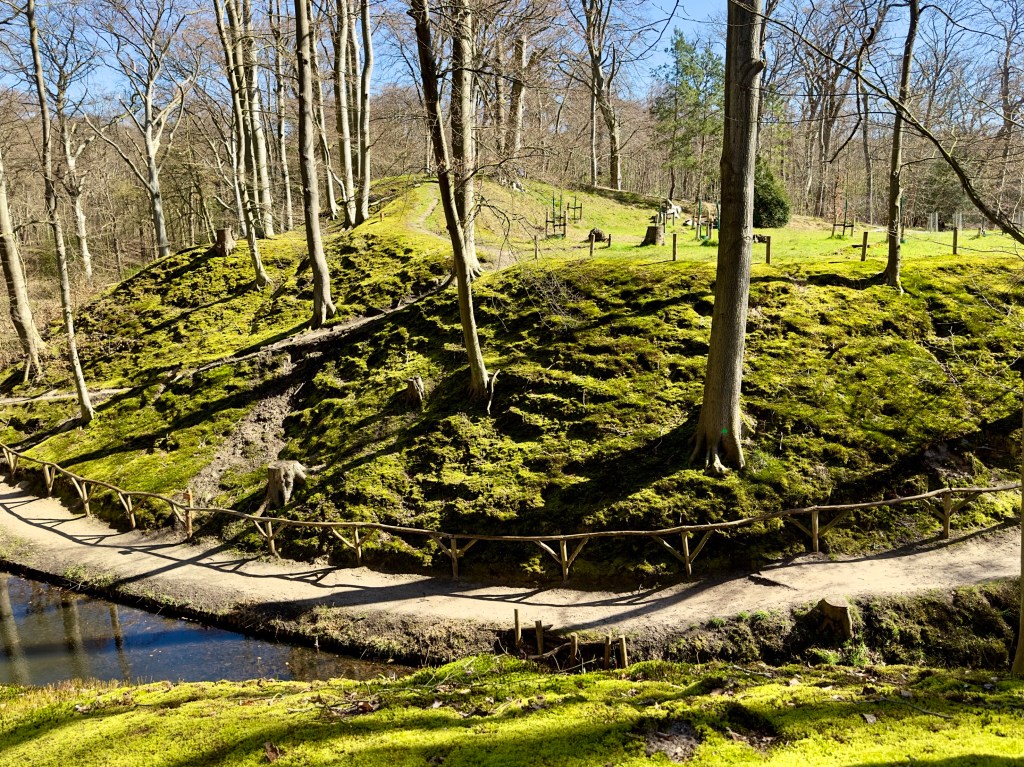
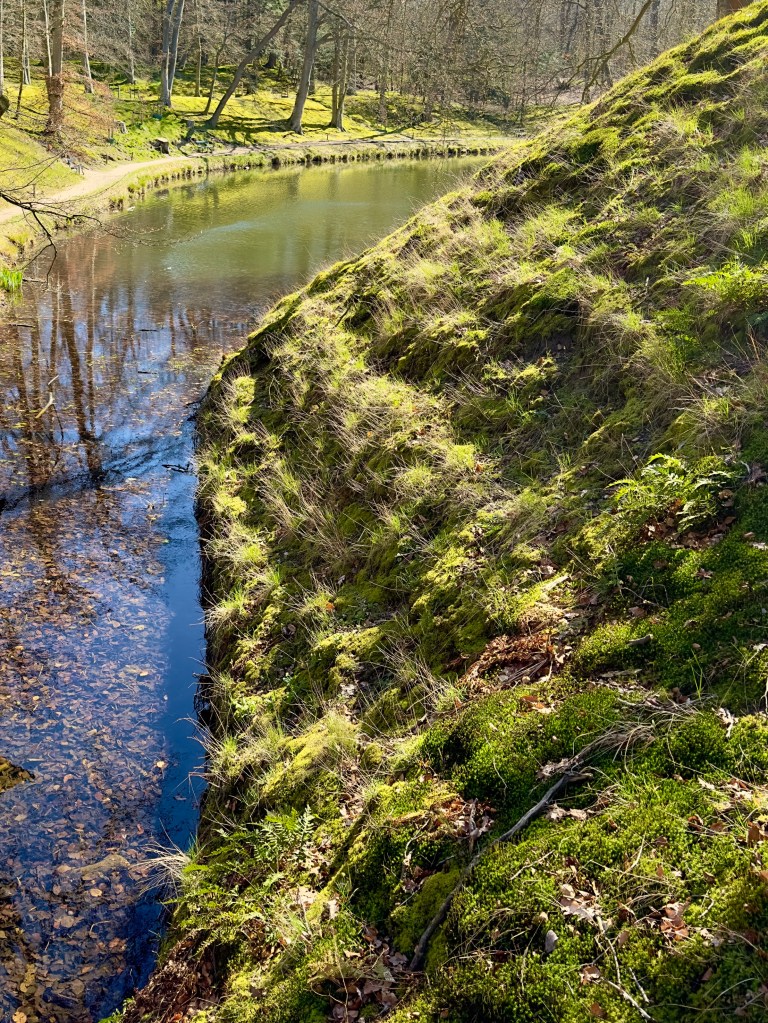
In the morning Henny took us for a walk in a park near her home where she walks almost every day when she isn’t walking on the dunes or the beach. At the center of the park there is a very large private house with outbuildings of what was formerly a great estate with an Orangerie or indoor botanical garden with orange trees (now a cafe) and lakes and canals and walkways through a wooded area.
It is private and privately maintained but it is open to the public for no cost except for the cost of parking. Back home the Biltmore House in Asheville is grander and the gardens larger and the walkways equally beautiful but the cost for a season ticket is over $100 and a daily ticket near that.
This park in Haarlem is only one of many many parks open to the public at no cost including the national parks which extend from Haarlem to the North Sea, where we went later in the day. For me this is an example of one great difference between the United States and the Netherlands, Asheville and Haarlem. In the Netherlands the community comes first with taxes going to public places shared with everyone, rich or poor, but without the extreme gap between the rich and the poor. We saw no examples of obviously poor people and while there are many houses of the rich who gained great wealth during the colonial period, these houses were not ostentatious. And there is almost no commercialism either at the beach or in the parks or anywhere really. From an outsider’s perspective, while there is a high standard living, the people of the Netherlands seem to united by a culture in which community sharing comes first and wealth is played down. There are trampoline parks, mountain cycling areas, shared walkways everywhere, a subsidized theater, many museums and many outdoor markets. Higher education is not expensive, health care is available to all without great expense. Everyone seems to have the basics of life. We felt the same way in Finland,said to have the highest happiness measure in the world. And we feel it here where everyone is friendly and there doesn’t seem to be built in tension and resentment. But with this comes an inclination to stay within the norms of the culture from building codes to urban planning to shared parks and a desire to make everything beautiful. There is variety in housing but no bad taste, no Kitsch, no annoying commercialism from billboards to glaring signs on shops. People are not forced to fit into cultural norms, they want to fit in. At least that is the way it appears from my viewpoint, the viewpoint of an outsider who has only been here for a couple of weeks.
I guess this is what many Americans would see as a denial of freedom and would be mocked for being socialism. And if socialism means putting group quality of life ahead of individual desires, then the Dutch are guilty of socialism. But for a person from a country where anyone can buy and carry a gun and use it when resentful enough, where lack of zoning leads to ugly strip malls and junked cars in the front yard of rural houses and an insistence on self expression, where health care is often unaffordable or can bankrupt you and higher education is enormously expensive leading to life long debt, the Netherlands, and their form of socialism, caring for others, seems quite attractive.
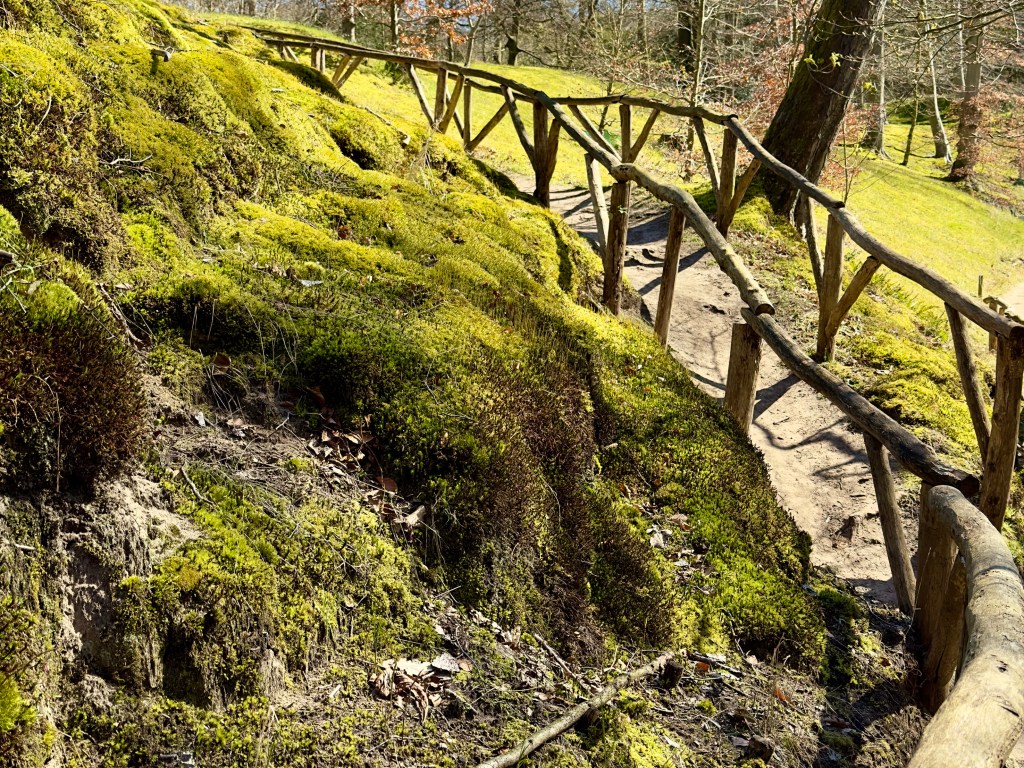
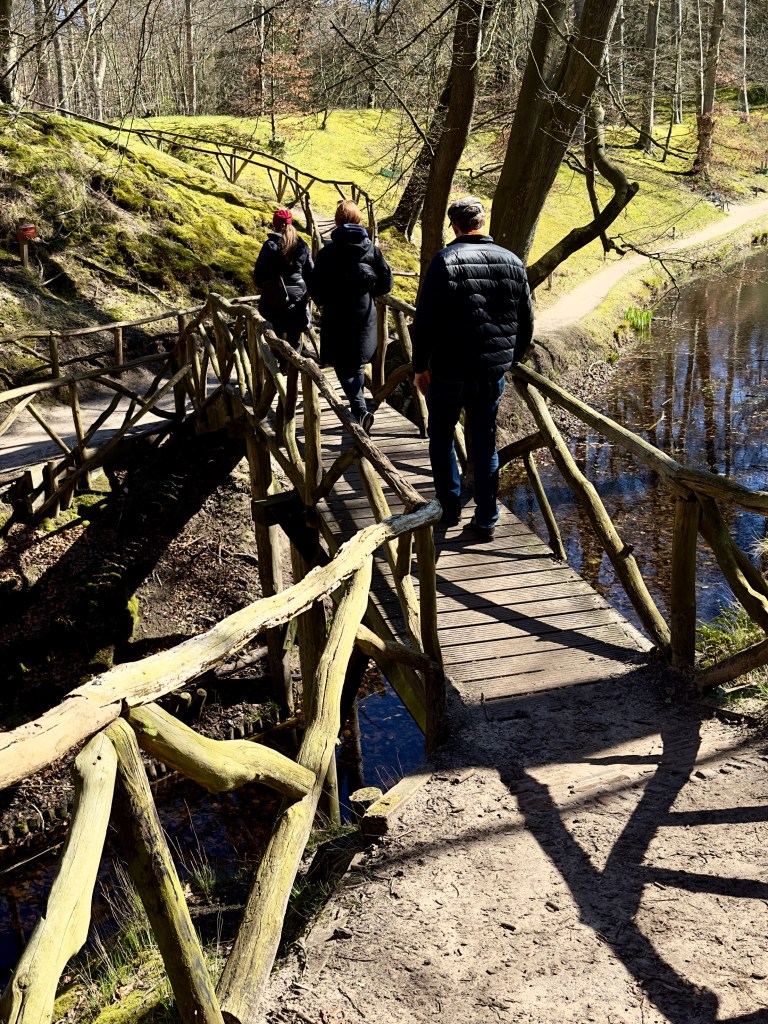
And this beautiful park is for me an example of the difference. It is a private park with signs to not leave the path or walk on the grass that are respected by all the people taking walks in the park. There is no graffiti anywhere, not a Kleenex dropped on the paths, everything is beautiful and well maintained. And it is absolute beautiful. But it is only one of more then ten different parks, some national parks, in Haarlem. We saw this everywhere we have driven on our rides by car (a good use of a car) in the Netherlands. The old houses are well maintained, everything is well laid out so that almost everyone can shop or do errands by bicycle. Car parking is very compact as well, but if for every bicycle parked in a bicycle rack, available everywhere, there would be a car Haarlem would be overrun with automobiles. There are no school buses, few parking lots and no parking around grocery stores and even little parking around stores, even on the outskirts of town. Instead, there are paved bicycle paths along every street and road, often off to one side. Grocery stores in town are smaller than ours and located all over town with no parking at all. People own cars for longer travel but otherwise walk or ride bicycles or go by bus. And many of the cars are electric cars. All of this is an example, I think, of people in a very crowded country putting the group welfare ahead of their individual freedom and desires. The Netherlands refuses to be paved over and much of this is on land reclaimed from the sea below sea level.




 BILLYBABA’S WANDERING
Have you discovered your Shangri_La? Did you get my email of 3_6_23?