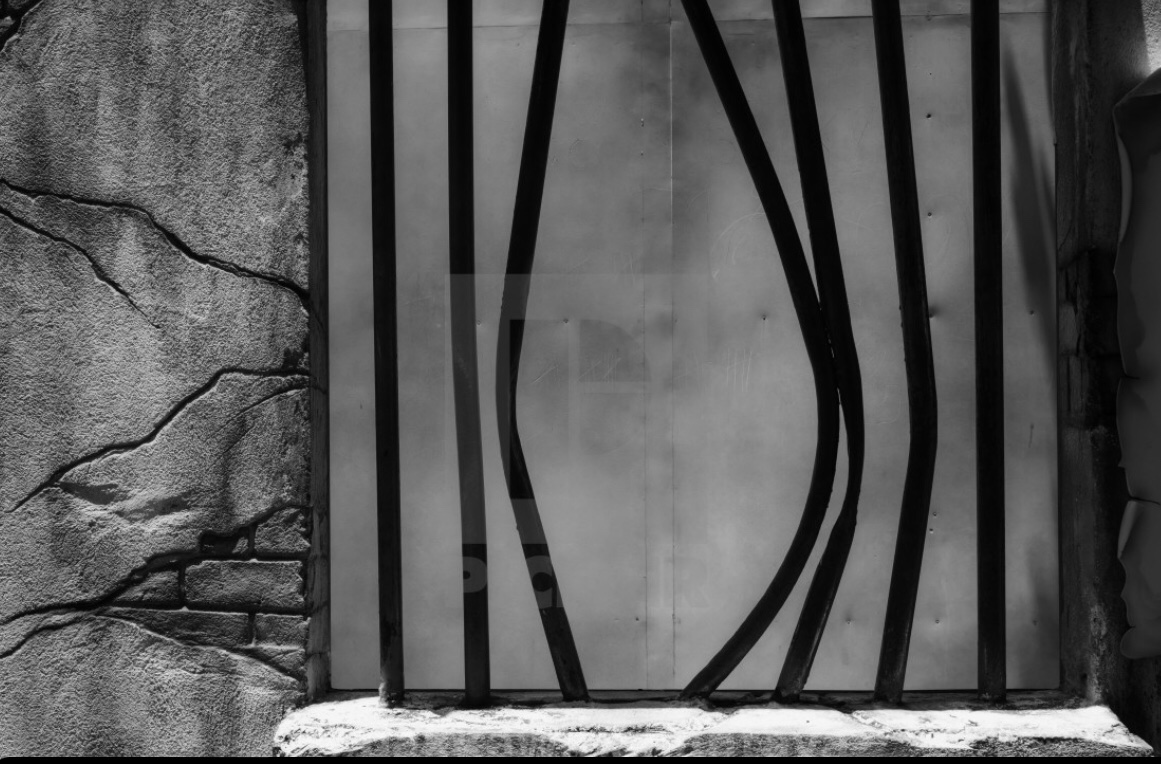
BREAKING OUT OF CONVENTIONS
Yesterday I talked myself into feeling that the inner visceral drives embedded in my DNA are what impel me through life and are projected out so that, for me personally, certain objects and people and activities seem to be particularly alive just because my inner visceral self responds to them. And then it followed from that that when I and others in my family or tribe find we respond to the same object or people in a way that feels very alive and share this feeling then that object or person, usually embedded in a story, takes on a further intensity. And if a whole tribe does this, then the projected power takes on a super intensity and that intensity can explain the intensity of the power of a projected god.
But today I want to wonder about what happens when the conventions that we dream up together, the cultural conventions that make us feel alive and give us identity and let us communicate with each other because we agree on shared values, what happens when cultural conventions begin to fade and lose their shared value and become routine and lifeless and being to suffocate us rather than enliven us.
I’ll give an example. Yesterday I was watching the Cincinnati Bengals play the Kansas City Chiefs in the AFC championship game. It was a good game with the Chiefs way ahead and then the Bengals catching up to them and passing them at the very end. I noticed a couple of things. One was that the fans, the Chief fans in the stadium, and the Bengals fans on tv in a bar back in Cincinnati, were almost rabid in their intensity. It was only a game and none of the players had grown up in either home town, the fans had nothing in common with each other and yet their combined complete dedication to a team had tremendous power and energy. Together they focused on their own team, screamed their hearts out, and left either exalted or despondent. This shows the power of fused, focused energy. But all that was happening was that young men were tossing or carrying a ball around. It occurred to me that shared religious devotion to a god whom no one has actually touched or seen is similar. The intense feeling is real, but the object of the feeling is simply a projection.
A second thing I noticed was at the beginning of the game when the Star Spangled Banner was being sung a giant American Flag, almost the size of the football field, shaped like a map of the United States, was held by hundreds of people who undulated it so that the flag was still waving as the singer sang the words in the national anthem. I am sure that for thousands of people at the game their hearts swelled with pride as she sang and an honor guard marched and people held their hands over their hearts and a formation of fighter jets flew overhead.
But my heart didn’t swell. I couldn’t see what the show of patriotism had to do with a football game. I felt a statement was being made about America that I didn’t feel. It seemed to me that it is just this kind of patriotism that lets Americans fool themselves about their country and that gets the United States into misadventures abroad. It seems more self aware to dispassionately examine ourselves to see what we could do better instead of blinding ourselves with patriotism, but no nearly as exciting.
I am not saying that I am right and the patriots are wrong, or that their pride was empty and didn’t make them feel more alive. They certainly were higher and felt more alive than I did. But I am saying that patriotism doesn’t do that for me, particularly when I see what it has done in other parts of the world. The shared sense of pride that we have built together as a tribe no longer works for me. It is beginning to fade, it is a convention that is becoming ritualized and is turning for me into a cliche. For some young people going to church and singing the old hymns and worshiping a God that seems abstract and distant leads to a similar feeling.
Because, just as conventions are a way in which we can focus on things or people that make us seem alive, they can become cliche and worn out and seem to be suffocating and seem to be ways of blocking life and controlling people in ways that are empty for them. Capitalism has two sides, alive and dead, politics has two sides, religion has two sides, even language has two sides with new words becoming loaded with meaning and then just as quickly becoming cliche, words like “cool” and “awesome” and newer words that old people like me haven’t learned yet.
So what I am wondering is whether I have within my DNA, built into me, one side that finds tradition rich and life sustaining and enlivening but that I also have another side, also embedded in my DNA, that wants to break out of conventions and reject the old cliches and to start over and find new ways of doing things that are more alive. I have the feeling that to be human we both have to live within a bubble of tribal conventions that make us feel very alive and let us connect deeply with each other but also have to be able to sense when conventions are are worn out because it is change and adaptability that have also been necessary for our survival. And to make things more complicated, as soon as we break out of the old and into the new, the new becomes simply a new set of conventions that quickly seems old. We have the revolution and then to hold onto it and keep it from changing we get dictatorship. Maybe we have to be traditionalists and innovators at the same time even though there is a great tension between holding onto things that have traditionally given us identity and the opposite need to innovate and do things in new and better ways which threatens our traditions.
What this does for me is to help me to deal with a tension that I have felt my whole life long as I have lived in different cultures. On one hand cultural conventions seem local and transient and artificial and unreal. They feel like the emperor’s new clothes, entirely made up. I feel constrained by cultural conventions and feel a need to break out and to do things in new ways and not to be caught by tradition. But even as I tell myself this I realize that even my language, American English, is simply a convention and yet language seems very alive to me and writing, for me, seems to be a way to be fully alive. And I realize that many of my cultural values are American values: individualism, freedom, being able to start over, a belief in individual equality whether we achieve it or not. These values don’t seem artificial to me, they seem central to my identity. I have realized over time that I can neither have faith in conventions or reject conventions. I am forced to move in betweet acceptance and rejection because maybe this tension is built into me as a human being.
And yet I am pretty sure that in the grand scheme of things I am living in a human bubble of projected culture and values that is significant to me as a human, but which in the wide expanse of space and time which ignores me, is simply my inherited way of moving along and feeling energized and alive, it is simply the chance mutation of evolution that is embedded me and creates this bubble of human values. So from my perspective once I have talked myself into tension between tradition and innovation, all I can do is to be as fully human and alive as I can be and to enjoy the ride in my brief time, growing ever briefer, playing out the drives embedded in me by my DNA.
 BILLYBABA’S WANDERING