SKIPPO WINNER DISCOVERS ENTITLEMENT
Yesterday was the day the Berlin wall came down 32 years ago, also the day 32 years ago when Hinnerk died. The first is a day that everyone in Germany remembers, the second is momentous only to the Schrader family. I remember the day the wall went up, not the date, but the feeling of the day, a feeling that the world had shifted. It was the day the Cold War, the division of the world between America and the rest of the so-called free world with all their atom bombs and the Soviet Union and its empire with all of its atom bombs, became starkly real. The whole world lived with the Cold War and the threat of annihilation for thirty years, feeling that it would extend forever.
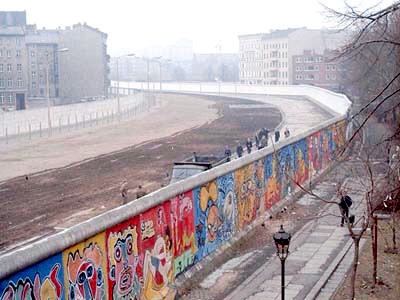
I don’t have to remember the date the wall went up. I am a click away from finding it on Wikipedia, both the date, August 13, 1961, and the description of the wall, which German Democratic Republic propaganda called Antifaschistischer Schutzwall, protecting German socialism, and which Willi Brandt, the mayor of Berlin, called “the wall of shame.” America’s response to Berlin being walled off was the Berlin Airlift.
The world was frozen by the split of the Cold War but my personal response after the wall went up was relief. I had been discharged from the Army in Germany, where I stayed for another six months, during which time I fell in love with Kathe through letters after being struck by her presence earlier on a chance visit. I spent Christmas with her family that year and invited Kathe to come to America for a visit which led to our marrying and entwining ourselves together through love which has led to Susie and my visit to Germany to put her ashes in the old Schrader family burial plot which we are going to do at 10 a.m. today.
When the wall went up and the Berlin airlift began everyone in the US Army had their time on active duty extended by six months, everyone but me, because I had been discharged from the straight jacket of the Army just a few weeks earlier.
Yesterday, after our failure to rent a car, Susie and I decided to go to Weinhausen for the day. In Weinhausen, a beautiful little town not far from Winsen, is a cloister with beautiful tapestries and a restaurant where we had had good outdoor meals with Volker and Kathe and so they would be in their presence there.
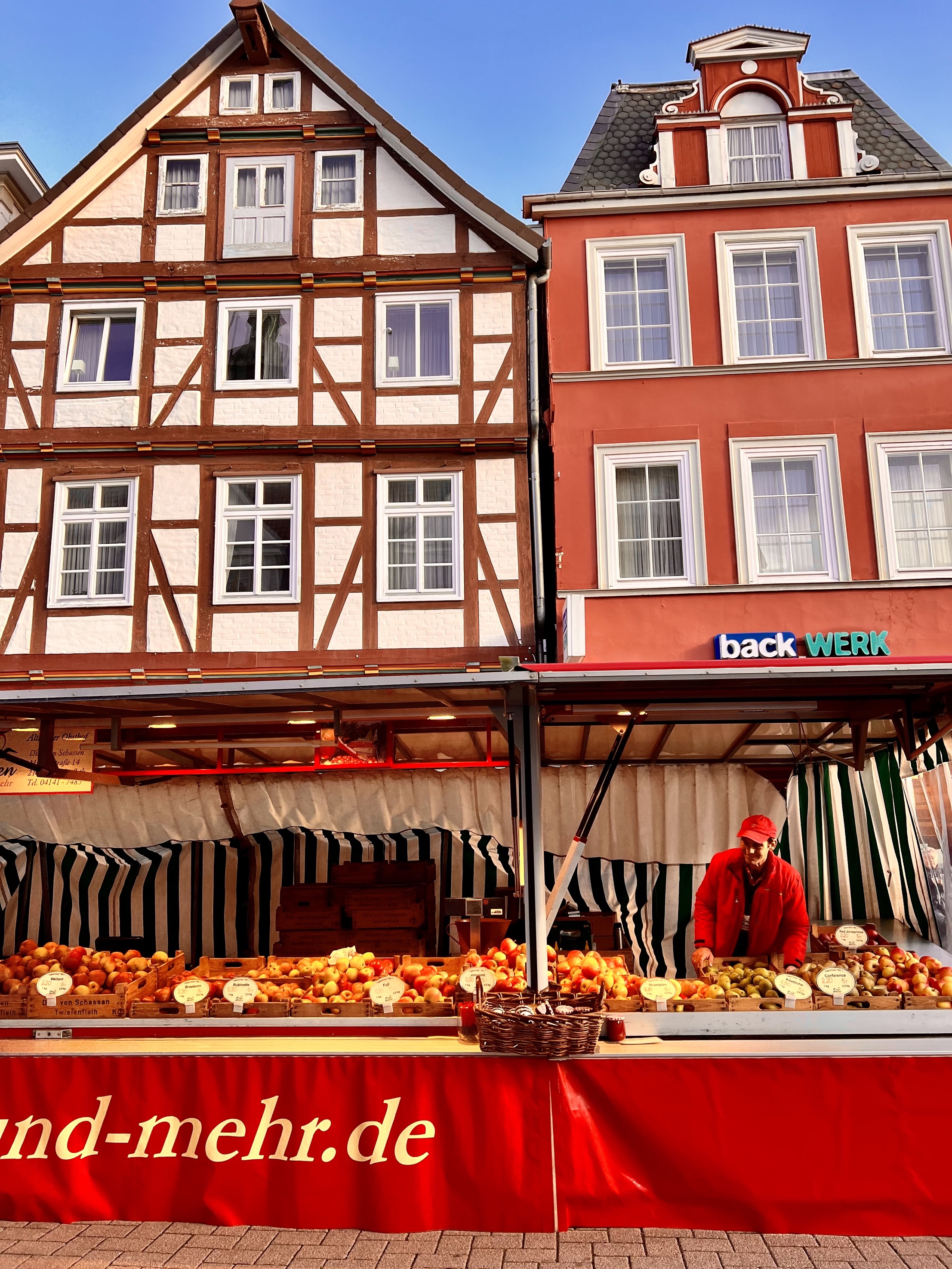
But we had only been on the bus to Celle for two minutes when we informed Elke of our plans and said we would be back for dinner with her and Heinrich by supper time. Elke had ordered salmon which we had brought back from Celle the day before. I had asked for enough salmon for four people but the woman at the Nordsee fish store unloaded five pounds of salmon on me, enough for ten people. In America the big meal of the day is at supper, in Germany Abendessen is bread and cheese and wurst, the big meal of the day in Germany is at lunch, Mittagessen. When invited by Elke we thought we were coming to supper, our big meal, she had invited us for lunch, her big meal. The huge piece of salmon was going to go to waste if we didn’t eat it. So we decided to skip Wienhausen, to go to Celle for an hour, and then return for lunch, which we did.
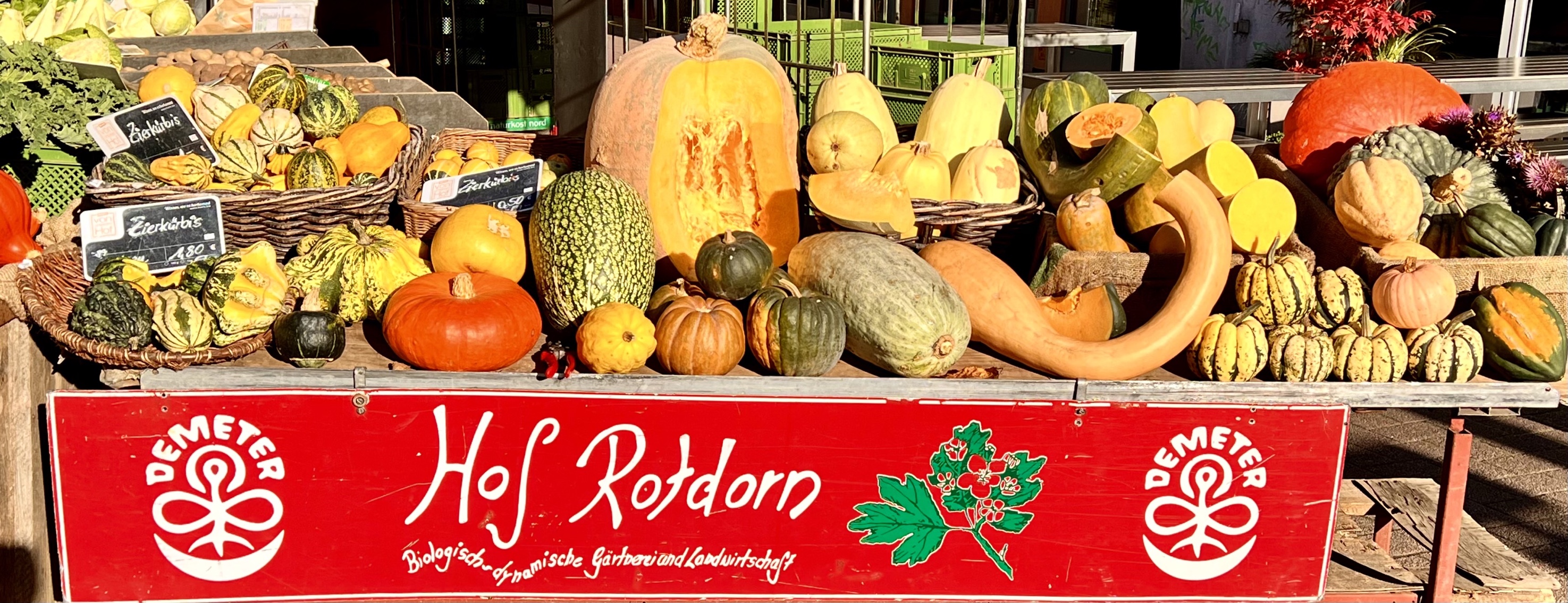
And then it turned out that we much preferred visiting Celle to visiting Weinhausen, although we have no way of knowing what adventure we might have had in Weinhausen. But two things were special about our hour and a half in Celle.
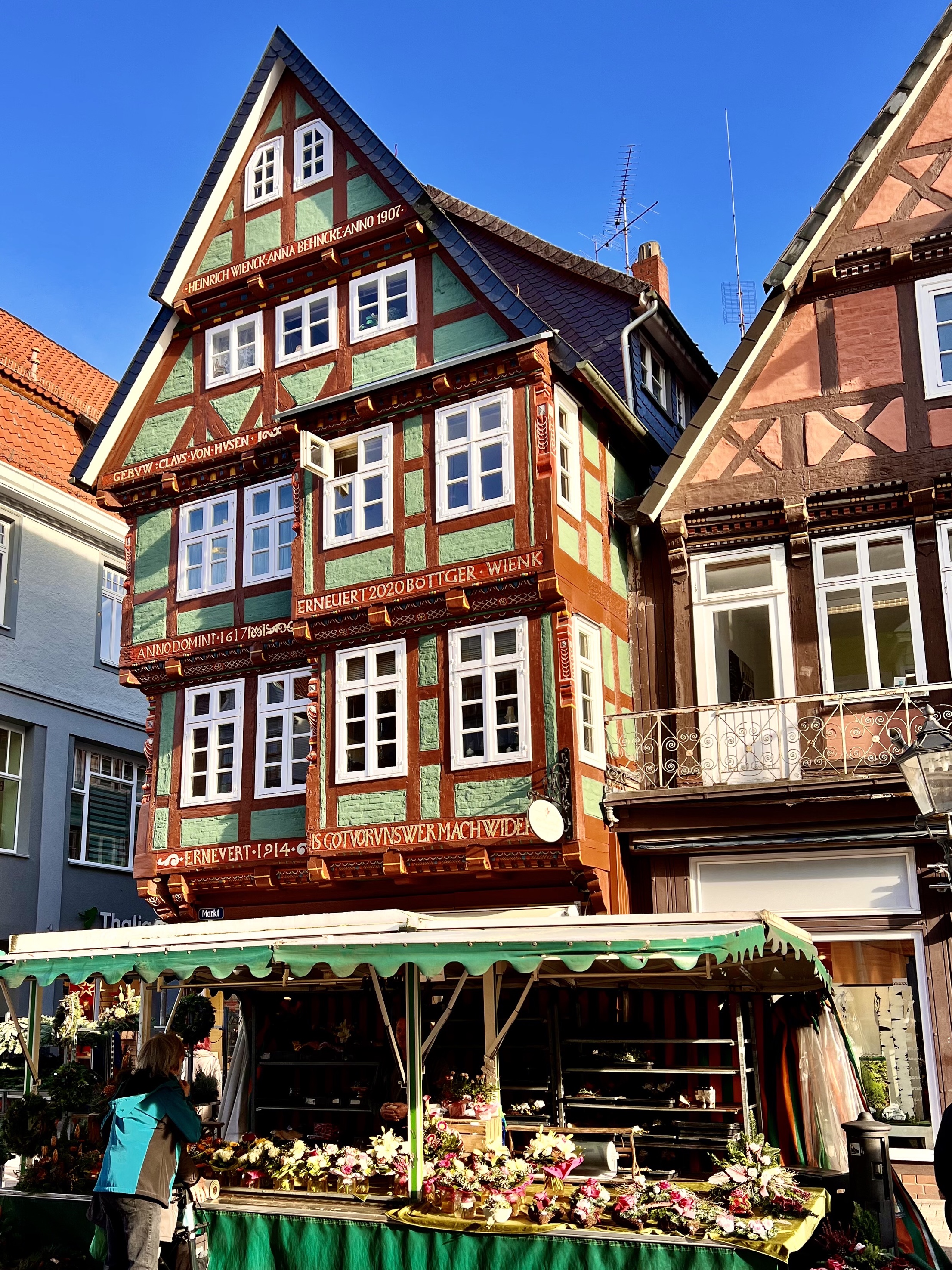
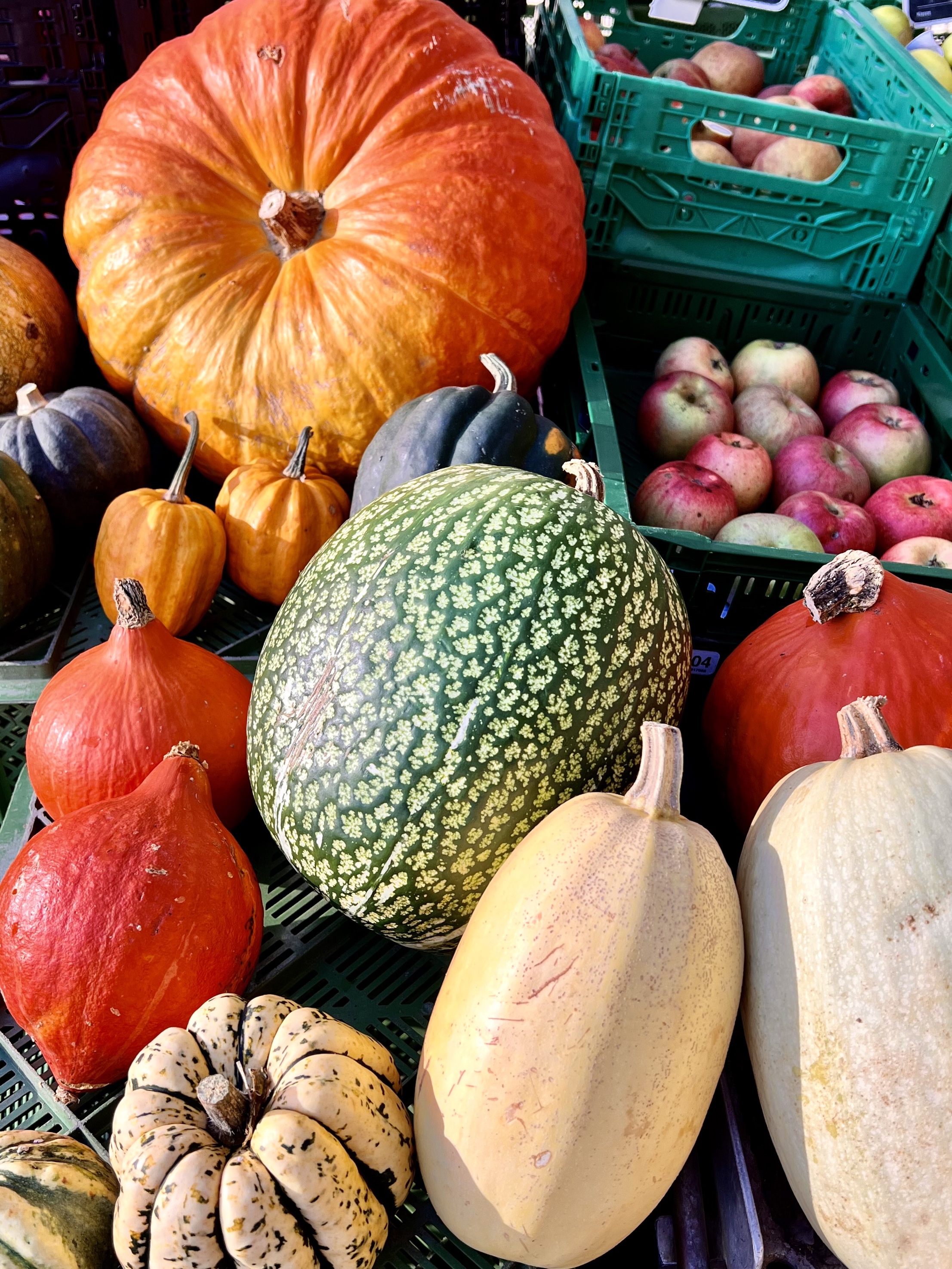
One was that it was Wednesday morning market day in Celle which we discovered just after we stepped off the bus. Farmers had outdoor booths on the wide street around the main church in town, just across from the white Schloss and beside the wonderfully decorated old Rathaus.

There were all kinds of vegetables, cheeses, meats, honey, Christmas wreaths and candy for sale with the street full of shoppers. We wandered through, looking at everything and taking photographs.
And then Susie happened into a antiquitariat store with all kinds of old things for sale. When we showed interest in his things, the shop owner showed us his prize possessions, two printed books by Martin Luther, printed in the early 1500’s. He showed us a double sided page of Protestant believers rising to heaven and the Roman Catholic Pope being thrown into hell.
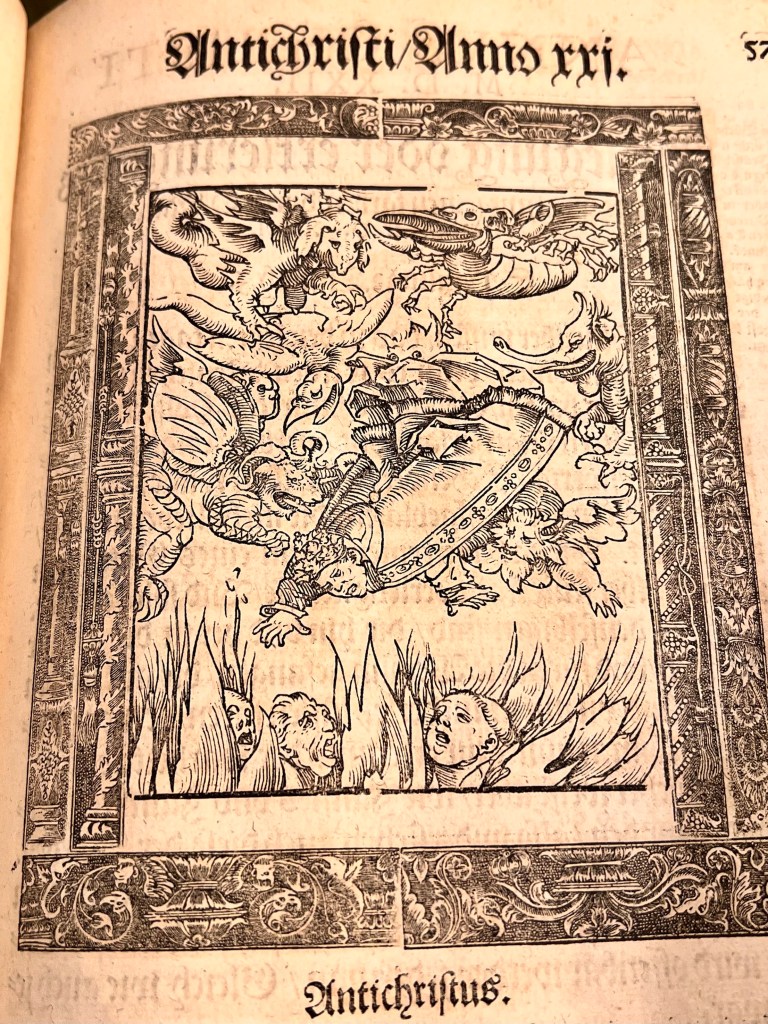
Luther had been excommunicated by the Pope and it was the beginning of the Reformation and the wars that tore Europe apart for centuries. But what struck me was the violence of the Pope being thrown into hell, a religious polarization which led to centuries of violent warfare, the burning of heretics, and all kinds of mayhem. Somehow the Reformation was a benign event in my mind, a righteous return to true Christianity, not hate filled tribalism, with the saintly Martin Luther (turns out he vilified the Jews as well as the Catholics) leading the way.
But here was Martin Luther in his own words printed in his own lifetime. My grandfather’s name is Martin Luther Mosher. I was impressed. And then the bookseller offered us sheets from a history book, printed in 1497, the time of Columbus. The printing press was invented by Johannes Gutenberg in the 1440’s and now for 12 euros I had a page of this early printing. Wikipedia informs me that by 1500 20 million books had been printed undermining the old authorities, so my page isn’t that rare, but it was the printing press as much as Luther, that turned the world upside down. I’ve lived through the second information revolution with Wikipedia being an example (I am in the process of getting rid of most of my printed books and carry 1000 ebooks with me on my iPad) and now I have a page from the first information revolution when everyone could own books, books in their own language, rather than Latin.
So it was a memorable, accidental hour and a half in Celle. We got back on the bus and returned to Elke’s house, every bus ride being interesting, and had a marvelous casserole of salmon and potato and a delicious white gravy which I was so eager to eat that I forgot to photograph it.
Then I took a nap in our apartment and we went back to Elke’s and Heinrich’s house because, of all days, this was Martin Luther day and children were expected to come by and sing a song and be given candy. Elke had lots of candy left over from Halloween, which is becoming a Germany holiday, which they say came to them from Ireland, from which it probably came to the USA. And sure enough, when I look at Wikipedia Halloween is All Hallows Eve, a celebration of the dead that was probably a pagan holiday before it became Christian in the Celtic countries of Ireland and Scotland and was brought by the Scotch Irish to American.
Only two children came by, Tjark, Elke’s grandson who couldn’t come in, and a friend, all of whom had to stay outside because Tjark has a cold and Elke a lung infection.
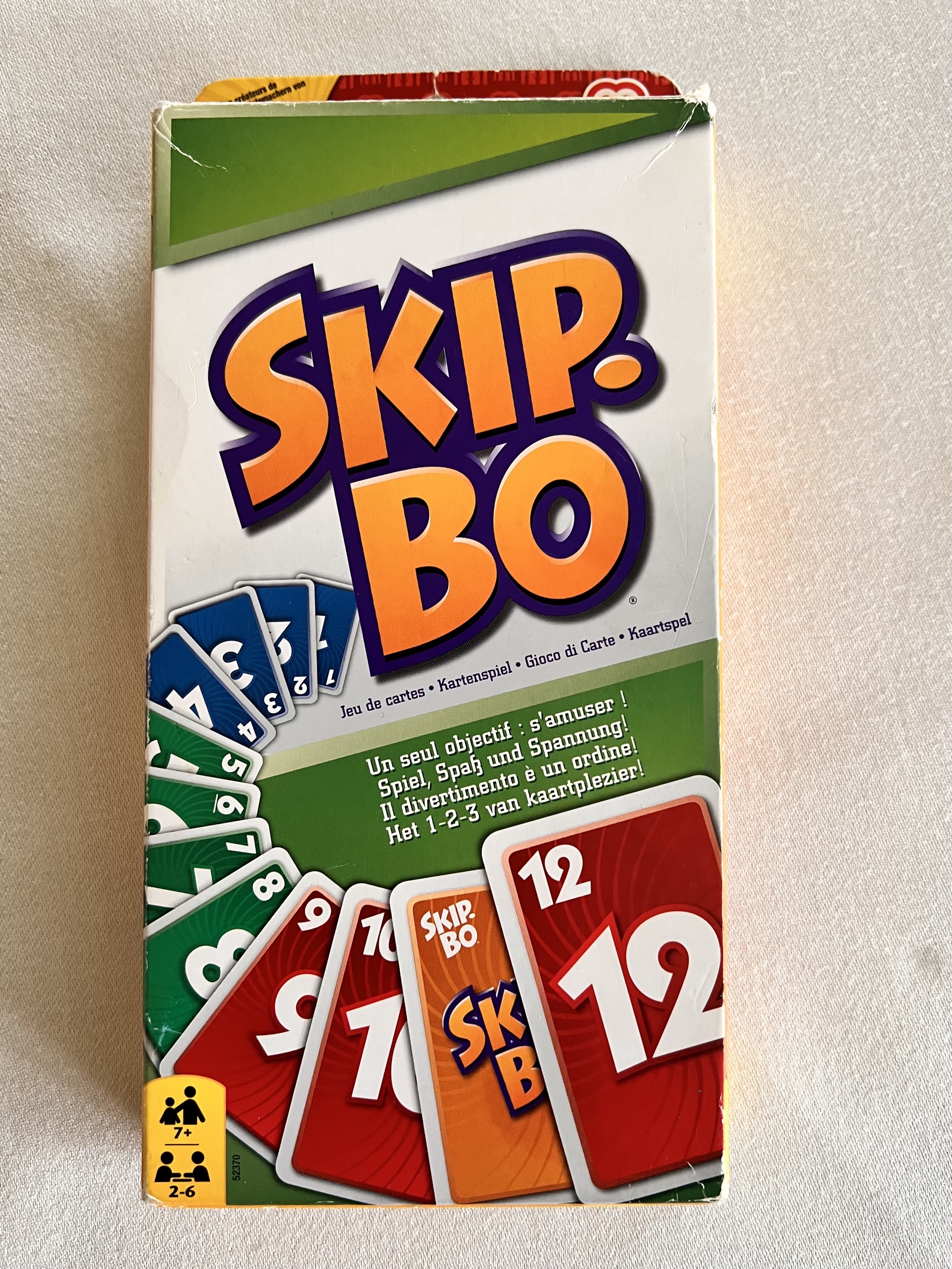
And then we ended the evening playing Skipbo, a children’s game in which you try to get rid of a pile of cards by placing them on cards are that are piled from 1 to 12. Simple but complicated. It is a game almost entirely of luck, the luck of what cards you draw, the luck of the cards in your own hidden pile that you are trying to get rid of, the luck of what other people do. But you do get to make choices. I was first sleepy, then grouchy when a new rule was sprung on me, then rabid with excitement as the competition got to me and finally, after much discouragement I had a wild run of luck and won. So I was a little smug and happy and the others slightly dispirited.
But as Susie and I walked back to our apartment two things struck me. One was that this was a game that both Susie and I had played many times with Kathe at Heinrich’s and Elke’s house. Back home in Swannanoa we had bought Skippo but it wasn’t the same and we didn’t play it. It was reserved for good times in Winsen at Elke and Heinrich’s house. But it occurred to me that this time I had had a really good time and the good time was with our friends Heinrich and Elke. We had had a good time and Kathe wasn’t there. We were having fun without Kathe being there and from now on would remember this as being a good time in Germany without thinking of Kathe. I wondered if this was part of letting Kathe go, wondered if taking her ashes to the Winsen cemetery today will be part of letting her go. Maybe this is a transition to good times without feeling Kathe’s absence. This trip could be a bittersweet time in the transition between holding on and letting go. But it was good to have a good time without feeling haunted.
And then as I was going to sleep another idea came to me. I had been a little smug when I won playing Skipbo. I somehow made the assumption that because I had chosen the way I played my cards that I somehow deserved to win. I was entitled to win because of my own wit and cleverness.
But as I thought about this I thought of Elke’s story of coming to Winsen which she told us earlier in the evening. Her family lived in East Prussia, which after the war became was annexed by Poland with all Germans having to flea. Her father had been in the Germany army before the Second World War and was often away from home. He was away from home all during the war and then kept in a Russian prison camp for three years following the war, only returning from Russian imprisonment in 1948 after the rest of the world had returned to semi-normalcy. When he came home, Elke, who was 9 at the time, didn’t know him, he was a stranger in the house and for years he was a strict father without a purpose, with no occupation or training besides the army. But during the period he was gone Elke’s mother had been put on a refugee boat by Hitler’s government, with refugees being placed in homes of people all across Germany. 30% of Winsen following the war were refugees and the other 70% resented them and wanted little to do with them. The refugees were boarded with home owners, but Elke’s mother was forced to fend for and feed her three children on the meager rations provided by the government and whatever she could scrounge. Elke told three stories as examples. For nine months after the war there was no school because most of the teachers had been forced to become Nazi party members during the war, including Kathe’s father, and were put into reeducation camps before being allowed to teach again after the war. What Elke remembers about school was that the Winsen children would bring a slice of buttered bread to school as a snack and that she couldn’t. One day, on her own, she cut off a slice from the family loaf, put butter and sugar on it, and was going to take it to school to eat it like the other children did but was caught by her mother and punished severely for stealing from their small supply of food.
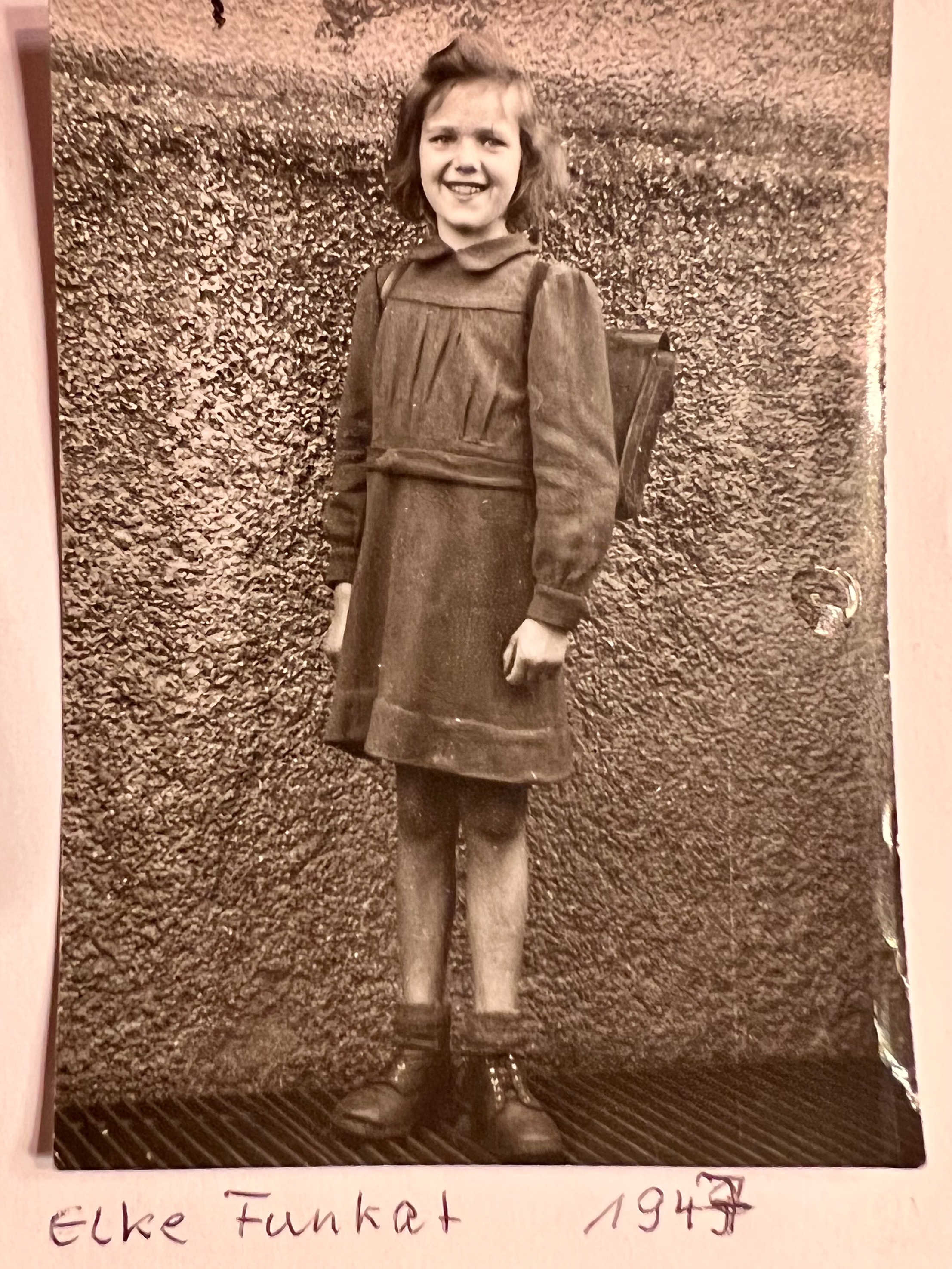
Another memory was being asked at school if she wanted to be photographed by a visiting photographer, eagerly accepting, and then having to ask her mother for the very small amount, maybe 50 pfennigs the photographer wanted when he handed out the photographs the next day. Her mother explained that they couldn’t afford it and then relented. And a third story was about having a dress made from a bed sheet by a neighbor and wearing it proudly to the Schutzenfest, an annual summer celebration, and being allowed to march in the parade of local Winsen children holding half circles of flowers and then of somehow having 5 marks to spend on ice cream and rides and of having a simply glorious day.
The poor refugee children when they grew up were still discriminated against and sometimes not accepted for marriage, but Heinrich, the minister’s son, didn’t care and she was accepted and married. Later Heinrich, a teacher, became a school principal and Germany became rich and they have become well to do and live a good life. But the past still haunts her. She still can’t throw away a slice of bread. As she said this I picked up the hard crust which I had set aside and chewed it up and swallowed it.
I thought of Elke when I thought of the Skipbo game, and of the Syrian refugees that Angela Merkel allowed into Germany, whom some Germans resent as unwanted immigrants, and of Margit and Dorothee whose families lost everything.
I won at Skippo entirely by luck, but somehow felt I deserved to win, that I was entitled. I am male by luck, pinkish yellow white by luck, American by luck, from an educated family insisting on education by luck, a liberal by luck. I have no more deserved my good fortune than Elke and her family deserved their hard life, or Dorothee and Margit’s family deserved to lose everything and come to Germany after the war with nothing, or the Syrian migrants have deserved being stigmatized refugees, or that undocumented immigrants in America have deserved to be unwanted as they try to scrabble out a life.
But the Skippo game shows me how easy it is to feel that because luck favors you that you somehow deserve it, that your entitlement is deserved. It shows me how easy it is for the winners in the game of life, entirely by luck, to feel they are entitled to win, and how easy it is to think that those who lose in this game of luck somehow deserve it.
 BILLYBABA’S WANDERING