ASHES
Thursday we spread Kathe’s ashes in her former family cemetery plot, as well as at the place in the Aller river where her brother Bernard drowned at the age of 17.
When Kathe died, so far from her home town of Winsen on the Aller, where Susie and I are now, we knew that we needed to take her back to the place she loved so much and the people she loved so much, at least symbolically.
And that is what cremation allowed us to do. We couldn’t have buried her body here in Winsen, but we could spread and bury her ashes here as well as in Swannanoa. She will have a gravestone in the Warren Wilson cemetery. I wanted to do something similar here, or at least have a service similar to the one we had at the Warren Wilson cemetery the day of her memorial service when with friends gathered around when our minister, Steve Runholt, spread her ashes on a rock and washed them away with water and we had a service of sharing stories about Kathe.
But when I looked on line to see if this was a German custom I discovered that not only did they not have a service of washing ashes from a rock, but that in Germany it is not allowed for ashes to be spread anywhere. The family is not allowed to have the ashes in their possession in case they will want to do this. The funeral director takes the ashes and puts them in a full sized wooden casket which is buried in a cemetery plot as if it were the body of the person who has died. Even bringing the ashes into Germany was illegal. We were determined to bring the ashes but were afraid of being caught at a customs check. But there was no customs check, there wasn’t even a stamp in our passport. We walked from the plane to the train with no check except for a check of our Covid vaccination card.
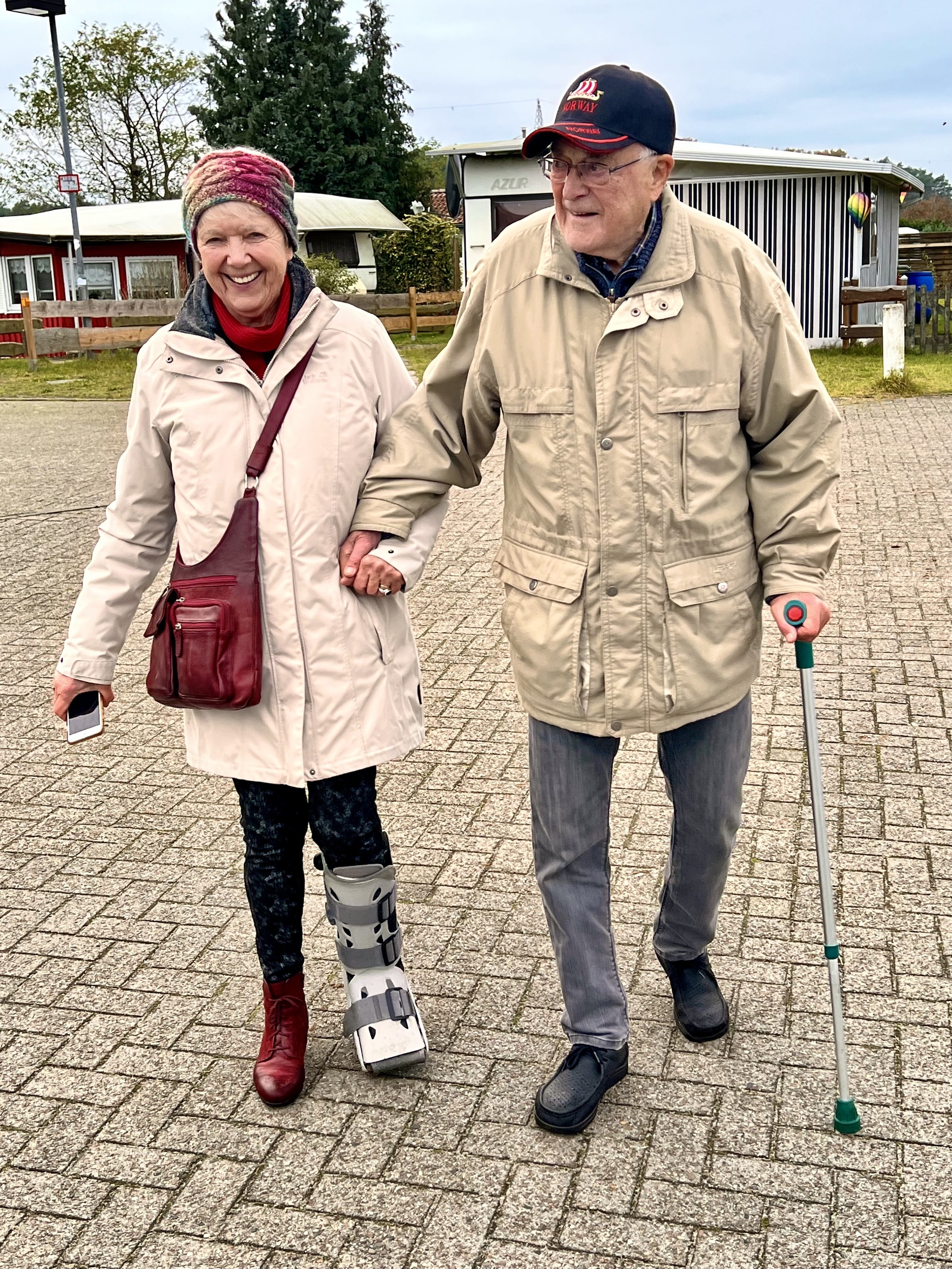
So on Thursday we went to the Winsen cemetery in a grove of trees and shrubs across from the church. Elke and Heinrich showed us the way, Elke with a boot on her foot because of a torn Achilles’ tendon, Heinrich with one crutch because of an arthritic knee.
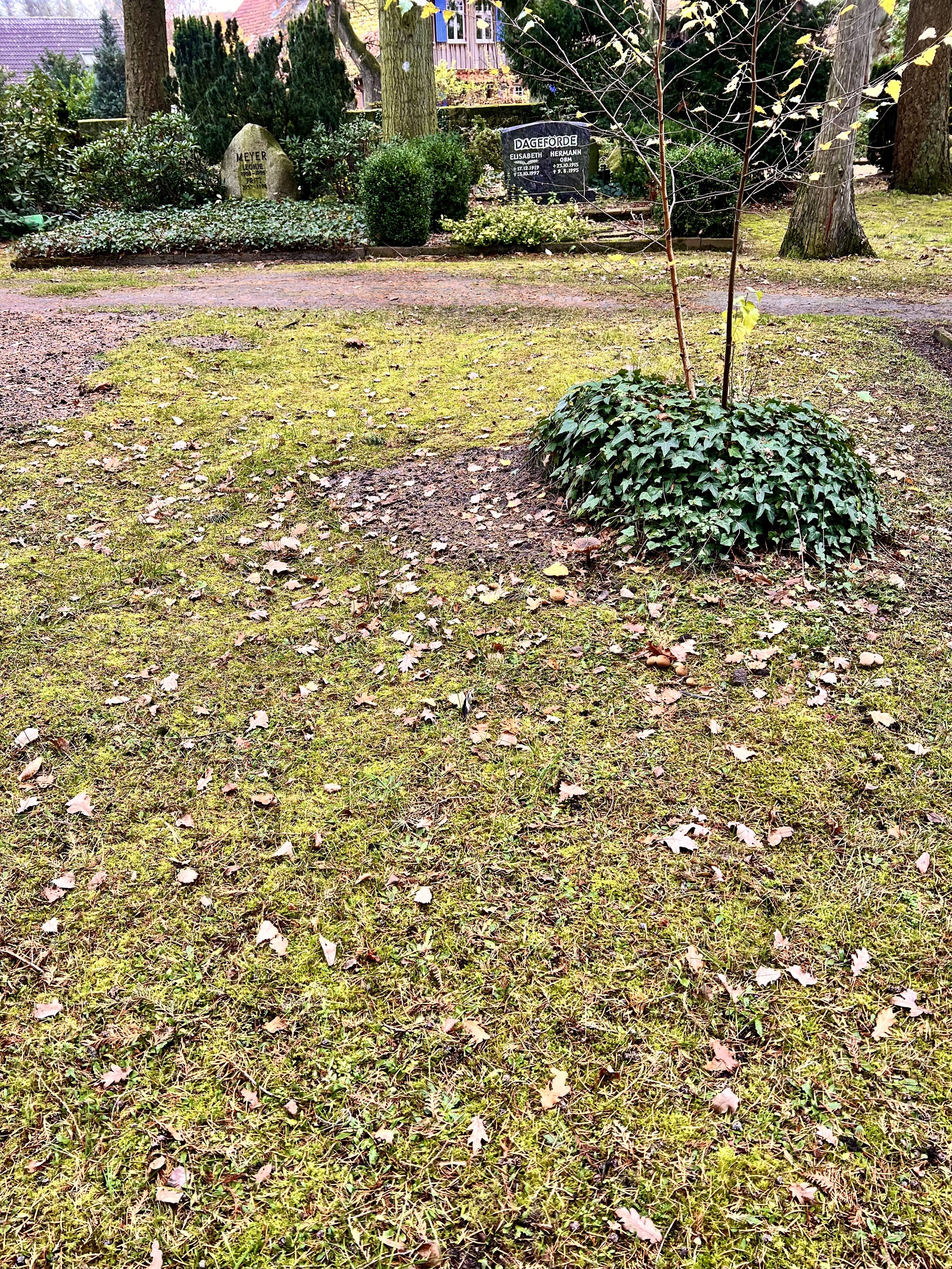
I had been there years before at the Schrader family grave plot with shrubs all around under a huge tree. I knew it would not be as I remembered it because a new German law twenty years or so ago decreed that after 25 years a gravesite would be dug up, leveled, and offered to others unless the family paid a large fee. Volker, Kathe’s brother, was unsentimental and declined to pay and so the plot had been leveled. To avoid the same thing himself he paid for his burial in an anonymous plot in a field of anonymous burials with no headstones.

But we still felt that we were returning Kathe home when we spread her ashes on and around a bush at the center of the old Schrader plot. Kathe was home again.

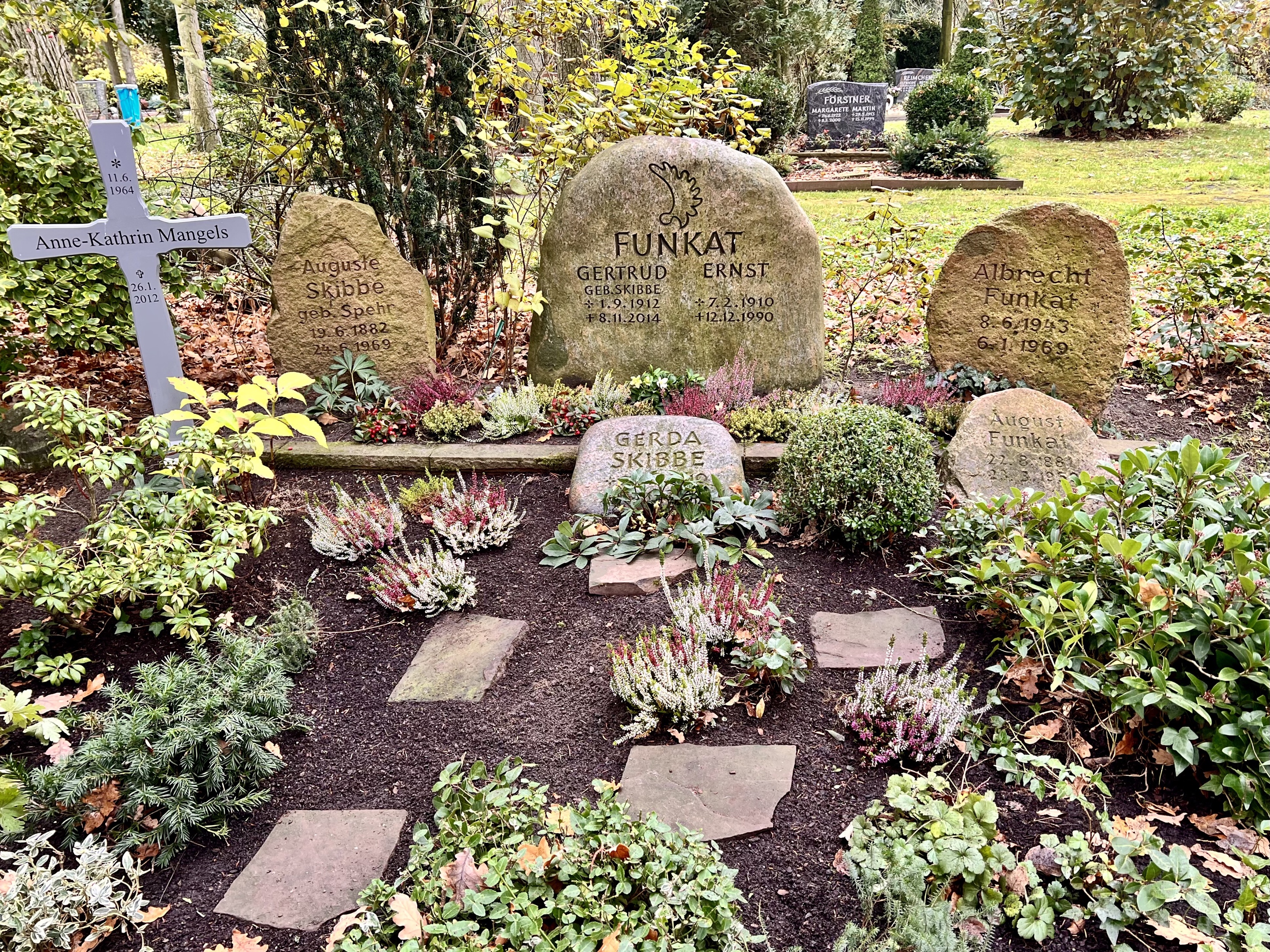
And after that we visited the still paid for and existing Mangels plot where Heinrich’s family is buried and the Funkat plot where Elke’s refugee family from East Prussia is buried.
And then on the way out of the cemetery we walked through the large semi circular cemetery honoring both World War I Winsen and surrounding region deaths and World War II.
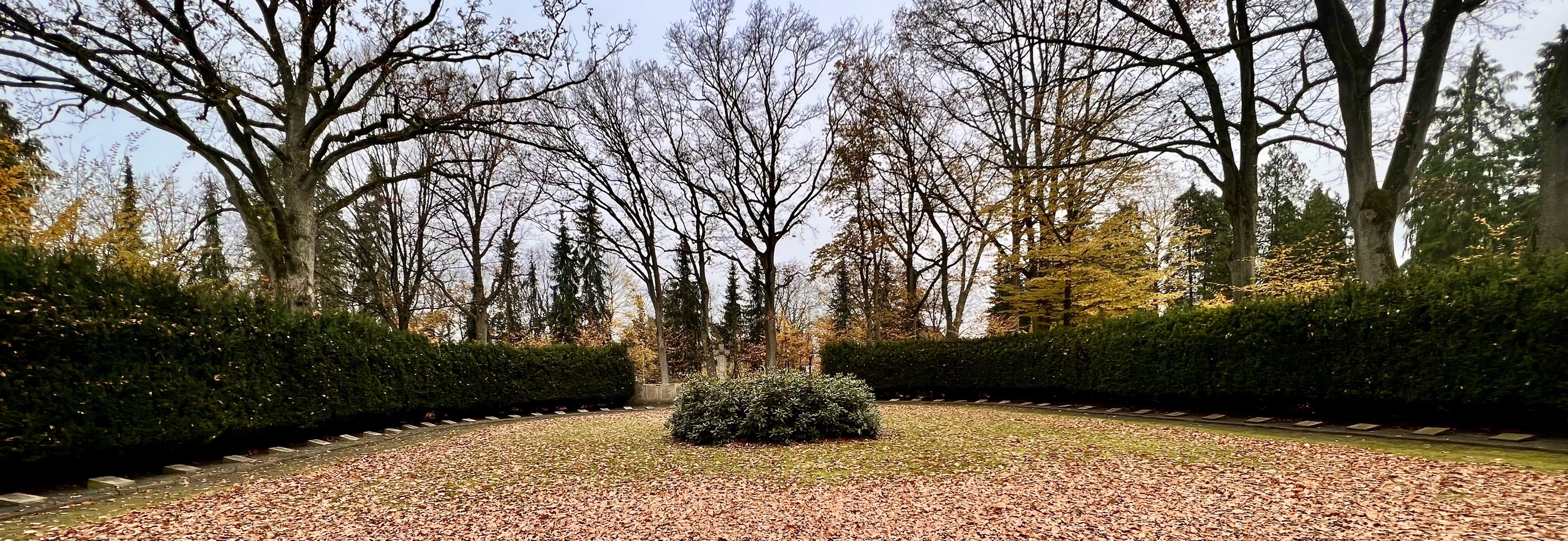
The most poignant part of this large circle of graves was that many of them were of teenage boys conscripted at the last moment to defend Winsen and the Homeland, in a hopeless last skirmish in which these untrained boys were killed by the British Army, an attack in which Heinrich’s home of his pastor father was also destroyed. In addition to the graves of these boys is also the grave of a 16 year old girl who was killed on a train full of children returning from school in Celle.
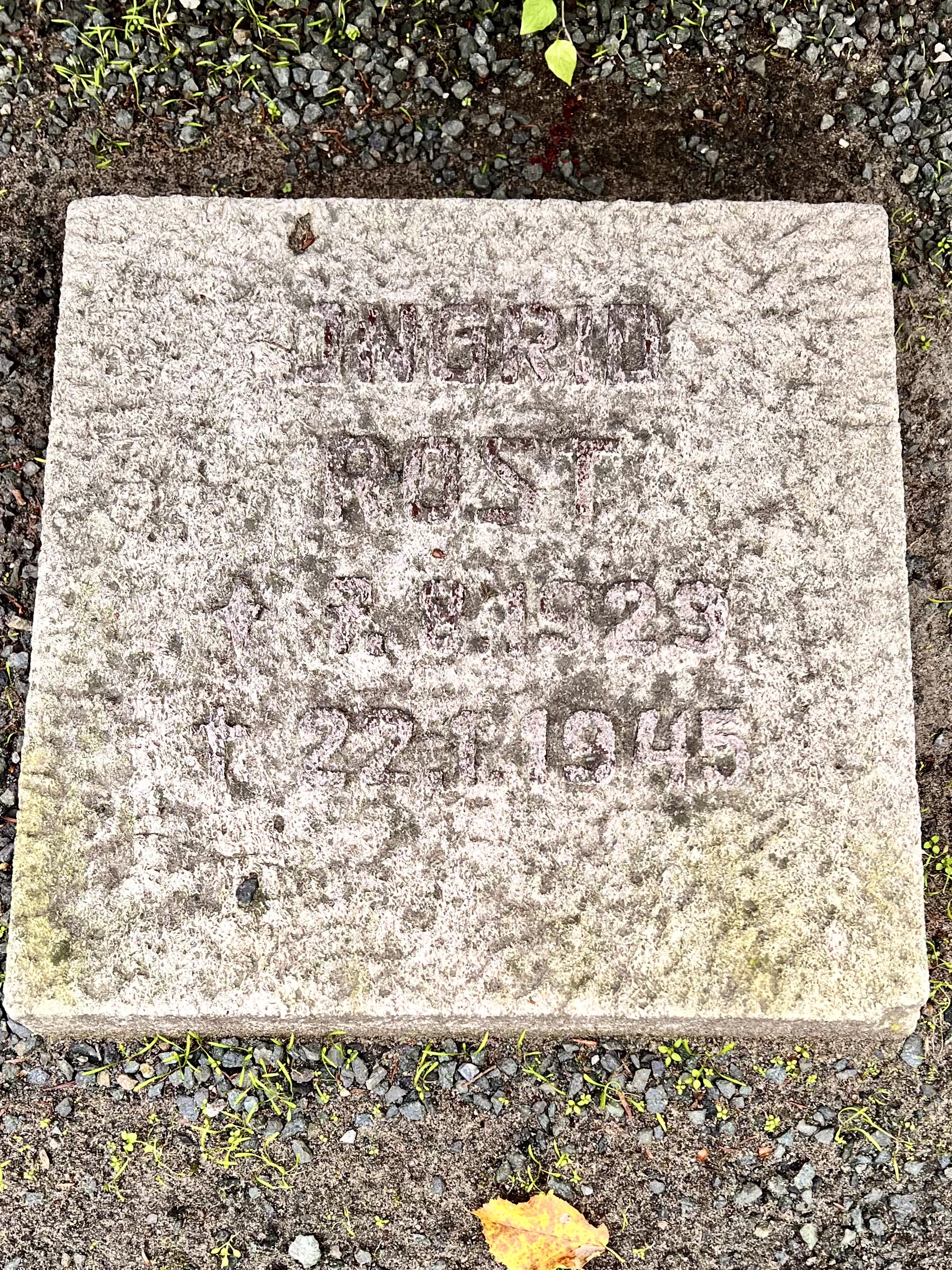
Heinrich was also on the train, in the next car from the girl’s. The train had stopped because of a British air attack somewhere else and when the all clear was given and it started up, one last, lone British plane had machine gunned it and killed the girl.
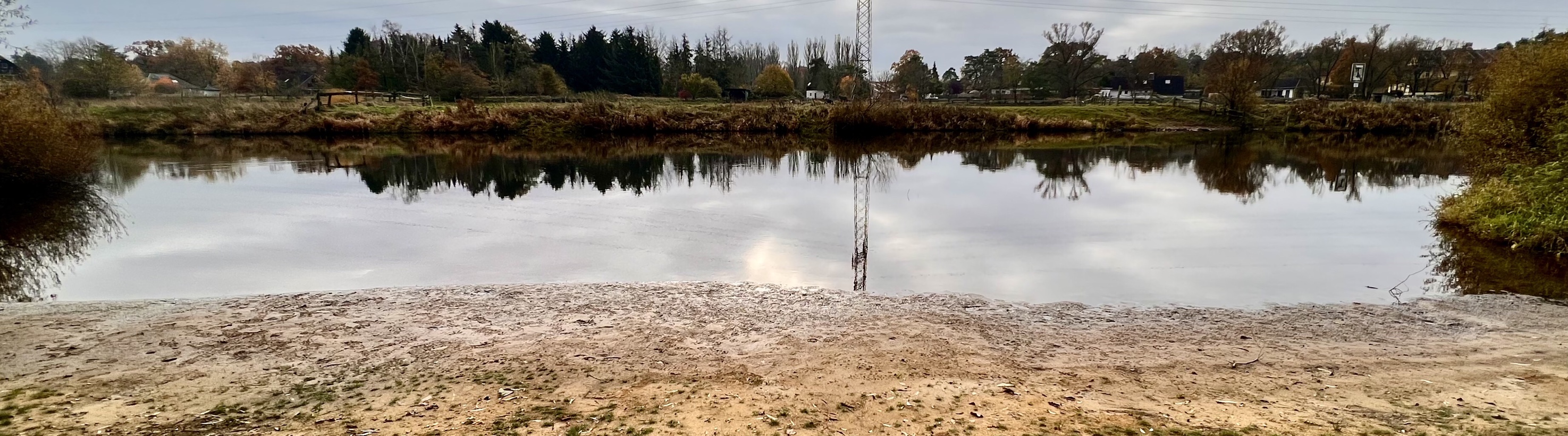
After that we went to the Aller river, so serene and placid that it seemed no one could drown there. It had been a very hot summer day and after work in a family gardening business Bernard had gone to the river with Volker and as Volker sat on the bank, Bernard slipped under the water and drowned. He didn’t know how to swim and it wasn’t clear why he drowned, but he did. Heinrich was watching a soccer game on the other side of the river and along with others was a witness of Bernard being brought from the river. Kathe’s father was in the hospital in Celle with a bad foot injured from tripping on a wire fence. Oma, Kathe’s mother, was taken on the back of a bicycle to the river. Kathe describes her own shock and disbelief in her autobiography at kathemosher.com.
We spread the ashes in the Aller and then drove home. This was a major reason for coming to Germany. Elke, Kathe’s best friend from childhood feels that Kathe has come home and is glad that she has a quiet, beautiful place where she can feel Kathe’s presence and think about her. And Susie and I and our whole family feel that we have brought her home and laid her symbolically at rest, while having our own gravestone in Swannanoa that we can visit.

 BILLYBABA’S WANDERING