LITTLE WORLDS
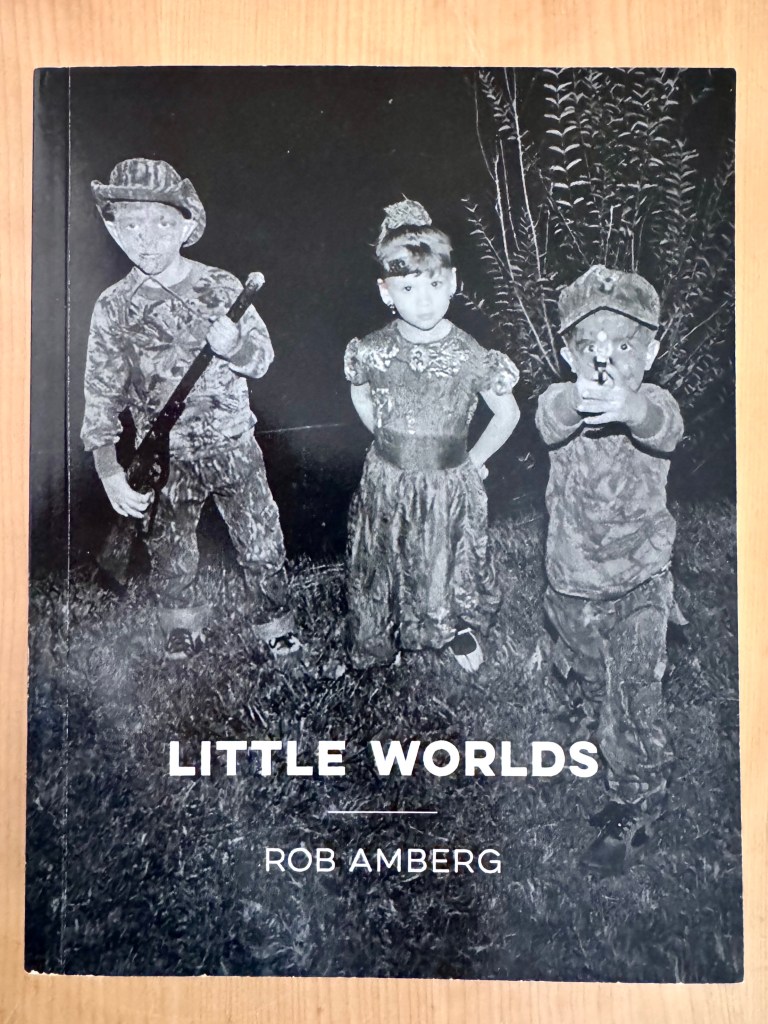
In the mail this week I received a book by Rob Amberg, Little Worlds. Rob Amberg is the Madison County photographer whose 75th birthday party I attended in Letojanni, Sicily, in October. The visit to Sicily was memorable in a number of ways. I stayed for a week in Taormina, a ritzy vacation town perched on a cliff above the Mediterranean and then joined Rob, his wife Leslie and daughter Kate in a hotel in Letojanni run by a cousin of his. Getting to know Rob’s family and the large group of friends from Marshall, the county seat of Madison County was a really good experience. I had been to Marshall, up the French Broad River from Asheville and close to my daughter Susie and her partner Todd’s country cabin, many times. But on this trip I got to know some of the people of Marshall, particularly the developers and business owners who have made Marshall such an interesting place.
Rob has dedicated himself to both living in and fitting into rural Madison County through over 50 years photographing the ordinary people of the county, the oldtimers, families who have lived here for generations, He also fit in through living in a mountain cabin, cutting his own firewood and growing a garden and living as simply as the Madison old timers live.
One third of Little Worlds is photographs over the years of tobacco farms, hog butchering, music making, and the hard work of the traditional families. His documentary style is straight forward, showing an unvarnished view of rural life. He is not trying to create beautiful photographs in which artistry enhances and sentimentalizes and draws attention to the photographer, he is making pictures that are true to the people he is photographing, just as they are. He shows Madison County life as it is, usually in black and white.
The second part of his book is taken from his journals over the years. It is the story of his passage from growing up in Maryland to coming to Madison County and being an outsider, as well as feeling that these mountains and this way of life are home, where he ought to be. It is the story of his transition and fitting in. But it is also the story of another side of Madison County. It is of two outside groups, first of all the outsiders who have been coming here for the last 50 years either to escape from urban America and places like tourist Asheville who are determined to adapt to this rural way of life, but also of another group of wealthy outsiders who are moving into Madison County and particularly Marshall, not to fit in but to live in a place of great natural beauty, often building a second home in the mountains that they visit in the summer. And there are also developers who are remaking Marshall into a tourist town with breweries and bars and excellent restauarants and trendy stores.
There is a clash between the oldtimers and the newcomers that Rob deals with in his journal entries that I have experienced as well. But his journal helps me to understand this tension between cultures much better. Rob fits in with both groups. It is the second group who came to Letojanni for his birthday party.
His journal touches me as much as his photographs do and the combination makes very clear, without resolving anything, the tremendous tension between rural America and urban America that is everywhere across the country. The elitism of the outsiders irritates the old timers as the outsiders try to improve things and make Madison County an attractive place. The oldtimers feel their traditional values and ways of doing things are under threat. I heard this week that the new tax adjustments in Madison County may make the taxes so high that the oldtimers with lots of forested land and small rocky fields might not be able to afford staying on their own land. Yet the newcomers also honor the oldtimers and try to be accepting of mountain music and ballads and traditional ways of life.
It is Rob’s patient effort to fit in and honor both sides and yet to be fully aware of the tension between cultures that touches me so deeply and is what will make me continue to be haunted by this tension between the two Americas and make me continue to agonize over it.
The third part of the book, which I am still reading, is imagined stories about the future of Madison County that Rob told his two children, Benny and Kate, over the years. It is an fictional story of a future Madison County. Every chapter begins with a photograph of Kate at different times in her life. I will respond to this story later. But right now I am haunted by the first two parts which give me so much to wonder about.
 BILLYBABA’S WANDERING