CROSSING KENTUCKY, INDIANA, TENNESSEE TO HOME
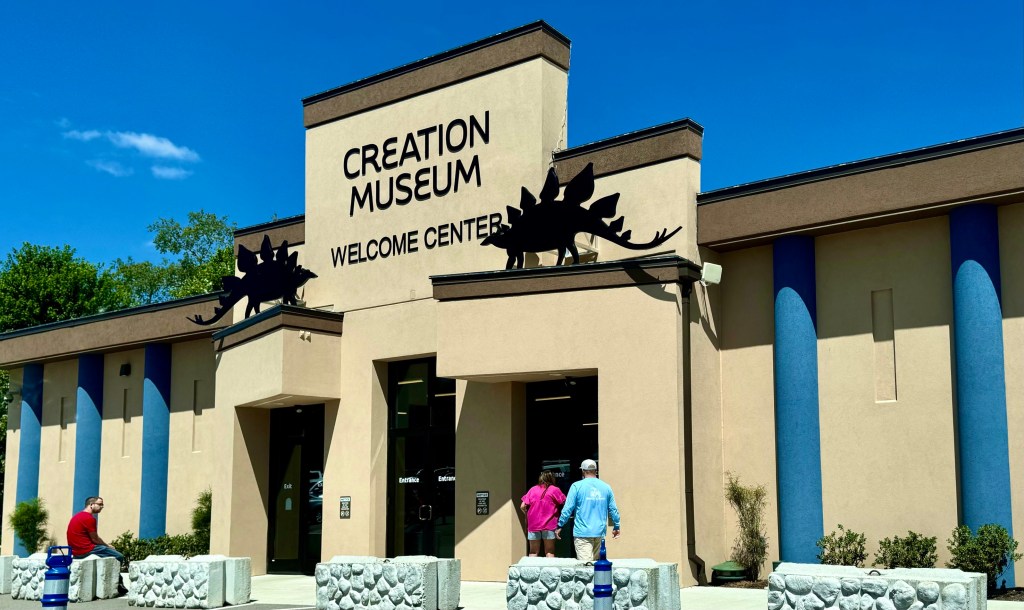
This morning as we were driving from Rockville, Illinois on the last day of our trip as we crossed into Kentucky we saw a sign for the Creation Museum, a museum which attempts to combine the discoveries of evolution, for example dinosaurs, with the 7 day creation story told in the book of Genesis, in a theory of creation called creationism. . Years ago Susie and Todd had stopped here and gone as far in as they could, into the creation museum shop, without paying the $25 admission and wanted me to see it. But after we went through the gate we discovered that parking was $15 so we drove out again. Somewhere in there, since God had created everything that exists in 6 days, was a place where kids could ride on dinosaurs who were created when humans were. So my only visit to the Creation Museum has to be on their website.
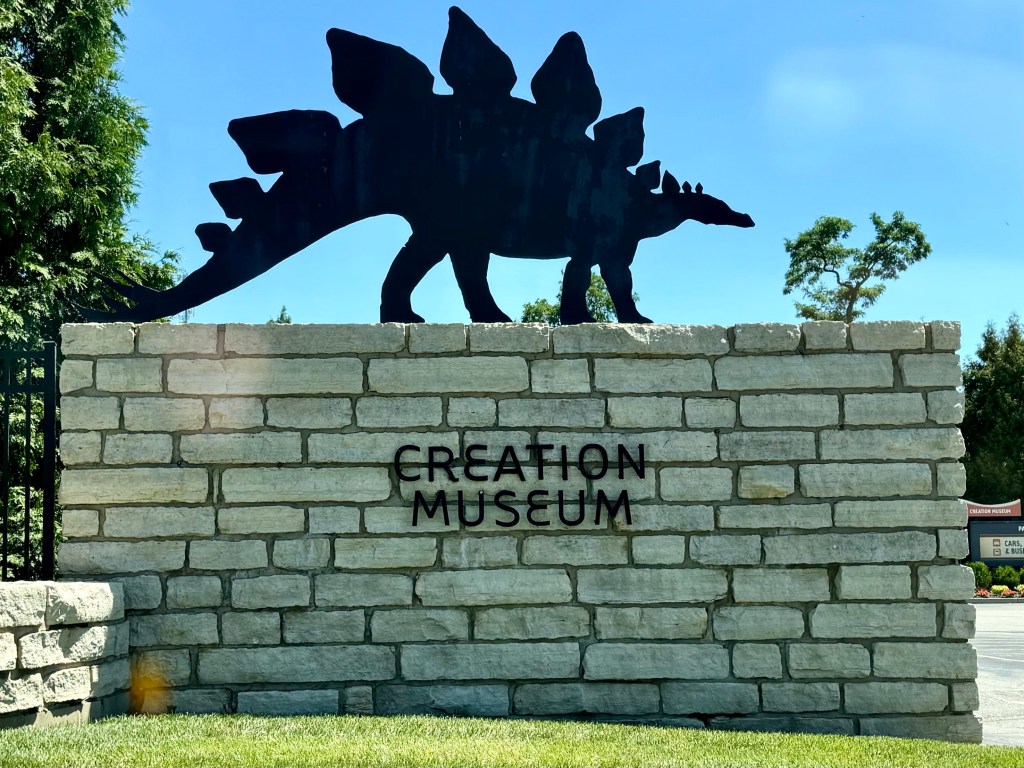
But the Creation Museum got me to thinking more about what I have been thinking about all week on this trip as I puzzle over the difference in beliefs, in faith about what is real, actually, between most MAGA people and the more secular scientific beliefs of most liberals. The Creation Museum just brings this into relief.
At first it seems nuts to commercialize the powerful creation story of Genesis with a $15 parking fee and a $25 entrance fee. But what is almost as comic is to think that you can take the sacred beginning of the Bible and turn it into a Disneyworld or Madam Tussaud’s Wax Museum. It seems to me to be almost sacrilege to give the divine physical form. Somehow, for me, the power of the mythological is diminished by giving it physical form.
But I can sense at this point that I am on a slippery slope. Because much of the great art that fills Western churches and musuems is a depiction of the life of Jesus including his birth and childhood and miracles and death on the cross, his actual life, not a mythological one. This art today when privately owned is commercialized by art collectors or investors but these powerful religious paintings by master artists were indirectly commercialized through the donations that people made to build cathedrals and to make them into sacred places. This was certainly true of the Greek churches I have visited in the past couple of years which are filled with icons and stylized images of saints and Biblical figures. And in India there are representations of the huge pantheon of Hindu gods in temple after temple or in street shrines with these images holding sacred power. So why does the Creation Museum seem faintly comic to me when these other representations of the sacred don’t? Is it simply because the artists who made these traditional images were more serious artists than the creators of the Creation Museum? That doesn’t make sense to me.
But at this point as I ride back from Wisconsin to Asheville, North Carolina, I am not willing to deal with the real issue of what the Creation Museum is trying to do, for me in a tortured way. It is trying to combine what science which tells us about the long, long process of evolution with the story of Creation in the Bible in a realistic way. The real issue for me is, if the religious stories of the Bible or the Koran or the vast Hindu mythoolgy are not factual and cannot be realistically depicted, how have these stories have come to be so deeply meaningful when there is no way to show that they are objectively real, as the descriptions of evolution can be shown to be. If they are not objectively real, how are these stories so emotionally real to so many people, including, probably, the visitors to the Creation Museum? I will have to keep wondering.
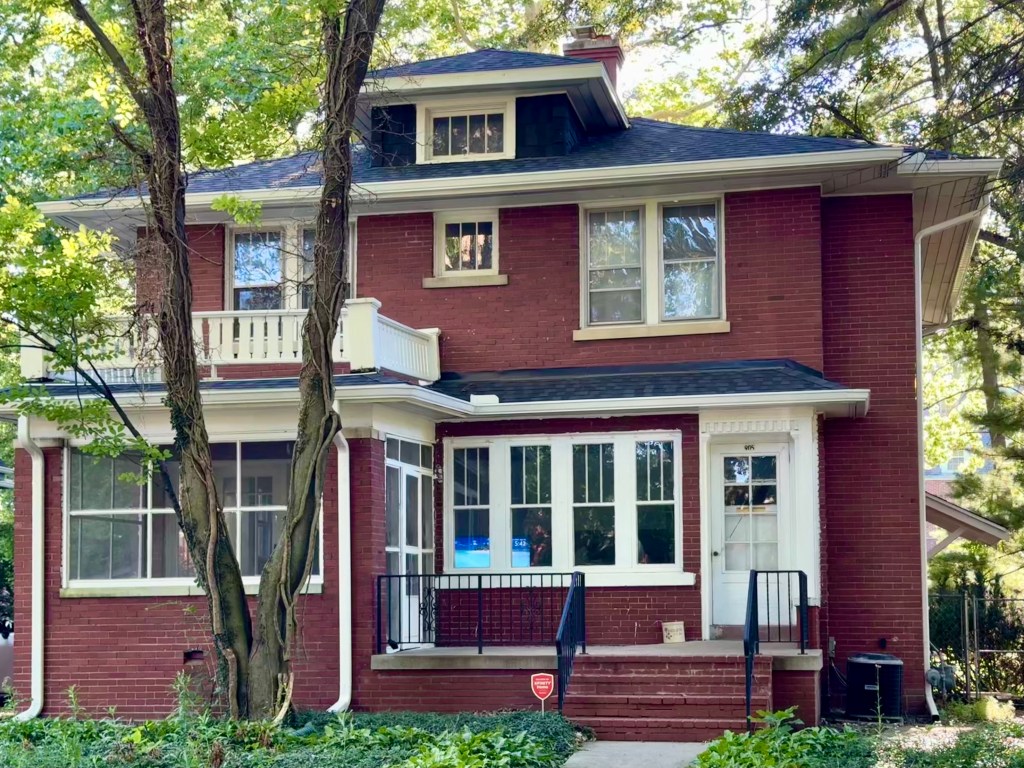
I fell asleep while we driving through Illinois and woke up to see that we were twenty miles from Urbana. Suddenly the address of my grandfather, Martin Luther Mosher, and my grandmother, Elva, popped into my mind. 905 South Busey. We looked it up on Google and it was twenty blocks off the Interstate. So we drove by. The streets around it were still the original brick. it seemed that nothing had changed. There was the house that my father and his two brothers and two sisters had grown up in and which I had often visited as a boy.
 BILLYBABA’S WANDERING