ILLINOIS AND THE HALL PAST

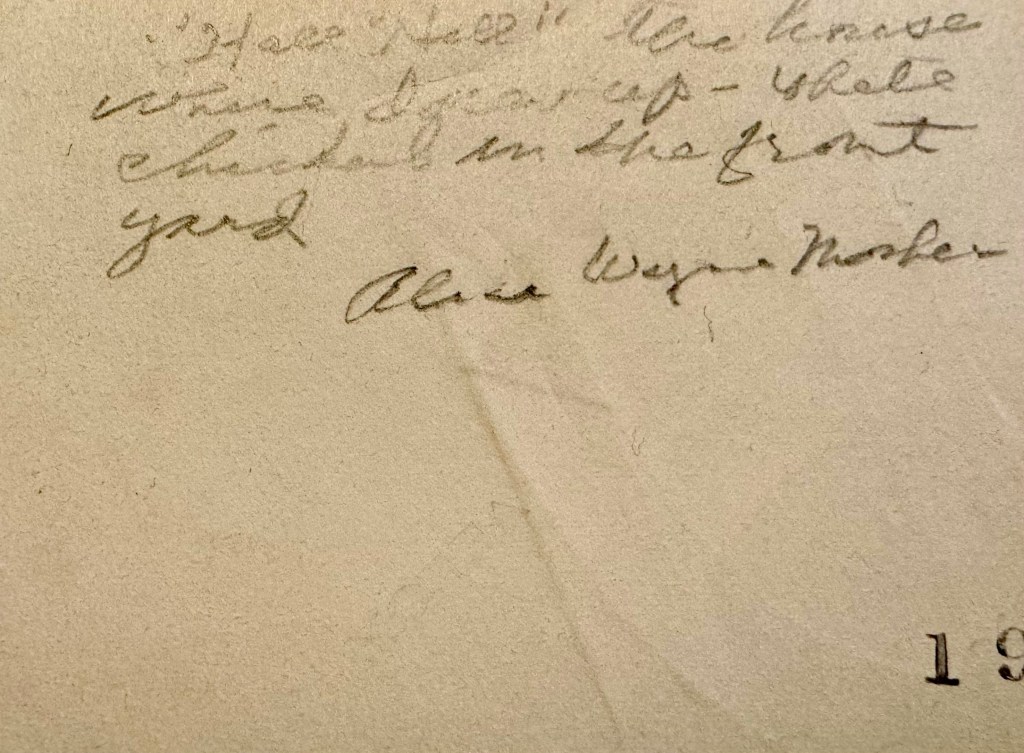
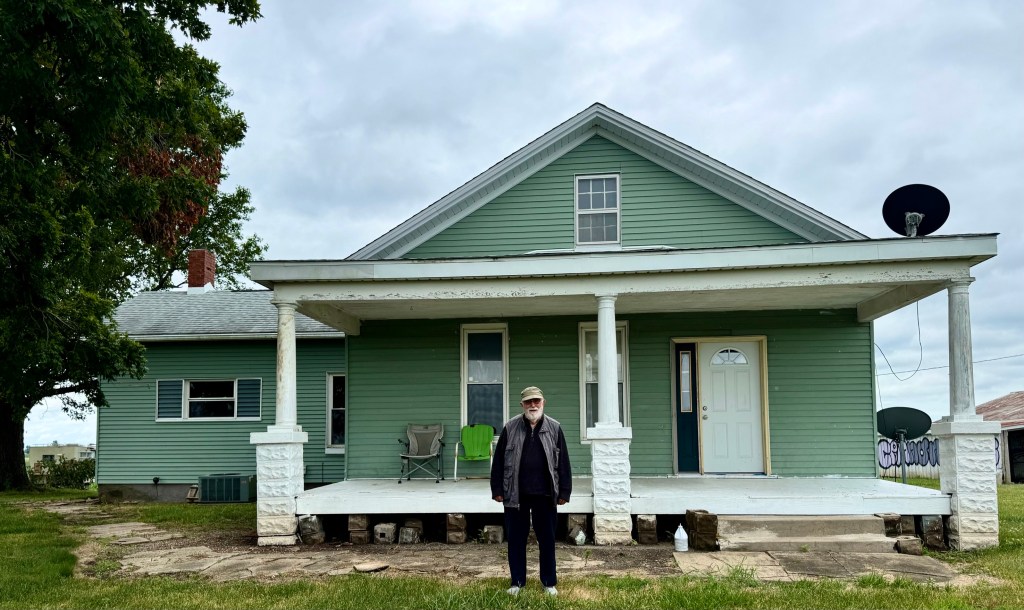
For the next two days we drove through endless alternating fields of corn and soybean that extended to the horizon. As a boy my family had lived for awhile in Orland Park, outside of Chicago, where my father was working on his Ph.D. at the University of Chicago. During this time we would often visit my father’s parents home in Urbana, Illinois and my mother’s parent’s home in Buffalo. Then we went off to India as missionaries for seven years and in the years following our return we would drive out west to Illinois, before the arrival of Interstates driving in non air conditioned cars with all the windows open in the sweltering heat through town after little town which slowed the trip down a great deal but also allowed me, as a boy, to get a feel for small town rural Illinois and Iowa. In those days, first in the early 40’s and later in the late 50’s, the small rural towns we were passing through were thriving with the business of prosperous farmers and on Saturdays were crowded with shoppers. A trip into Buffalo, the small town outside of which the Fred Hall farm, my mother’s father, was on a slight rise in the flat Illinois plain which we called Hall Hill, was great fun.
I had heard stories and seen photographs of my grandfather Fred’s family and my grandmother Patsy’s Fletcher family with something like five sisters all married to farmers with one, the black sheep of the family, married to a Catholic, but she was still included at family gatherings. As a boy I never could tell the big bosomed sisters apart. But what I remember were family gatherings on the front lawn of the white house on Hall Hill under giant elms where we ate mounds of fried chicken, their necks wrung that morning, sweet corn dripping with butter, mashed potatoes and gravy and several watermelons floating in a tub to be sliced for dessert.
But even with these joyous family celebrations there was a shadow in the background overhanging everything which my mother never escaped. Because Hall Hill with all of its acreage had been mortgaged in a get quick rich scheme during the depression of the early 30’s and the farm that had once belonged to the Halls was now owned by some distant owner and now my Grandfather Fred Hall was farming someone else’s land and getting only half the proceeds. I don’t think Fred had ever wanted to be a farmer, he wanted to be a teacher but his eyes were two weak although he somehow became an avid photographer with a large black fold open Kodak camera. I can remember him swinging a bucket full of water in a circle up over his head and not spilling a drop. But during the time we were in India Fred had a stroke, from eating toast soaked in bacon fat every morning, my mother said, and when we came back he spent most of each day piecing together cardboard puzzles on a card table.
His son, my Uncle Gene, who also didn’t want to be a farmer, took over the farm but finally when Patsy died the family let go of the farm and moved to Illiopolis where his wife Jeannie lived. In Illiopolis Uncle Gene became a driving instructor in the local high school and immersed himself in the little church in town.
So I remember Buffalo as a bustling place that was fun to visit with Patsy on a Saturday and where we went to church on Sunday.
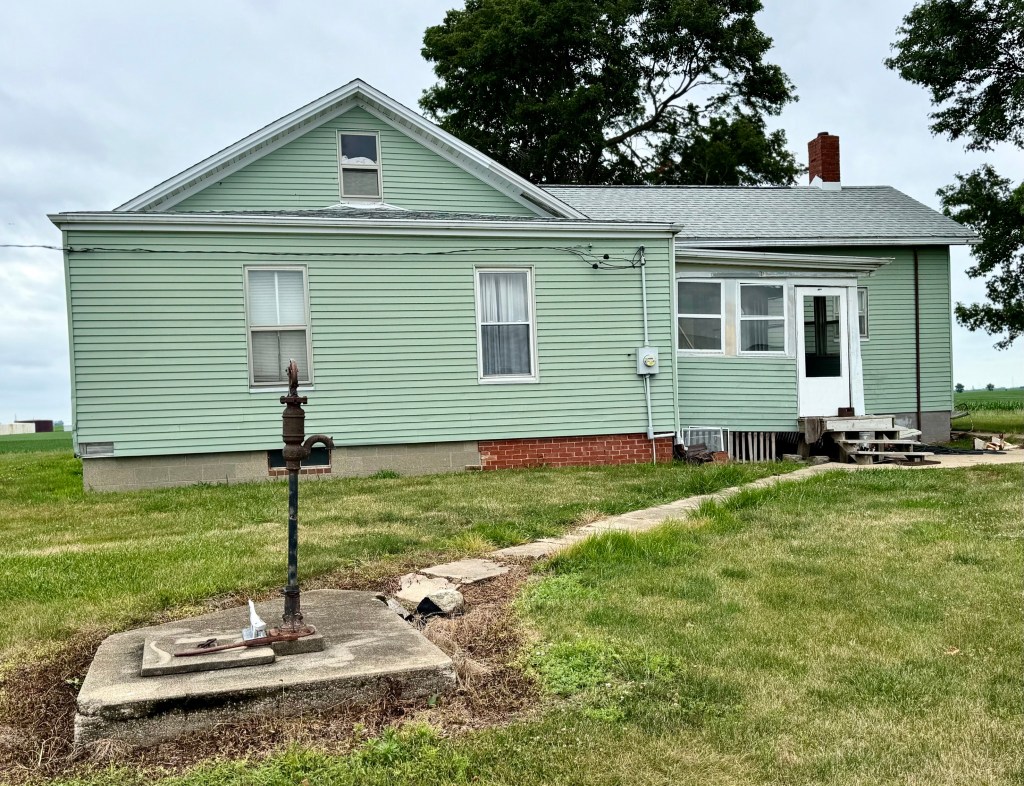
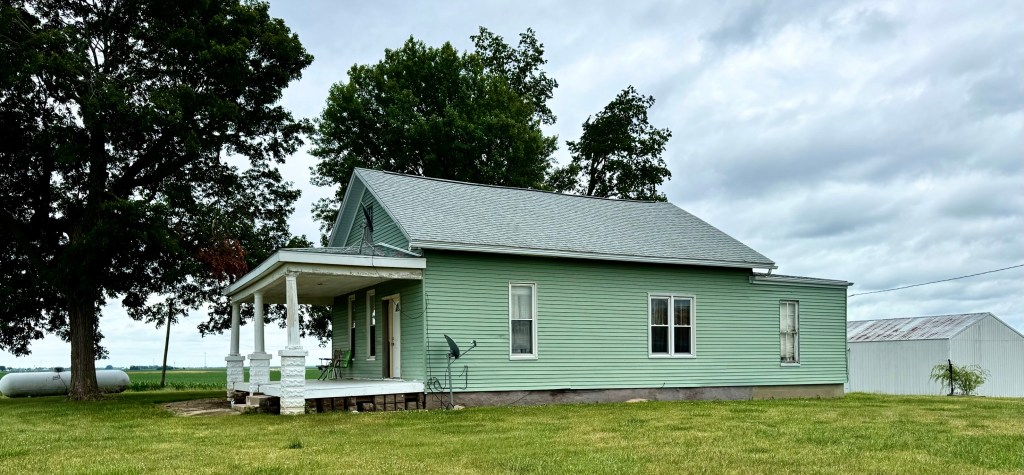
But this time when we drove up the lane to Hall Hill everything was different except for the house. The red barn was gone, the buildings for chickens and the outhouse were gone, the pasture in front of the house was gone and all around the house was planted a huge field of corn, even the trees that has shaded the house were all gone. My past was gone.
And when we drove into Buffalo the huge grain silos were still there but all of the stores were crumbling or without business. This is what we found in every rural town that we visited. There were some well kept houses, but pretty certainly the people living here commuted to work somewhere else.
On the way to Traer where we were going to spend the night we drove past the Heidelberg Motel in Burlington and then through Iowa City and had a Japanese dinner there. Kathe and I spent three years in Iowa City where I went to graduate school. I wanted to see our apartment on a downtown corner above an antique store on Dubuque Street, but it was gone, nothing was the same, in fifty years the town had been rebuilt and I didn’t recognize a thing. That part of my past was also gone.
We spent the night in Traer, another little town fallen on hard times, which is desperately trying to maintain itself.
We stayed at a family owned motel, the Golden Door Motel, and walked around the Main Street in the morning. Traer was best represented for us by the hardware store where Todd bought some bolts to repair the recliner we had brought along for me to sleep in but which had collapsed. The man running the store told us of the history of the old fashioned hardware store that had thrived when the downtown was bustling on Saturday morning and is now just trying to hang on. And then on we drove to Minnesota.
 BILLYBABA’S WANDERING