TWO ROADS, TWO SRI LANKAS
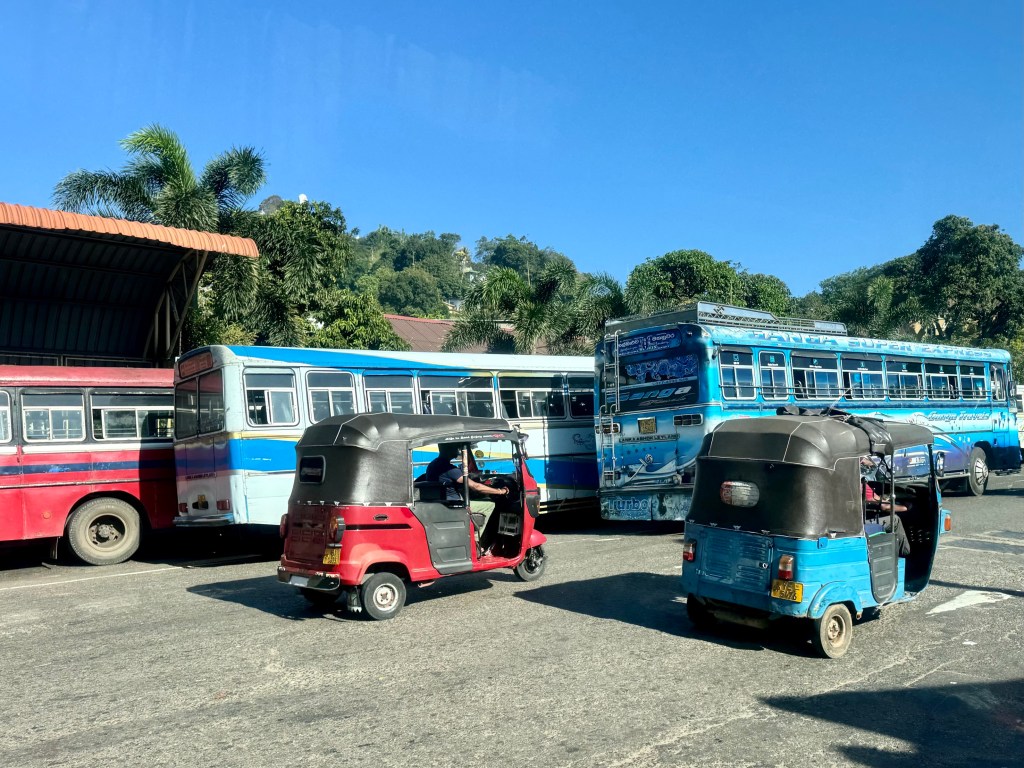
Today Winsor, Thalatha and I came to the beach at Una Watuna. We took the bus from Kandy to the outskirts of Colombo and then took another bus to Galle. The first bus was an elongated van which waited till its appointed hour, 9 a.m. to leave from the Kandy bus station. As we were waiting for the bus to fill up I was able to watch the buses coming in and out of the Kandy main bus station. There were hundreds of buses cycling in and out, appearing to stream in a steady line with no space between them. Kandy is in the middle of Sri Lanka and so is a travel hub, but this steady stream of hundreds of buses of various sizes also is testimony to the strength of public transportation system in Sri Lanka. You can go anywhere by bus with one bus to Colombo leaving every 15 minutes. You don’t have to know the bus schedule and certainly don’t need to make a reservation. Just show up at the bus station and within 15 minutes a bus will be leaving for anywhere on the island, or so it seems.
Our bus filled up and then began to overfill, first filling all the fold down seats which filled the aisle and then squeezing two or three standing room passengers in the little space that was left. Whenever anyone got off, with the remaining passengers in the fold down seats moving back a seat to fill the spot of the person leaving, the conductor would take on another standing room passenger from stops along the road to fill the last little gap. We were packed so tight that people almost had to do gymnastics to let departing passengers out.
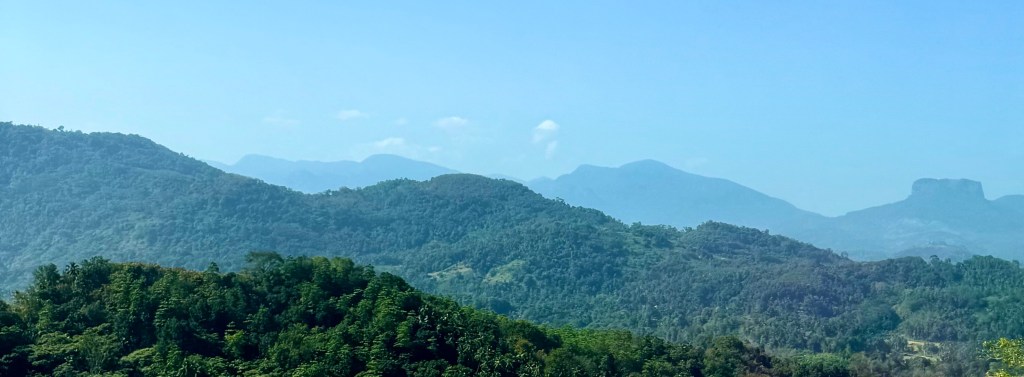
Kandy is at about 1500 feet elevation and the ride to Colombo seemed to be all downhill, sometimes steeply downhill, so that it felt as if we had dropped thousands of feet, although that would have been impossible. As we went through town after town the conductor would shout out the next stop that we were coming to and signaled to people to begin the laborious process, squeezing past other passengers, to get out. The towns were so close together that it seemed like we were going through one continuous town with shops and shop signs piled on top of each other all trying to get attention but such a jumble of signs that it was impossible for any to be noticed.


It was a hectic, chaotic ride and great fun except that I couldn’t move my left leg which finally began aching in an excruciating way. And then we were to the main highway crossroads after an almost three hour ride with no chance to pee.
So I paid to pee in a dirty bus station toilet before we got on the next, much larger, bus. This bus filled up with no fold down aisle seats. We went through a toll booth and were suddenly on a four lane divided highway no different from any autobahn in Germany or Interstate in the United States. The exits and entrances were the long gradual clover leafs that we have in the United States. There were no shops along the road, no signs, no towns, not even any houses or no more than you can see from the Blue Ridge Parkway which is lined by national forest.
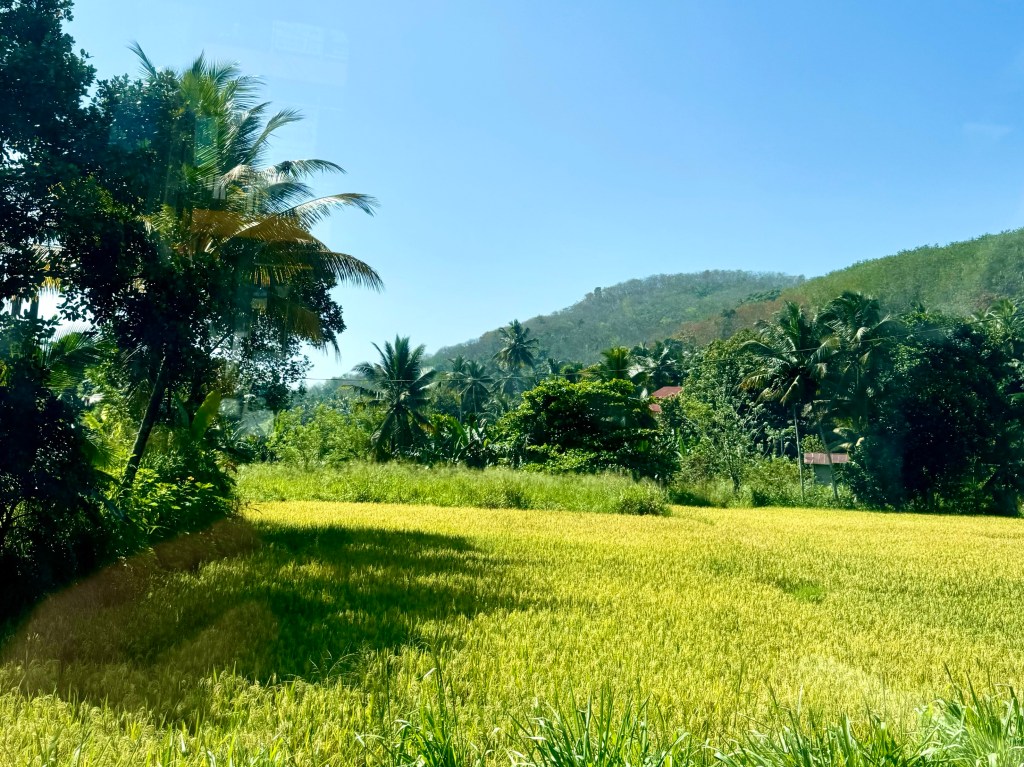

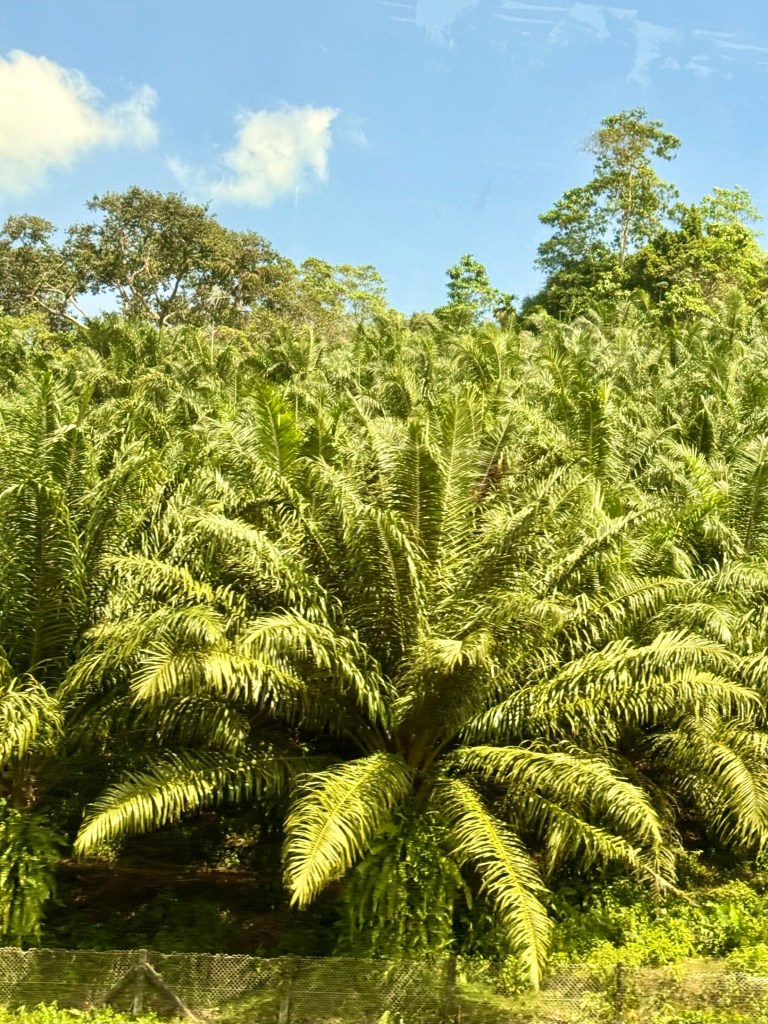
Instead we were driving at 60 miles an hour through rubber and coconut plantations owned by large corporations avoiding any towns and skirting the steep sides of low hills where no one lived. It must have been easier to get right of way this way, without dislocating anyone, but more expensive to build the wide road which which was, like any interstate, completely level with mountain sides gouged away and valleys filled up. It must have been a very expensive road to build. The jumble of towns on the first road was gone and Sri Lanka appeared to be a sparsely populated land of forest and rows of rubber trees or coconut palms with no towns at all. The trip to Galle, farther than the first leg from Kandy, yet we got there in half the time. My first thought was that a tourist intent on sunbathing rather than cultural immersion would get off his flight in Colombo, get on the wide highway and miss the feel of Sri Lanka’s people entirely, before. being deposited in an ocean side hotel in Una Watuna and spending her weeklong escape from Europe’s dark, icy winter, basking in the sun, the only thing that he really wanted, before hopping back to Europe again.
I wondered who benefitted by such a road. It wasn’t the ordinary person, it seemed to me, it was the business interests who wanted easier transportation of goods or those rich enough to own a car and to pay the tolls required by the road.
But then the other thing that began to dawn on me was the realization that it was very expensive projects like this, with additional costs being siphoned off through corruption, fueled by whopping loans, that finally led Sri Lanka to face first galloping inflation and then a financial crash that cost individuals their life savings as the banks, who had been giving huge interest on investment to lure in cash, a kind of ponzi scheme, suddenly went bankrupt. It was the ordinary person who for six months couldn’t buy gas to cook with or to travel with and whose life savings were wiped out who suffered by the financial crash brought on by things like the super highway to Galle.
 BILLYBABA’S WANDERING