IMMERSED
This was my second day in Anuradhapura in northern Sri Lanka, the ancient capitol of Sri Lanka. I arrived on Thursday and slept after the long drive from Colombo. Friday was a rest day and all I did was eat and sleep and walk once along the lake with Winsor. But Friday my program began.
At this point I have to explain that I become a different person in Sri Lanka. In Swannanoa I am an elderly retired college teacher whom no one notices, for good reason, there is nothing to notice. I am an ordinary, a nondescript person.
But in Sri Lanka I am transformed. I have a small preschool named for me, I was given an honorary plaque for service to Sarvodaya, I am treated as an important visiting dignatary, people ask me to give speeches and act as if I am saying something significant (often to people who don’t understand an English word I say). Sarvodaya, the organization that I have visited with Warren Wilson College students 11 times from 1984 to 2004 knows how to make people feel important. Every visit felt like a minor state visit.
But I am not fooled. I know I am playing a part in people’s expectations and play my part with a smile. I also learn a great deal this way.
So yesterday was a reimmersion in the activities of the Sarvodaya Shramadana Society.
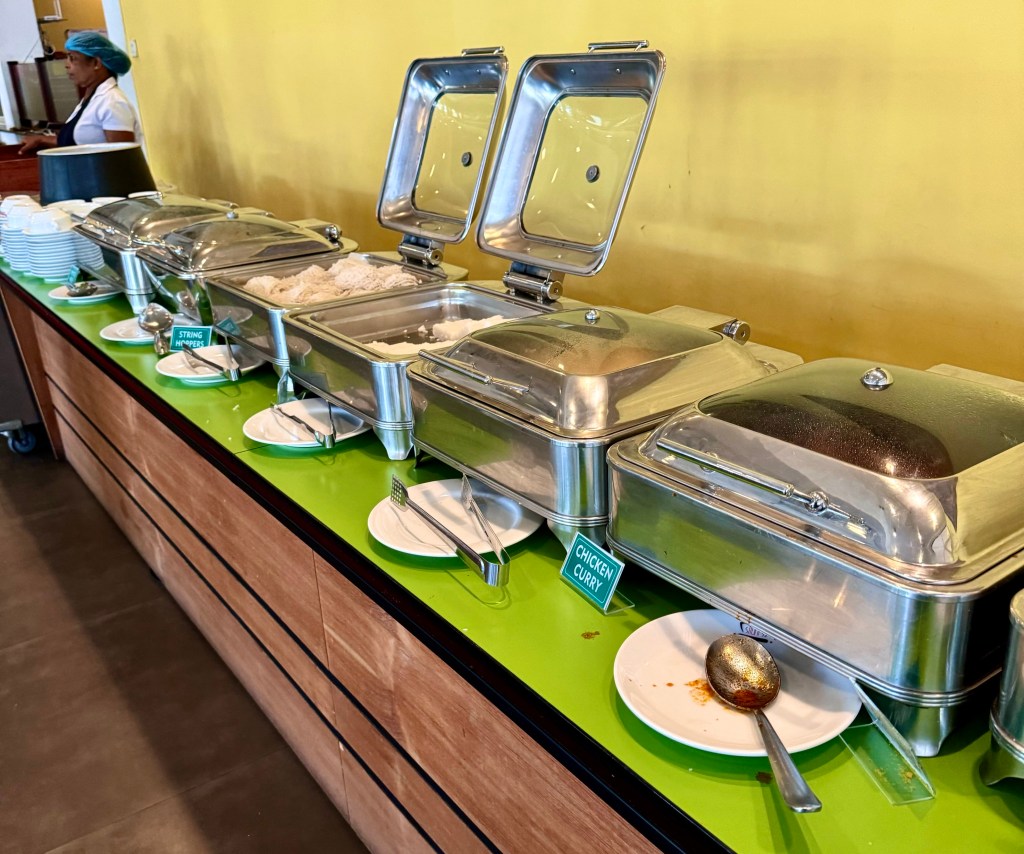
It started by Winsor inviting me and our driver to a marvelous breakfast buffet in an upscale restaurant where I had string hoppers and egg hoppers, chicken, hard roti, yellow dal for breakfast. The cost was about 1500 rupees or $5 apiece, maybe one third of the cost of a similar breakfast for which, after a fight with Winsor, I paid.
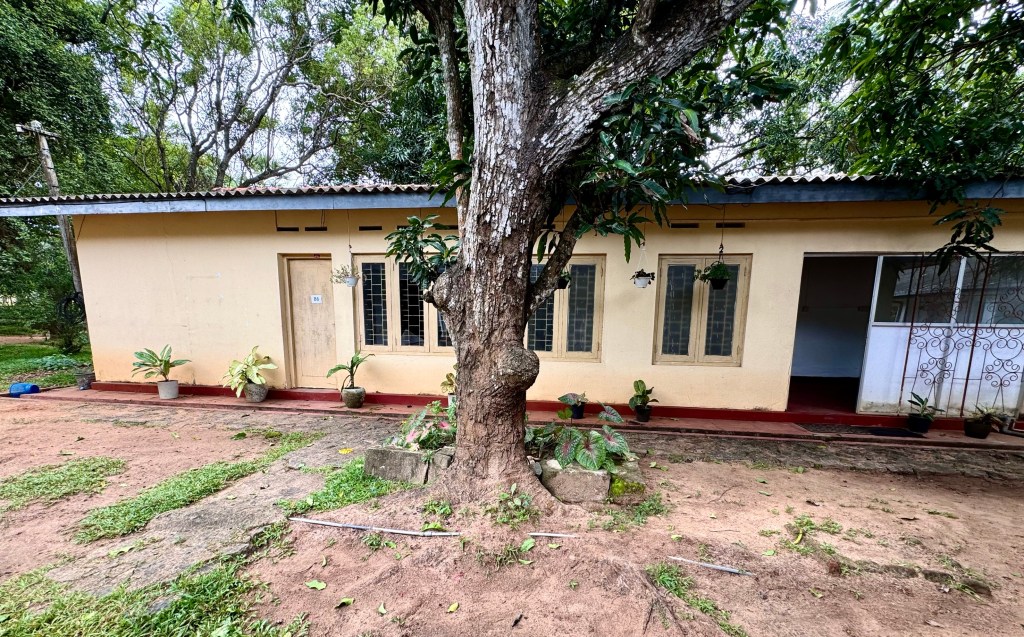
And then were were off to the Sarvodaya Anuradhapura District Center where Winsor for years was the director and where group after group of students stayed in dormitory rooms, men in one room, women in another with meals on the floor in the large open air assembly area.
The Sarvodaya (awakening of all) Shramadana (community labor) Society was founded in 1958 when Ari Ariyaratne took a group of his students from an elite Colombo private school to work with their hands in a village work project. He realized that this had an impact both on his students and on the rigid society structure of the village. He left the private school and dedicated his life to village empowerment. Community work projects were a way to empower villagers.
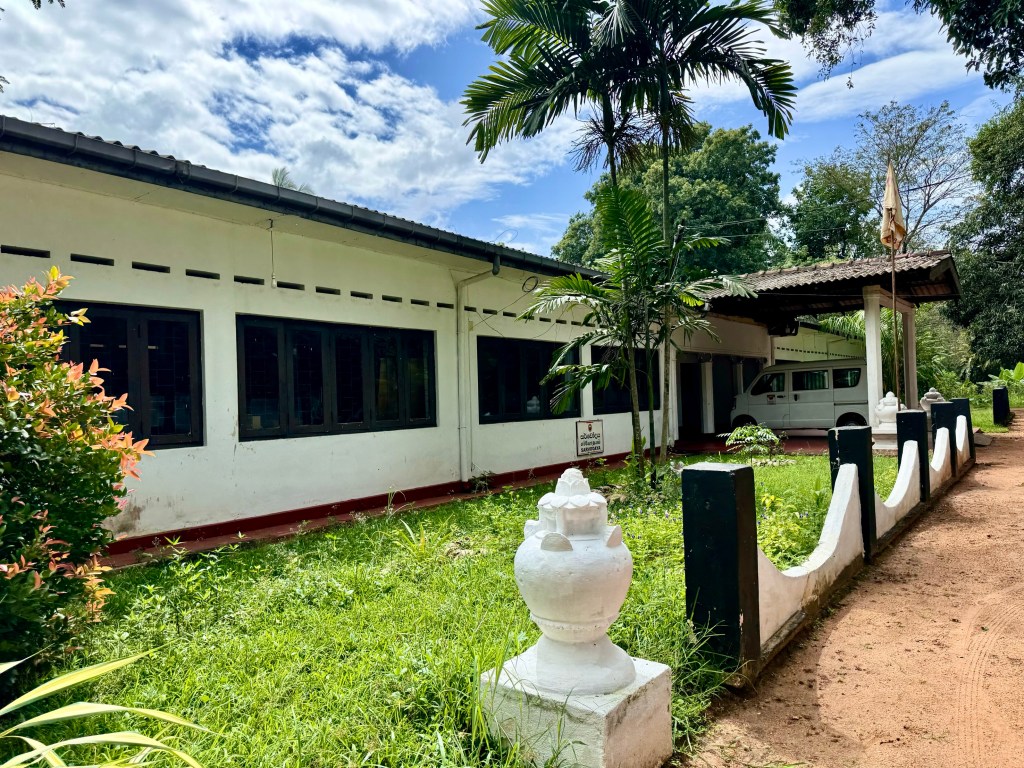
In his office E.N. Subasinghe, the Anuradhapura district coordinator, gave a detailed overview of Sarvodaya activities in the Anuradhapura District, stressing that Sarvodaya is constantly changing with the times.
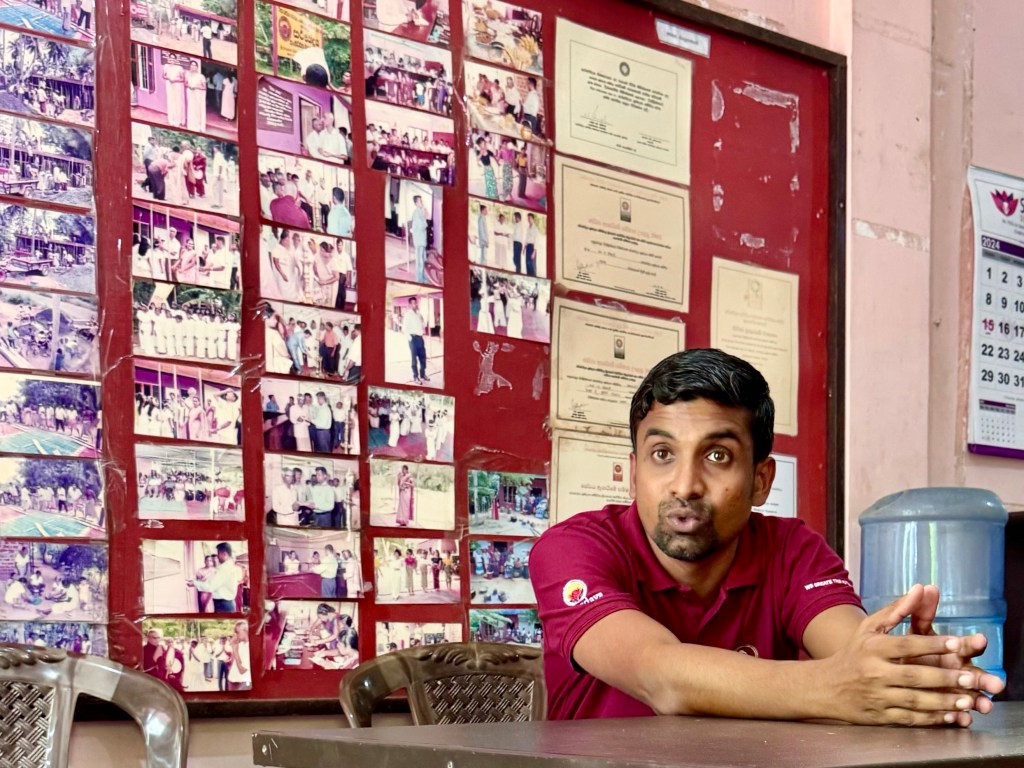
They have always focused on village empowerment and for years during the Tamil civil war were involved in peace activities. But now with advancements in village infrastructure and because of the the financial crisis caused by first the pandemic and then the banking crisis during the past two years which has caused widespread hunger they have shifted their emphasis to nutrition programs for malnourished children and because of the poisoning effects or intense fertilizer use are promoting organic agriculture and the growing of new crops.
The impression that I got was that, Sarvodaya, which I had observed in the earlier years with its intense idealism and volunteerism is maintaining its energy and is as energetic and dedicated as it ever was.
For the next two days I was driven from Sarvodaya village to Sarvodaya village to get an idea of the ways that Sarvodaya as an organization supports the empowerment of villagers. But it was not the technical aspects of the projects so much as the people who were touched by Sarvodaya that touched me and would touch any western person who was lucky enough to experience what I experienced for these two days. What is so impressive is the way that ordinary villagers, often housewives, are dedicated to projects that would make their village a better place.

The first stop was at a small Sarvodaya Bank at the edge of the main road going through the village. Here a committee of villagers led by the bank manager, a village woman, make small loans to fellow village farmers or their wives as investments in projects by which they can grow vegetables or earn money from innovative projects.
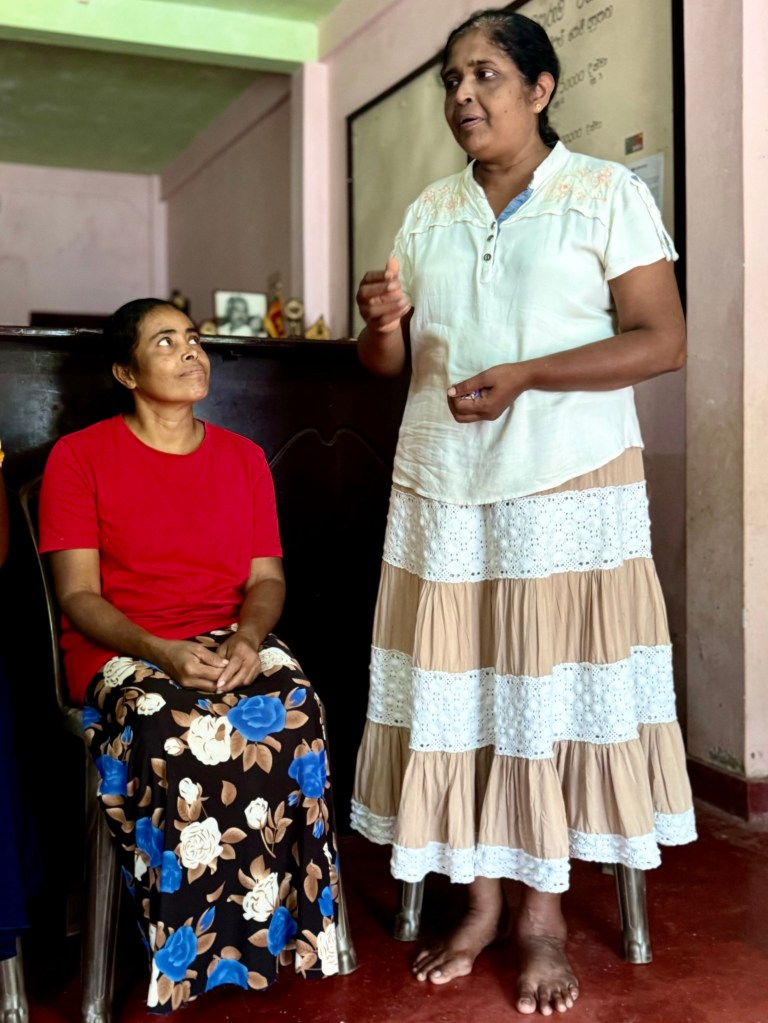
The bank manager, the head of Sarvodaya in the village, the preschool teacher each got up and shyly introduced themselves in Sinhalese. They were proud of their work, often unpaid, and of what Sarvodaya was doing in their village.


Then we visited a nearby farm of about a half acre where a woman was growing a room full of mushrooms for sale and saw and innovative drip irrigation method being used in a bean field.
 BILLYBABA’S WANDERING
I’m again enjoying your blog – now in Sri Lanka. Meanwhile, we’ve got a little snow and below freezing temperatures here in Charlottesville, Va. Quite a contrast. Snow 2024 January https://photos.app.goo.gl/AykAmzpnLiDu38R5A That link may not work on your system or copy it and put it online.