TOUR OF MONTEVIDEO

After walking in circles around Santandi street where I am living, then looking out the window of a bus on the way to the airport to pick up my jacket and not seeing much that was interesting and then walking and walking to a Sunday market to a outdoor street market that I couldn’t find and walking and walking the next day to a museum that was closed I’ve given up exploring on my own and have signed up for a couple of tours.
The first was a tour on Wednesday of Montevideo in a van that held about 15 tourists. The tourists from Uruguay spoke Spanish, the tourists from Brazil spoke Portuguese, and a few of us understood only English. The guided tour was in all three languages. But this meant that the woman guide had to rush through descriptions in all three languages as we passed by each place of interest. The problem for me was that her Spanish accented high speed English was so fast that I could only understand about every fifth word. In fact, most of the time I couldn’t tell whether she was speaking Spanish, Portuguese or English. She looked me in the eye as she spoke English, I nodded that I understood, and off she went again in whatever language came next without my understanding a thing.
Part of the tour was to places that I had already walked to and for the rest so much that she said flew over my head that there were only three things I picked up about Montevideo.
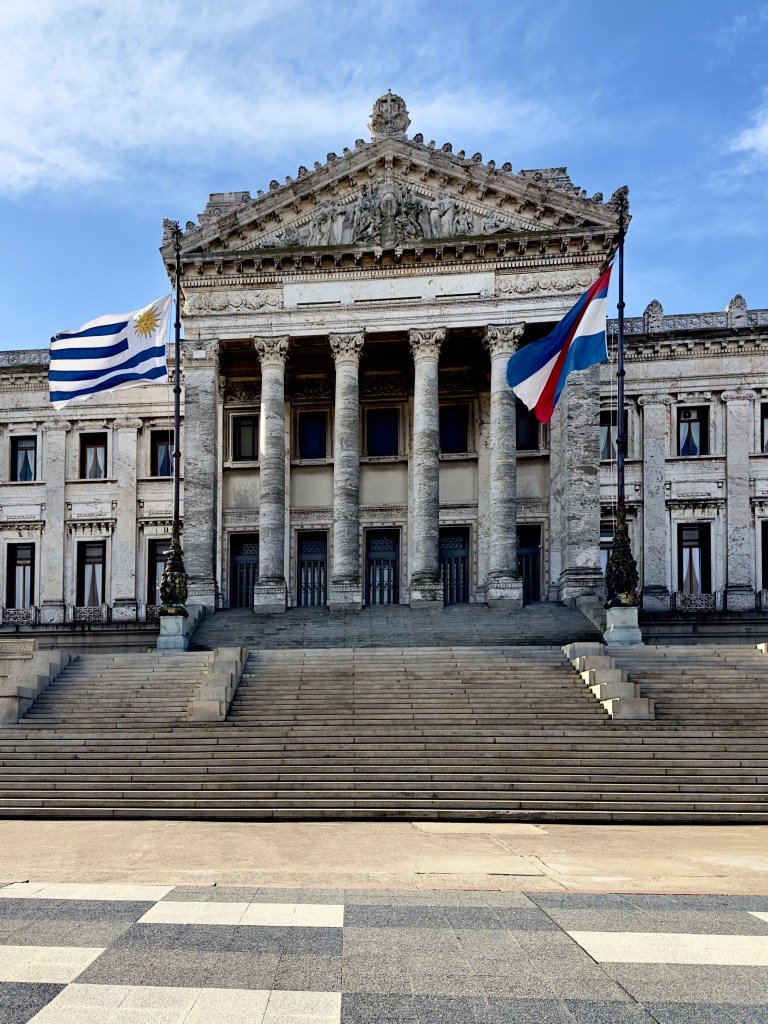

One was the main governmental buildings and the Parliament building built, maybe, around 1830 after independence. It is a heavy classical building as are many of the buildings in Montevideo.
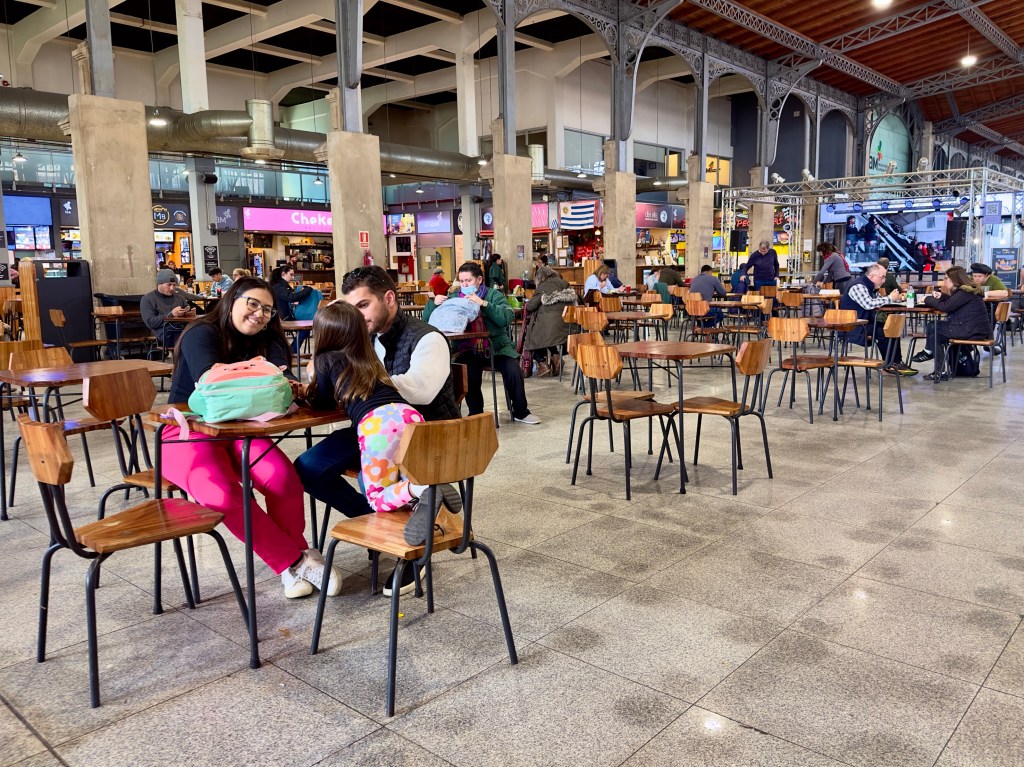
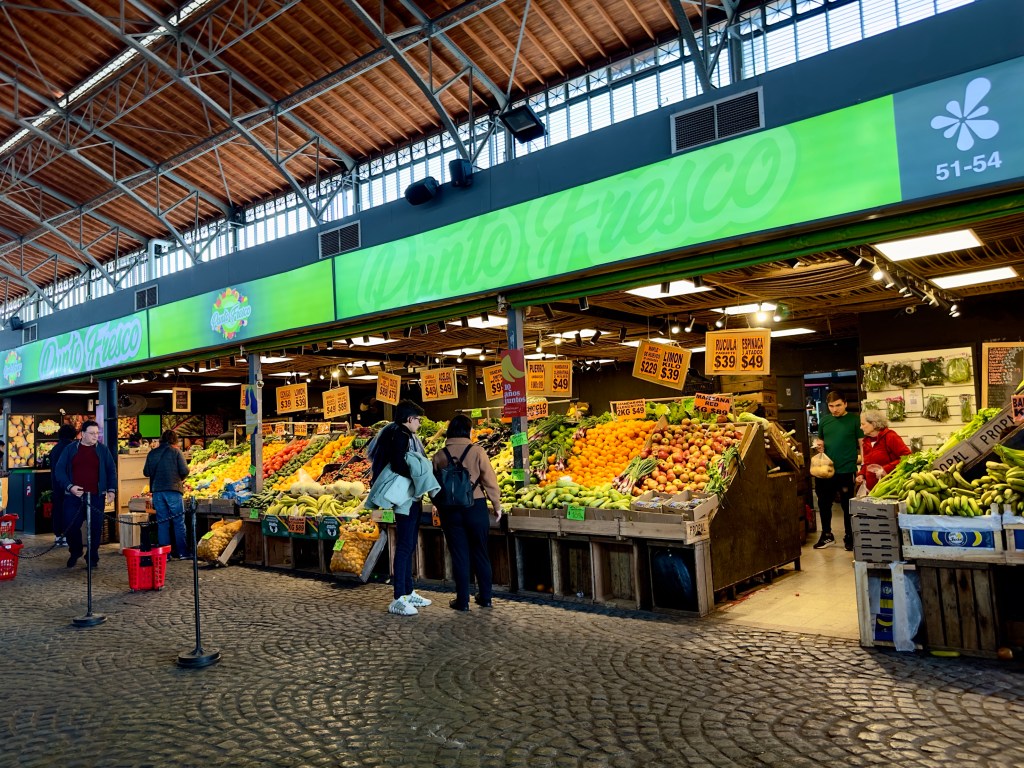
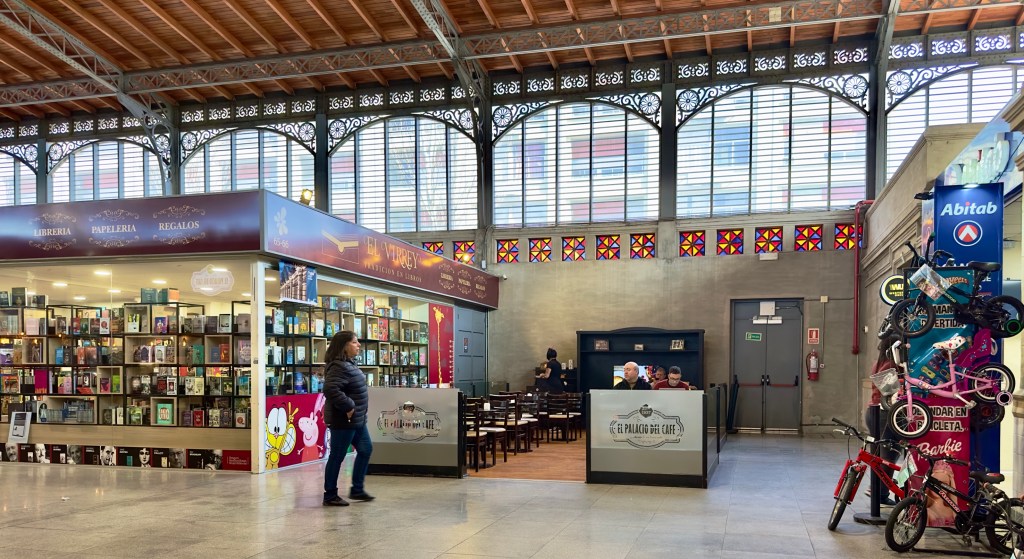
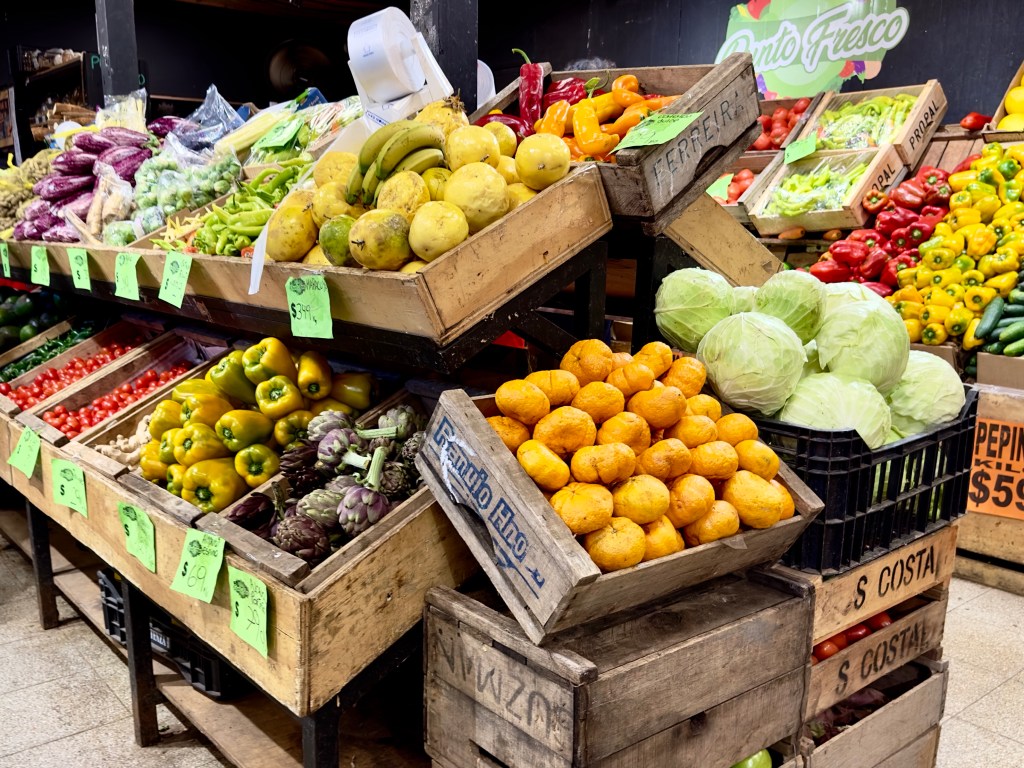
The second place we visited where we had a long stop was an indoor market, Mercado Agricola de Montevideo, which had all kinds of modern shops, many restauarants and two very colorful vegetable and fruit stands.

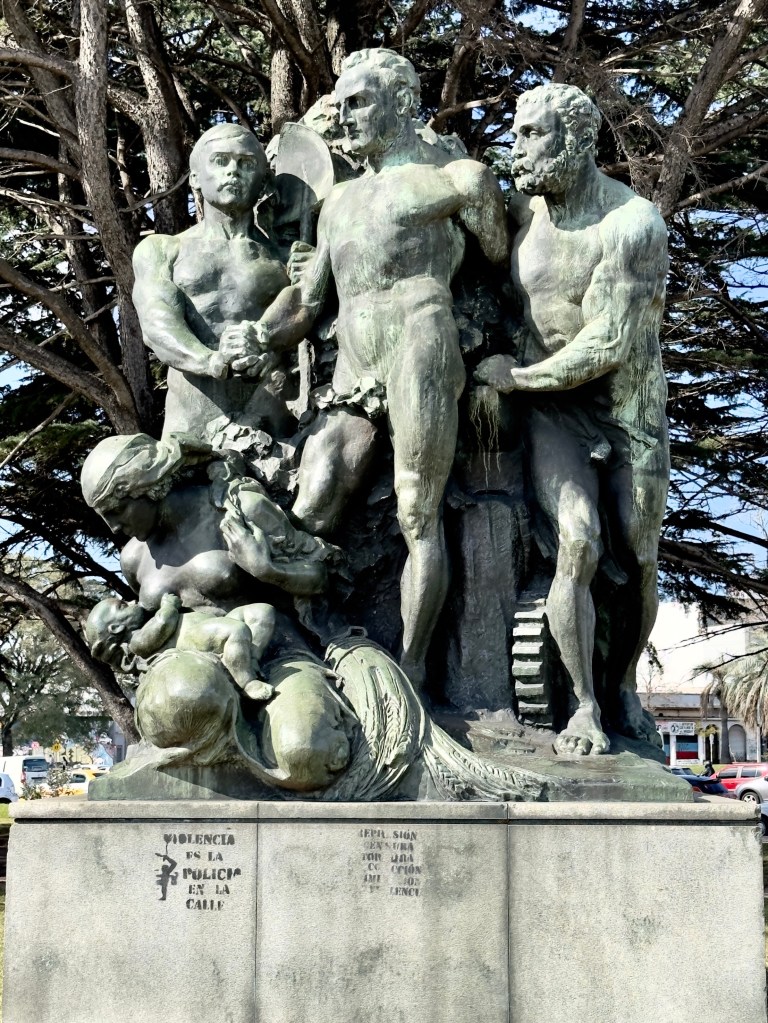
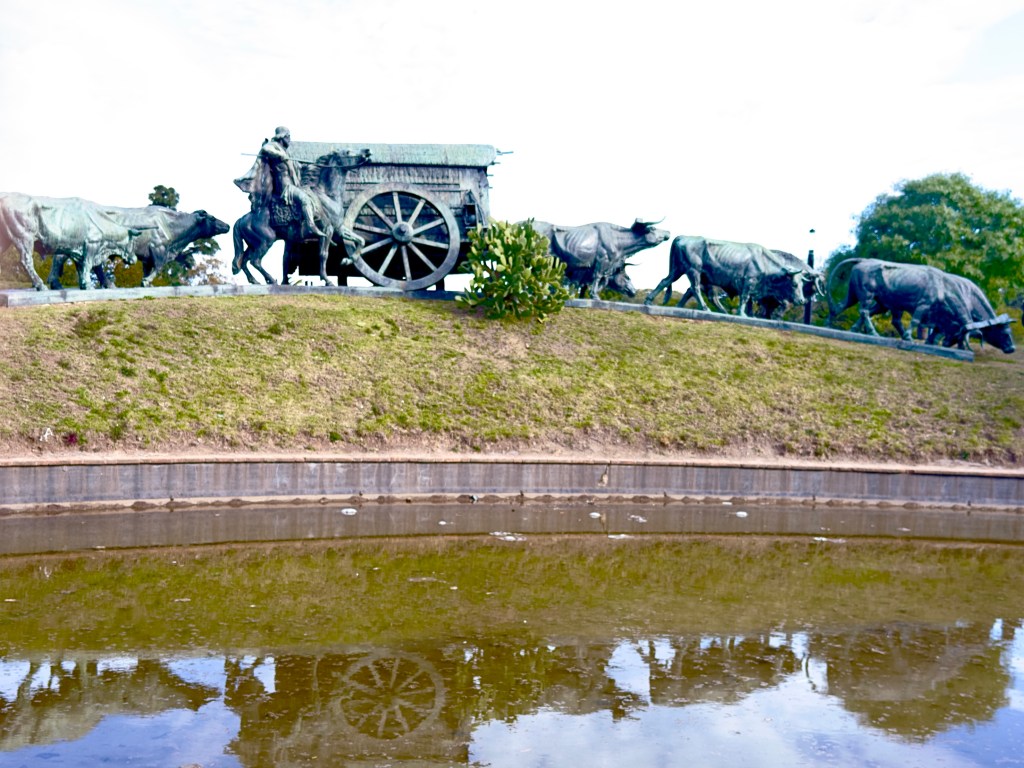
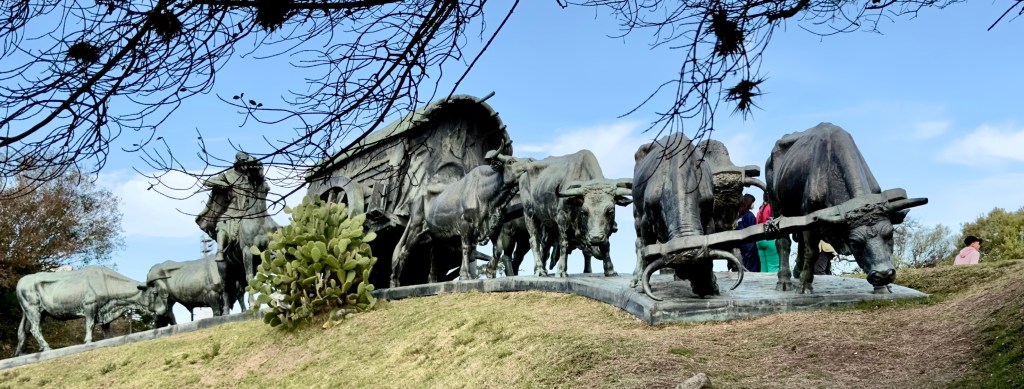
Then we stopped at the most famous statue in Montevideo, a monument to Uruguay’s pioneer settling by Europeans.
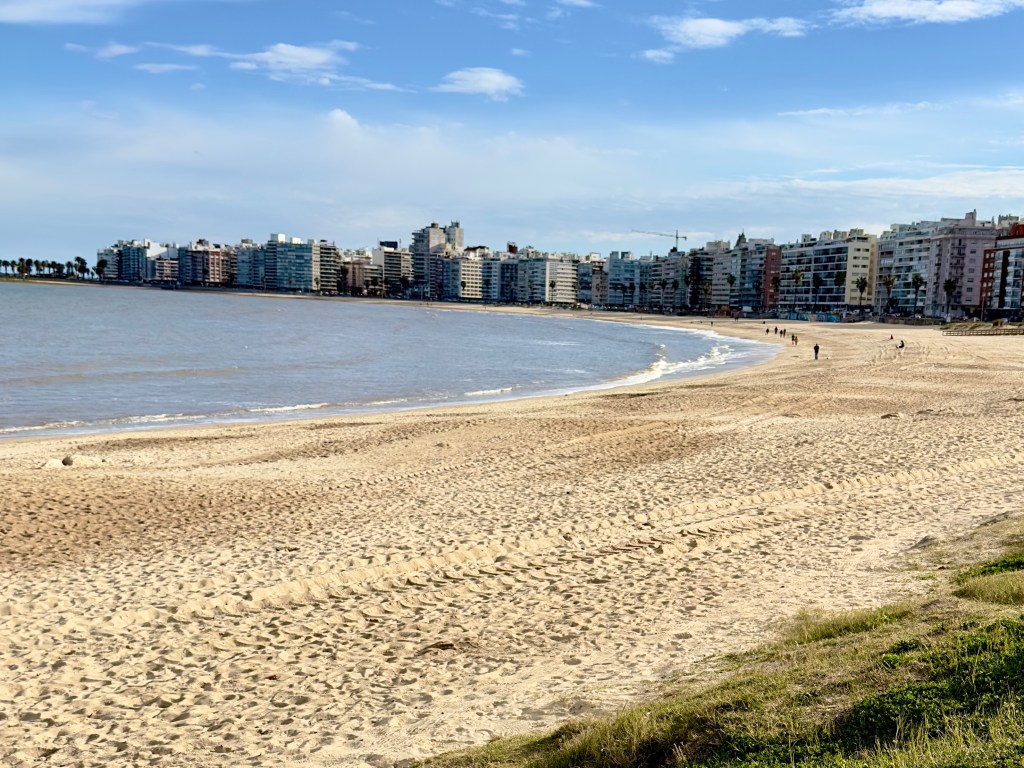
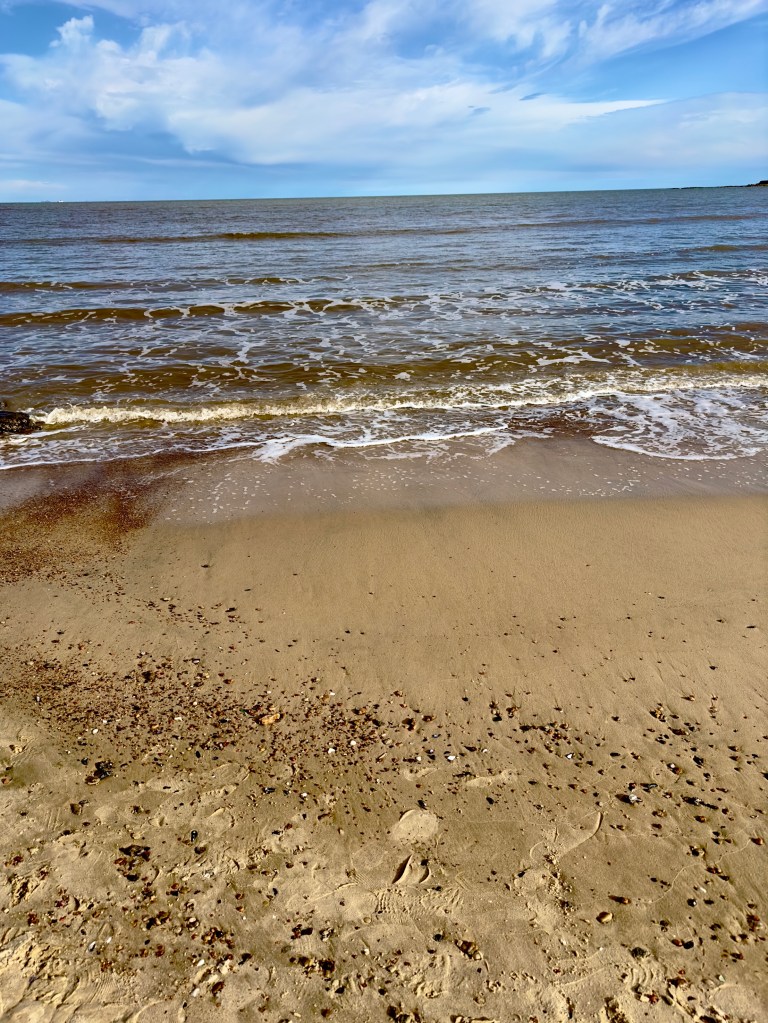
And finally we stopped briefly in the Posito neighborhood at one of the many beaches on the river Plata, so wide at this point that you can’t see the other side and it seems like the ocean.


 BILLYBABA’S WANDERING