ANTHROPOCENE
I am half way through The Rise And Reign Of The Mammals which started 300 million years or so ago, way before the rise and fall of the dinosaurs but only a brief period in the history of earth. Like most people, I guess, I‘ve been vaguely aware that the earth has gone through a number of enormous changes, a number of periods with names ending in cene: Paleocene, Eocene, Pleistocene, Holocene and then a whole lot more with various other names, all of which are hard to remember. And I remember hearing as a child about the wild notion of tectonic places and slowly through my lifetime the certainty that the land mass of the world was once a giant continent, Pangea, that split up with the continents floating away from each other or bumping up against each other and forming mountains, including the Himalayan mountains where I was born.
But all of this, the vast eons of time in which the climate was first warm with palm trees at the South Pole and then very cold with glaciers covering much of the United States, seemed interesting but irrelevant.
But reading this book makes me realize that human history has taken place in a brief period in which the climate as we know it has been relatively stable.
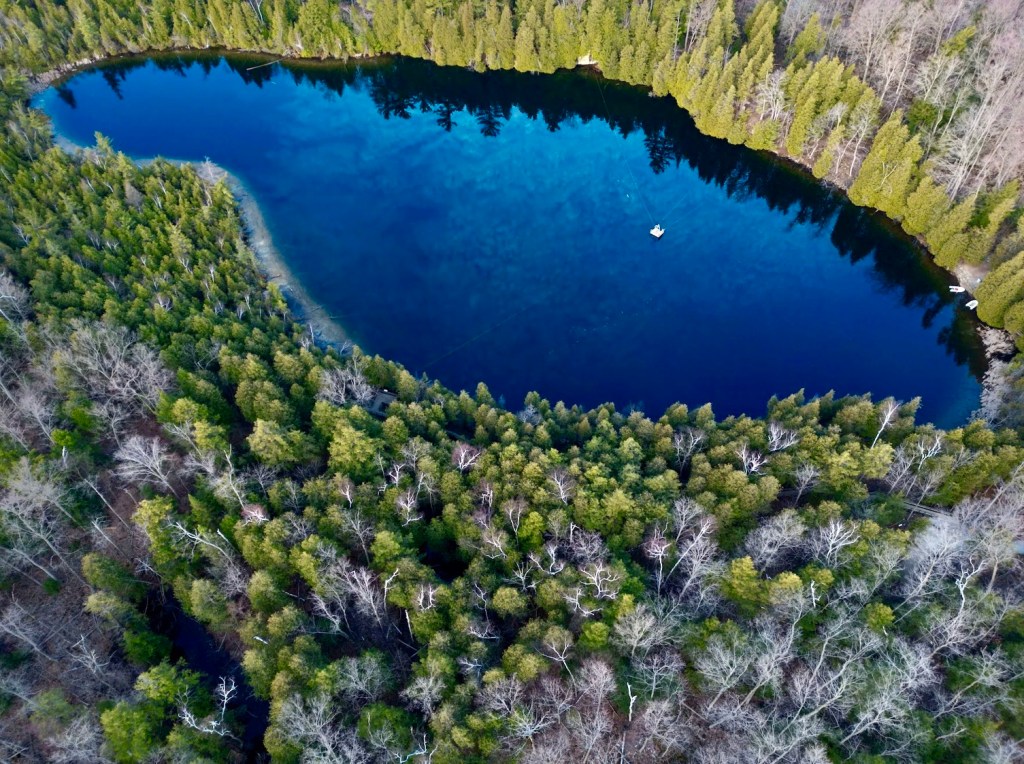
And then this week I read an article about Crawford Lake, near Toronto, in Canada, a quiet lake that on its bottom has a record of the microscopic debris that has fallen into it year after year with clear markers between years, a record of 1300 years. And what the record reveals is that for 1300 years there was relative stability, but that since the 1950‘s there has been a rapid acceleration of changes in the mud record revealing the world to be a changed place. It is a record of the changes climate scientists have been pointing to, the clear marker of one more enormous change already underway, in the earth‘s environment, a change that happened since my high school days. We are in a new “cene”, but this time Anthopocene, human caused change. This is a new environment with change potentially as large as, and much more rapid than, any other change in earth’s history. The 11,000 years of relative stability is over and we are entering a new unknown period.
Of course, this is what all the warnings about global warming are about with evidence all around us that the climate is changing, becoming warmer, becoming more violent. I have heard of that again and again and believe it.
But this book on the rise of the mammals puts that in context. Other rapid changes were caused by meteorites, by volcanos, by shifting landmasses. Often this has led to mass extinctions and the rise of different forms of life. With each change the slow process of evolution through chance mutations, most of them dead ends, has led to the formation of new species and the vanishing of old species. Almost all life that has existed on earth is now extinct with only the latest versions existing in the world as we know it. There is no master plan, evolution is not leading anywhere, only through the slow, slow process of adapting to present changes has evolution progressed and led to the types of animals and plant life on earth today. Global warming won’t change that process of slow change over eons, in a new age some forms of life will survive, usually the smaller forms, cockroaches and mice and worms and bacteria and viruses. Earth will go on with change after change and if human life becomes extinct along with most forms of life as we know it, the evolutionary process will continue. Tectonic plates will continue to slide around, moving at the speed of my fingernails growing, the earth will get hotter and colder, and one period of millions of years will be followed by another period of millions of years. Of course one catastrophic change or another, some enormous collision or the flaming out of the sun, could mean that all life, which developed by chance and becomes extinct by chance, will vanish. But more likely older species, and likely us among them, will vanish and new species will take our place.
And all of a sudden, for me, this vast expanse of time in which the world has shifted from one environment to another, with us only being briefly here, does seem relevant and, for me, overwhelming. It makes human existence seem very fragile and in the wide expanse of the time and space of the universe almost a dream, real enough to us now, but hardly real at all and turns our importance into a life giving illusion, allowing us to act, however foolishly, as if our human existence is permanent.
 BILLYBABA’S WANDERING