OLD FORT
The town of Old Fort is about twenty minutes away on Interstate 40. It is just over the Black Mountains which rise above the town of Black Mountain. At the top of the hill is the continental divide with the Swannanoa river flowing westward into the French Broad which eventually joins the Mississippi River flowing down to New Orleans. This mountain was also the first barrier to the westward movement of the early pioneers.
The Cherokee, who lived in the Swannanoa Valley had made a treaty with the British that British would not settle beyond Old Fort, but with the final defeat in 1784 of the British and American independence, white settlers no longer felt constrained by the treaty. The first settlers were the family of Samuel Davidson. They moved from Old Fort to the Swannanoa Valley and the Samuel Davidson was lured by native Americans up Jones Mountain, just across the street from my house, by taking the cowbell off his horse and luring him up the mountain with the sound. He was shot and killed and scalped and the next day buried there. When the wife heard a gunshot and saw her husband’s gun still over the fireplace she fled with her child and a slave servant back to Old Fort. This was the beginning of the settlement by whites in Western Carolina. Old Fort Mountain was also a barrier to the western extension of the railroad because the way over the mountain was almost impassible for a train, requiring too many tunnels.
There are two roads to from Black Mountain to Old Fort. One is six lane Interstate 40 and the other is old route 70 which is a narrow winding two lane road that hugs the curves of the mountain, looping back and forth, that is unpaved for a good part of the way through a national forest. I have lived in Swannanoa for 50 years and my Sunday trip with Susie was the first time I have gone to Old Forth by the back road. Sunday morning was clear and the sun brilliant shining through the new spring leaves. We met almost no one on the road. It was breathtakingly beautiful.
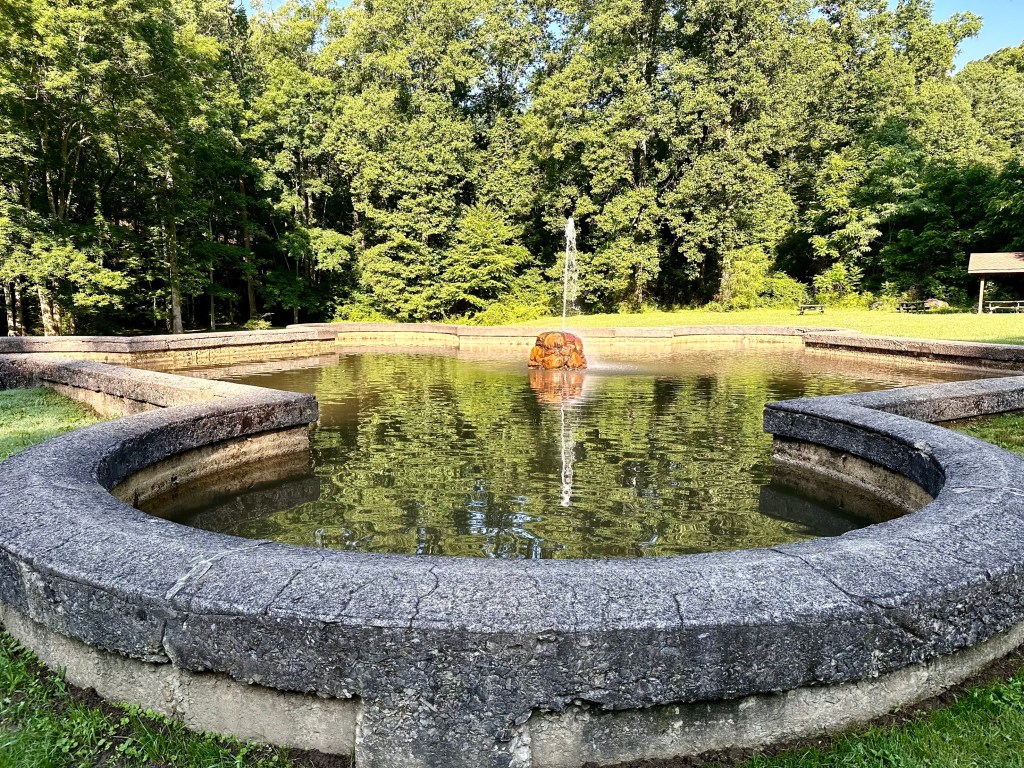
When we got to the bottom of the mountain and the road leveled out we came across Andrews Geyser, a fountain in a large sculptured pool with the water shooting up in the middle. It has been dry lately so the fountain, which comes from a dam in the stream 500 feet higher than this fountain, was only 15 feet high. The water pressure is usually enough to send the fountain up 80 feet on a good day.
We stopped to take some photographs and to read the signs to discover why the geyser was here. It turned out that Colonel Alexander Andrews was the Vice President of the Southern Railway and one of the men responsible for the building of the tunnels and long incline that connected by rail Old Fort with Asheville and points west. The fountain was a feature of the Round Knob Hotel built on the same site which later burned down. The fountain fell into disrepair and a rich New York friend of Colonel Andrews paid to restore the five sided basin and fountain to honor his friend and his achievement in building the railroad through this very difficult stretch.
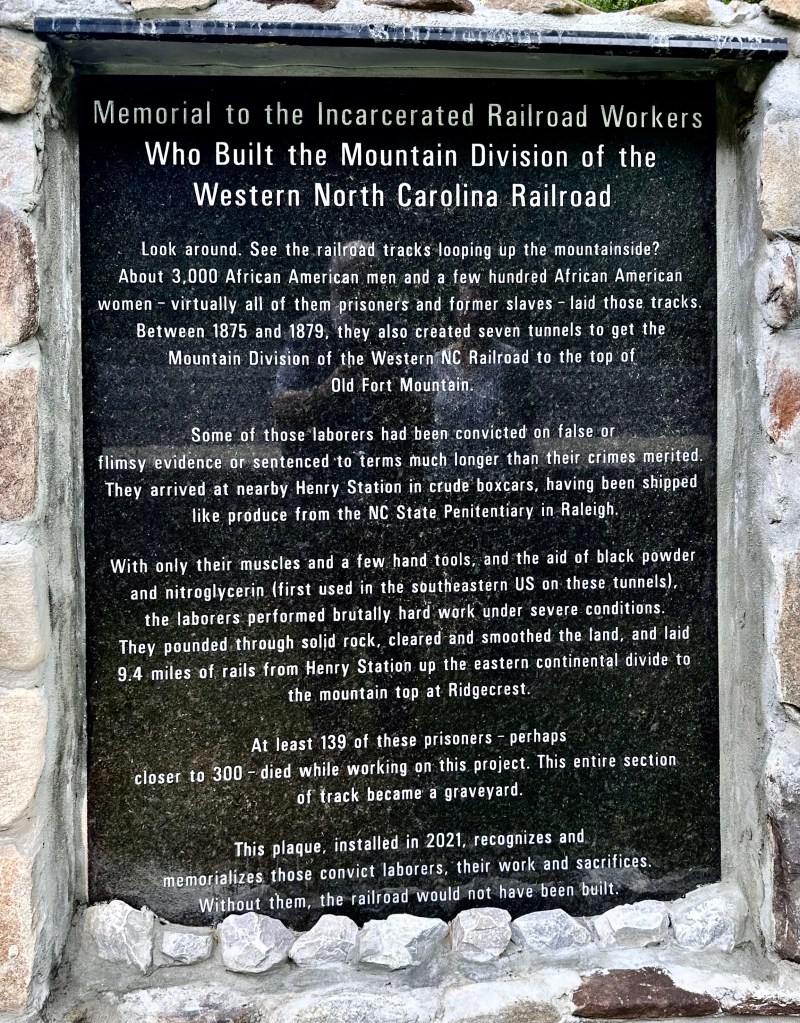
But then we came across another two sided stone memorial which looked brand new, only a year or two old. And these two plaques told the rest of the story, conveying the dark side of Colonel Andrews achievement.
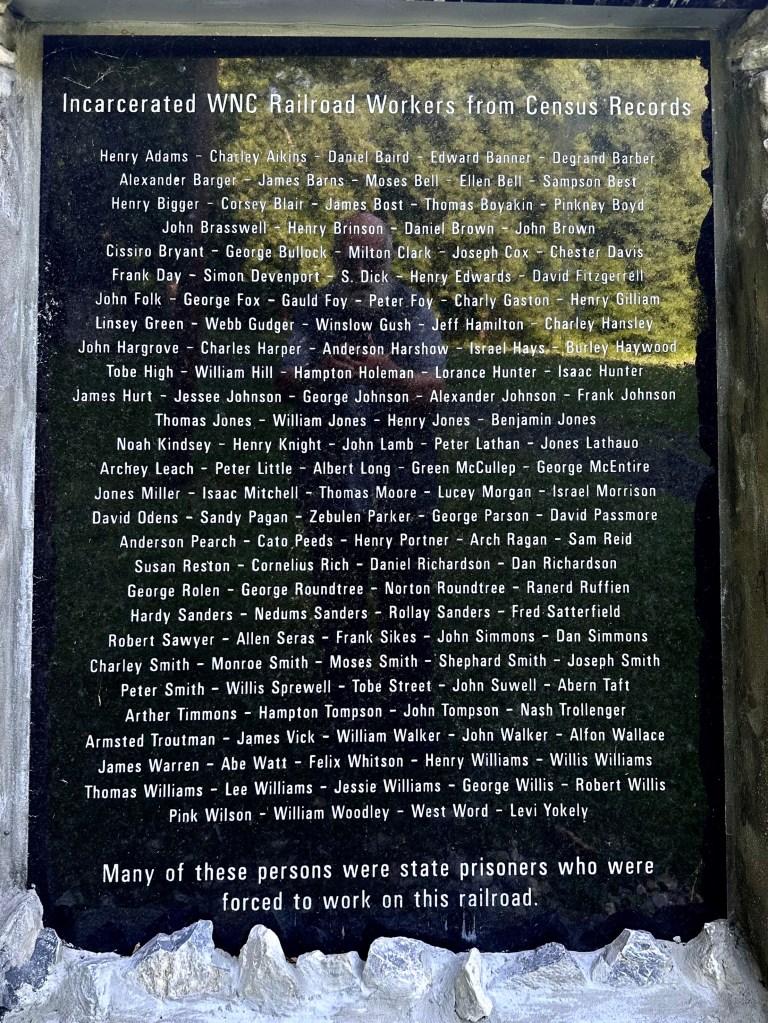
Between 1875 and 1879 3000 African American men and a few hundred African American women, virtually all prisoners, often jailed on the flimsiest of charges, and former slaves were forced to tunnel by hand through solid rock to build the tunnels and clear the incline for the railroad. This plaque honors the 139 known names (probably nearer 300) of the people who died building this stretch of the railroad turning the railbed into a graveyard. This dark history is mentioned in song and now honored by plaques while the man who supervised the project is honored by the Andrews Geyser.
After the Civil War when slaves were freed, the incarcerating of African Americans without evidence of crimes was a way to continue to have free slave labor and is the shadow under which Blacks lived and still do today, an issue I wondered about yesterday.
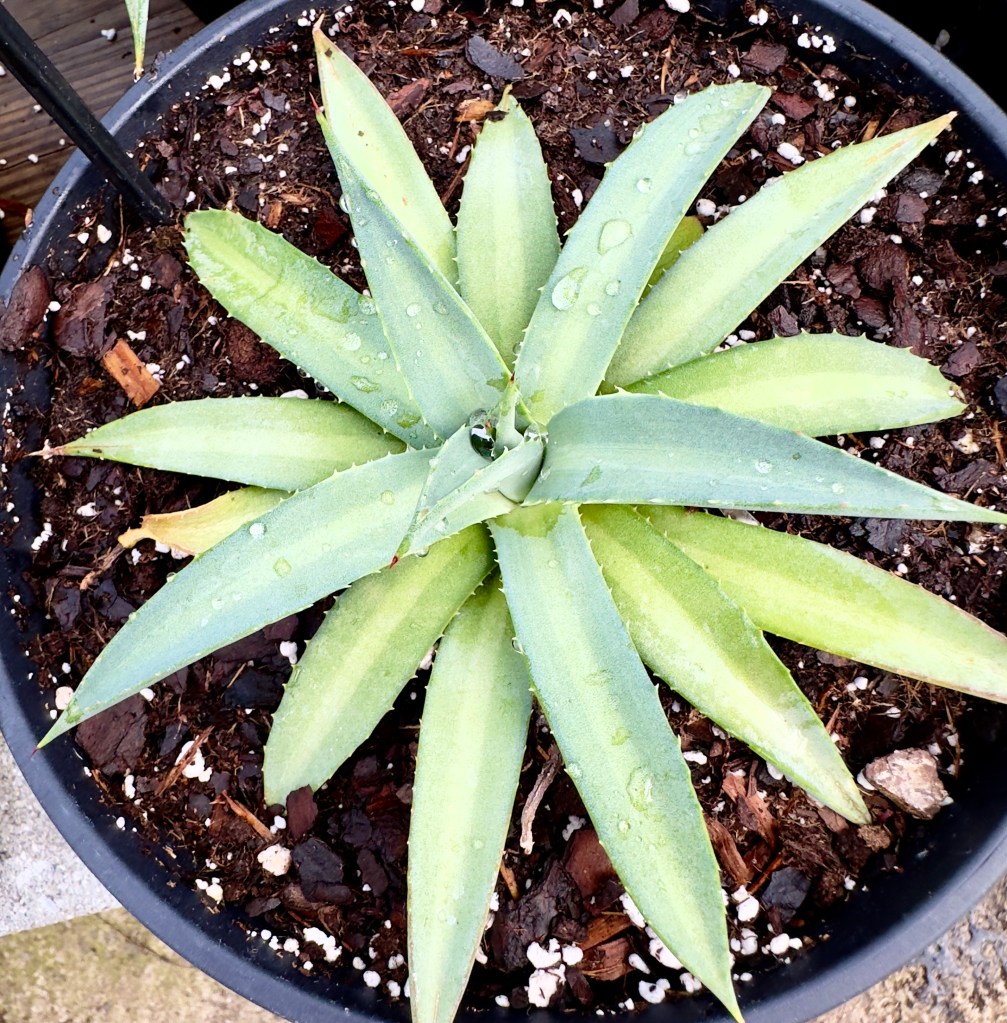
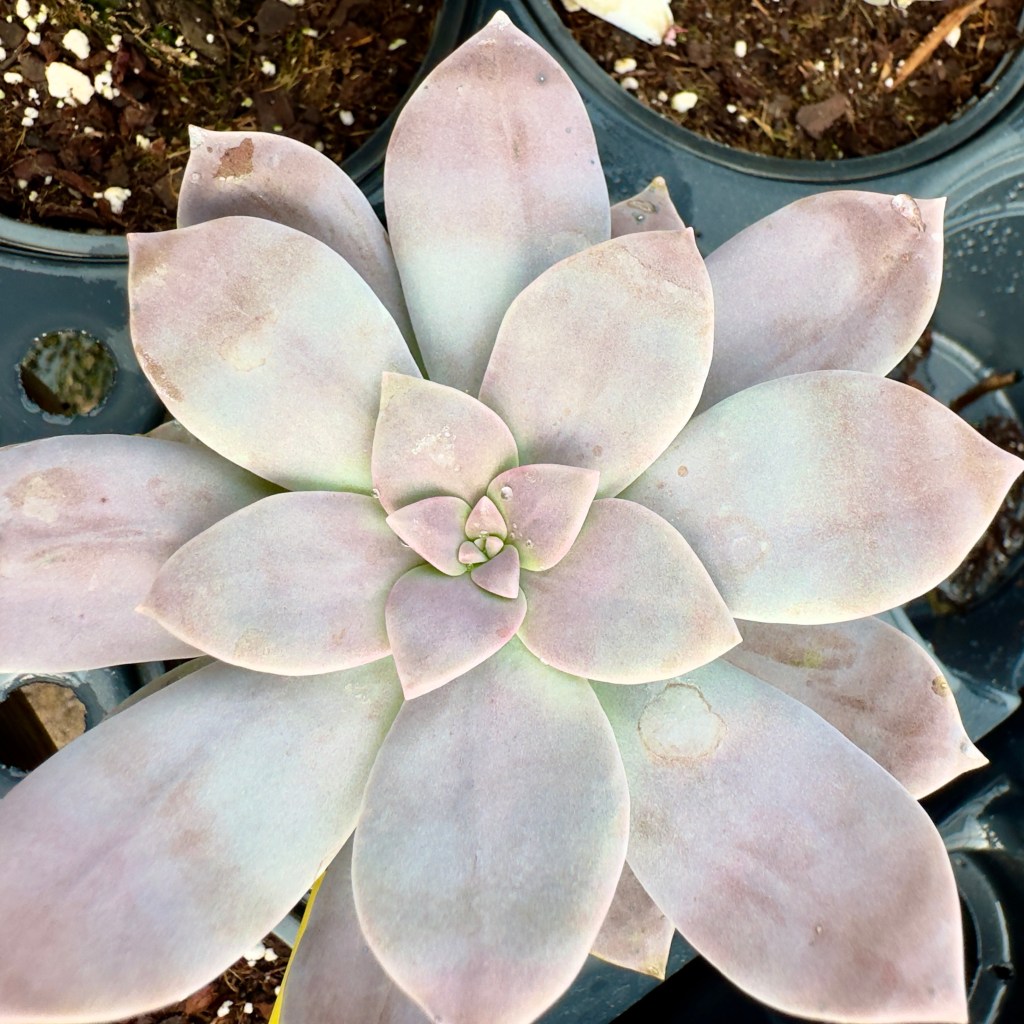
After this disquieting stop we continued down the beautiful road to Old Fort and on to Painter’s Greenhouse where in an enormous greenhouse there were plants with leaves of every color and shape.
It occurred to me that the tourists staying at the Restoration Hotel and spending a fortune in Asheville, could have had a free ride through a nature wonderland at no cost at all. Here are a few of the leaves.


 BILLYBABA’S WANDERING
What’s going on is that I put these in the wrong order and when trying to reorder them I got completely confused and had to start all over again with the last five. I hoped they’ are in order now. Thanks for paying attention. Bill