CONCEPTUAL ART
Last night my daughter Susie sent me a link to a segment of the PBS Newshour which she had just seen on You Tube. It was a response by Sarah Sze to the show of her work which is now being exhibited at the Guggenheim Museum in New York City, a show that I saw exactly two weeks ago.
Look and listen for yourself here.
Susie had heard about this exhibit and it was one of the reasons she wanted to go to New York City with me two weeks ago when I was going to visit my Indian dentist who was briefly in New York. So we went along with LeeAnn Torn to see the Guggenheim and then to walk through Central Park.
As I reported on my May 9 post I looked at Sarah Sze’s exhibit and was completely unimpressed. I was much more interested in the exhibit by GEGO in the Guggenheim at the same time. I was also delighted by the children’s exhibit which I reported on May 15 and the impressionist paintings in the museums regular collection.
So now that I’ve watched the interview with Sarah Sze at the Guggenheim and have discovered that she is a MacArthur award winner and that she has exhibited in a number of major museums I suddenly feel like a complete dunce for having dismissed her so easily two weeks ago. I’ve described her exhibit to friends as a piles of junk, a confusing mixture of digital devices and everyday objects. I didn’t read the descriptions of the different installations carefully, but if I had I’m not sure I would have understood what she was intending to state in each installation. And I’m not sure that I would feel differently now if I had.
The problem is, I think, that her’s is a completely different kind of art from the art that touches me. Or rather, she is intending to touch people in a completely different way from the way that the children were doing in their drawings or that the impressionists touch me through their paintings of which I will put examples of here.

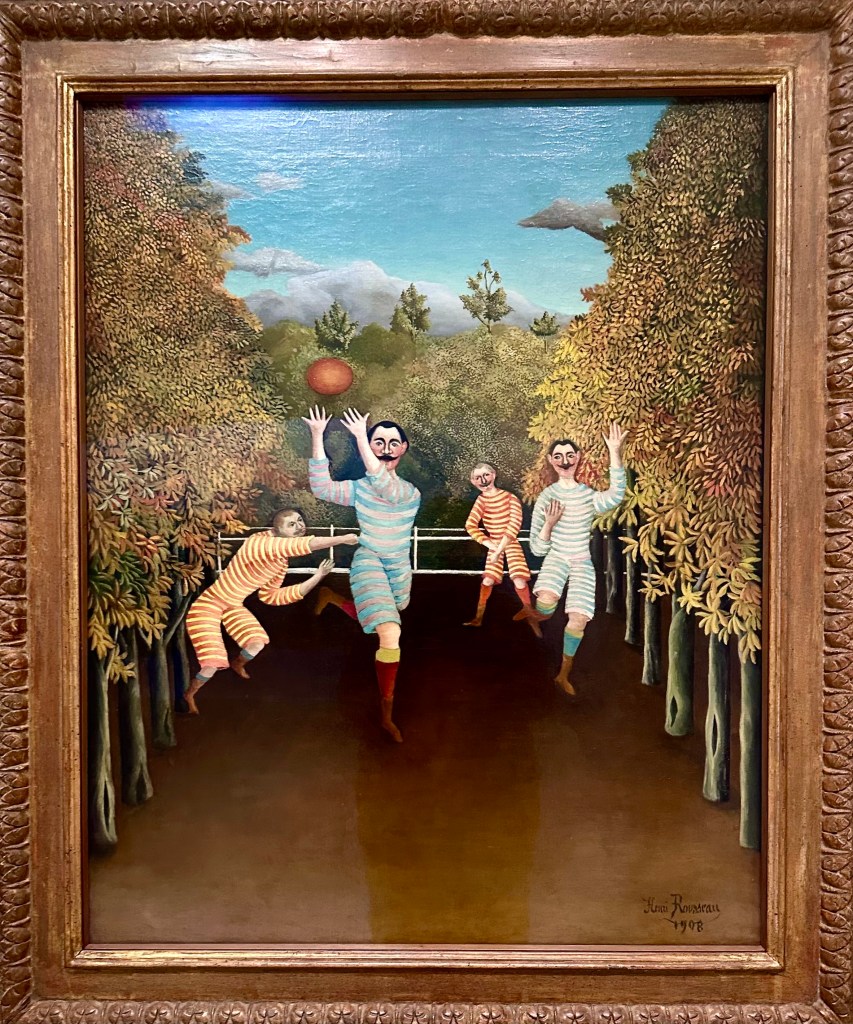
I’ve run into this issue once before when I attended a high level photography workshop that I was invited to in Athens by a former student, Adrianna Ault, who was in Athens attending the workshop when I happened to be in Athens returning home from Paros where I had been for a month.
At the workshop most of the photographs by the participants which were discussed by the whole group were not photographs that touched me in any immediate way. They weren’t like any of the photographs that I have put into these posts for the last year or described yesterday. The things that I photograph are things that touch me viscerally in a sensual way. Sometimes I am struck by beauty or by the painful poverty of a person or by something absurd or shocking in their appearance or simply by the presence of the person, an old man or a child that touches me in some visceral way. The act of responding to something or someone or something that touches me intensely through a photograph is pleasureable for me. Most of the times when I photograph the photograph doesn’t turn out well. I enjoy taking the photograph but discard it later. But a few photographs, maybe one out of twenty, touches me later when I look at it. I don’t worry about whether someone else thinks the photograph is good or not. The stimulation I feel when I take the photograph or look at it later touches me and that is satisfaction enough. It is my visceral response that matters.
But that was not true of the black and white photographs discussed at the photography workshop. What the photographers at the workshop were trying to convey was a concept, a meaning, an irony of come kind, a statement about the world. The photographs were often about banal things and on the surface they didn’t touch me at all, they depressed me. From the perspective of the participants at the workshop I was completely missing the point of the photo essays that they were working on. In fact, the things that touch me with their beauty or intensity, the photographs I responded to yesterday, would be considered sentimental and almost cliche by the workshop participants. They would dismiss my photographs and probably not pay much attention to Henri Cartier Bresson or Richard Avedon or the photographer who touches me most intensely, Steve McCurry. Their’s was a different kind of photography completely, conceptual photography not sensual photography, not photographs of things or people but photographs of an idea.
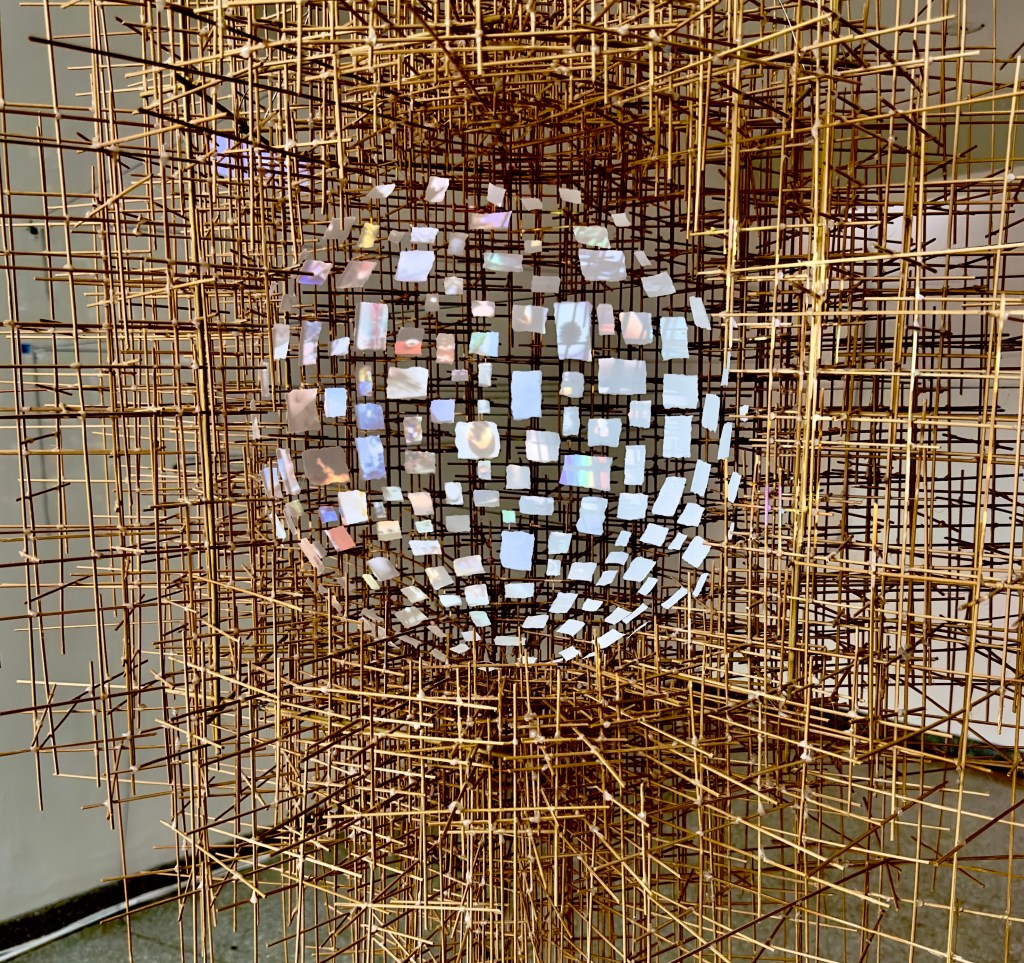
And I think the same is true of Sarah Sze’s installation and why I didn’t respond to her installations at all but did respond to the impressionist paintings and the paintings by the children that I saw in the museum

When Sarah Sze explains what she is doing in the PBS segment I realize what she is doing but to get anything out of her exhibit I can’t wait for a visceral response because my visceral response is one of puzzlement or dislike at the banality of the things that she puts together. Instead I have to be touched by the concept, the idea, that she is trying to illustrate. Hers isn’t abstract art, it is conceptual art, art that conveys a concept or a perspective or an idea.
So it was very good for me to see the PBS segment and to at least have a concept of her concept. But until I am touched as intensely by her concept of time or her concept of images in our heads in a image filled world I won’t be able to really appreciate her installations. I have to learn to see in a new way and want to learn to see in a new way. Until that happens I won’t respond very fully to either conceptual photography or conceptual art. Until then I’ll just be left out of both.
 BILLYBABA’S WANDERING