KATHE’S WINSEN
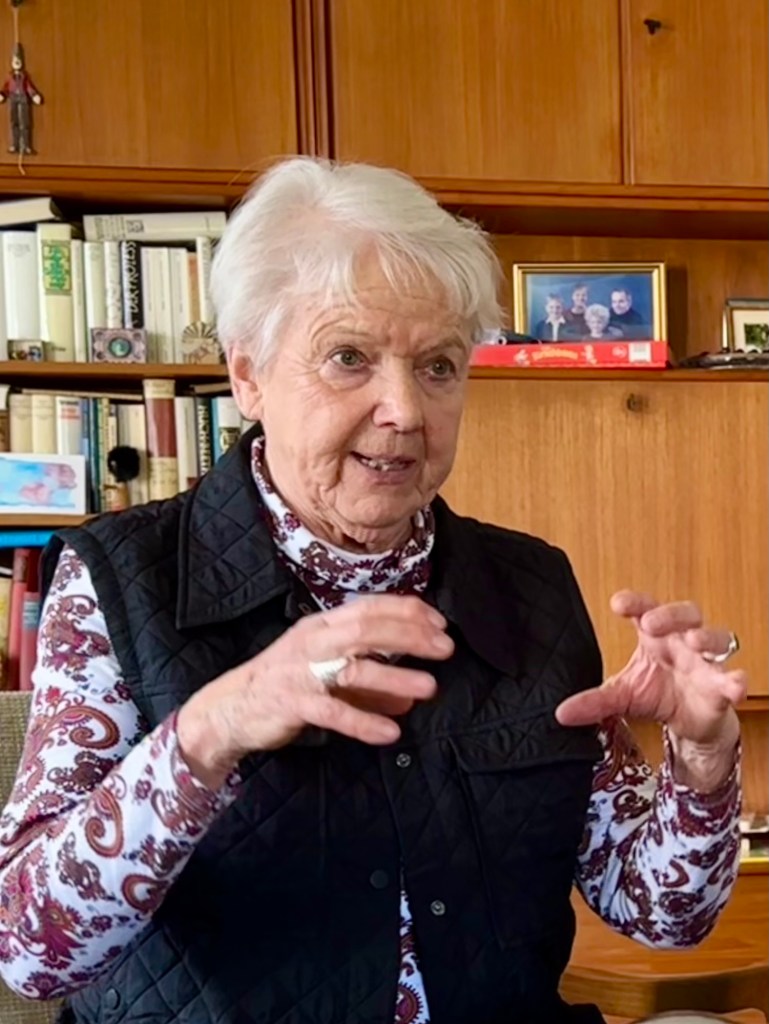
Winsen on the Aller is where my wife Kathe grew up. She arrived from Bergen when she was about ten when her father was made Director of the Realschule. The school was newly built in 1950, five years after WWII when Germany, but not most of Winsen, had been devastated. During the war children attending the German more elite version of high school, Gymnasium, had had to go by train to Celle each morning. The train back home that Heinrich, Elke’s husband, had been on, had stalled half way so that most of the students on it, including Heinrich, had gotten off and walked. When the train started up again it had been strafed by British planes and a number of children and soldiers on the train had been killed. It was on April 14, 1945. Their graves are in the Winsen cemetary.
In that summer when Kathe arrived in Winsen feeling alienated by the new school she had met and become friends with Elke Funkat. That was also the summer that Kathe’s older brother, Bernhard, 17, drowned in the Aller River while cooling off after a hard day’s work in an plant nursery. The fast friendship then with Elke, became a lifetime friendship with weekly hour long Facetime calls during these last ten years, with the final Facetime call happening with Elke and their friend, Ulla, who were out on a walk, two days before Kathe died. They receiving a Facetime call from Kathe who had suddenly revived with intense excitement for a few hours. The three old friends sang German hymns together for a few minutes until Kathe tired and began to fade away again.
Elke’s family were very poor, refugees from East Prussia that was swallowed up by Russia, arriving in Winsen with nothing and being given a room in someone else’s house. Elke’s father was a prisoner in Russia for three years longer until 1948 and because he had been away in the German army during the war years Elke barely knew him when he returned. So Elke found refuge in Kathe’s house, often sleeping over on weekends. Now Elke has a beautiful house just across the street from the Realschule, where Kathe lived on the second floor with her family. Elke married Heinrich Mangels, son of the pastor of the Lutheran church in the center of Winsen. Heinrich later became an primary school principal. Elke and Heinrich hosted us for dinner the night we arrived by train from Paris. We are tied by our friendship with each other but centered on our love of Kathe, who died two years ago.
So that is why we are here in Winsen. In Winsen we are several hundred yards from the Realschule where I first met Kathe, 50 yards from the church where Kathe and Elke sang in the choir and Elke continued to sing in the choir all her life, with Kathe’s presence everywhere we go and Germany and German culture, which Kathe gifted me, (she remained a German citizen all her life) all around me from the brotchen at Vatter Bakery to the prewar fachwerk cross beamed houses still everywhere. Only a hundred yards away is the Schrader family plot in the Winsen cemetery which after 25 years, as happens everywhere in Germany, was dug up and cleared unless the family pays a very large renewal fee, which Kathe’s brother Volker decided not to pay, either for them or for himself before he died nine years ago. A birch tree that was there was cut down, but sprouted twin shoots. And it is around the birch tree that last year that Susie and I put Kathe’s ashes and is the spot to which Elke brings flowers when she comes to visit the Funkat family plot and the Mangels family plot and Kathe’s ashes final resting place, back home in Germany. Kathe also has a gravestone, which I share, in Swannanoa, an advantage of cremation.
So we are here in Winsen to celebrate and share the friendships and family ties to Kathe and her German upbringing. To read more about Kathe’s growing up in Winsen and her early years in Swannanoa read her autobiography, To Think That The Same Sun Shines Over All Of Us at kathemosher.com.
Tomorrow I will will write about a little about our family gatherings of the last few days.
 BILLYBABA’S WANDERING