COLONIAL MUSSOORIE AND THE SAVOY HOTEL
When I was a boy in Landour I rarely walked an hour to the other end of Mussoorie along the narrow ridge road along which the town was built. Landour, at the east end, was the first part of Mussoorie that was settled by the British. Before the British arrived there were scattered villages in the lower Himalayas clinging to the steep mountain sides. There were not flat places in the mountain and the village houses, often made of stone with slate roofs were narrow and cramped and dark and strung along the mountain side, probably in the proximity of a spring from which to draw water which was carried on the heads of girls and women to the house for cooking, clothes washing and bathing. Around the villages were narrow terraces, maybe 15 feet wide, dug out by hand with rocky soil, where vegetables were grown. The terraces were plowed by a wooden plow and oxen. Families would also have a cow or goats for milk. Over the years the gnarly oak forests around village had been gradually cut back with leaves to feed the cattle and the wood to cook with and heat the narrow dark houses. Every day the women would walk to the edge of the forest and bring back piled up branches with leaves or bundles of firewood, needing to walk farther and farther from the village as the hill was denuded. Now the hills from a distance are purple with small patches of trees near the top. It is cold in the mountains and often snows. In the summer the monsoons pour down making everything dank and wet and providing water for the fields. The villagers lived in dark at night but now you can look out from Mussoorie and see the glow of villages scattered amoung the hills.
This was what was there before the British came. The British were looking for cool places in the mountains to stay when the blazing heat of the summer plains was unbearable to them. The first settlement in Landour was at the top of the mountain, Lal Tibba, where the British built a hospital for soldiers recuperating from diseases or wounds on the plains where they were stationed. There was also a long building to house the nurses who cared for them. Gradually more and more cottages were built along the ridge of the mountain extending to the west from Landour. At the center of the ridge was a narrow road may 15 feet wide and on either side of the road a bazaar sprung up with the stores being two stories on the upper road side but with the mountain drop off on each side of the ridge so steep that the back of the houses were five or six or seven stories high. There was just this one road on which mule trains transported vegetables and milk in large circular metal containers with narrow lives stuff shut with leaves. My mother always boiled our milk, which left the village whole but by the time the milkmen had added some water at the last stream the milk took on a bluish tinge and you could see your finger an inch below the surface. We called it milk but it didn‘t taste like milk. Along with the donkeys and people carrying thing so town or back home again there were a large number of coolies who fastened a heavy loads by ropes on their backs attached to a strap across their foreheads which bore the weight of the loads. Slowly, slowly they would carry these heavy loads up and down the very steep mountain paths, often for miles. The only vehicles on this long narrow ridge road were rickshaws with two men pulling in front and three men pushing from behind. On the steeper narrow mountain paths a dandi with high sides and a narrow seat in the middle would hold a passenger with two men holding a cross bar on their shoulders in front and two men behind. For small children a kundi, a basket with a seat in the center would be carried by one man. There were of course no cars or other vehicles. One intrepid fellow rode his bicycle around the chakkar, the narrow road around Lal Tibba, without guardrails and a steep drop off the side of the road.
All of this long preamble was to describe the narrow ridge top road past the built up tourist Mussoorie to get to the other end of the Mussoorie bazaar, where large numbers of British civilians built cottages along with a number of hotels. There was a roller skating rink and movie houses, a growing number of hotels of which Hakmans was the height of elegance to 12 year olds and a public library in the Library bazaar. I heard of the Savoy Hotel but never visited it. It was right behind the library. It must have been considered off limits for boys of 12. But it turns out that it was the center of elegant British dances and parties and weddings through the early 1900‘s.
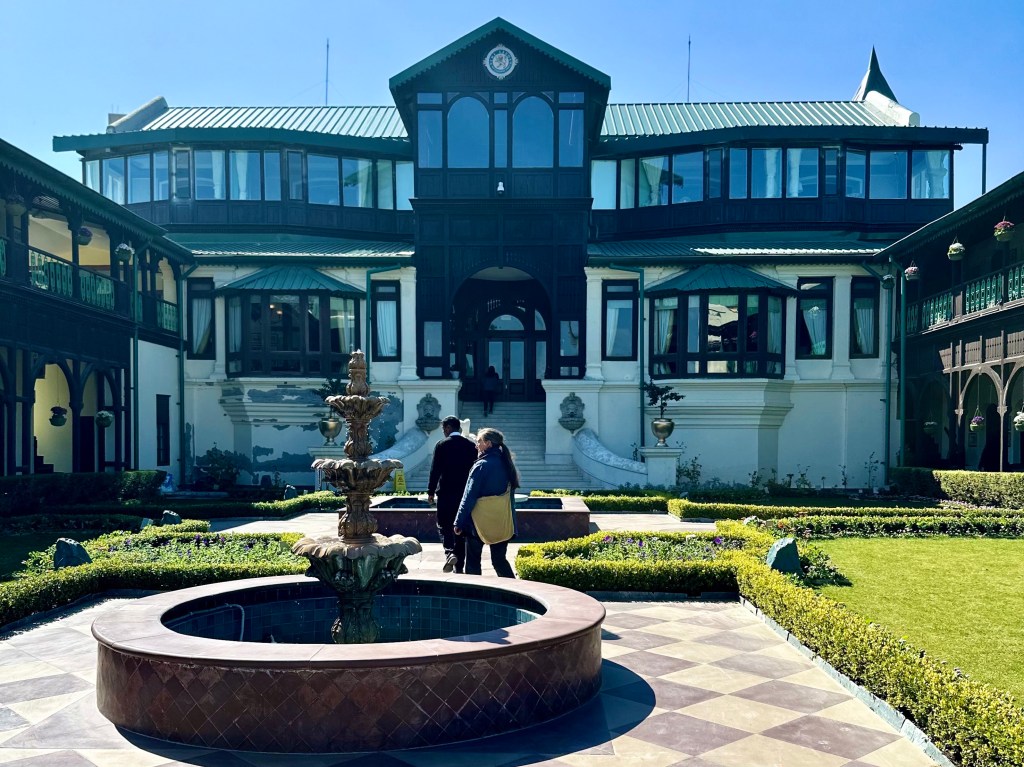
I had heard that the Savoy Hotel had faded after the British left in 1947. But when Mrs. Prakash said that we had to visit it, we would be amazed, we did. My was it elegant with a giant dining room, vintage hotel rooms, and all kinds of bars and smoking rooms and libraries. We arrived by taxi, saving the long walk along the ridge mall road for the way back.
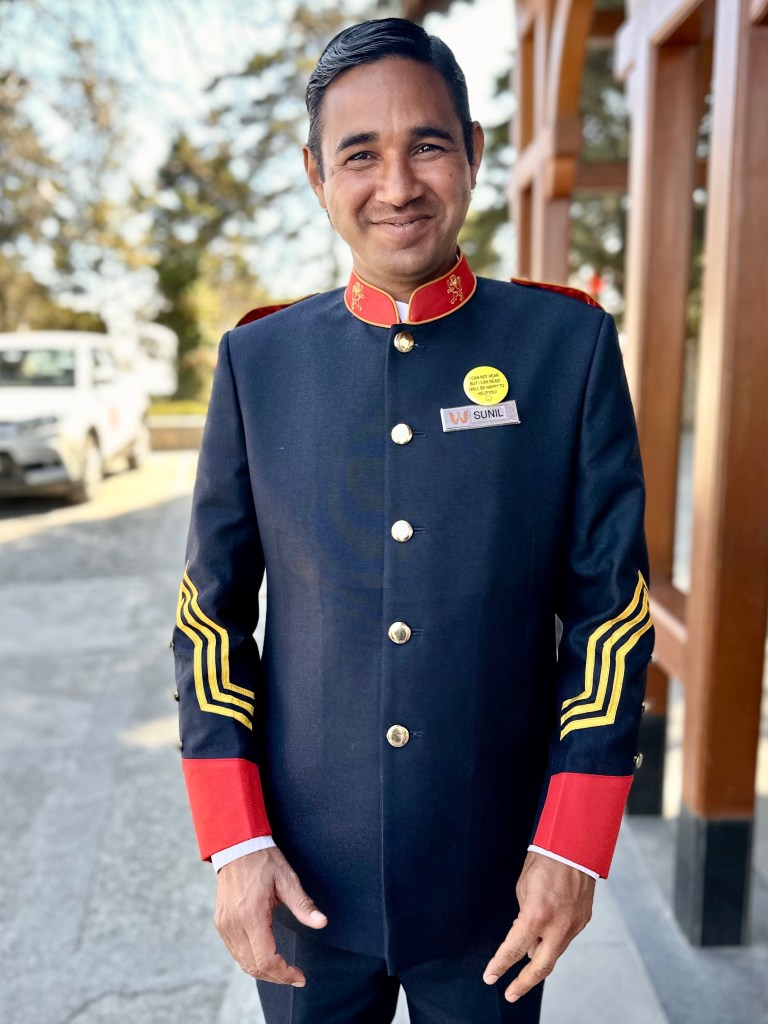
Immediately we were met by five attendants in zippy outfits that looked like the Siamese army with one escorting us all the way to the grand dining room, either as a sign of respect, in our droopy travel outfits, or to make sure we didn‘t create mischief along the way. And once in the dining room there were more attendants and picture taking with the attendants and even the cook. I ate from the buffet, twenty silver tureens stretch out on one side of the room with all kinds of Indian food and five desserts.
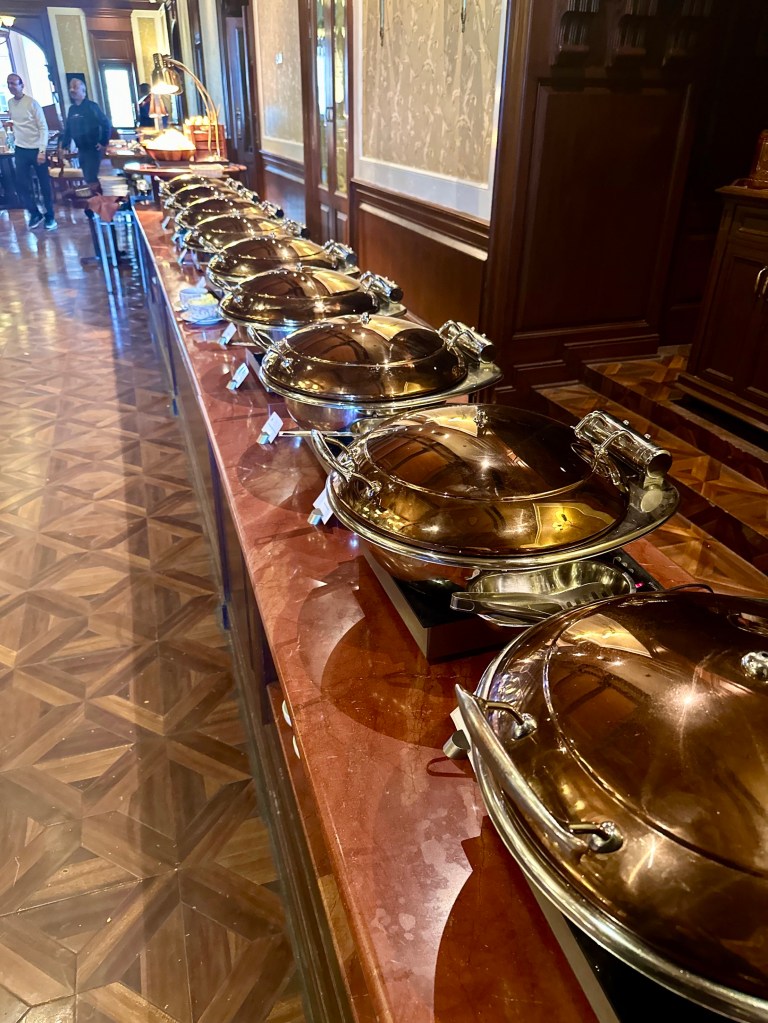
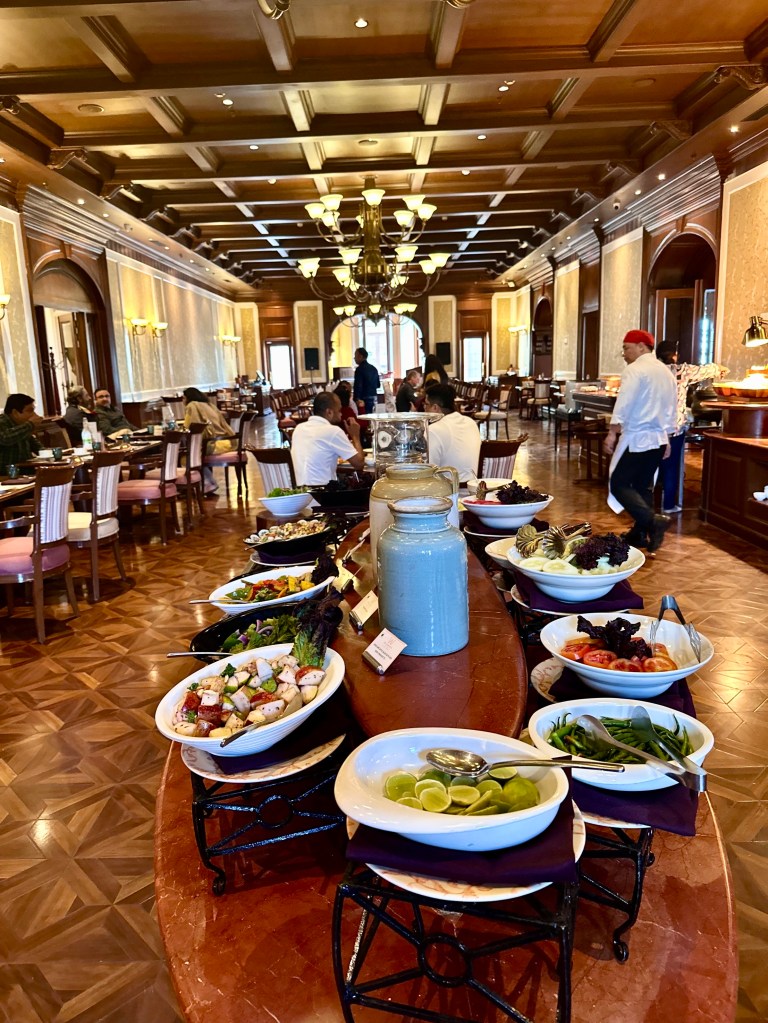
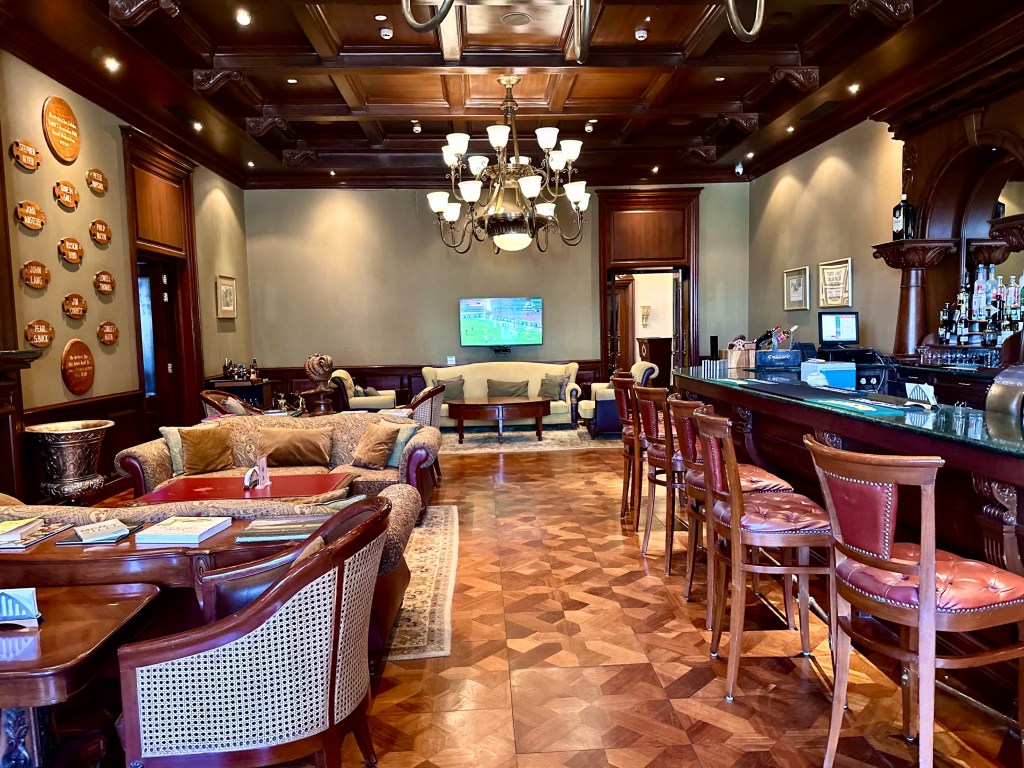
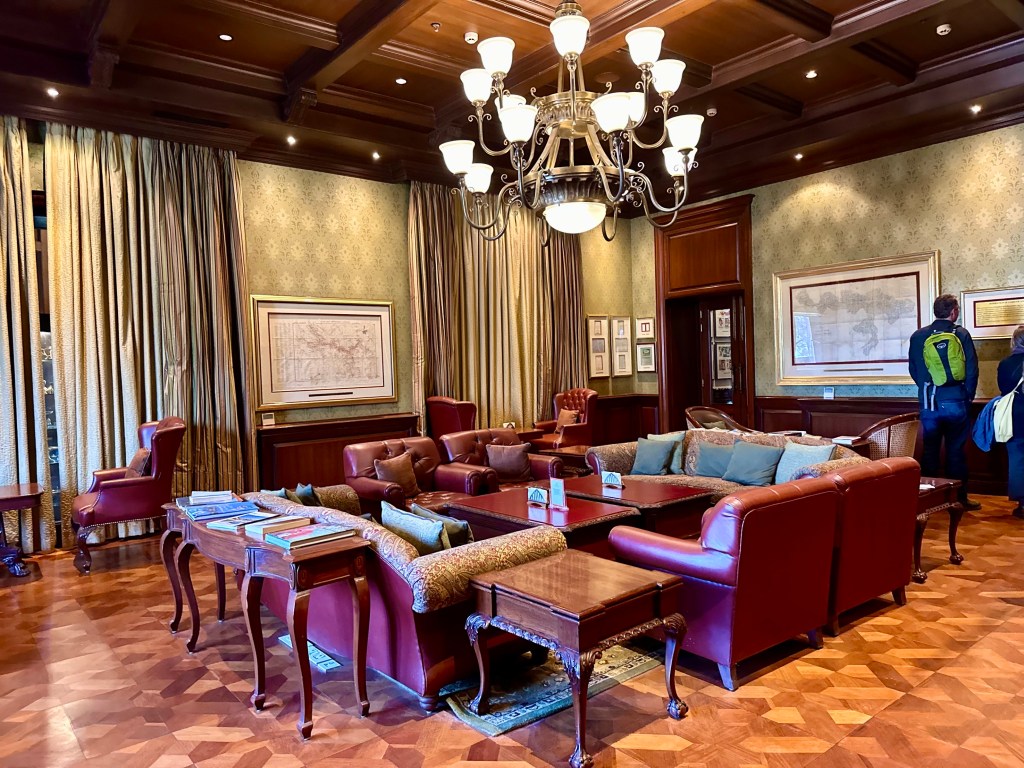
Susie said it was the best Thai curry she had had in India. The dining room was almost empty when we came in, but clear full when we left, we believe with wedding guests from a wedding the day before, who all seemed to know each other. We wandered out, examining the elaborate bar, smoking room and library with photographs of the old glory days and of famous people who had stayed there.
Finally as we walked through the courtyard and old style rooms with a wide verandah, we came to a garden house filled with flowers, a tea room, where we met the manager of the grand hotel. When I found who he was I offered to bow down and touch his feet with respect, he invited us to have high tea with him later in the afternoon. But we had a long walk to make and it was time for this 85 year old to nap. So we wished him well and were on our way.
 BILLYBABA’S WANDERING