LETTER TO MY FRIDAY OLD MEN‘S GROUP
RAMNAGAR FORT
Friday at McDonals was my one scheduled activity each week in Swannanoa, so I notice here also when it is Friday. And remembering the five of you sitting around the table in the River Ridge McDonalds is always such a great contrast to what I am doing here that each week it makes me wonder which experience is real and which is dreamlike unreality.
I just had one failed attempt to insist on Swannanoa reality while in Assi Ghat, Varanasi. It has been three weeks since I suddenly was released to fly and left abruptly although it seems as if I left months ago, so much has happened. But slowly in these three weeks my stomach has begun to rebel against Indian food, particularly chili in everything including Italian spaghetti and pizza. I have yearned for two fried eggs over easy and hash browns, for fried potatoes and onions and black coffee. This morning I came close with a breakfast of two fried eggs, hash browns, roasted tomato, baked beans, toast and a salad of cucumbers and tomatoes at a place that billed itself as the best breakfast at Assi Ghat. But it was slightly off, the coffee not as good as McDonalds and the sunny side eggs dry as a pancake. I know from experience that anyone who imagines home town food in a strange land is going to be disappointed. But I keep dreaming and keep trying.
At lunch I ordered French fries and 2 fried eggs cooked on one side only. The French fries came and they were hot and delicious, every bit as good as McDonald’s. I ate a few and then waited for the fried eggs which I was going to put on top of them. The eggs didn’t come and didn’t come until the French fries were cold, and when the eggs came, not two but four, two eggs meaning two sets of two eggs, they were also cold. Only then did it begin to dawn on me that the French fries were an appetizer and they were holding my congealing eggs in the kitchen until I had eaten the French fries. They finally gave up and I managed three of the cold eggs with the cold French fries.
It was a very small thing, but something that happens so often that it is almost the expected thing. The people serving us were extremely friendly and attentive and doing their best. I thought I was clear. But as Susie says, everything gets lost in translation with one culture having one set of expectations and the other another.

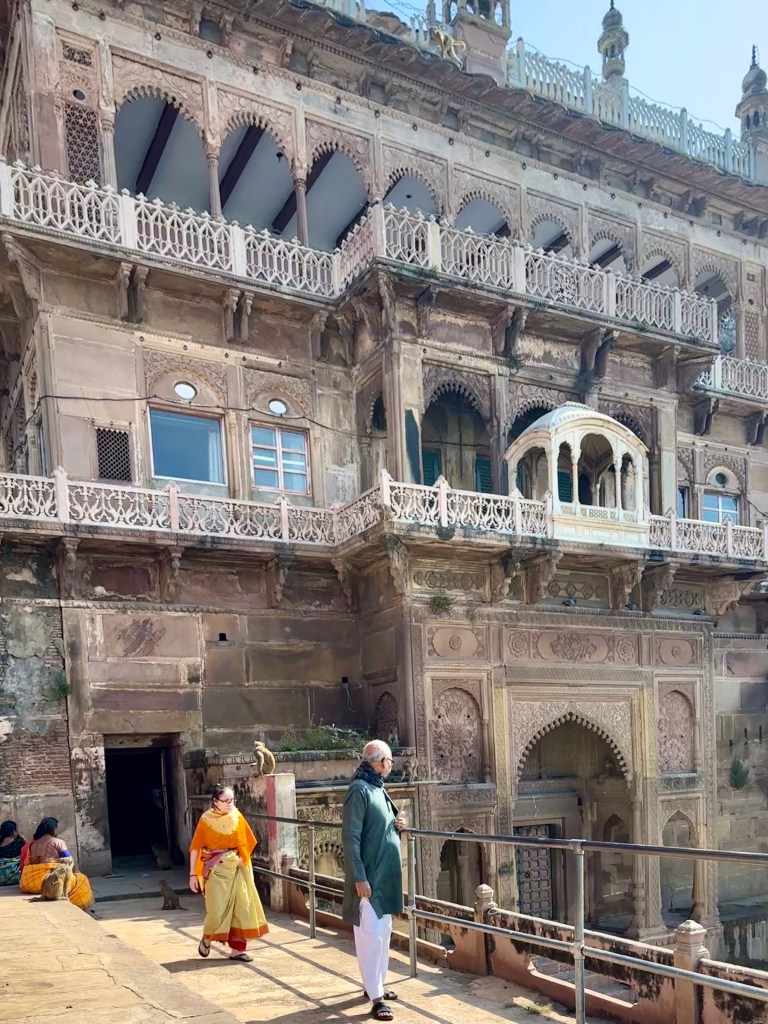
The event of the day was a visit to Ramnagar Forts, one of the featured tourist sites of Varanasi, and it was another experience of expectations unmet, although I guessed it would be. The Maharajah of Banaras built a large fort in the 1920’s across the Ganges river and a little upstream. We drove to the fort on a motorcycle rickshaw in dense traffic with motor cycles and bicycles and push carts weaving in and out and with SUV’s slowly plowing their way through this sea of vehicles, their horns blaring. I thought of you then and wished that I could squeeze you into an electric rickshaw for ten minutes just to give you a brief feel for India and why I keep coming to India whenever I can.
Both Susie and I had been to the Ramnagar Fort twenty or thirty years ago. It had been a rundown tourist trap then with a strange museum and a general decrepitude. But it was something to do and when we got there it was full of Indian tourists. We all paid 200 rupees, about $2.50, to get us in and were directed into the museum. Behind glass with poor lighting there was first a display of palanquins and carriages which in their day must have been magnificent but had over the years lost their color and had turned into shabby relics, then came the vintage car museum which had a 1930’s Cadillac in decent shaped which hadn’t been cleaned and polished for years, then a Plymouth that appeared to have spent most of it’s existence in a Madison County front yard, and an old Ford station wagon with real wood that looked fake and finally a junk yard Studebaker with no headlights or front grill. Nothing appeared to have been dusted since we were here thirty years ago.
After that were all kinds of vintage swords and bows and arrows and dueling pistols and World War I weaponry honoring the various ways that men have developed to kill each other. And then we were out of the museum. I have no photographs because prominent in every display window was a warning that anyone who took a photograph of whatever dusty relic was being displayed would be fined 500 rupees ($6).
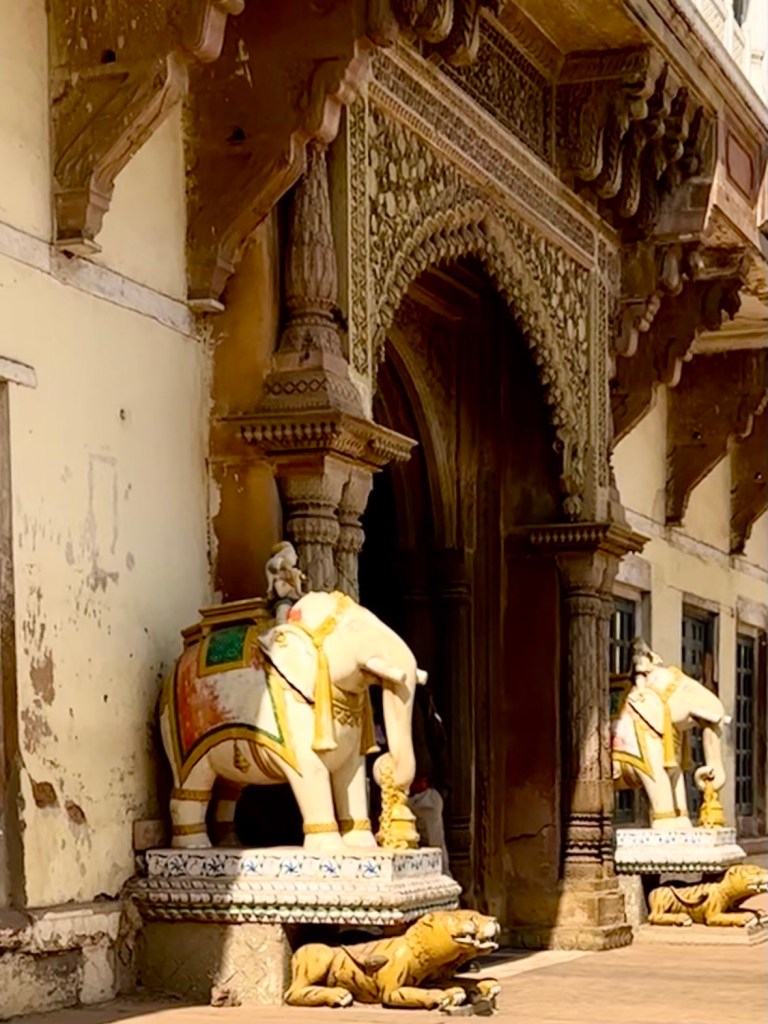
One part of the fort is the Maharajah’s residence. There still is Maharajah, Anant Narayan Singh, although his kingship was abolished in 1971 when the Indian government finally bought off and pensioned off the maharajahs of the semi independent Indian kingdoms which had existed under the British until Indian Independence in 1947.
Maharajahs who owned magnificent palaces in Jodhpur, Jaipur, Udaipur and other states leased their palaces to hotel companies and continued to live well off this income. But the Maharajah of Banaras chose to hang on to his palace within a fort and now makes a little money off of the small amount tourists pay to see his decaying fort and almost comical decrepit museum. He must sit in his falling apart palace and dream of the days when his ancestors were treated with pomp and ceremony and rode around in elegant carriages and new Cadillacs.
And then I remembered that it was when Britain took over the Kingdom of Oudh where the Maharajah of Banaras was the king and refused to support all the holy men and soldiers and entourage of the court that the Maharajah was supporting that the Indian Army finally rebelled against their English officers, killing as many as they could along with their English wives and children.
The Sepoy Muntiny of 1857 against the British East Indian Company which ruled Indian was the rebellion of the old traditional India with all of its values threatened that rebelled against the British and modernization. It was the last gasp of the old traditional India. But because of the muntiny the British learned their lesson. Up until that time they had occupied a large part of South Asia, always seeing danger just over the border and annexing state after state, arguing that the white man’s civilizing rule was what South Asia needed. The Sepoy mutiny, which the British brutally crushed, killing thousands of sepoys and others, was the end of annexation and from then on the British allowed the remaining princely states to be semi independent.
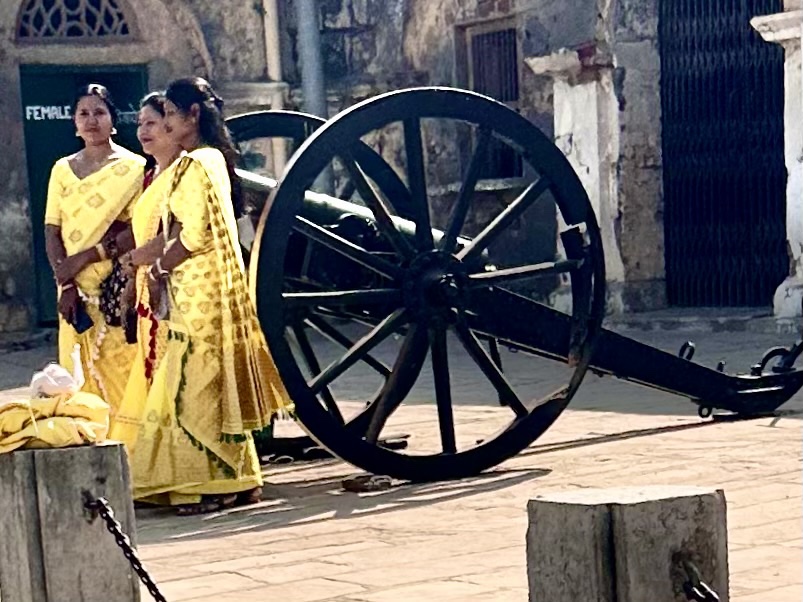
So our visit to Ramnagar Fort was really a visit to a place of great significance and the decay of the fort and the decline of the Maharajah was all a consequence of the the Indian Mutiny and the discontent that started here and spread all over South Asia among the dispossessed groups. It didn’t extend to Bengal which actually supported British rule and the new modernizing forces.
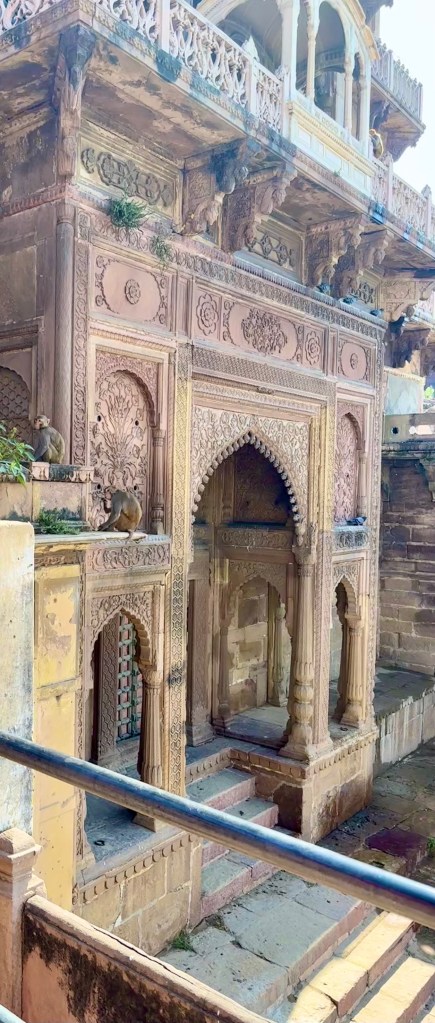
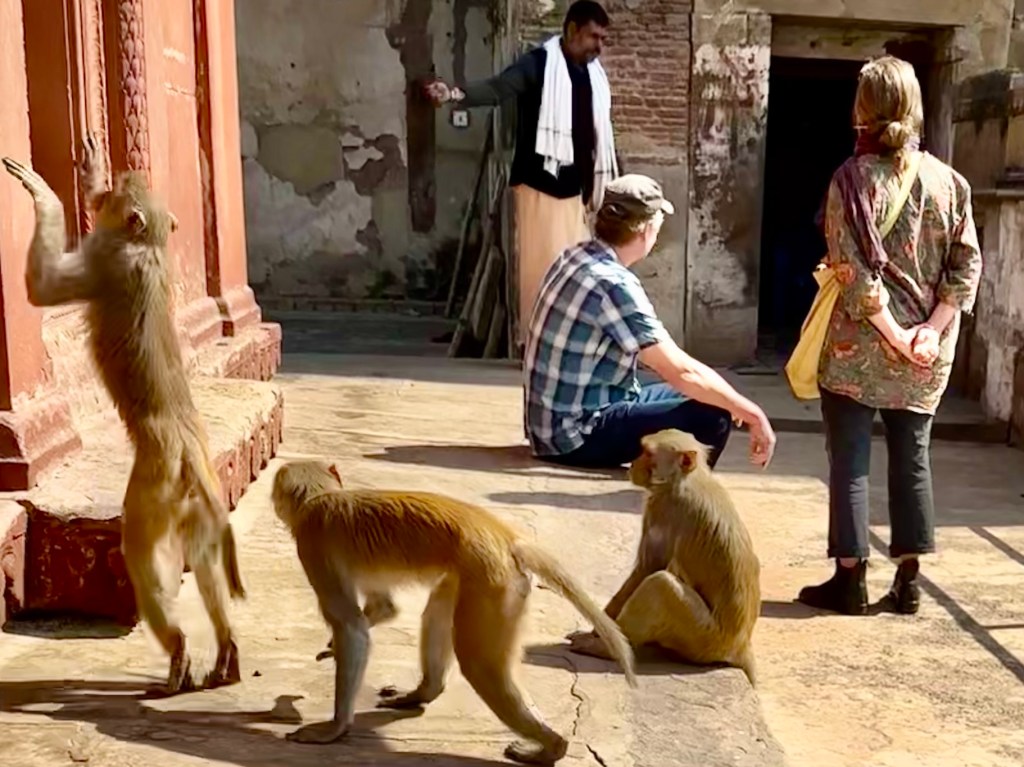
But there was no mention of the Mutiny at fort. There was just the evidence of the Maharajah still trying to hang on with the small entrance fee to his shabby museum and decaying fort, trying to hang on as long as possible, giving pilgrims to Varanasi one more tourist activity to do while they are here. The only sign of support to tourists that I saw was a man at the outside temple above the castle wall who protected tourists from bands of roving monkeys who were looking for whatever they could snatch from people and who seems undisturbed by the way he beat his bamboo stick on the wall of the fort to try and scare them away.

 BILLYBABA’S WANDERING