PRAVEEN (ASHRAM COOK)
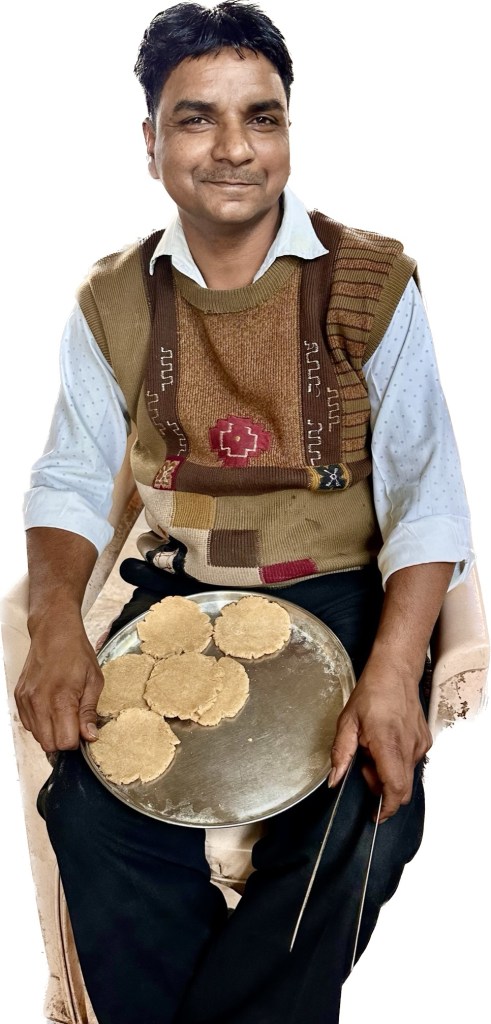
Everytime I have visited the Samdevna Ashram over the last ten years, a small group of us would sit in the upstairs kitchen where there is a table that seats six and have our meals. Tea is served at 7 with kakra, very thin round crackers. Then at 9:30 we have a breakfast of puffed rice or bean curry with some other form of bread, sometimes puffed up puries fried in hot oil and sometimes chappatties, tortilla like flatbread. Then at 1:30 we have lunch, which is similar to breakfast. At 4 we have tea and kakra again. And then finally at 8:30 we eat a late dinner. Praveen, the cook, would serve us lunch and dinner and Shilpa would make us the 9:30 breakfast. Praveen is a marvelous cook with all of his meals being the staples of dal, wheat bread of some kind and a vegetable curry with all of the dishes having plenty of chili.
But after a week of highly spiced curries, which always tasted good, my stomach, used to bland American spice less food, began to revolt. It wasn’t that the food wasn’t delicious and carefully prepared, it was my own digestive system that was to blame. So I asked Praveen if I could have my food with no chilis. He was quite happy to do so and my problem was solved.
But all of this time I was totally oblivious to what was really going on. I thought that Praveen was our private cook. As a child growing up in missionary India we had a cook, Madho, who cooked all our meals for us, four times a day, often Western food which he never ate himself and so didn’t cook in quite the Western way. But in any case, he was our personal family cook. And being a cook was a full time job. Not only did he cook on a concrete coal stove, but he had to go to the market each day and spend several hours purchasing our food for the day. There were no grocery stores in Allahabad where we lived. We didn’t have a refrigerator. Every day he would ride his bicycle into the city and and go from one bazaar shop after another buying fresh food for the day, including meat hanging on hooks in the open air. And of course after every meal he would have to wash all the pots and pans and dishes by hand. Being a cook for a family of six was a full time job.
My mother supervised Madho, every day, carefully going over his accounting for what he had spent, and always suspicious that Madho either was over accounting for what he had spent or was keeping some of the food for his family. Since there were no receipts from any of the food stands, and since Madho was paid the standard for a cook for a missionary family, which wasn’t very much, (and no one wanted to cause trouble with the other missionaries by paying more), it was very likely, to me, that he was doing both just to keep his family afloat.
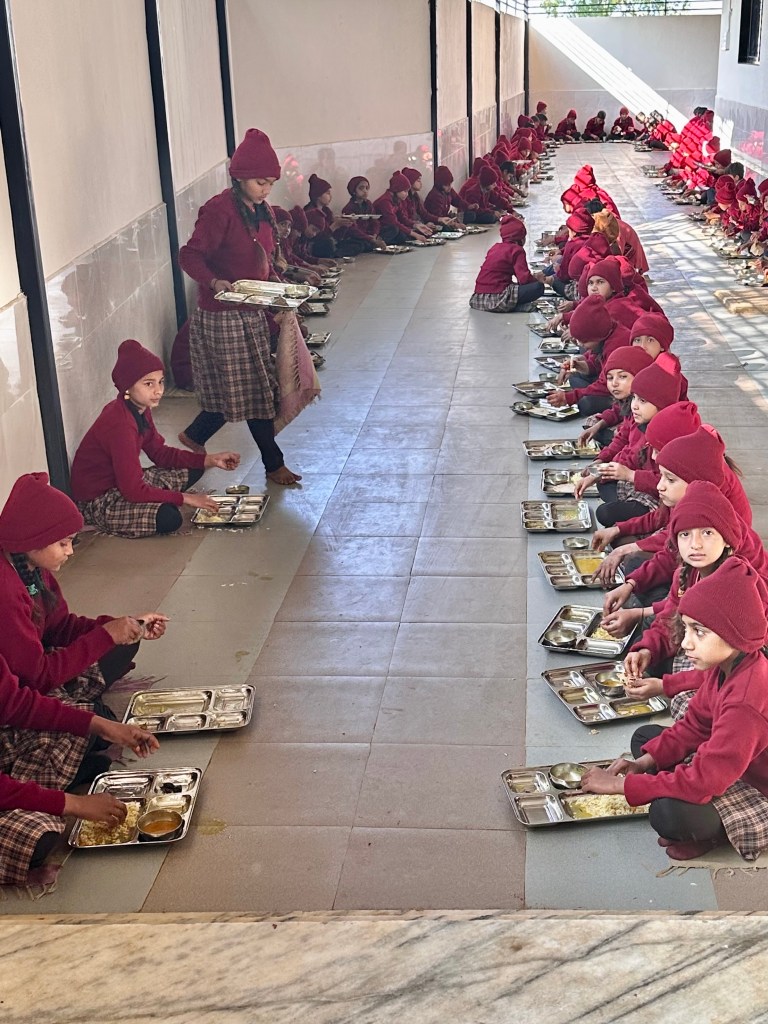
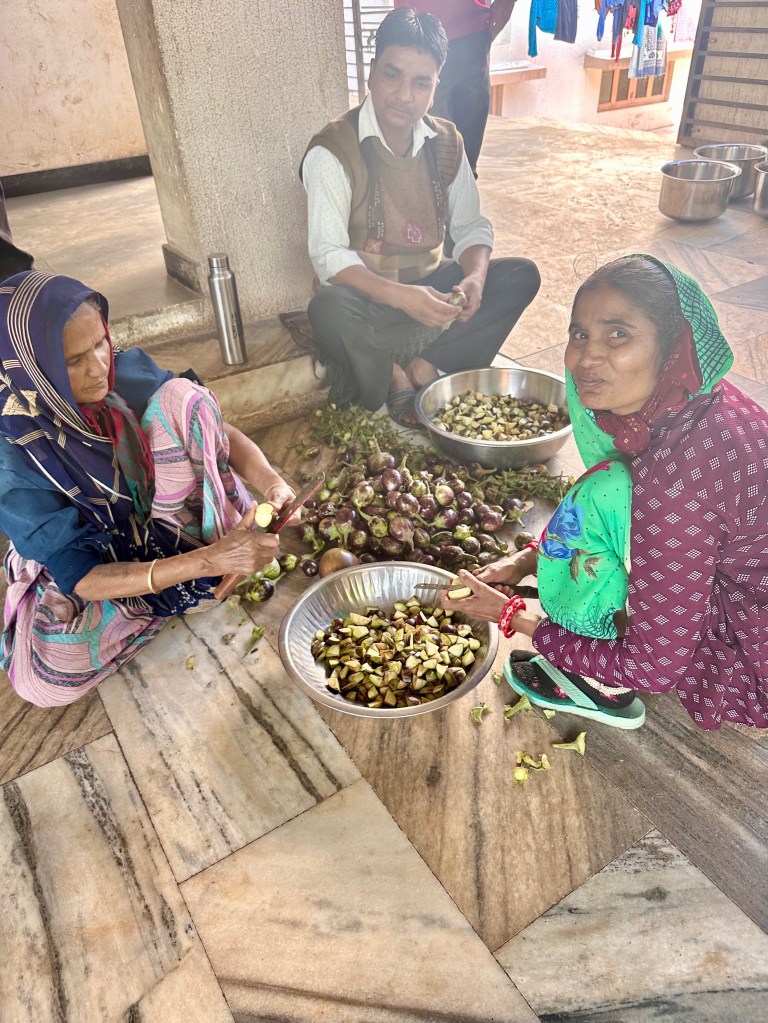
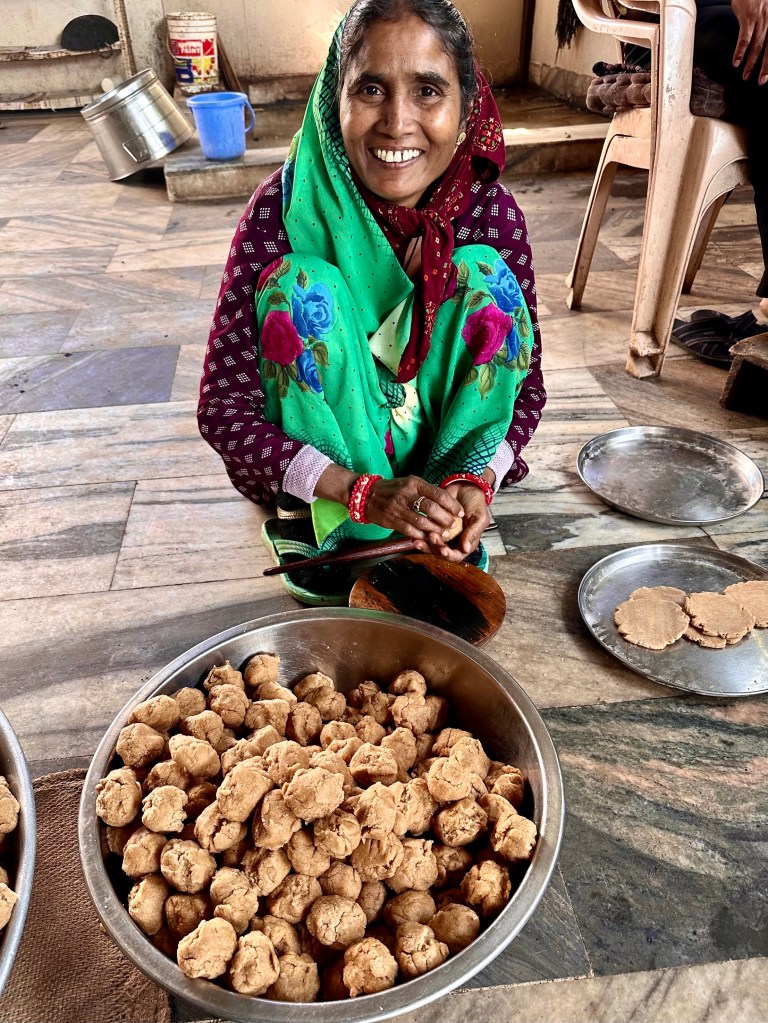
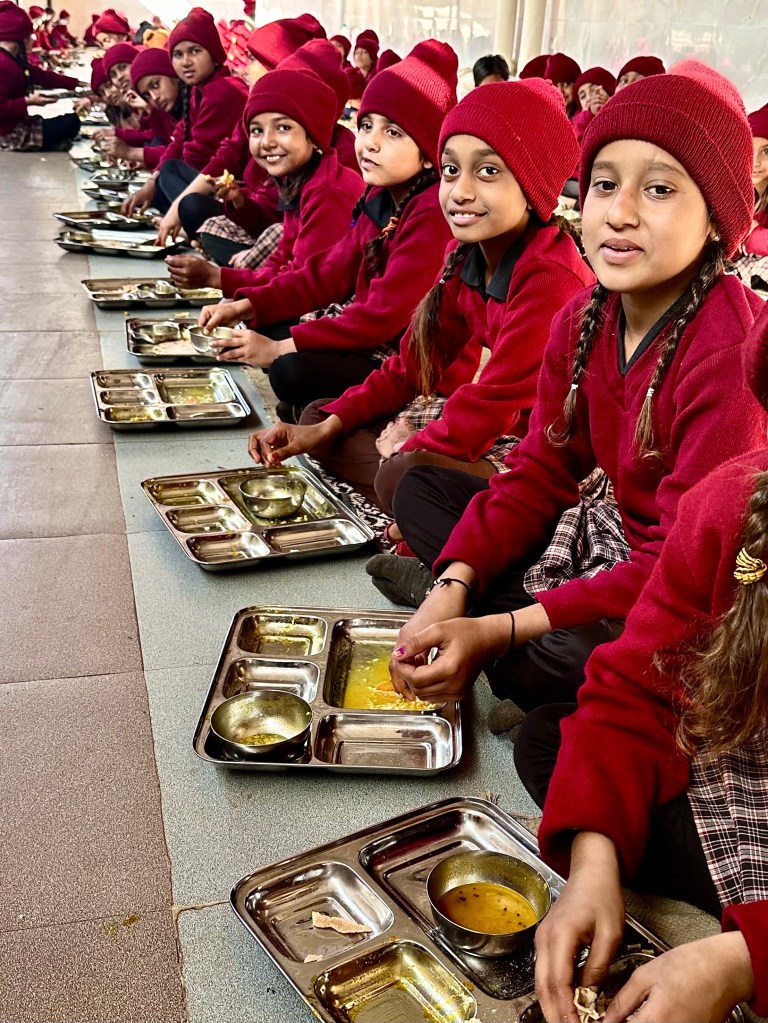
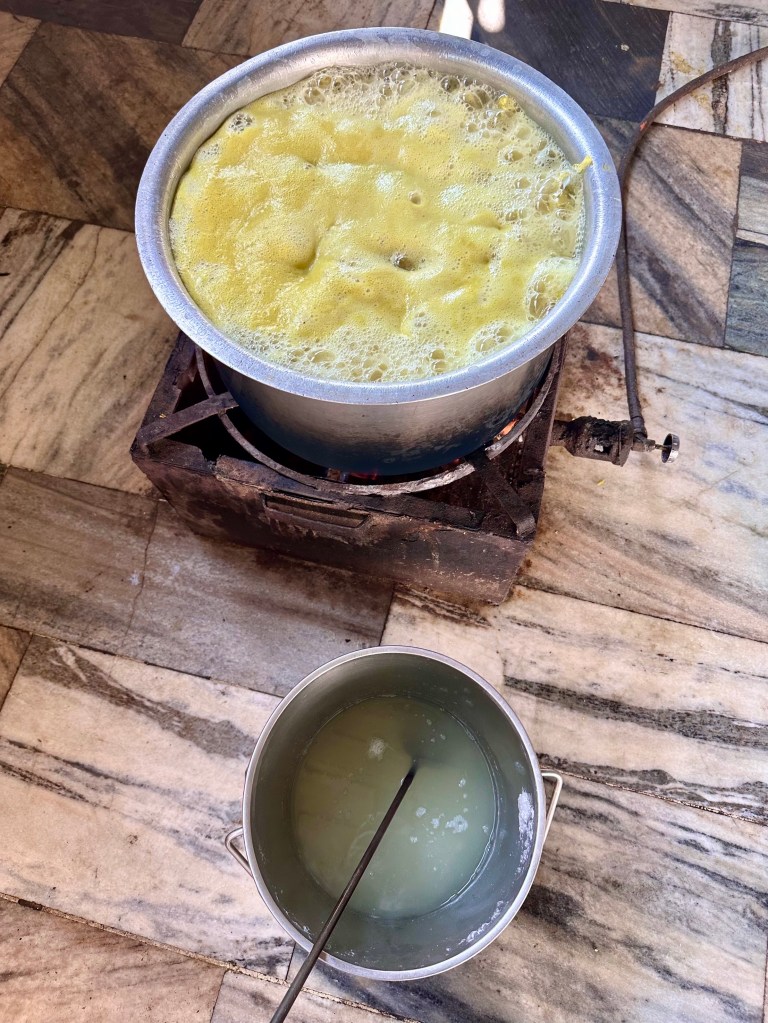
So that was my experience with cooks for missionary families. And it was only at the end of our visit in Virampur when I was taking photographs in the downstairs large kitchen beside a long hallway where the children would sit on the floor in long lines and ate their meals that I learned that Praveen, in addition to making us special meals upstairs, also was cooking for 150 children daily downstairs. With the help of a few women, the ones I gave blankets to earlier, he would cut up hundreds of eggplants and other vegetables, cook a huge pot of rice and make hundreds of flat thick round chewy bakra. He didn’t have to go to town to select the vegetables, as Madho did. A contracter brought in the daily required supplies and certainly provided a receipt. But it was a great deal of work to cook for two separate groups and certainly took Praveen’s whole day from morning to night.


 BILLYBABA’S WANDERING
A pleasure to read and to see those older women and beautiful children–and to see you, Susie, Todd.