PALANPUR
We needed to drive 40 minutes to Palanpur to get our railway tickets changed for the overnight return train trip to Delhi after leaving Virampur. We were going to visit Ahmedabad for a couple of days but my dental visits are interfering so we changed our tickets to go from here.
Palanpur is a dusty town which is centered on the marble and granite trade with large quarries for marble and granite close by and one large warehouse after another along the main highway where the marble is cut and polished on huge machines before shipping out across India and the world.
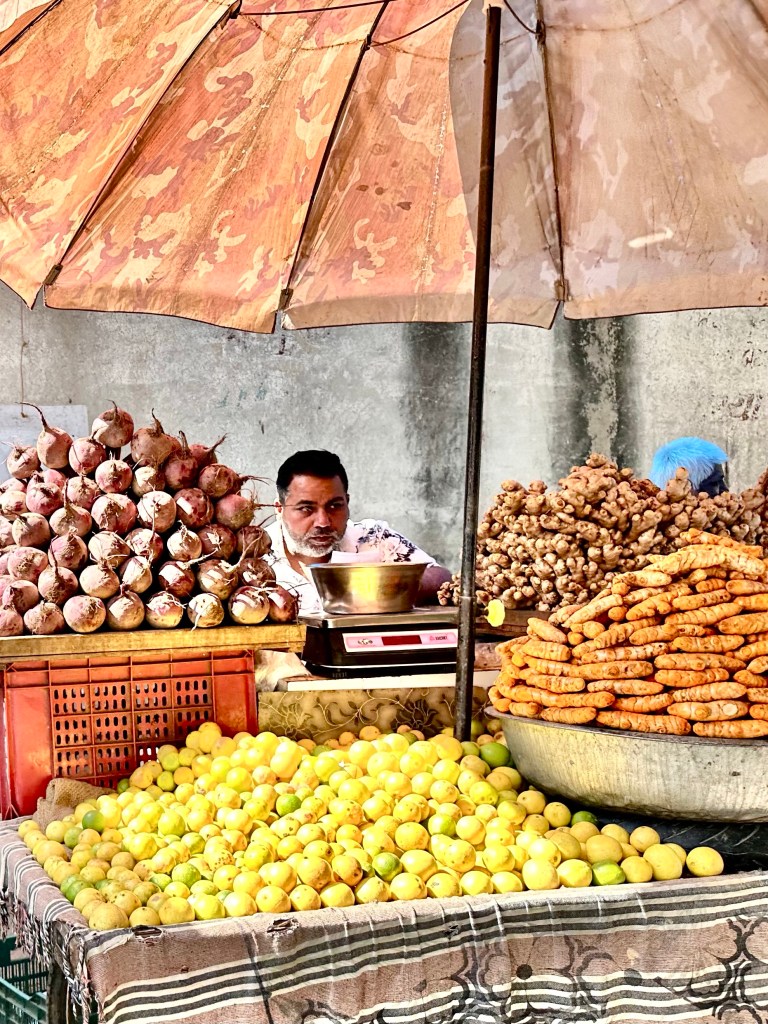
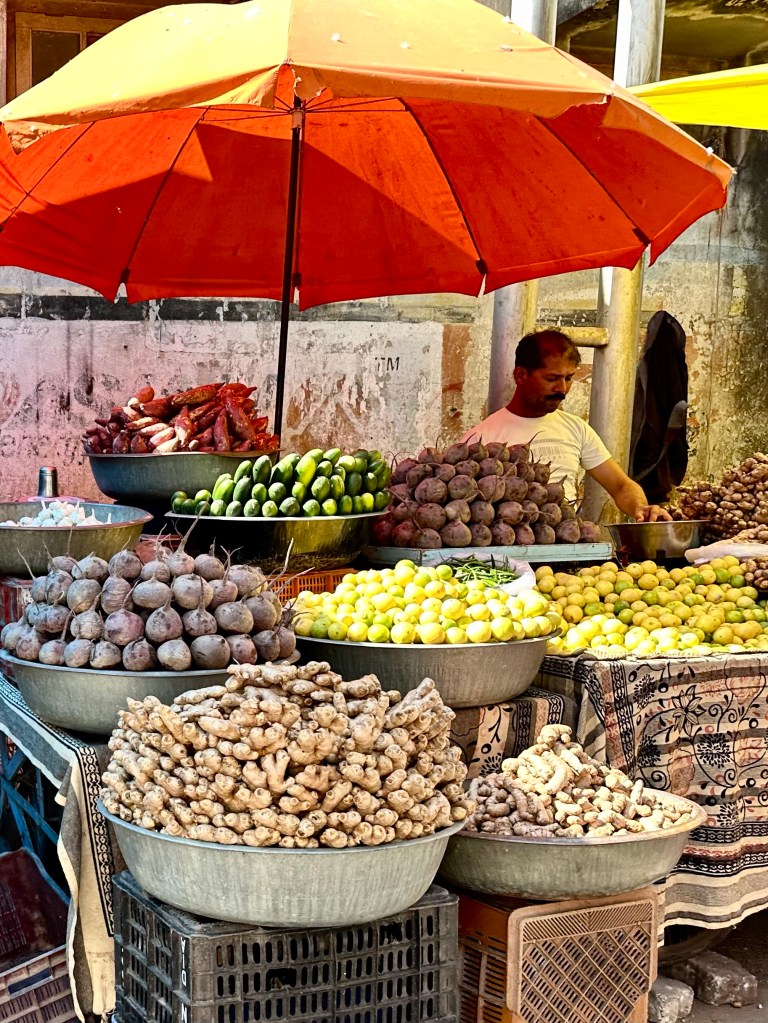
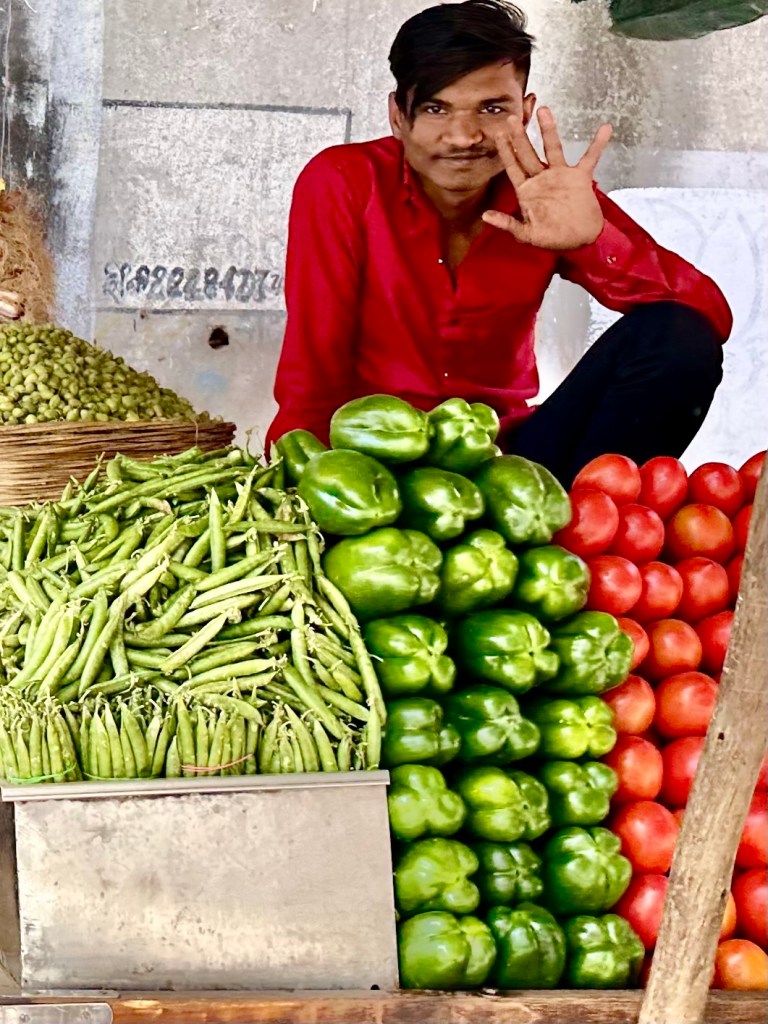
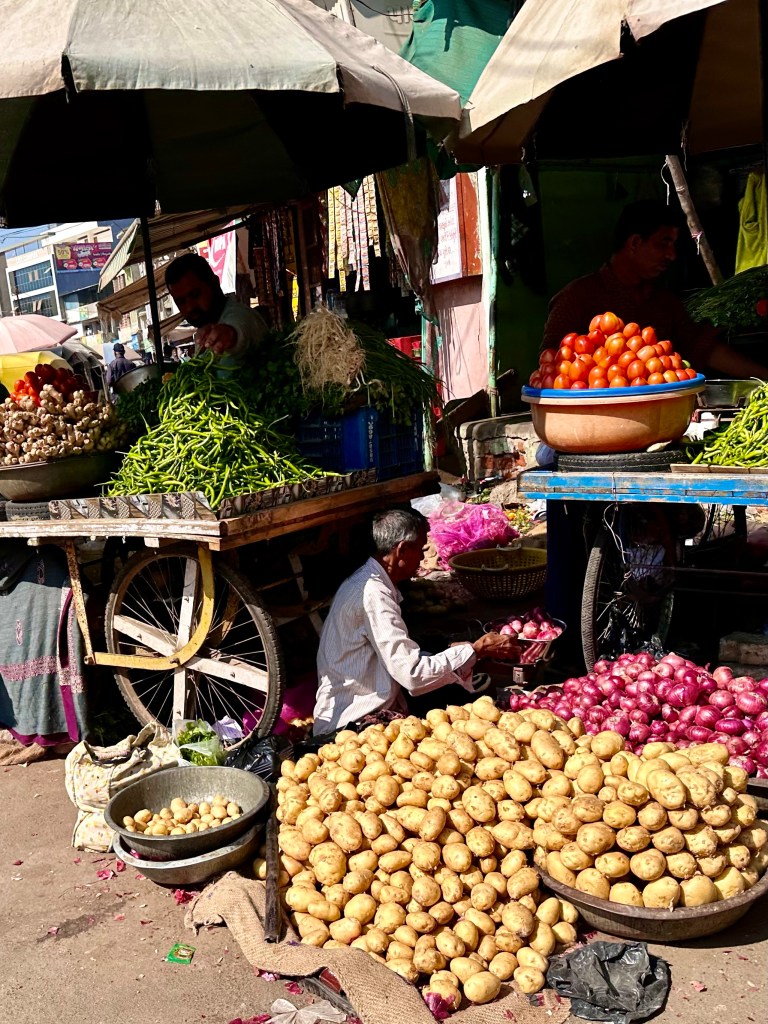
After changing our tickets we walked around the center of Palanpur a little. In small town India everywhere everthing is out in the open. The streets are full of people shopping with a constant flow of traffic. All the storefronts are open and when we drove slowly by the vegetable market I took photographs of the vegetable stands with the fruit and vegetables neatly piled and displayed. This openness to the public everywhere is one of the charms of India and one of the things that makes American strip malls without a person in sight seem neutral and barren and empty.
On the way back from Palanpur we drove by the Balaram Palace Resort, the Nawab or Maharajah of Palanpur’s ornate hunting lodge. When I was growing up in British India there were hundreds of small kingdoms, each with their own king or maharajah and often their own army and their own stamps and money. Some of these kingdoms in Rajasthan such as Udaipur and Jaipur and Hyderabad in the south were huge, but many were only a few square miles. Before 1865 the British annexed kingdom after kingdom, but after the Sepoy Indian Mutiny in 1857 when the Indian army turned on their British officers and their families, killing many and then being killed in return, the British became very cautious and allowed the remaining Indian states or kingdoms to have the appearance of independence until India became independent of the British in 1947, at which time the new Indian government bought off or pressured the maharajahs to give up their kingdoms and incorporated all the states into a united India. The same thing must have happend to the maharajah in the Balarom Palace. Many of the Maharajahs turned over the management of their palaces, which they could no longer afford to keep up, to hotel companies which made luxury hotels out of the palaces. I stayed once at the Balaram Palace Hotel for a couple of nights at the invitation of Jitubhai Patel, Hasmukh’s brother, during a medical conference. So I got a taste of the luxury high life.
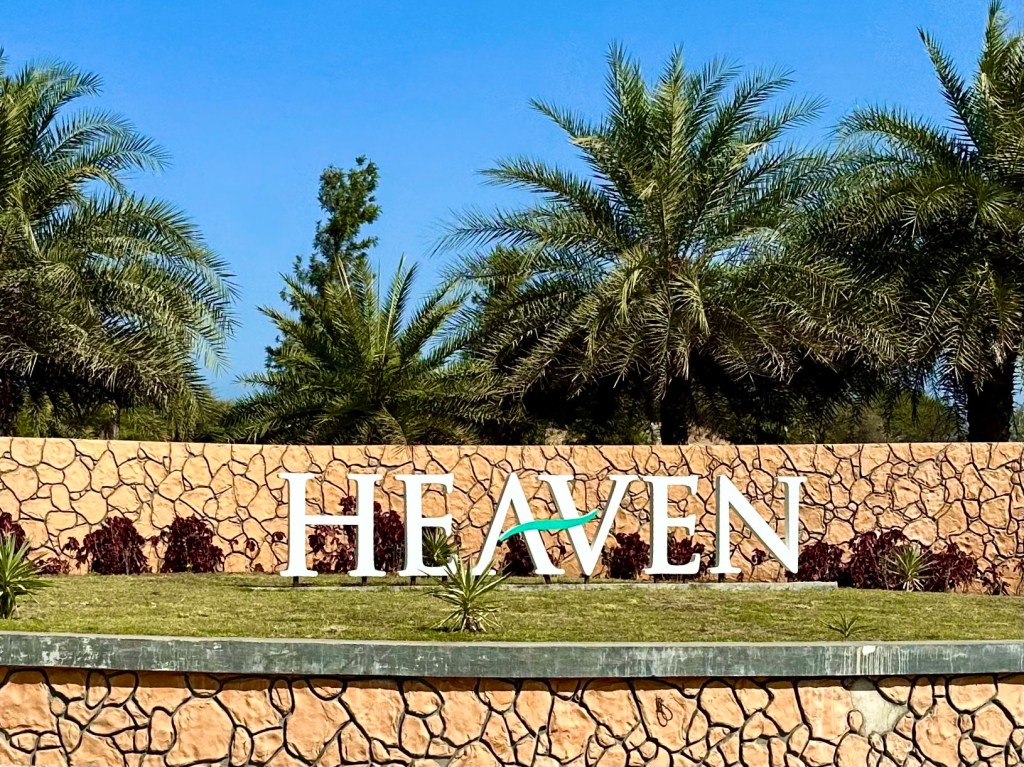
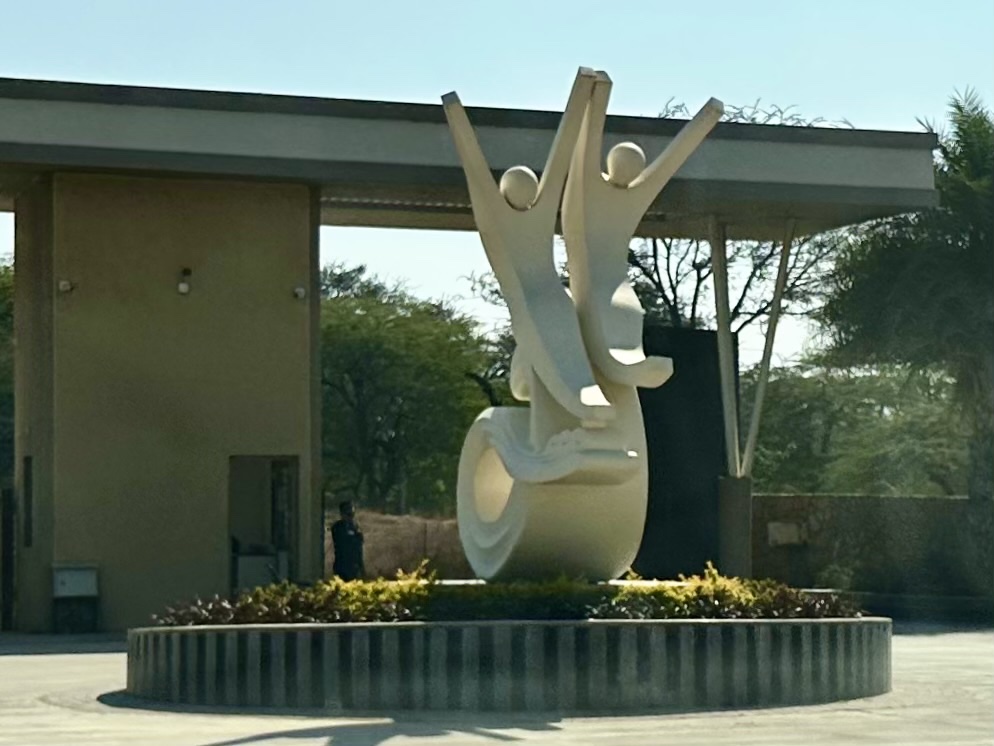
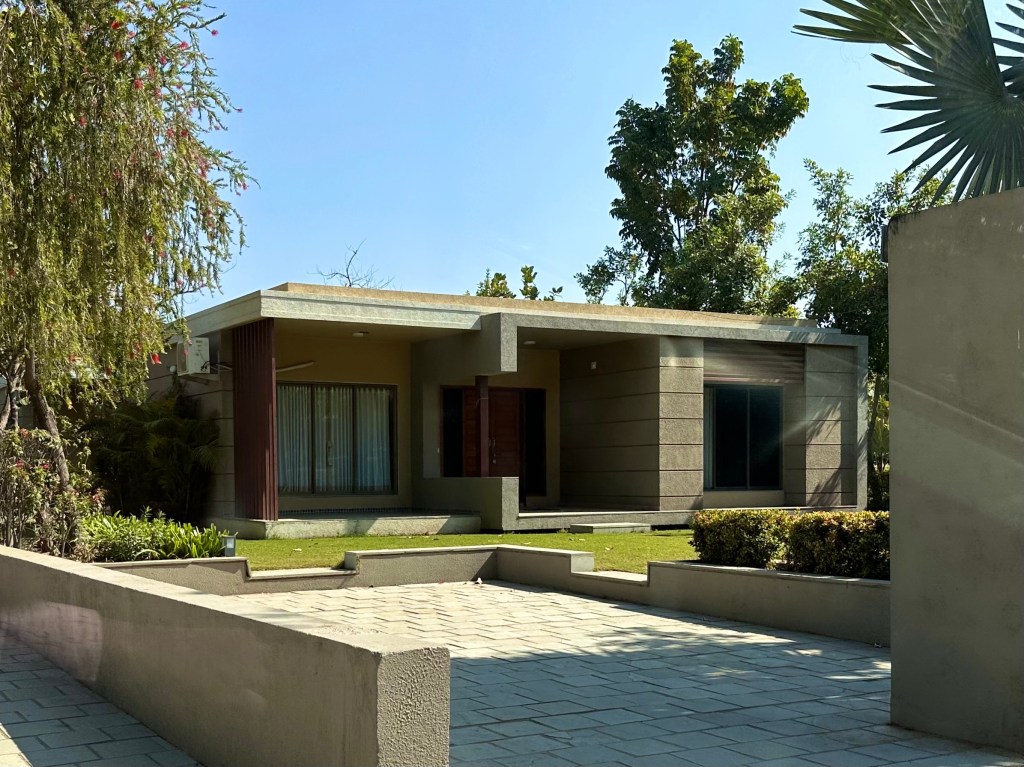
Right next to the Balaram Palace Resort is what to an American seems an odd country place of escape for right Indians. Named HEAVEN there are wide, tree lined avenues and smaller marble cottages with small grassy yards with a low fence around each where the rich can escape to, although what they do there in their small private house and plot I can’t imagine. We drove through HEAVEN and I am including a few photographs.


 BILLYBABA’S WANDERING