ASKING PERMISSION
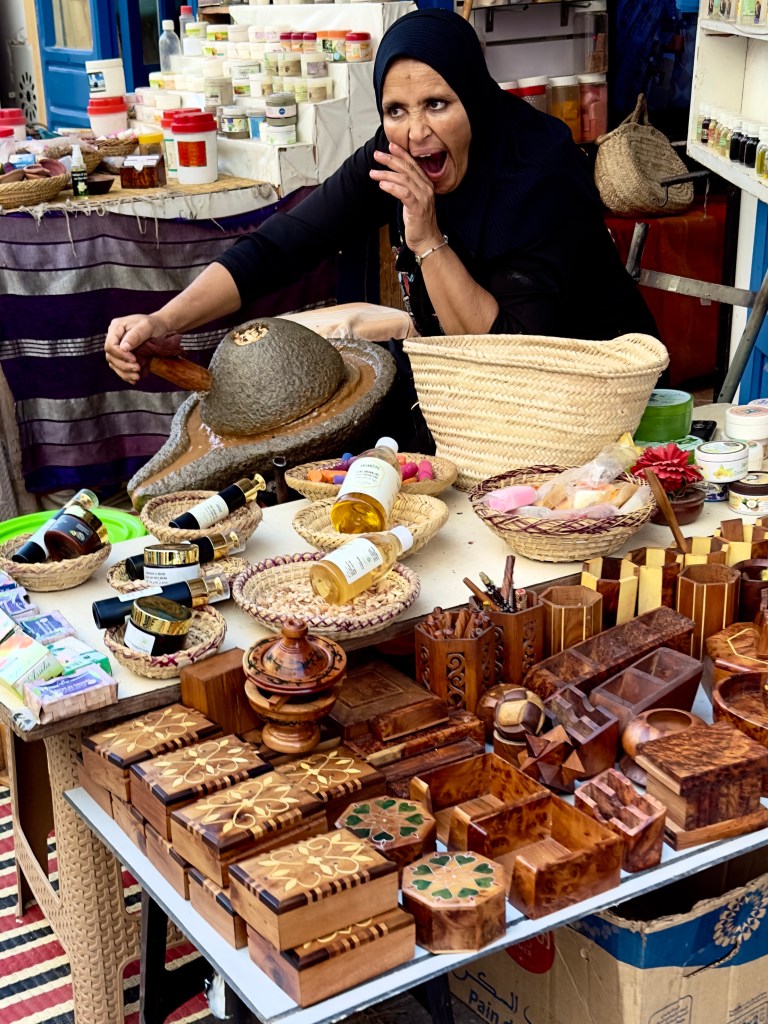
What is most interesting about the Medina is the people who are walking through it. I just read an article on photographing in Morocco by a woman photographer. She says that Moroccoans are tired of having their photographs taken and at times feel that a photograph is an invitation to an evil eye, bringing bad luck to the person whose photograph is taken.
Her advice is to always ask permission before taking a photograph and certainly not to take photographs without asking permission of either men or women, and be courteous when they say no. She also says it is helps a great deal to be able to ask to take a photograph if you ask in Arabic.
It turns out that her male companion as she traveled in Morocco spoke perfect Arabic so her advice isn‘t much use to a person who speaks neither French nor Arabic and has no companion.
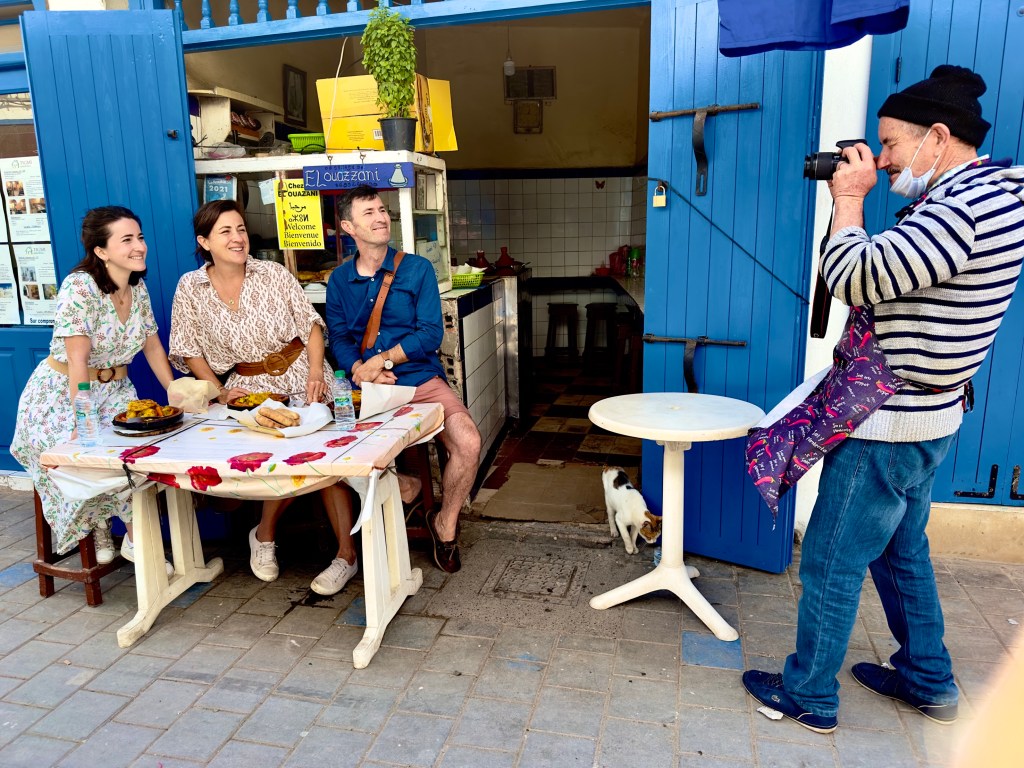
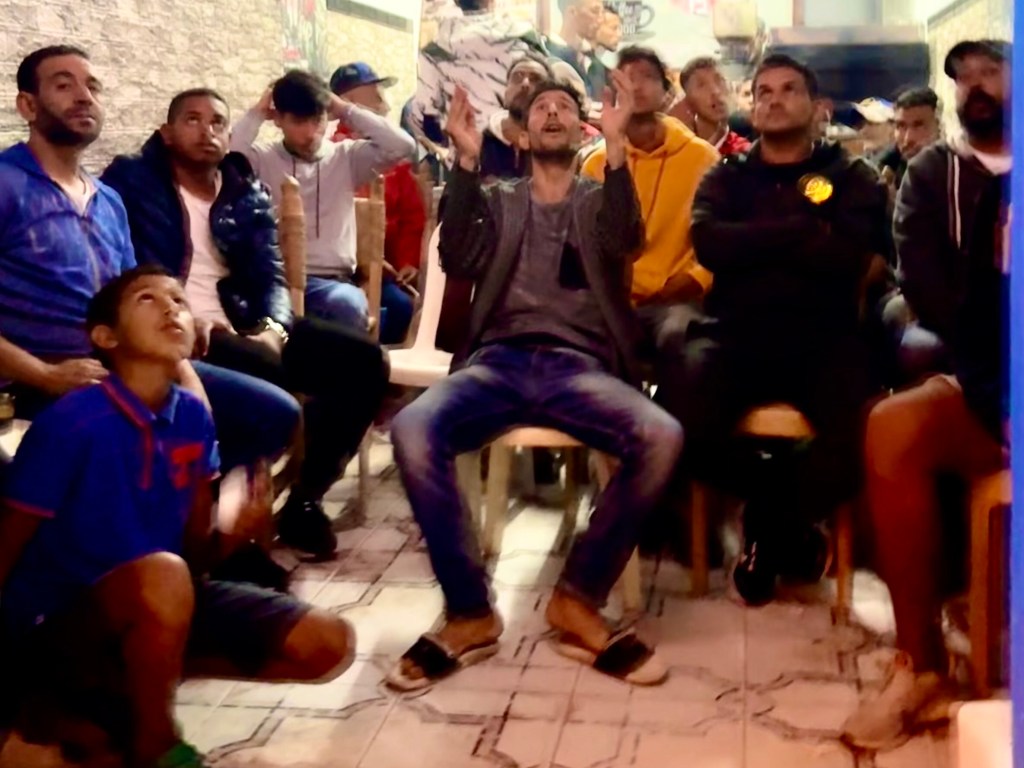
But her advice is almost irrelevant to me for another reason as illustrated in the photograph above. When you ask permission you get a pasted on smile, a self composed attempt to be attractive. The people above wanted their photograph taken by the worker in the restaurant where they were eating. I didn‘t ask their permission, I just very obviously took the photograph of them being photographed and they were so busy composing their smiles that they couldn‘t interrupt the session to shoo me away even hif they wanted to. My candid photograph makes their composed photograph seem comic.
I may take 1000 photographs a day. Am I going to stop people on the street 1000 times, particularly when asking means the decisive moment, the activity that caught your attention in the first place, has vanished?
That is the first reason that her advice is not of much use. When people know they are being photographed they are going to respond in one way or another, none of which will make a good photograph.
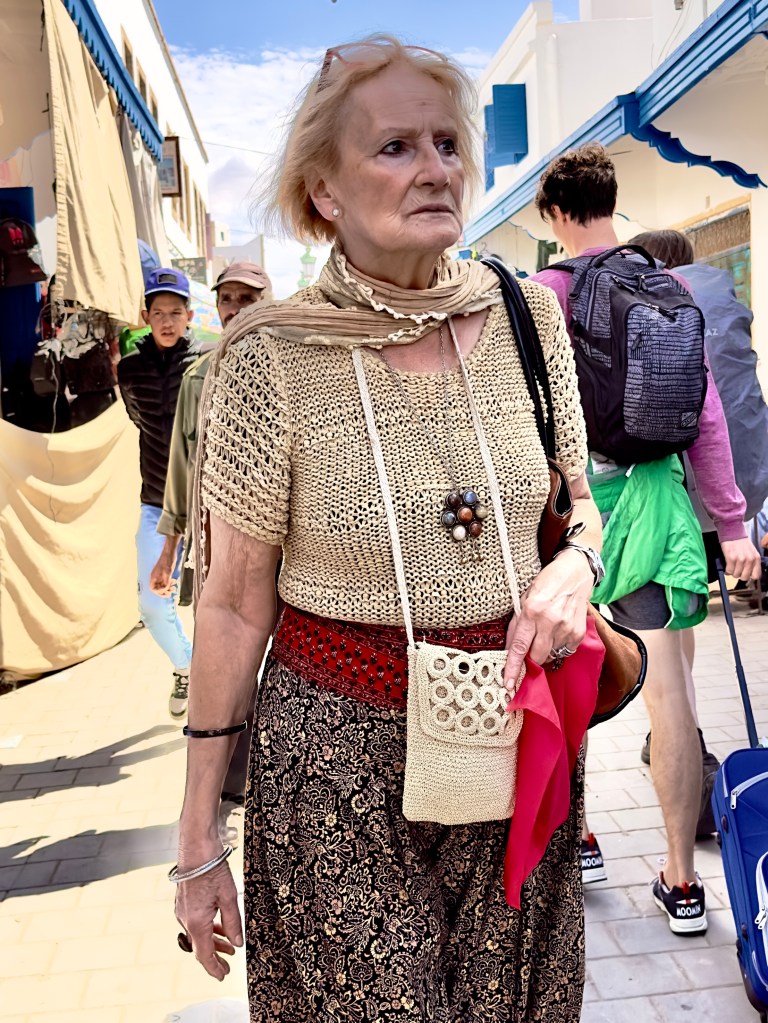
This photograph is of an older well dressed Western woman. Her appearance obviously matters a great deal to her but she might still, out of vanity, not want to be photographed. If I had asked her permission I think it likely she would have wondered why and been irritated. If I said that I was taking her photograph just because she looked interesting she would probably have thought I was nuts and trying to con her in some way. I‘m sure I wouldn‘t have gotten the photograph.
If you are going to have to ask permission before taking a photograph, in any country, you are not going to get many good photographs.

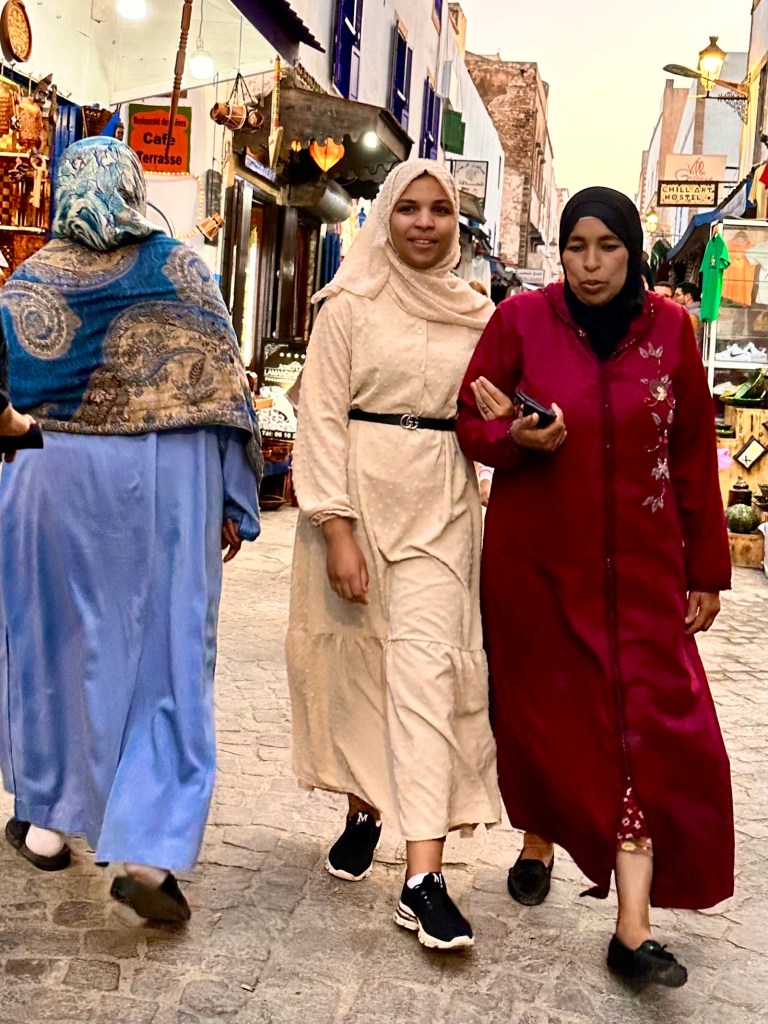
Take for example these two girls who were having a great time interacting with each other and responding to the world around them. Would I have gotten this photograph if I had stopped them and asked their permission (which I couldn‘t have done in Arabic anyway)? If I stopped them the decisive moment, in Cartier-Bresson‘s terms, would have been gone and it was not so much them as their facial expressions and gestures at this decisive moment that I wanted to capture and which I had to photograph instantly, without thinking, as they went past me.
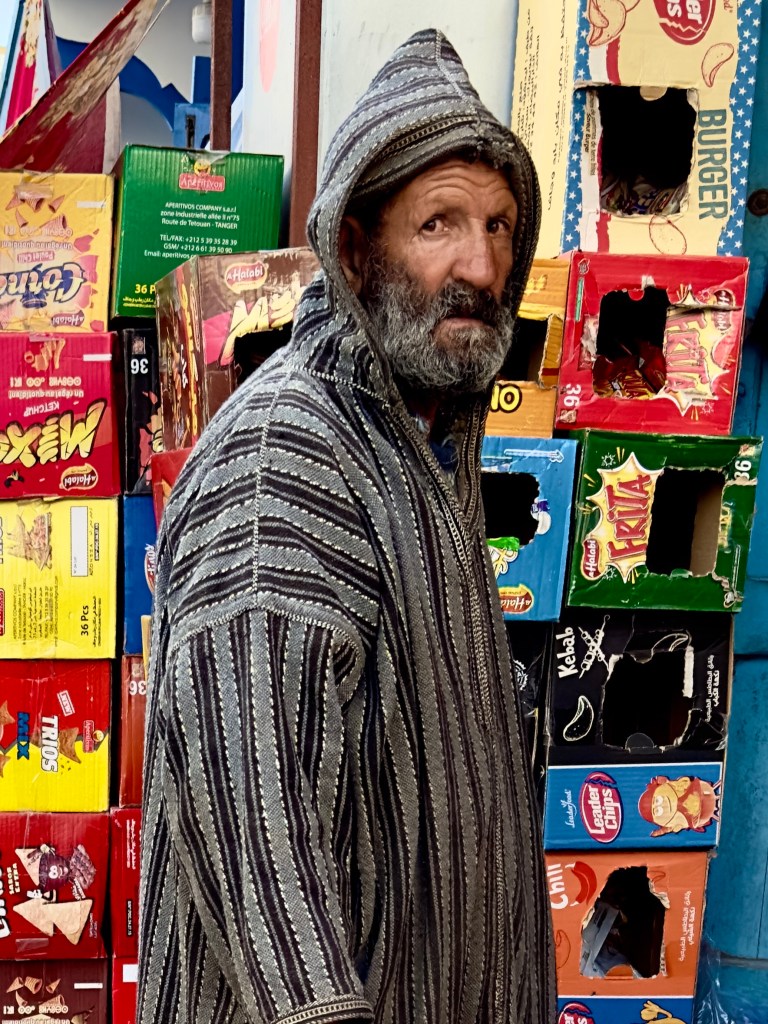
All of this applies just as much to Asheville as to Essaouira. If I am going to take these kinds of photographs I have only two choices, not to take them at all or to take them without causing the subject to respond in any way, positively or negatively, or with pasted on smile permission. So the question is really whether to photograph or not to photograph. If it was trees or objects or birds it would be all right because they wouldn‘t care. If I thought that the trees had a soul and I was wounding them by taking a photograph of them I guess, out of respect, I wouldn‘t photograph the tree, either.
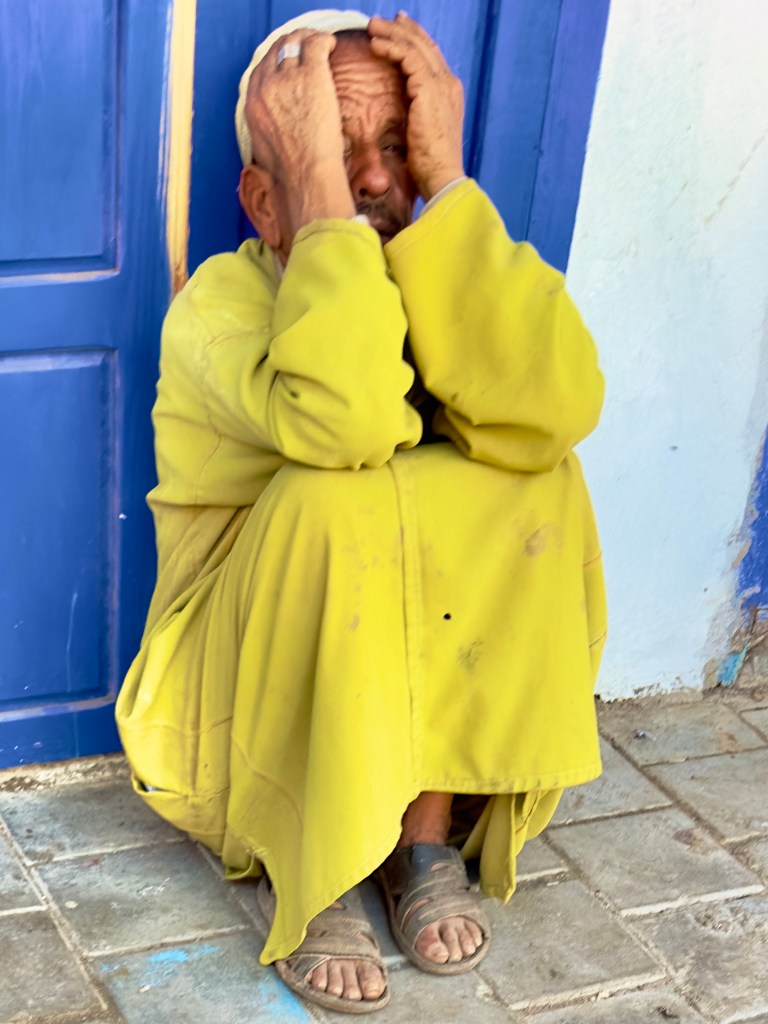
But I am most touched by people. Don‘t ask me why I am touched by the older well dressed woman, I simply am and couldn‘t resist. But that doesn‘t mean that I need to make her uncomfortable by putting a camera in her face. It means that I have to take her photograph without her knowing it.
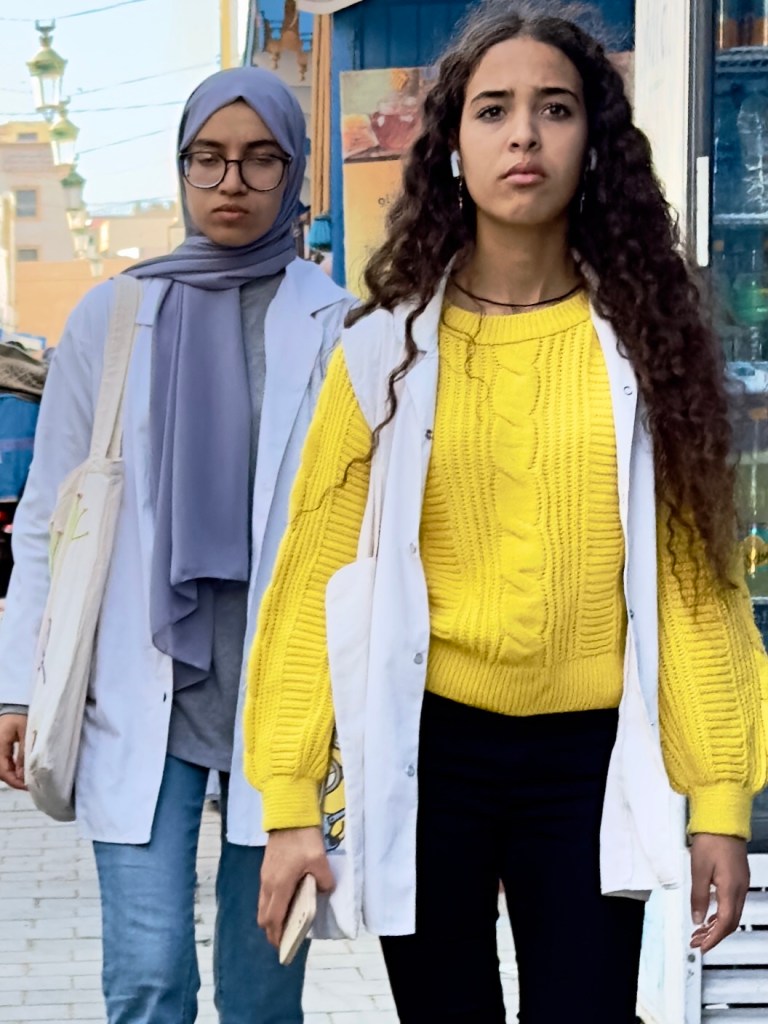
So that is my solution in Asheville and in Morocco. Anyone on the street has made themselves presentable so that anyone else can look at them without offending them. Taking a photograph for me is a way of really looking at someone and capturing that look in a photograph, in an enhanced memory. We file people away in memory from a glance all the time. A photograph is no more invasive than a glance unless I make a big deal about it.
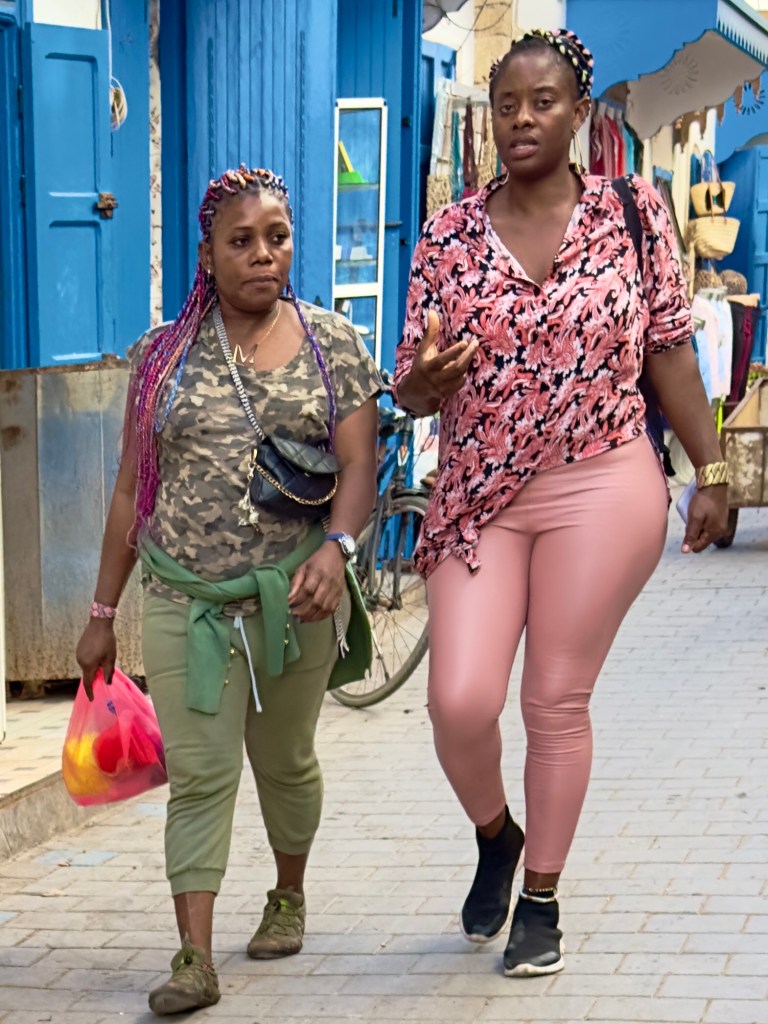
The big deal is the camera and the active process of taking the photograph. With a camera this big deal comes by pointing the camera at a person and pushing the shutter. It can be annoying. With a cell phone camera the big deal is putting it on a stick or holding the camera out at arm‘s length stiffly and framing the person I am photographing. People often don‘t like it when you do that. So I don‘t do it.

In an age when almost everyone has a cell phone in their hand and is often looking at it for whatever reason or talking on it, holding a cell phone is no threat at all and is hardly noticed. And that is all I do. And if it happens that my cell phone is pointing, more or less, at someone who is interesting and I will the shutter to silently click which results in a photograph, that is no big deal.
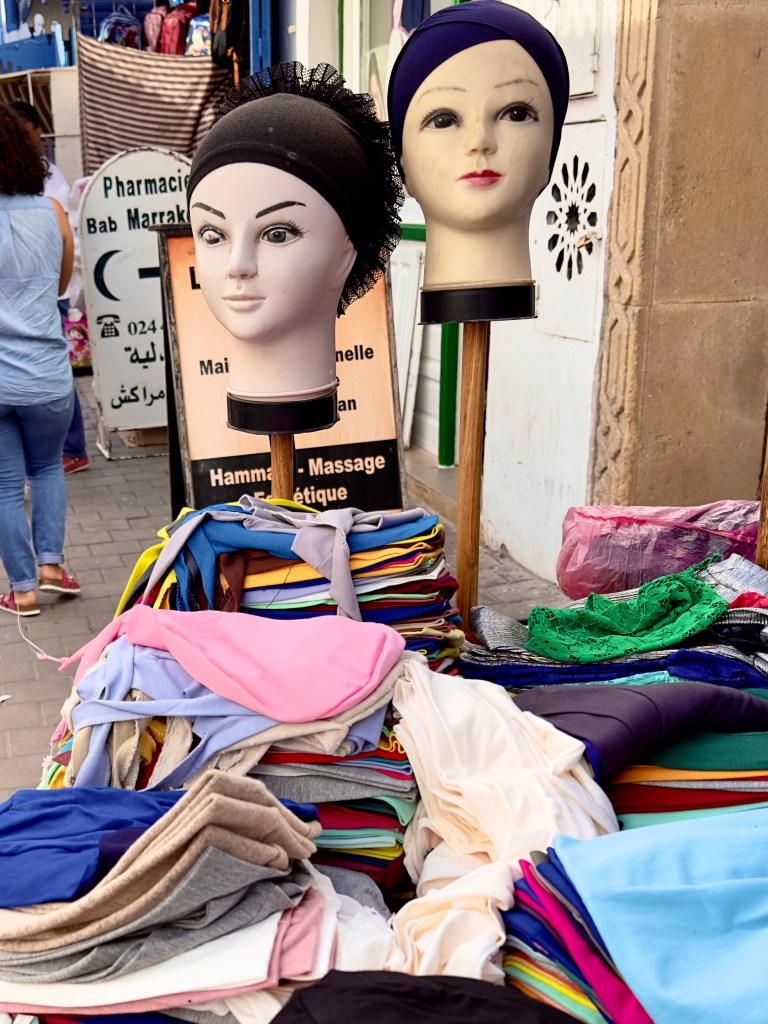
Museums used to forbid photography, but with a cell phone in every hand they gave up policing, and now welcome people to take photographs as long as they don‘t disturb people by using flash.
If you are out on the street you are constantly being photographed by CCTV cameras and often are being caught in photographs by people you are unaware of and it doesn‘t bother you.
All of this sounds like rationalization, and it is. I have never been disturbed by people who take photographs of me without my knowing it, of course, because I don‘t know it. The people in these photographs aren‘t disturbed by my taking their photographs because they don‘t know it at the time and never will know. 9 out of 10 photographs I delete, in any case, 9 out of 10 times asking permission if I were asking permission, is asking permission wasted, and the ones that I keep are for reasons, like the decisive moment, or because they touch me personally, that are almost unrelated to the feelings of the person I am photographing and keeping in my personal photo file of memories.
And yet this is a issue that I am touchy about. I really don‘t want to disturb or offend people and I‘m not, as long as I‘m not noticed. I know that people will possibly be offended because I didn‘t ask, or because I got the wrong angle, or got them with a sour look, or because they think I‘m stealing their soul (which I am sure, like the evil eye, is not possible), or because in their culture photographing is impolite, or because they suspect me of being a pedophile. If they are in public, presenting themselves to the world, then I can look at them with whatever I privately feel as long as I don‘t disturb them, and photographing is simply a way of looking intensely at a person and responding to them. That is my rationalization, which I am still not sure is quite satisfactory, but is what allows me to take photographs in Asheville or Essaouira as I do.
 BILLYBABA’S WANDERING