REDWOODS STATE PARK
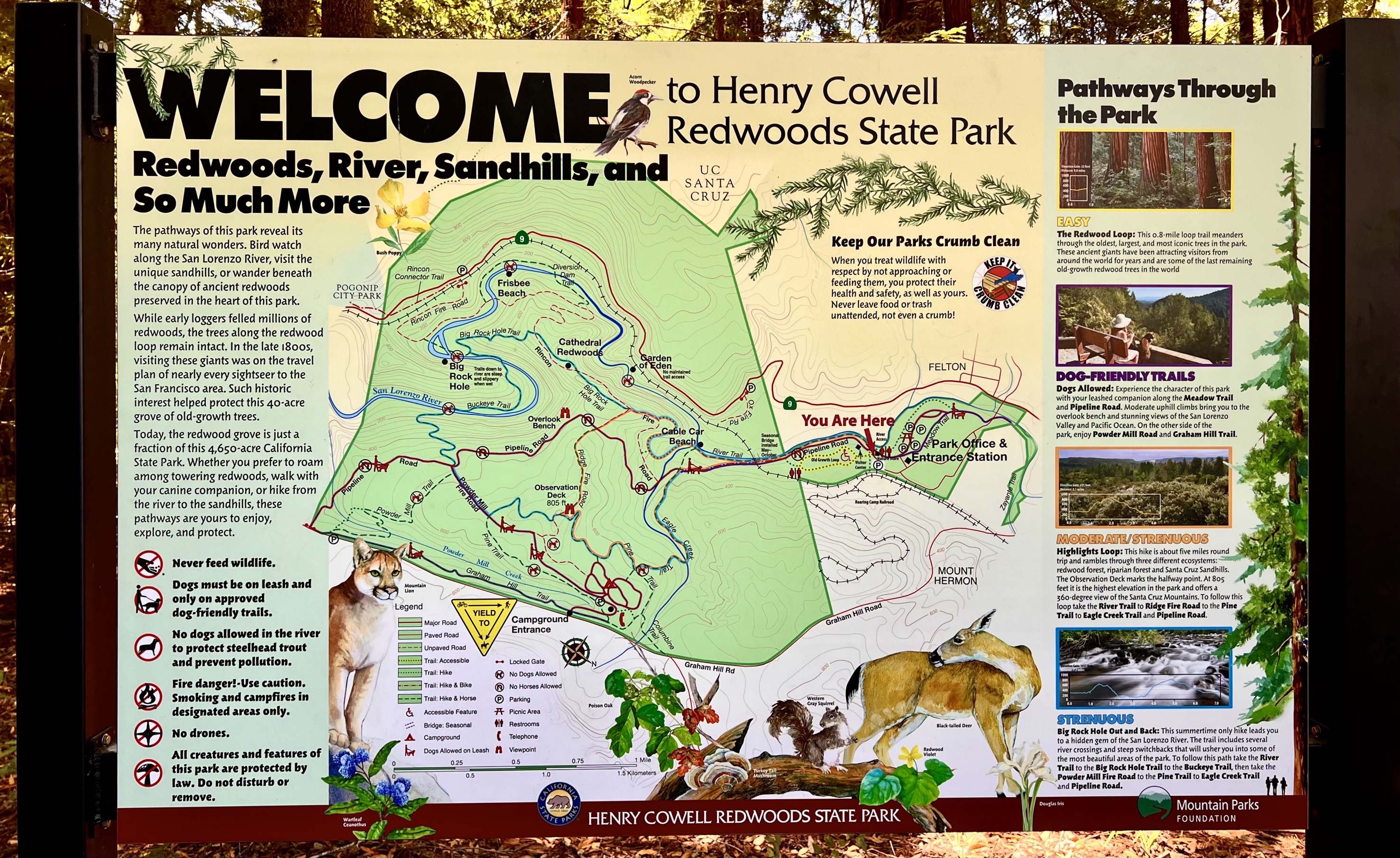
I thought that the giant redwood trees were in Northern California in a National Park.
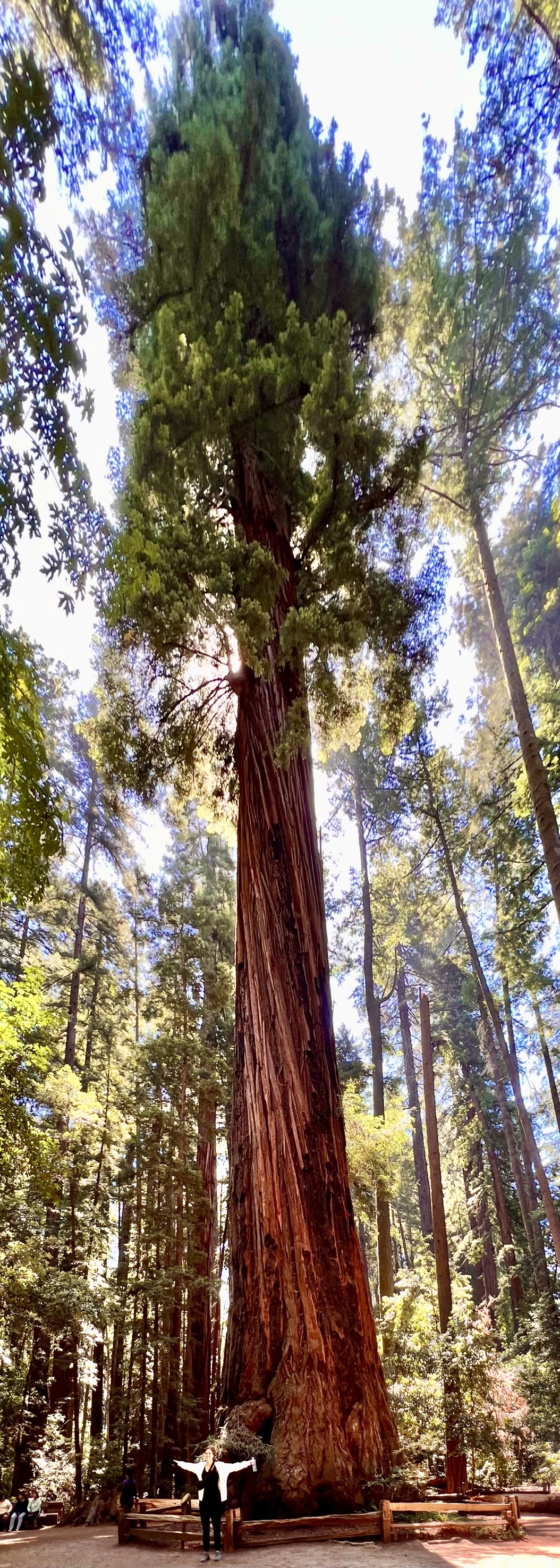
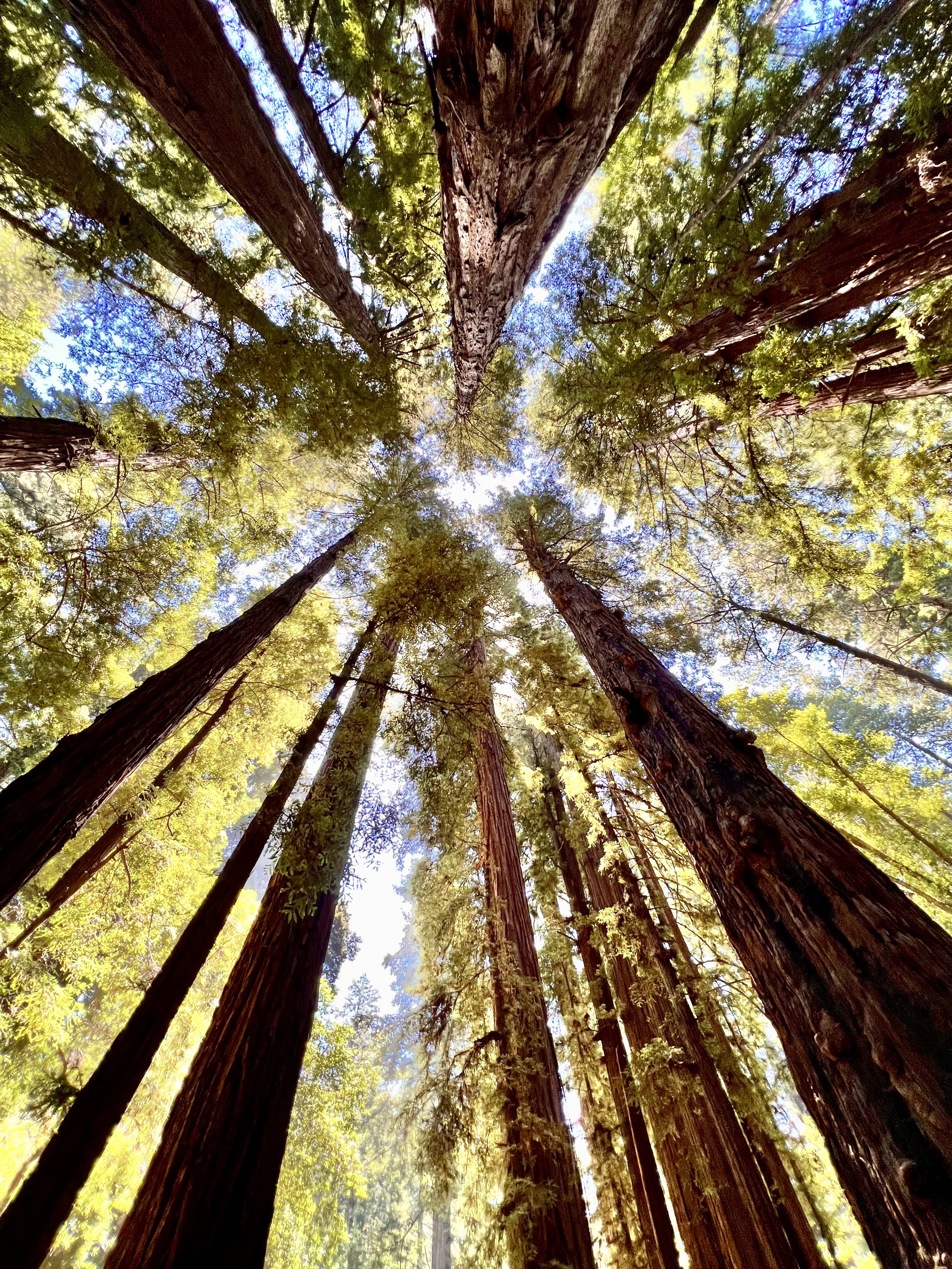
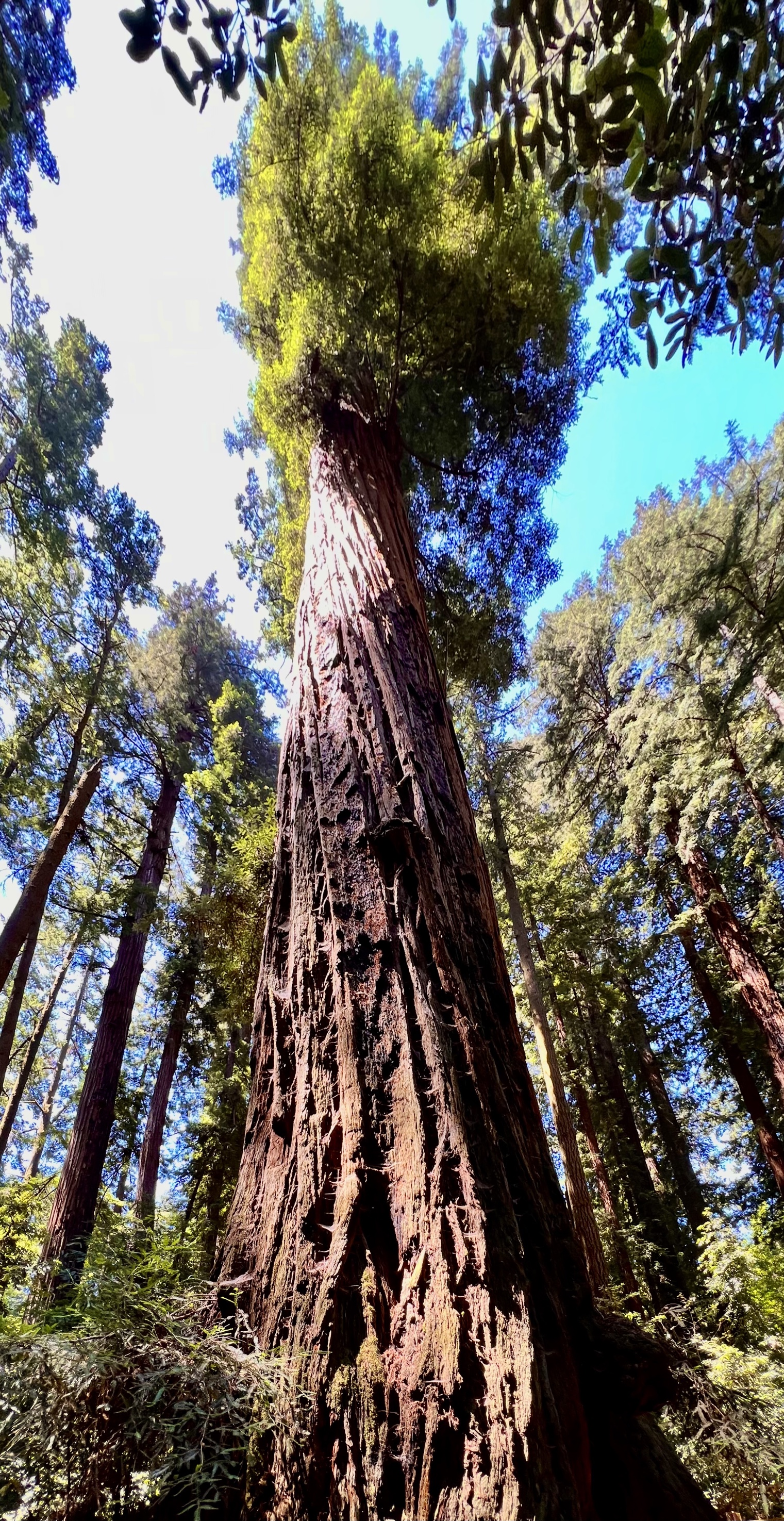
And here was a grove of protected ancient redwoods right outside of Santa Cruz in Henry Cowell Redwoods State Park. Ruth and Nick Royal, whom I am staying with in Santa Cruz (Ruth and I both attended Woodstock School in India at the same time), drove me the half hour to to the park and we walked a mile loop through the redwoods while learning about them.

First of all what strikes one is how ancient they were, with a cross section of one tree showing annual rings back way before Christ. How could a tree live for 2000 years, adding a ring a year and rising higher and higher? And how long it must have taken for evolution to produce a tree with these complicated characteristics, millions of years. How short our own time on earth is. I knew this, of course, but the immensity of it hadn‘t sunk in before.
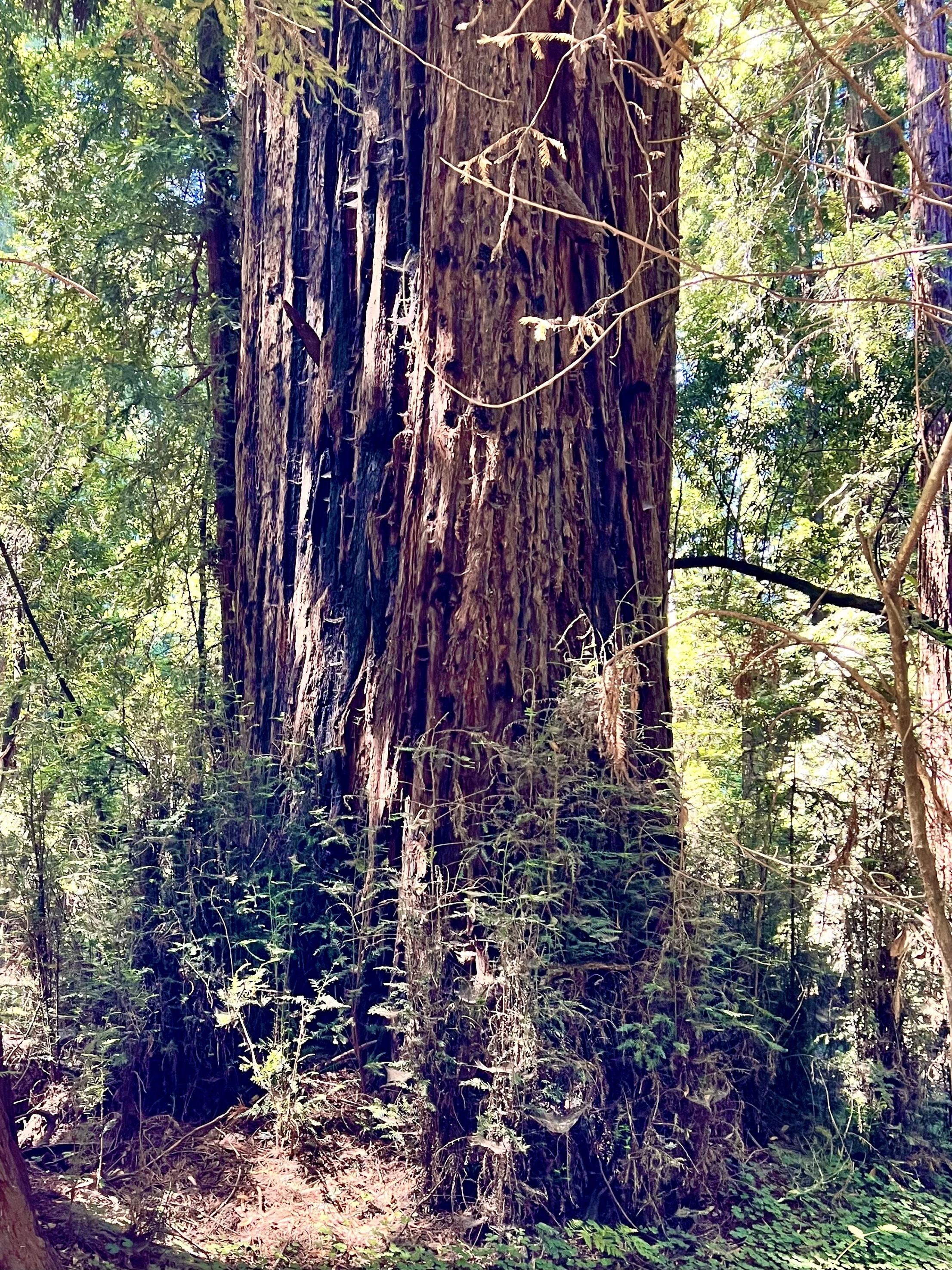
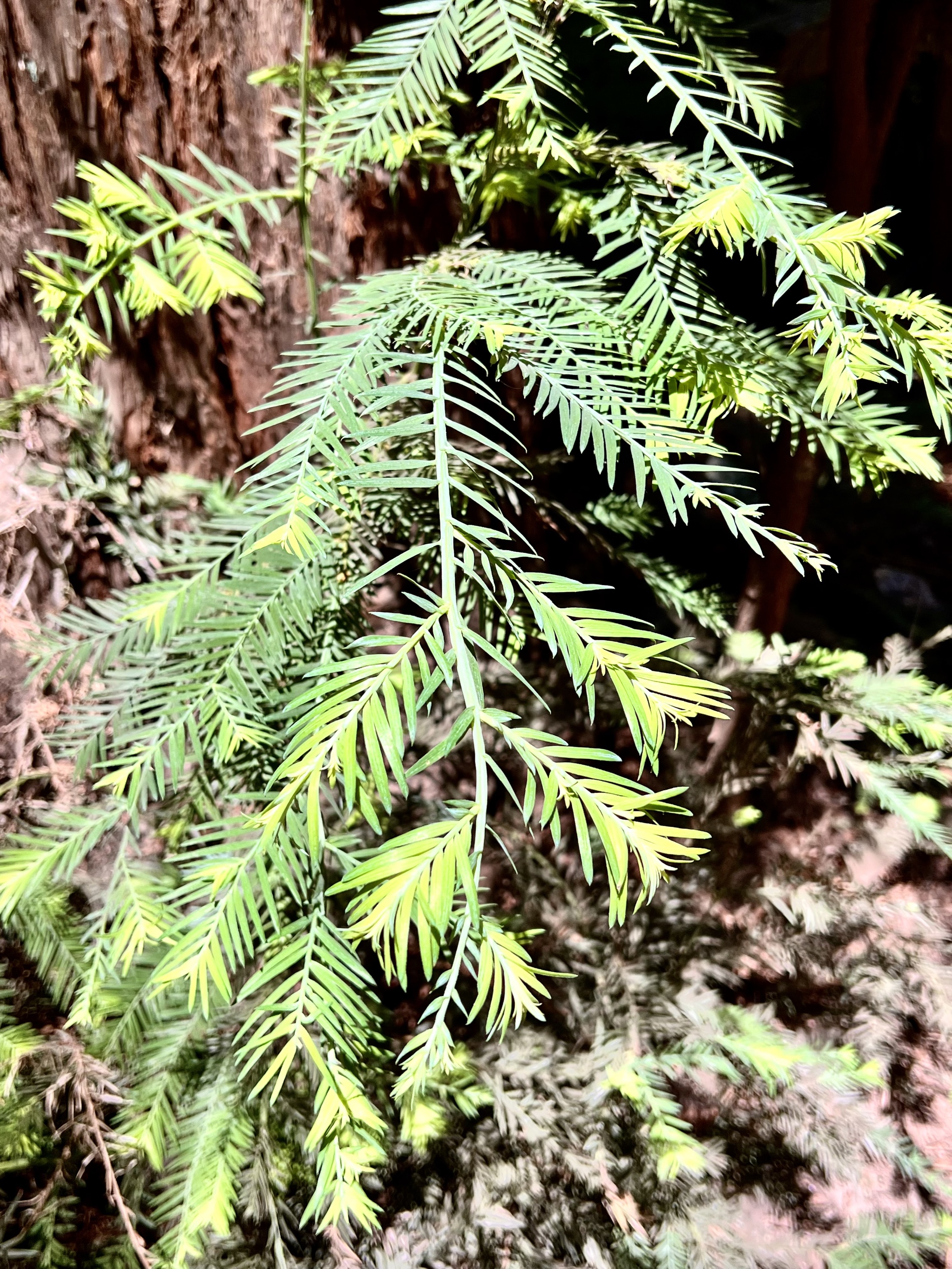
But what I learned that was new was that the trees propagate themselves in two ways. They have small cones, each with up to a hundred oatmeal sized seeds within them that drop to the earth around the tree. But this turns out to be such a hit or miss system because the forest floor is so thick that the seeds rarely make it to the ground that coastal redwoods have developed a second way of reproducing. Around each tree is a tangle of spindly bushes that come from the roots of the tree sending up shoots. A few of these survive and grow into huge towering redwoods living hundreds of years.
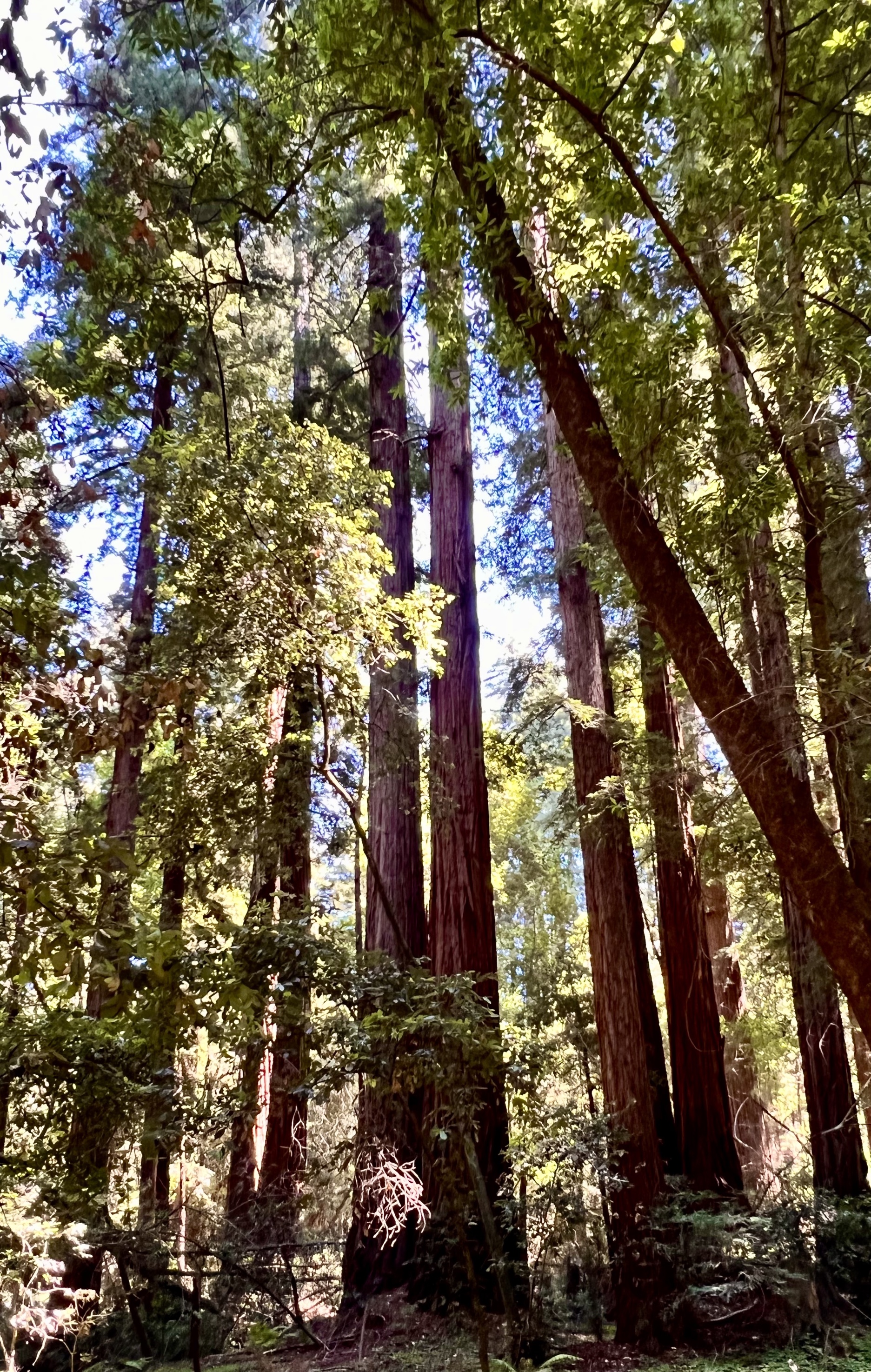
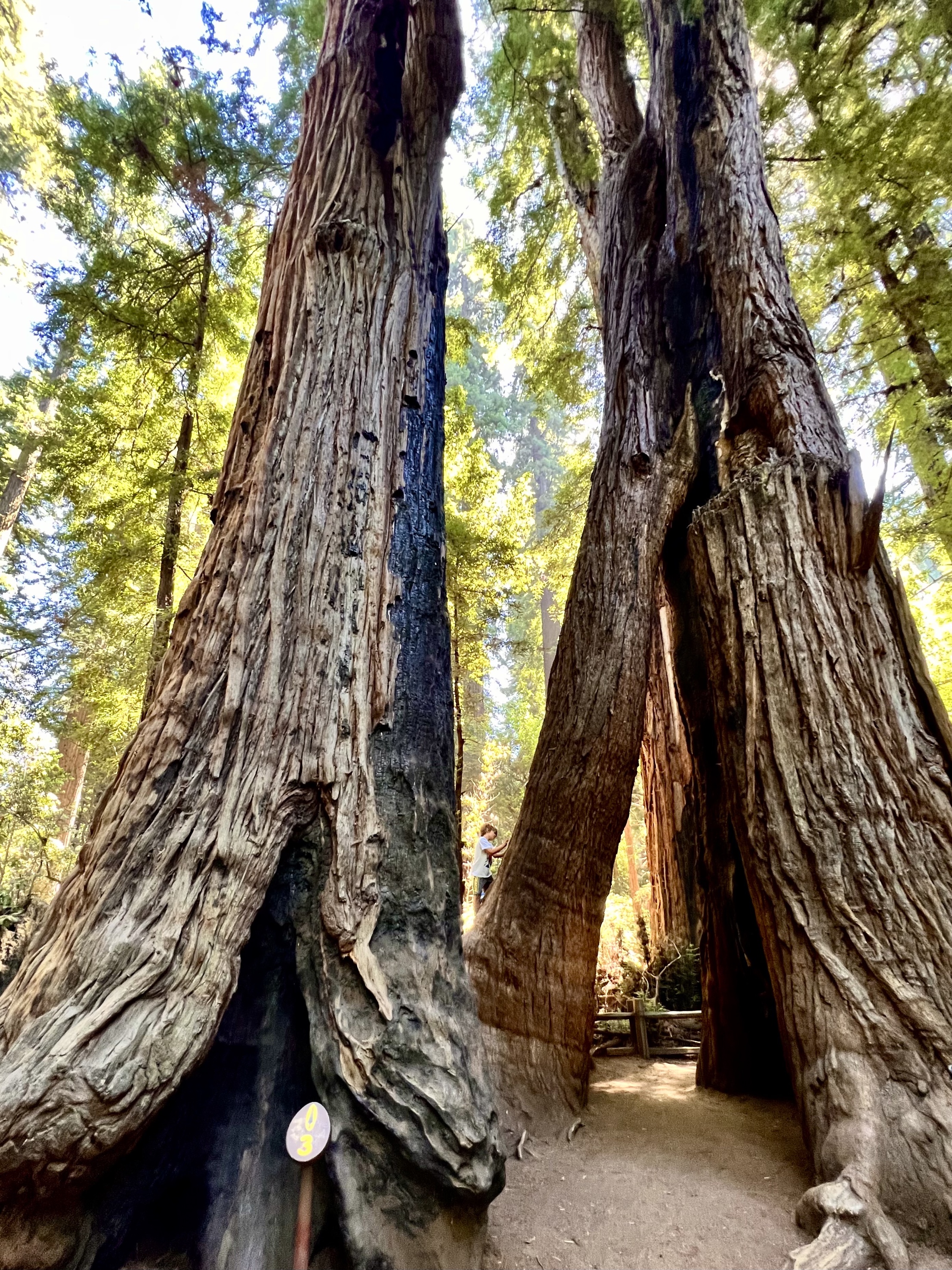
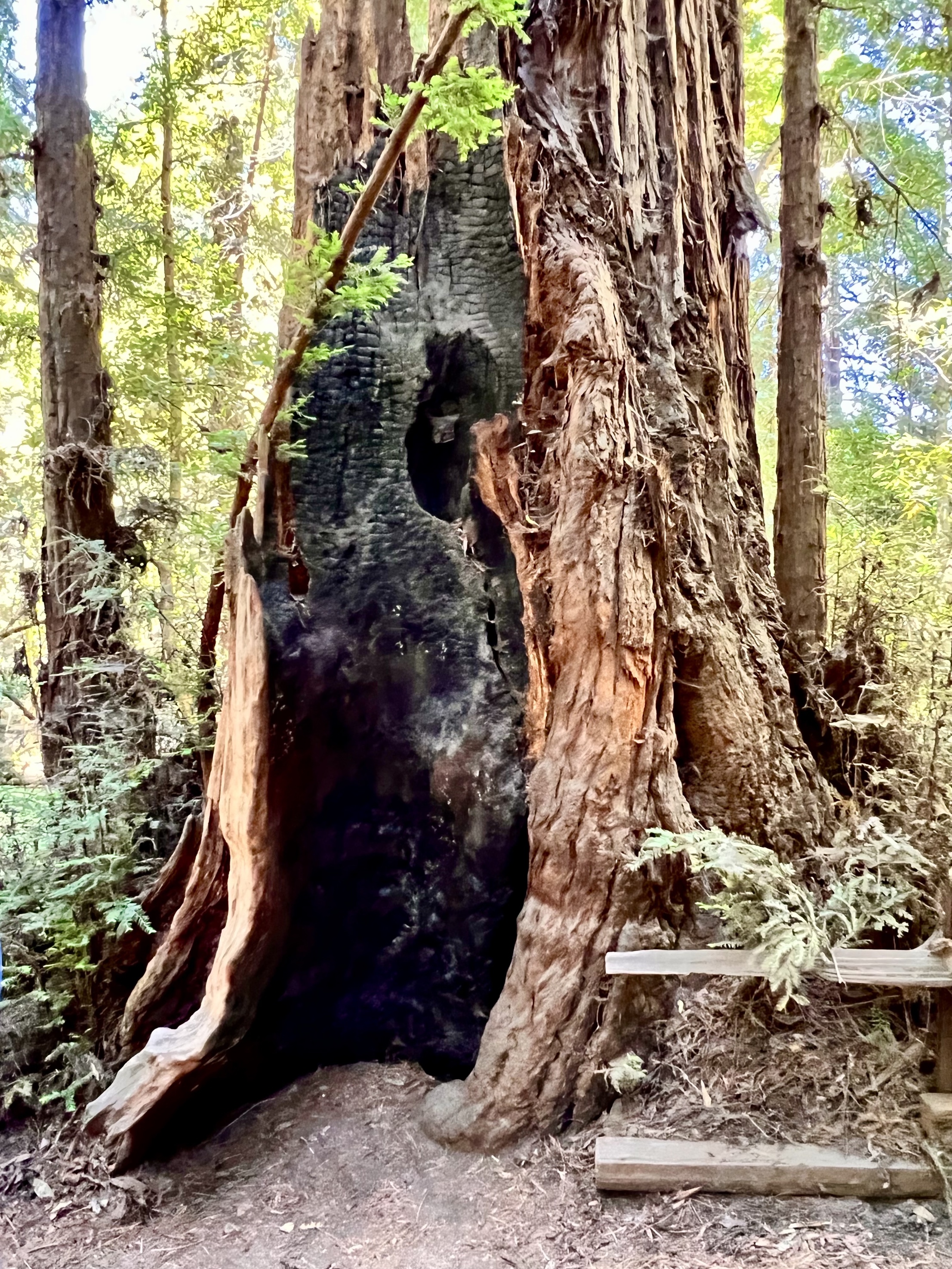
It also means that the redwoods grow in families of five or six or seven trees beside each other while growing from each other hundreds of feet into the air. And oddly, when they for some reasons fall into each other they grow together fusing into each other. They even support each other with nutrients because of the shared root system which is not deep, maybe ten feet, but spreads laterally over a wild area entangling itself with other redwood roots to give it strength. If a tree is cut the the root system sends up more sprouts. In addition, the very thick bark and tannic acid in the bark protects against insects of all kinds and against forest fires. Even if part of the trunk is burned away the rest of the tree can survive.
Then we had lunch at the Heavenly Cafe in Scott‘s Valley and came home and took a nap.


 BILLYBABA’S WANDERING