GLACIER NATIONAL PARK
The first day in East Glacier with a view of the snowcapped Rockies out the window I stayed put in the rustic and old fashioned hundred year old hotel built by the railroad to house visitors to Glacier National Park. There was a fire (gas) in the huge fireplace and plenty or room to sit and look out the window. There was a sumptuous breakfast buffet and the Lounge Cafe had a great view. In the evening I opted out of the hotel and ate at Serannos Mexican Restaurant in East Glacier Village (pop 375) where there was a 40 minute waiting line. Here a $12 Swannanoa Mexican restaurant meal was $18 probably because their season is only four months long between snows and partly because travel costs are up everywhere. I was still in pandemic mode thinking when I assumed that the trains would be half empty and that I could book my tickets only two weeks in advance. With the planes clear full and understaffed with huge numbers of cancellations probably more people are choosing to go by rail as a more secure way. I was forced to spend two days in Washington, DC, because trains were booked full to Chicago and the Empire builder across to was also clear full all the way. But I shouldn’t complain. Besides, I really enjoyed my visit to Washington. And sleeping four of the first eight days of my trip on a reclining seat was as comfortable as sleeping at home since I was equipped with a fuzzy throw (electric but not plugged in yet) a fancy wrap around the neck pillow and a back pillow, one third of my luggage, and Melatonin. I was ready for anything and slept well.

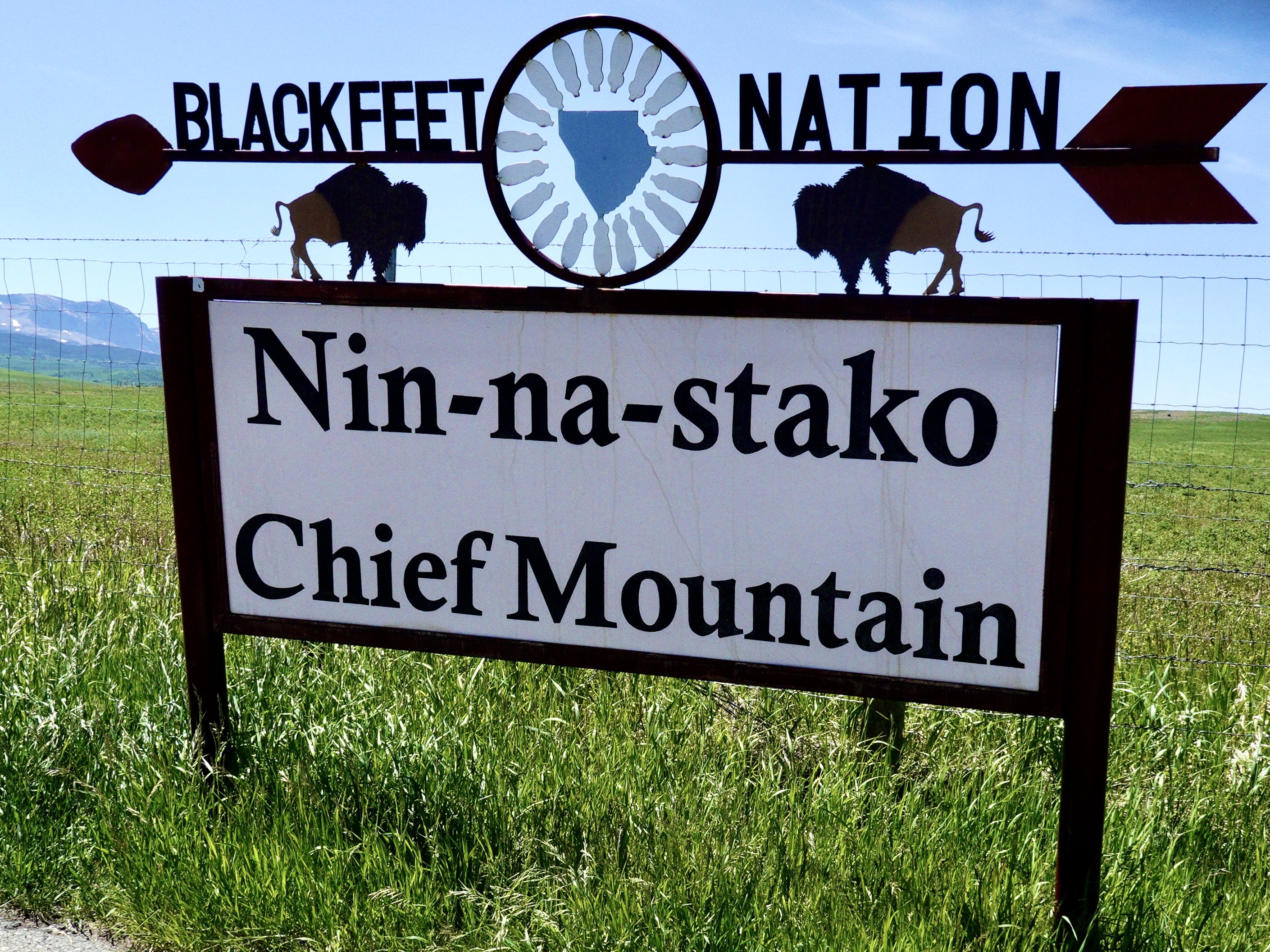
So I enjoyed the expensive Glacier Park Lodge on Saturday. I had earlier worried about how I would get to see the park itself. The free shuttles didn’t seem to be running. But Jim and Lisa Hestad, whom I was coming to visit in Bellingham, told me about a wonderful tour of the east side of the park called Sun Tours. On Sunday from 8 to 3:30 we were guided around the east side of the park by a Native American whose name was impossible to pronounce or remember.
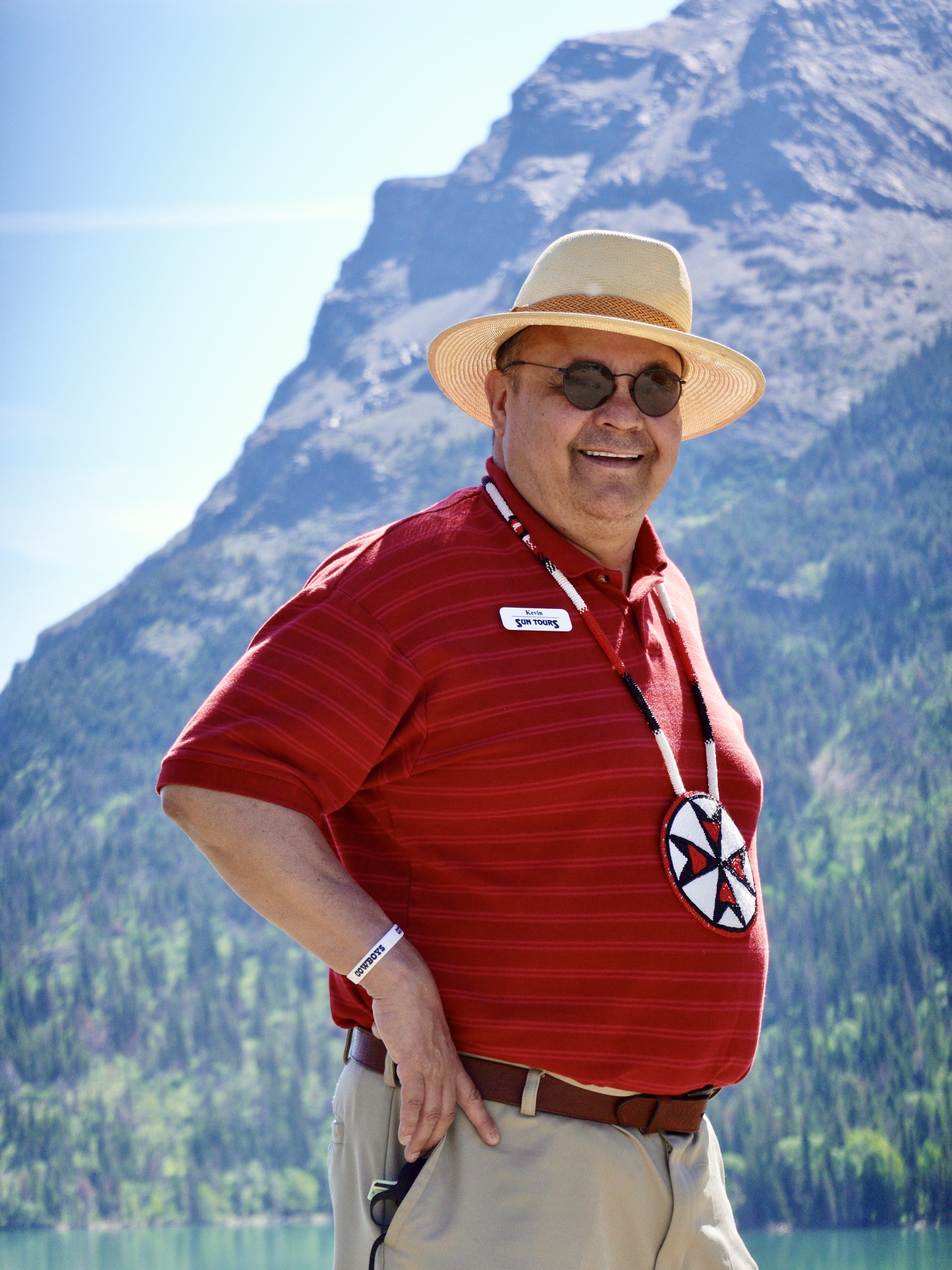
He told us stories of his grandfather growing up on the reservation and the white attempts to strip away the Blackfoot customs and indentity by well meaning but often cruel missionaries and government agents. And he sang a number of Blackfoot songs in a singsong nasal voice that sounded to me like Sri Lankan atonal songs. He had stories about all of the mountains that we saw and told about the pressured exile to a reservation on barren, unwanted land, in Oklahoma to allow white gold diggers in and then the gradual return home of tribal members. And he told us about how smallpox and other diseases decimated all the Native American inhabitants from 6 million to 275,000. He spoke lightly and without rancor, but honestly so that his story of Native American betrayal resonated with all of us in the bus and reminded me of the Trail of Tears when the Cherokee were marched in winter from near my home in North Carolina, a death march, to Oklahoma and then drifted back home again when able.
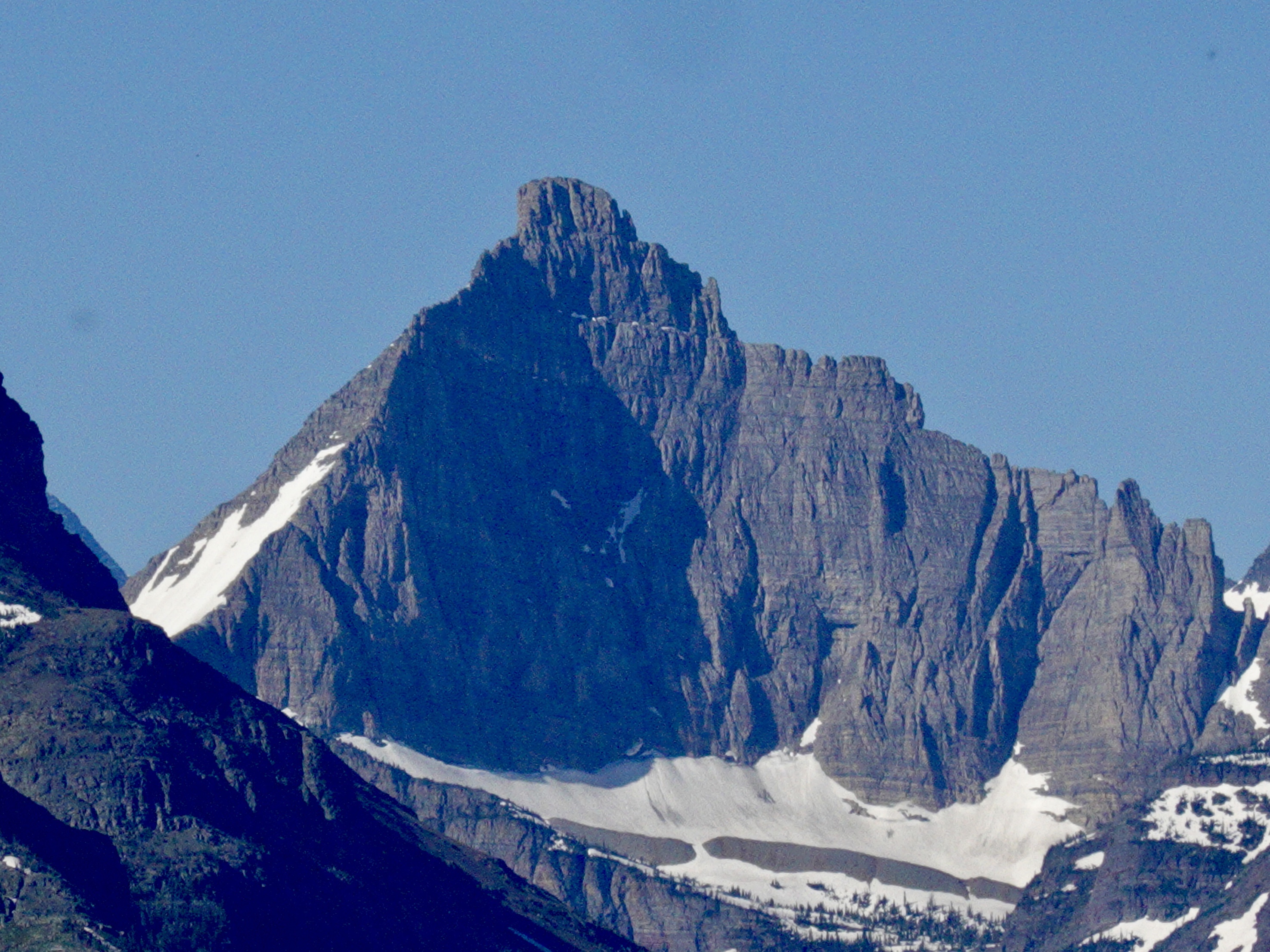
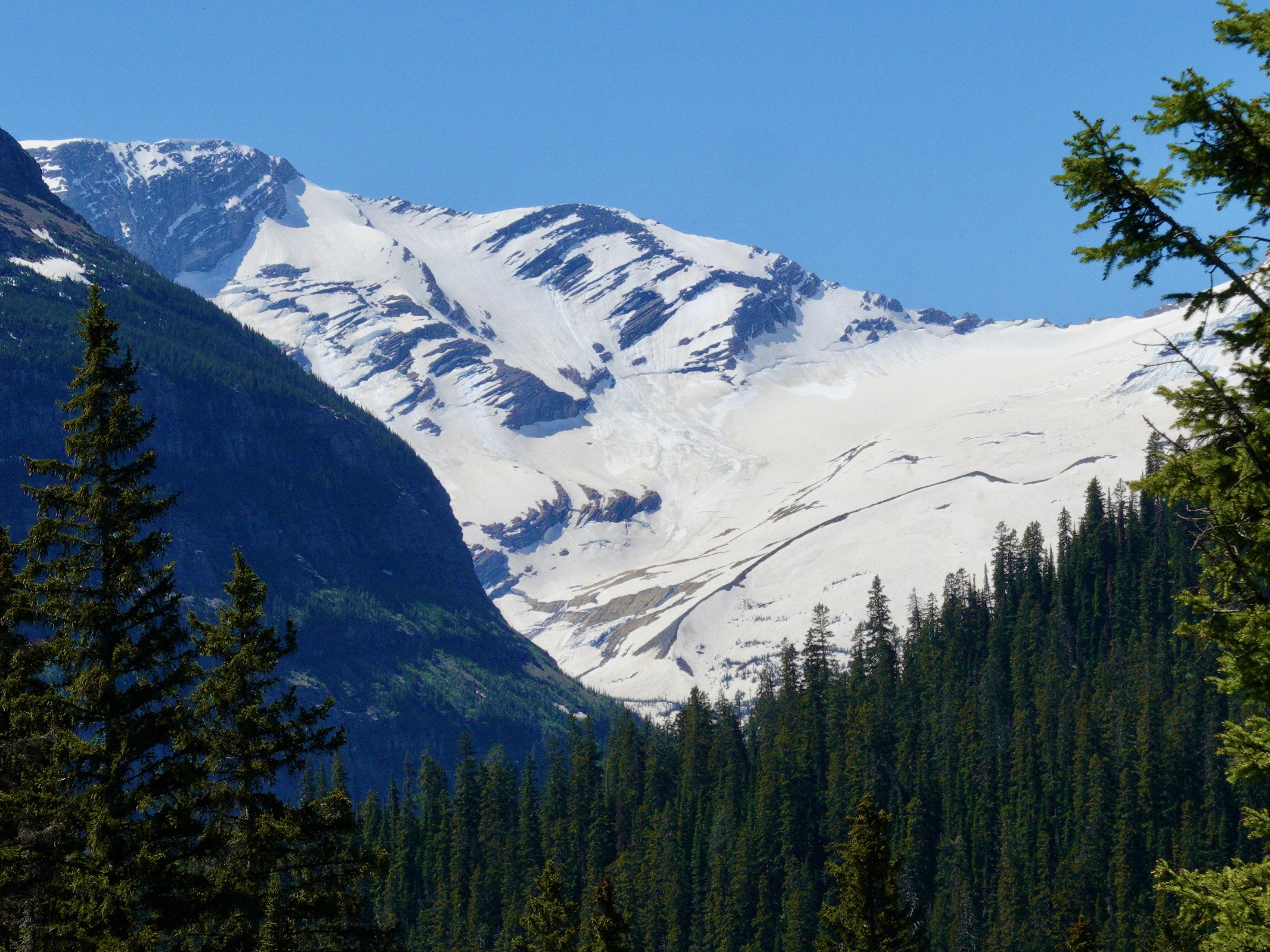
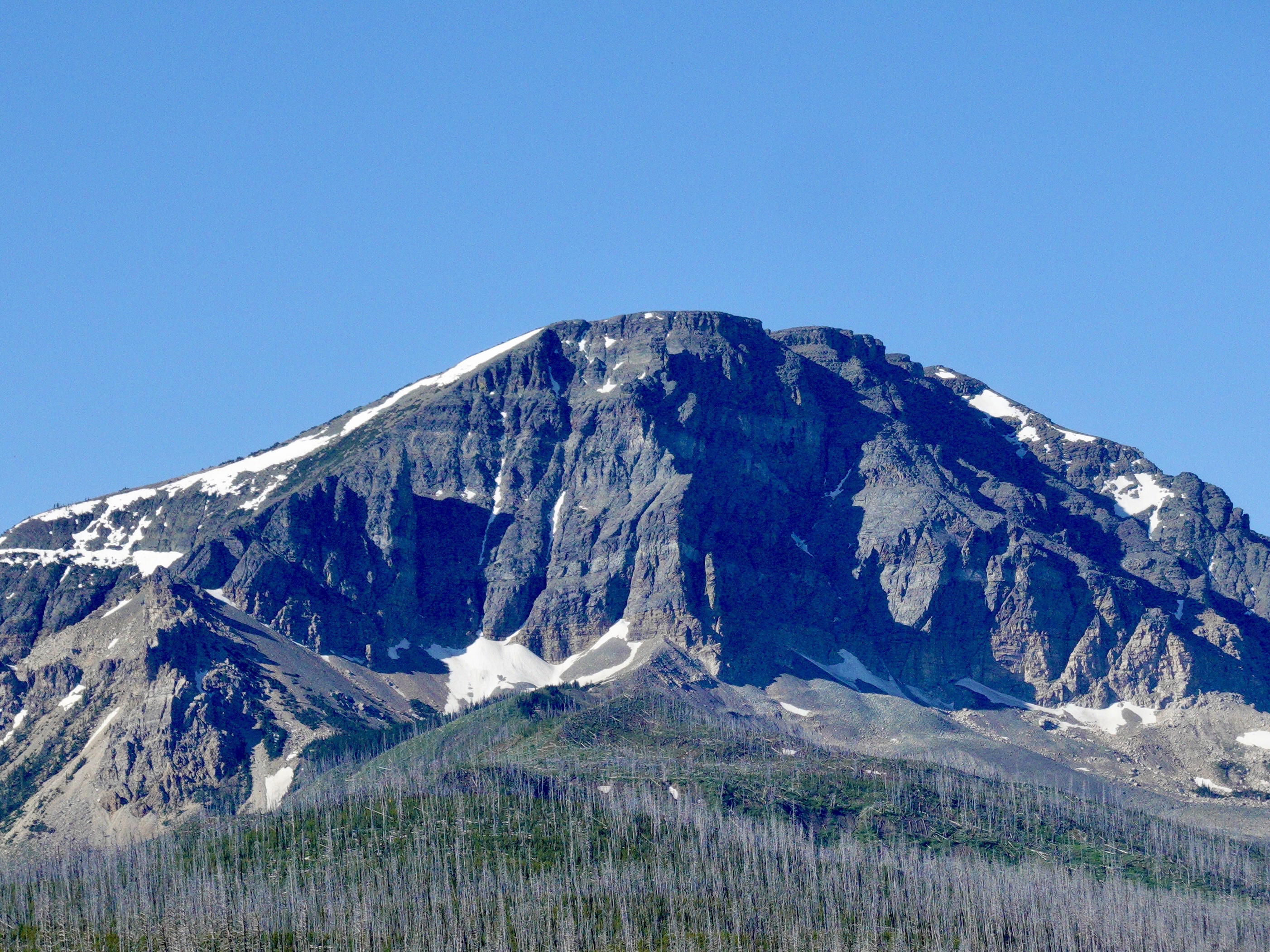
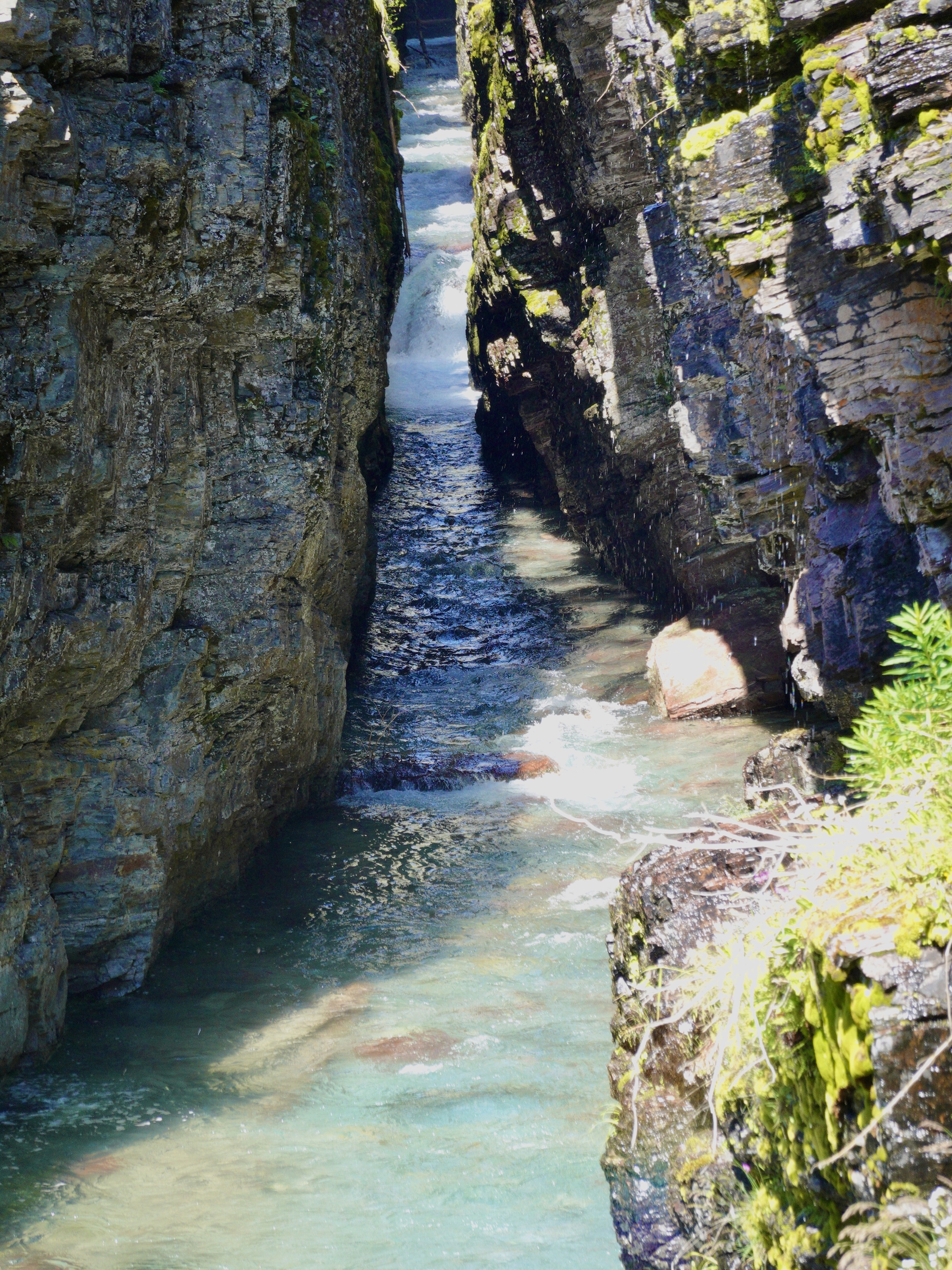
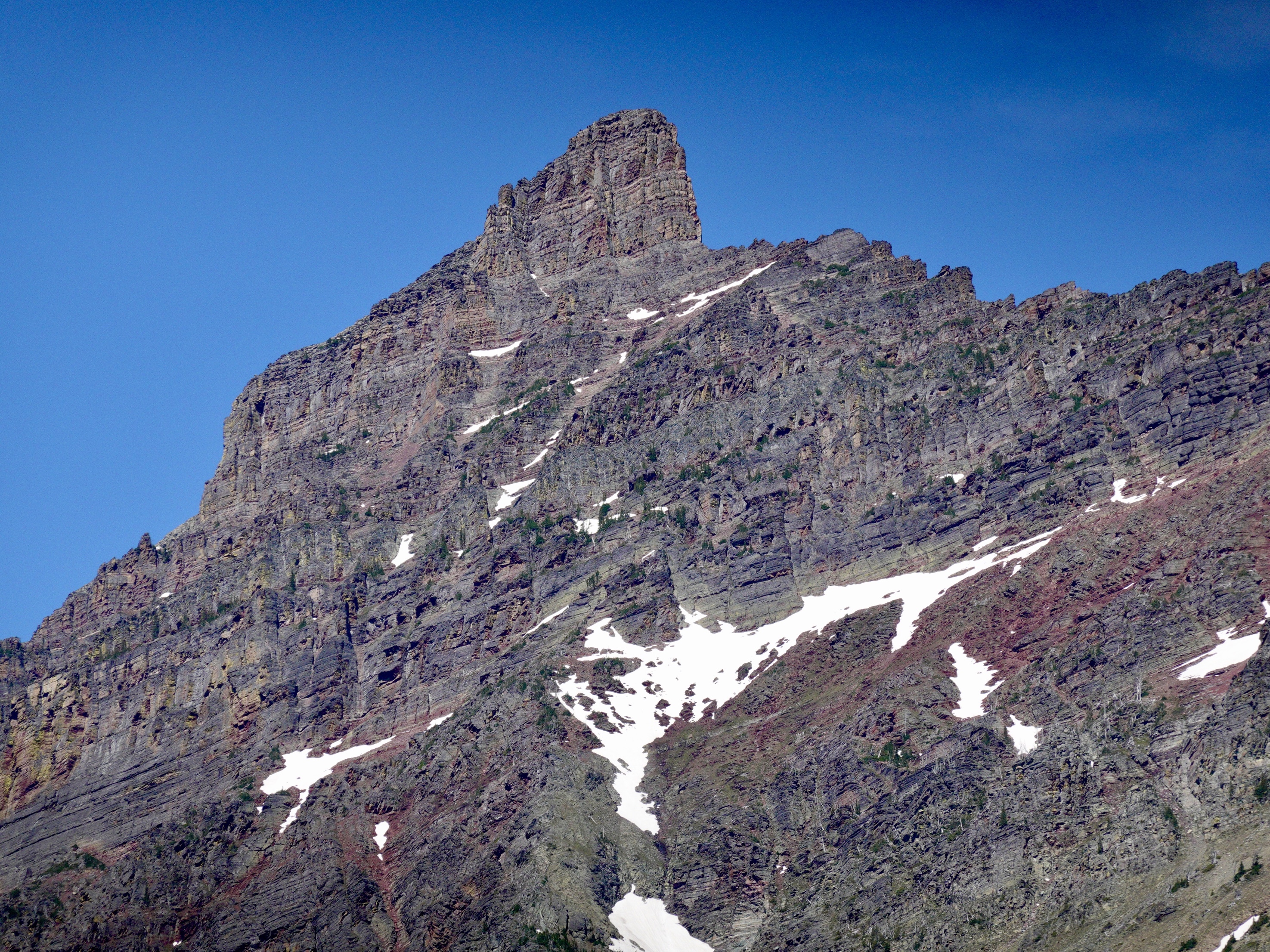
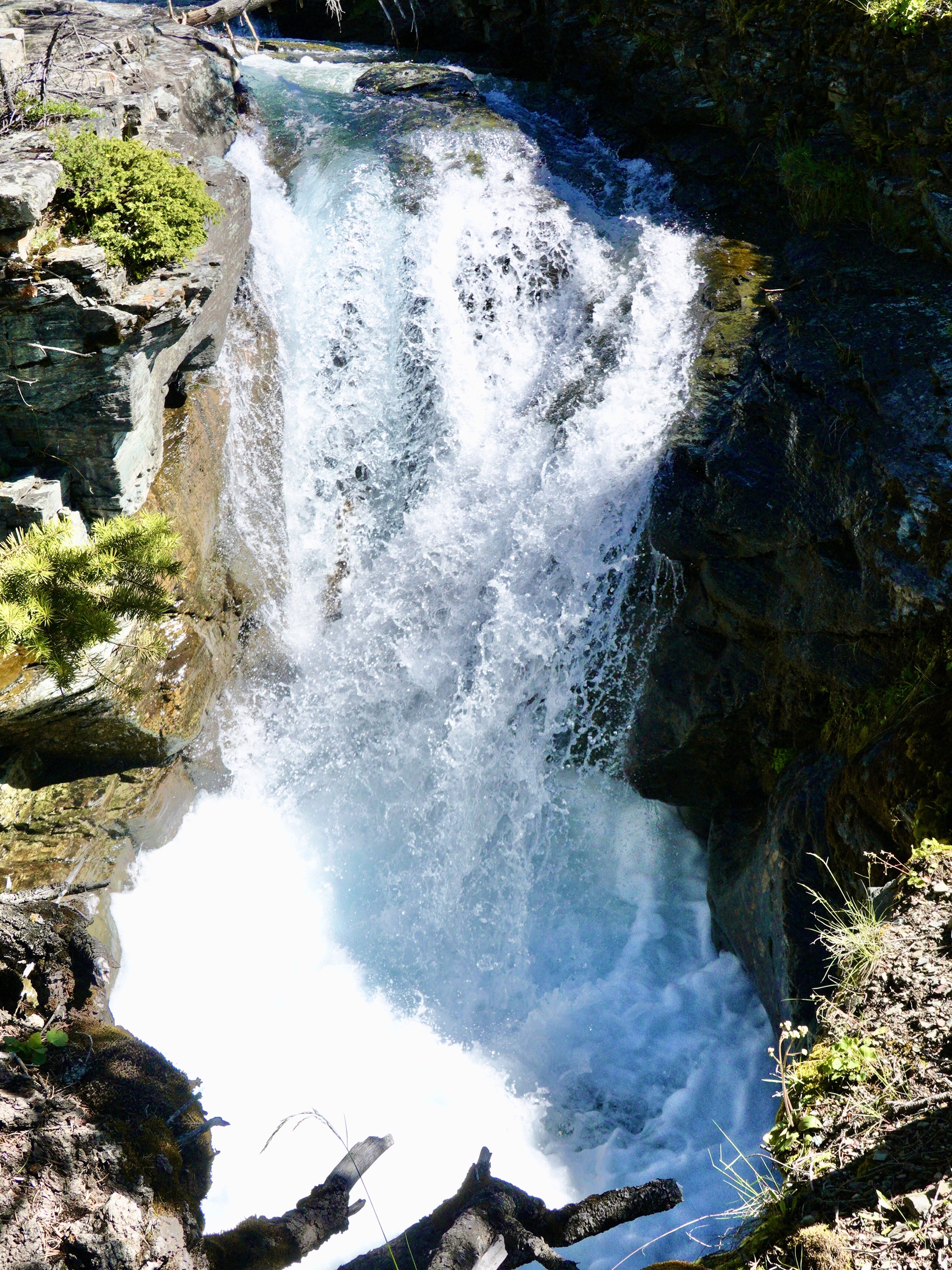
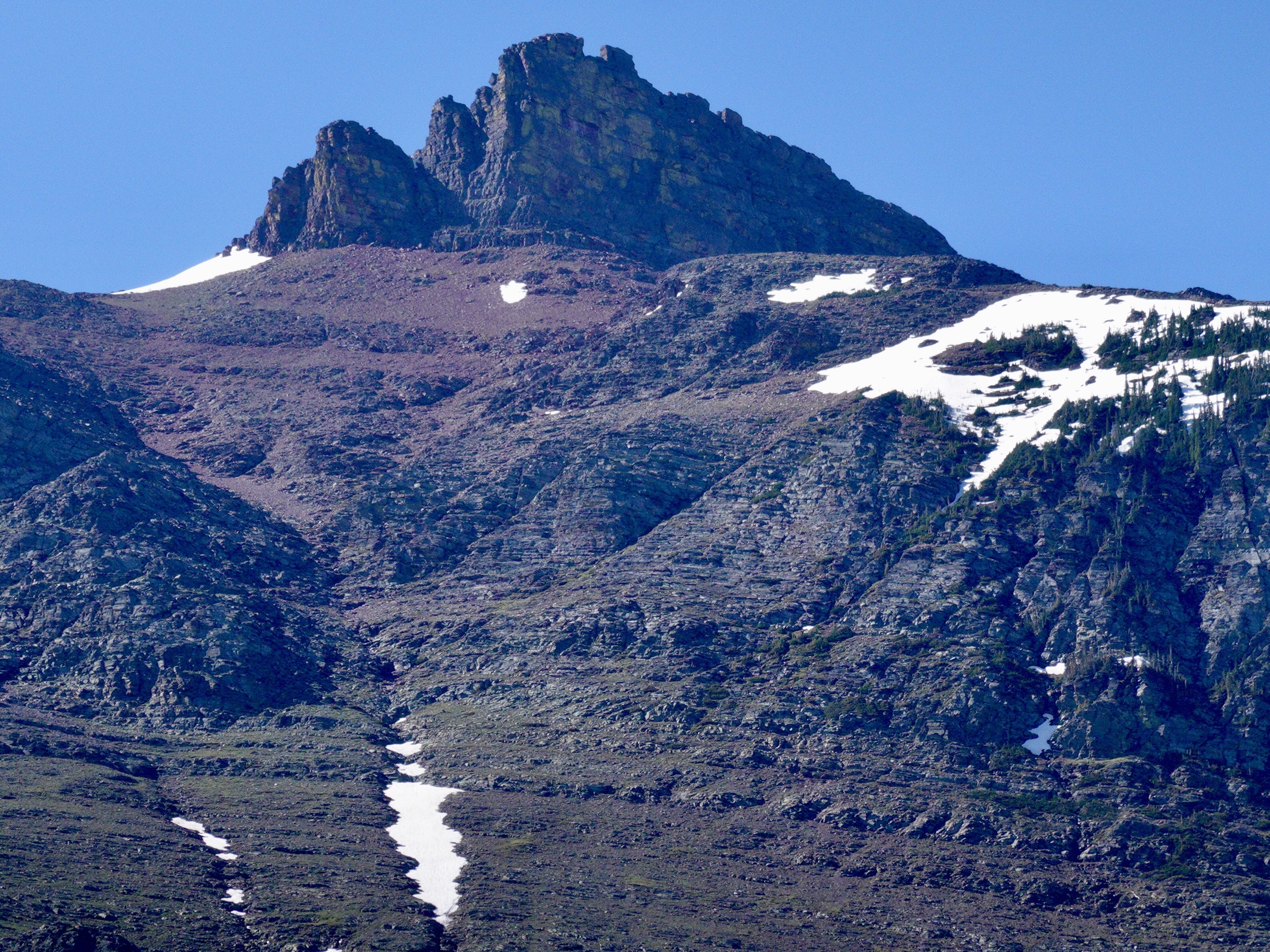
The photographs I am putting on today and tomorrow as I process them are of the grandeur of the mountains including one of the two glaciers that are still visible from the road. Soon the glaciers in Glacier National Park will all be gone.
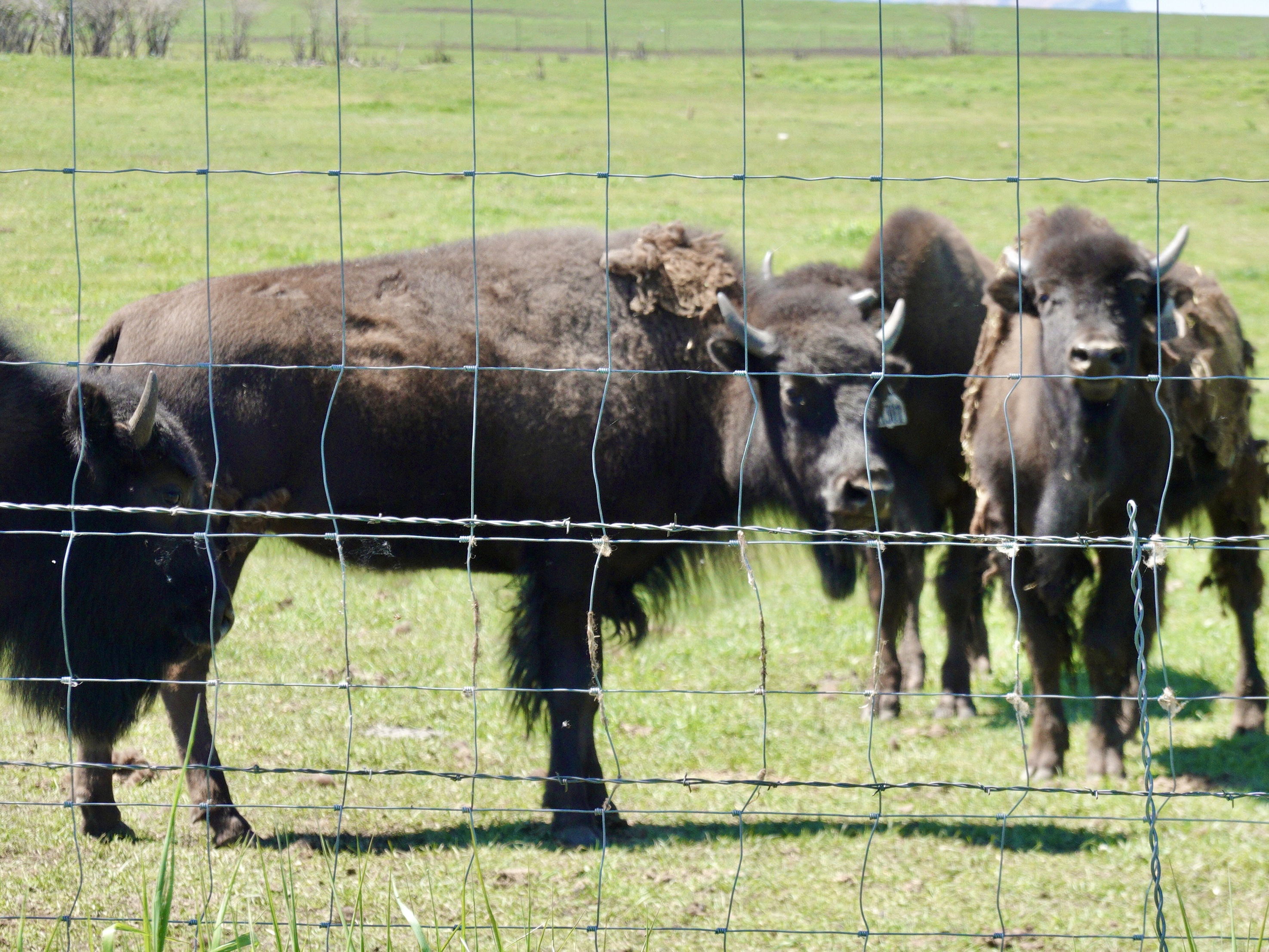
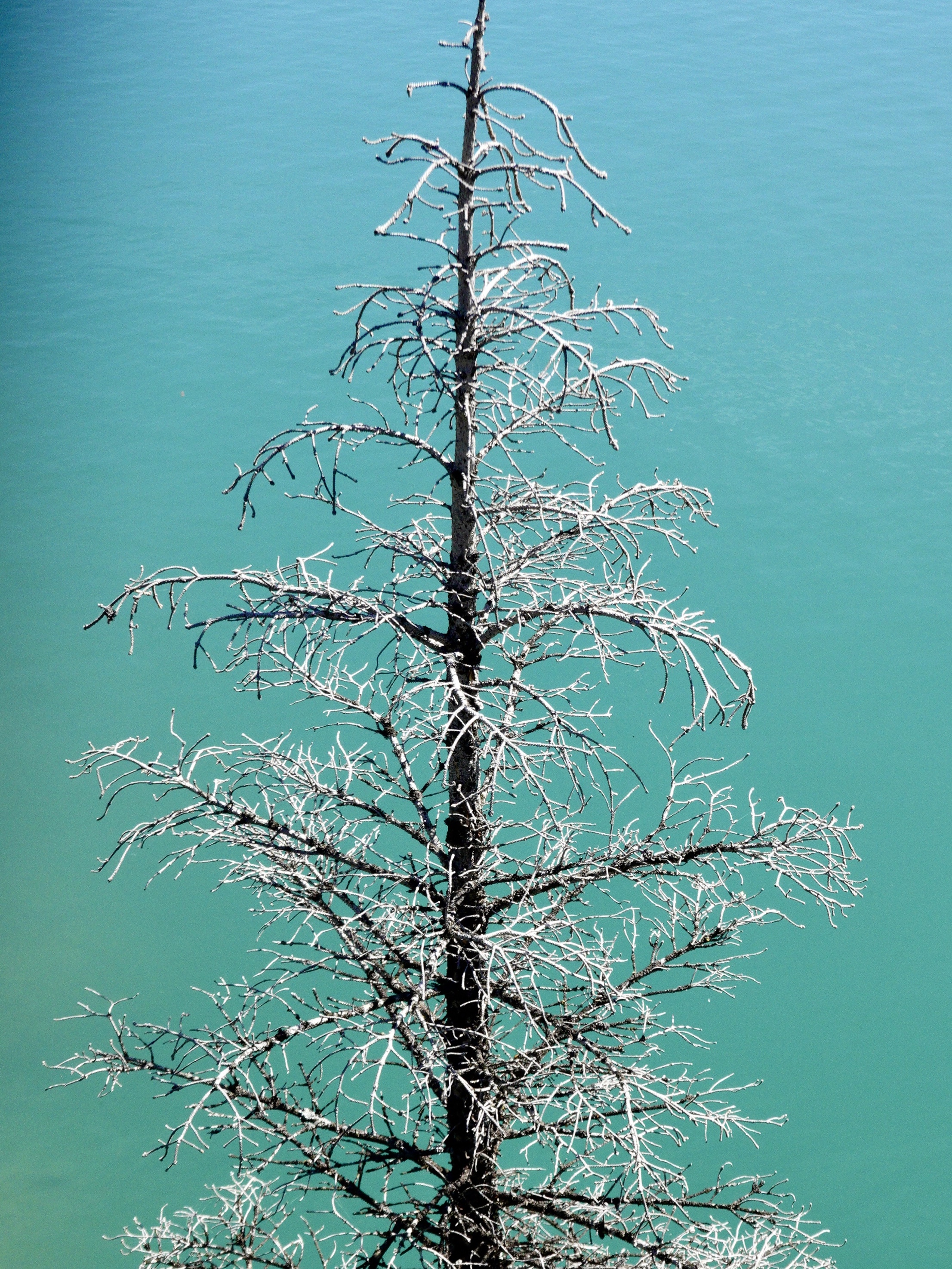
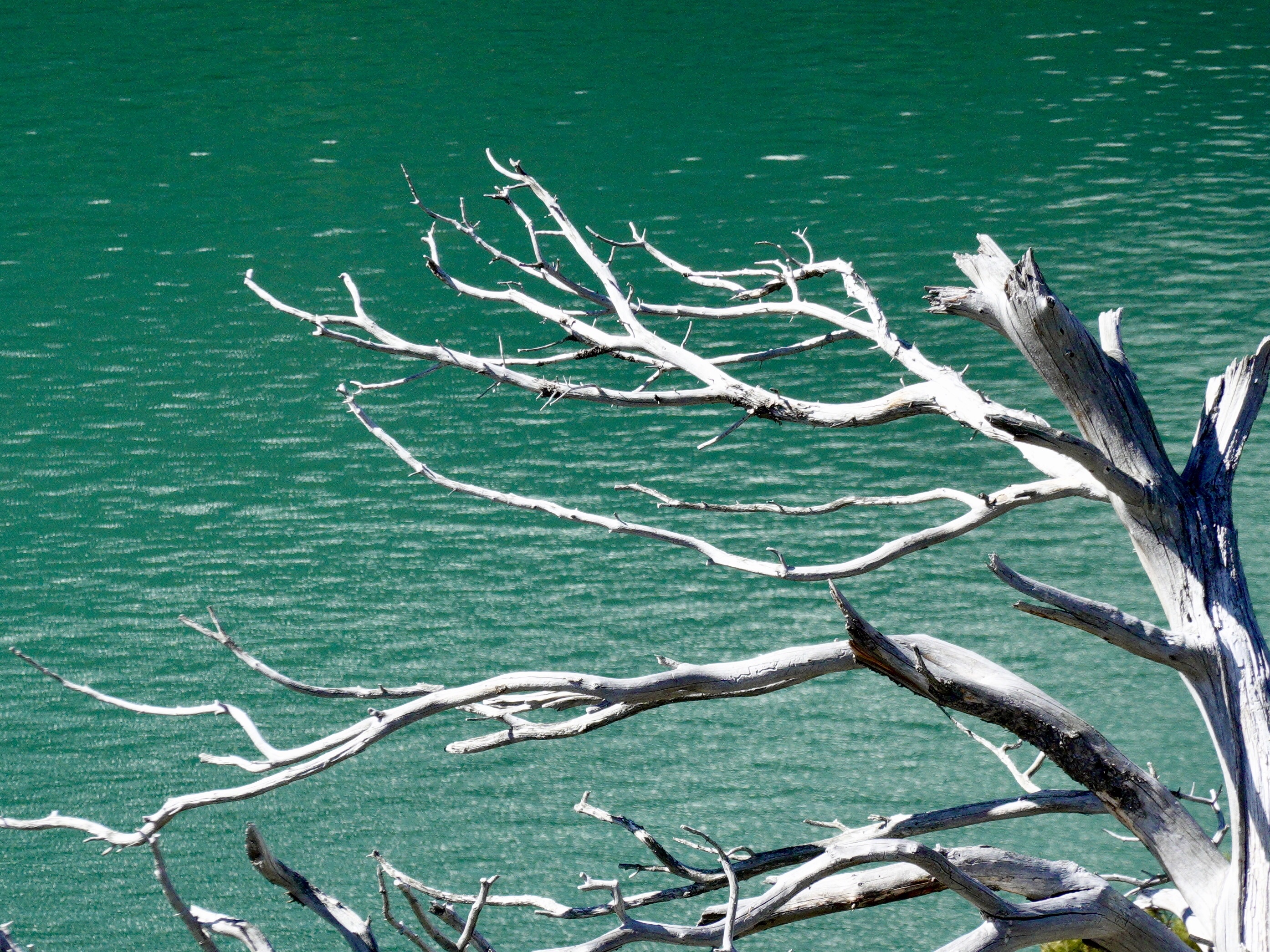
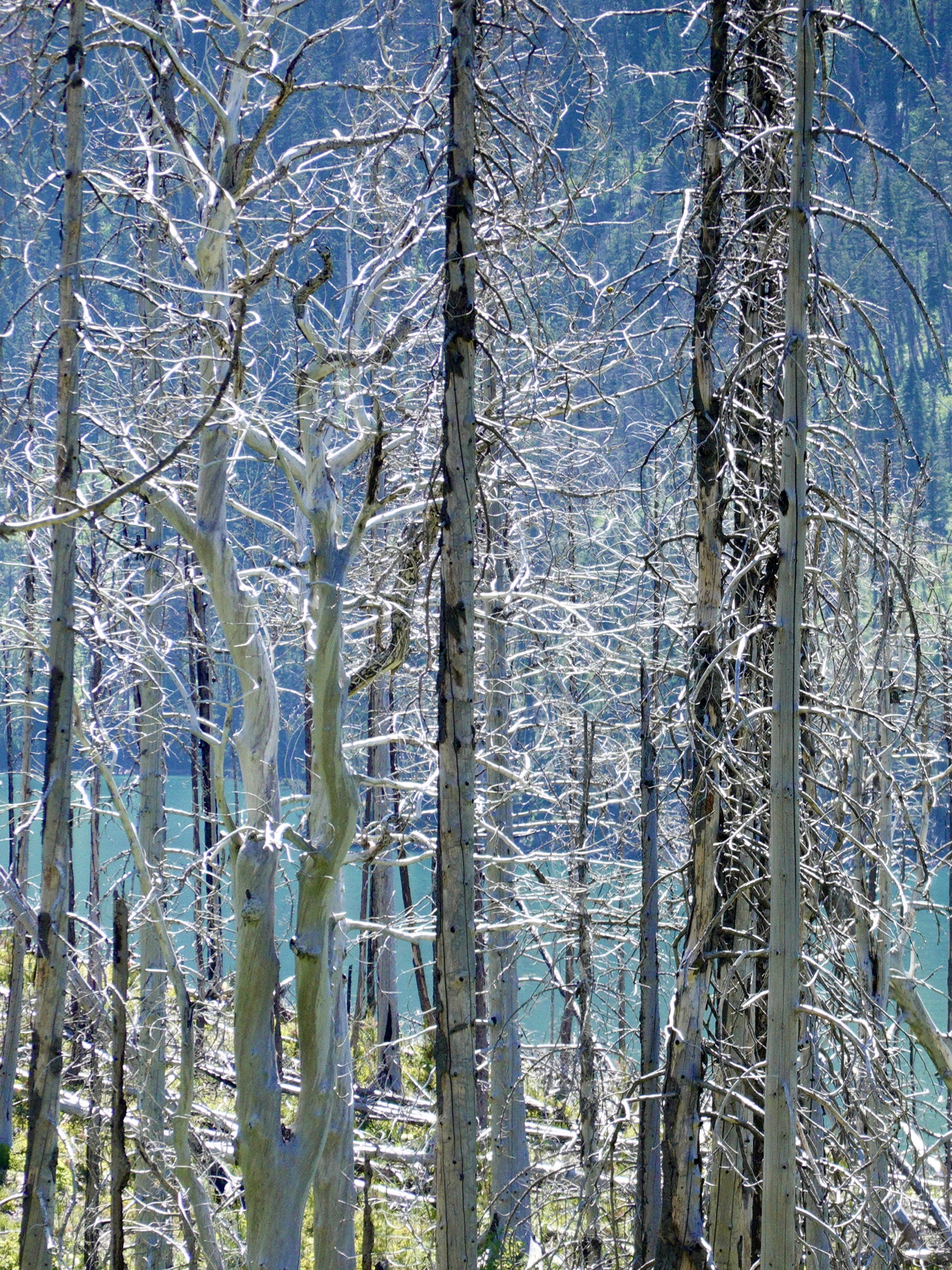
A big snow two weeks before our visit, which was on the second sunny and warm day after weeks of rain and snow, had closed the Going To The Sun Road, which is the most visited part of the park so we were only able to see 15 miles of road. But this shortened trip gave us time to get out again and again and to take short walks and to take as many photographs as we wanted to. A forest fire started by accident by camping Boy Scouts in 2016 burned 1000s of acres of this side of the park as seen in the bare white trunks of the dead pines. We saw a fox run across the road, saw a moose far across a lake, were told that there was a bear up the hill but couldn’t spot it and finally got to take as many photographs as we wanted to of bison behind barbed wire lolling on a ranch waiting to be turned into bison burgers, one of which I ate at our lunch stop at St. Mary’s Lodge restaurant.
I was reminded that I had seen a similar red fox months ago in the pasture below my house in Swannanoa and that just the week before I left a large, round brown bear had appeared as I drove into my driveway, coming from my next door neighbor’s yard, and that I have had deer in my yard in the early morning and that courting fan tailed turkeys almost daily strut through my yard. I am reminded that what I call my land was a hunting ground for the Native Americans who lived within view of my house for hundreds of years in a village on the edge of the Swannanoa River (a Native American name) and that one of the first white settlers to come over the mountain from Old Fort was lured by a cowbell lifted from a cow and killed on Jones Mountain, just above my house by Cherokee resenting his arrival. So I didn’t need to come to Glacier to face what colonization did to North America, if I just pay attention. I can hear and feel the story right here at home and see some of the wildlife that once filled the forests of North America. I don’t have to project it far from home. The story of betrayal is just as clear in Swannanoa as in Glacier, Montana and just as inescapable.
It was a wonder full day in the park and an educational one. And it sure was beautiful.






 BILLYBABA’S WANDERING