AMTRAK 4 HOUR STOPOVER IN CHICAGO

My first day in Washington I spent time in the National Portrait Gallery and on the second day in the National Gallery. They are each in very ornate buildings and are both free and both large with gallery after gallery. Today I visited the Art Institute in Chicago. It is also in an ornate building but is not free, $19 for out of state seniors. In a way these museums are all jumbled together and connect with the National Gallery in London that I saw last month as if I have been looking at the same museum over and over with similar paintings. I didn’t see any of the grand museums in Paris. But if I had my response would have been the same.
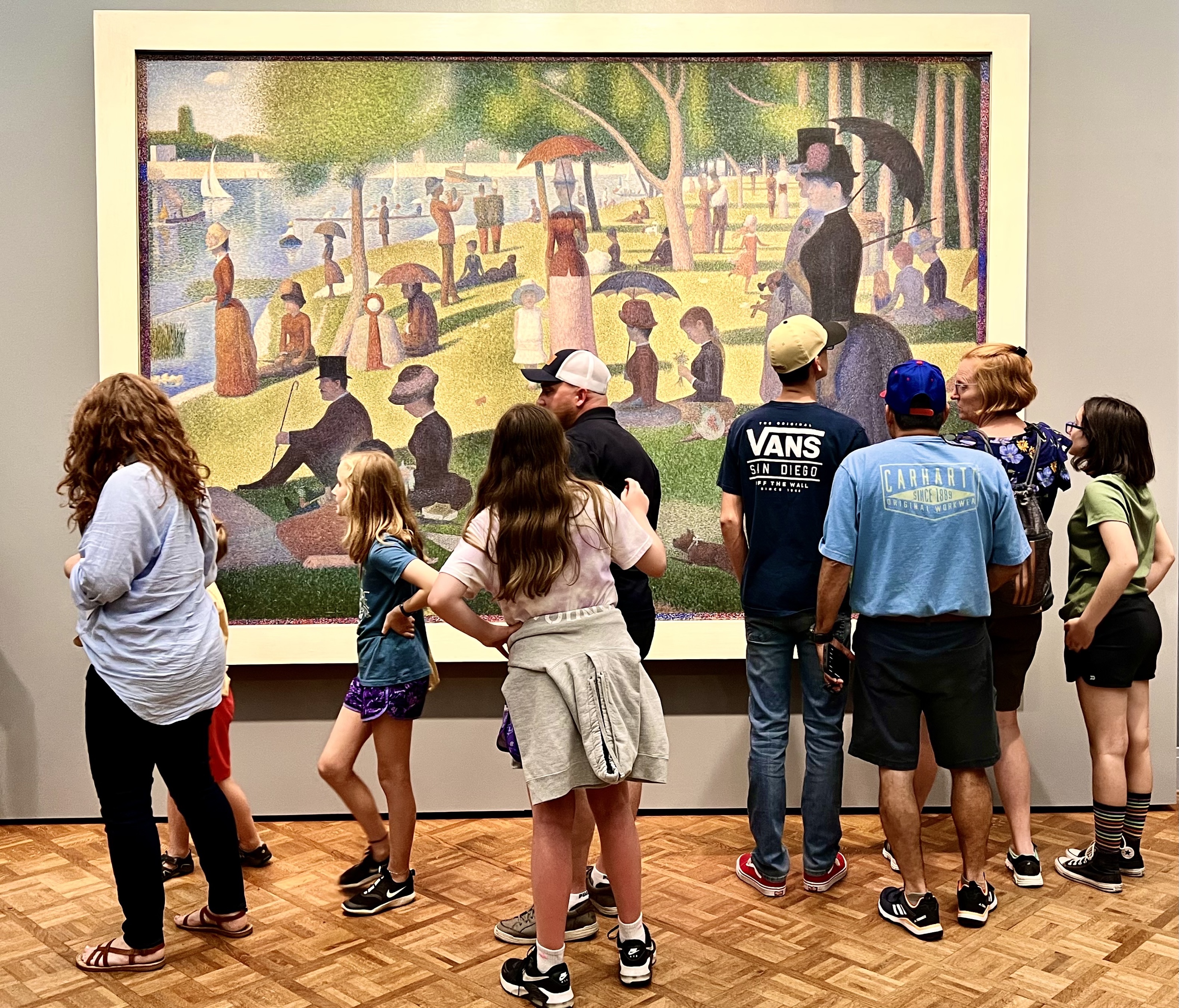
Part of my response is determined by old age. In every one of these museums I have arrived after walking a good deal. Today it was a mile from Union Station in Chicago to the Art Institute but I also wanted to see Lake Michigan which was another long way in the hot sun.
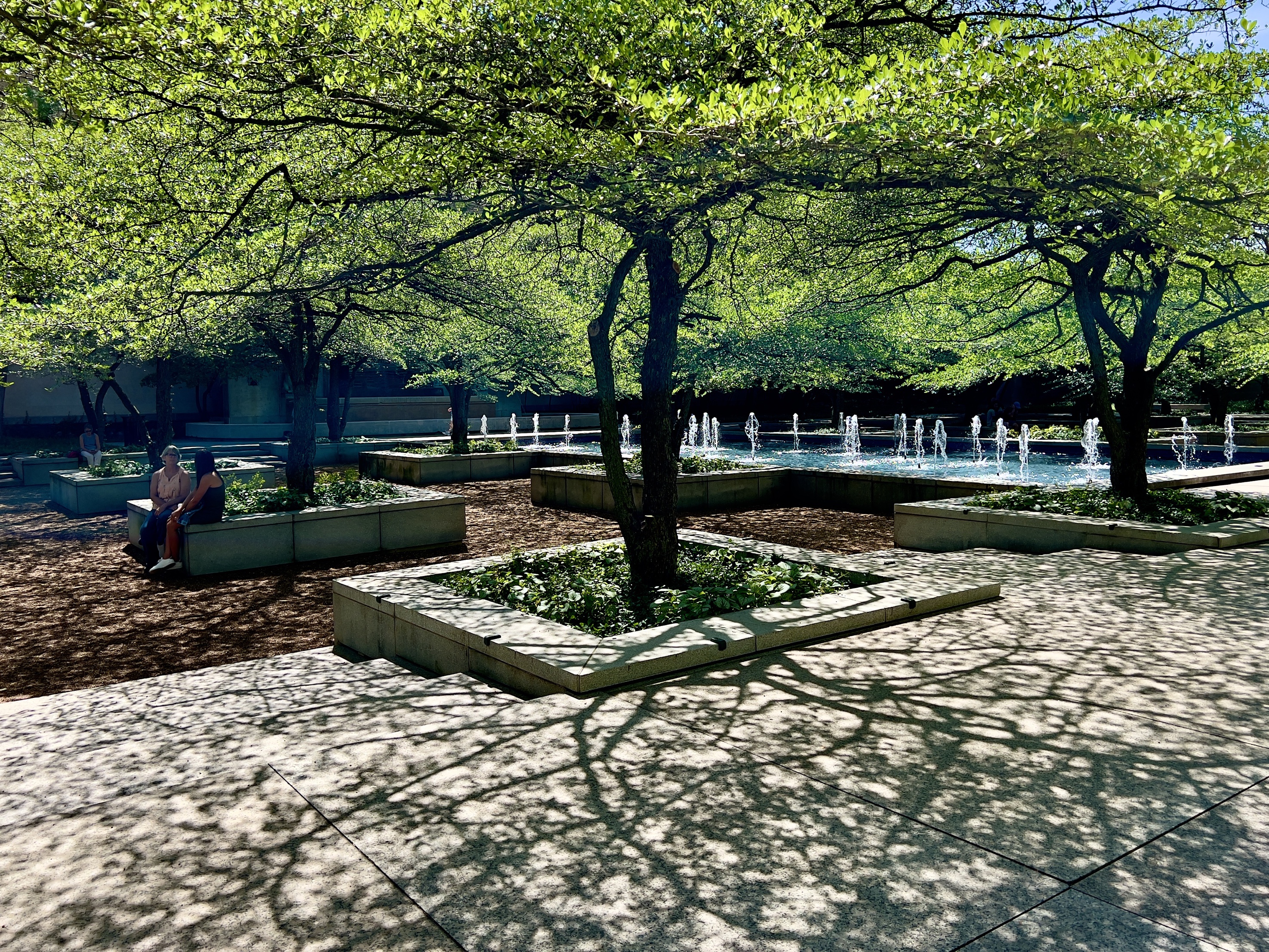

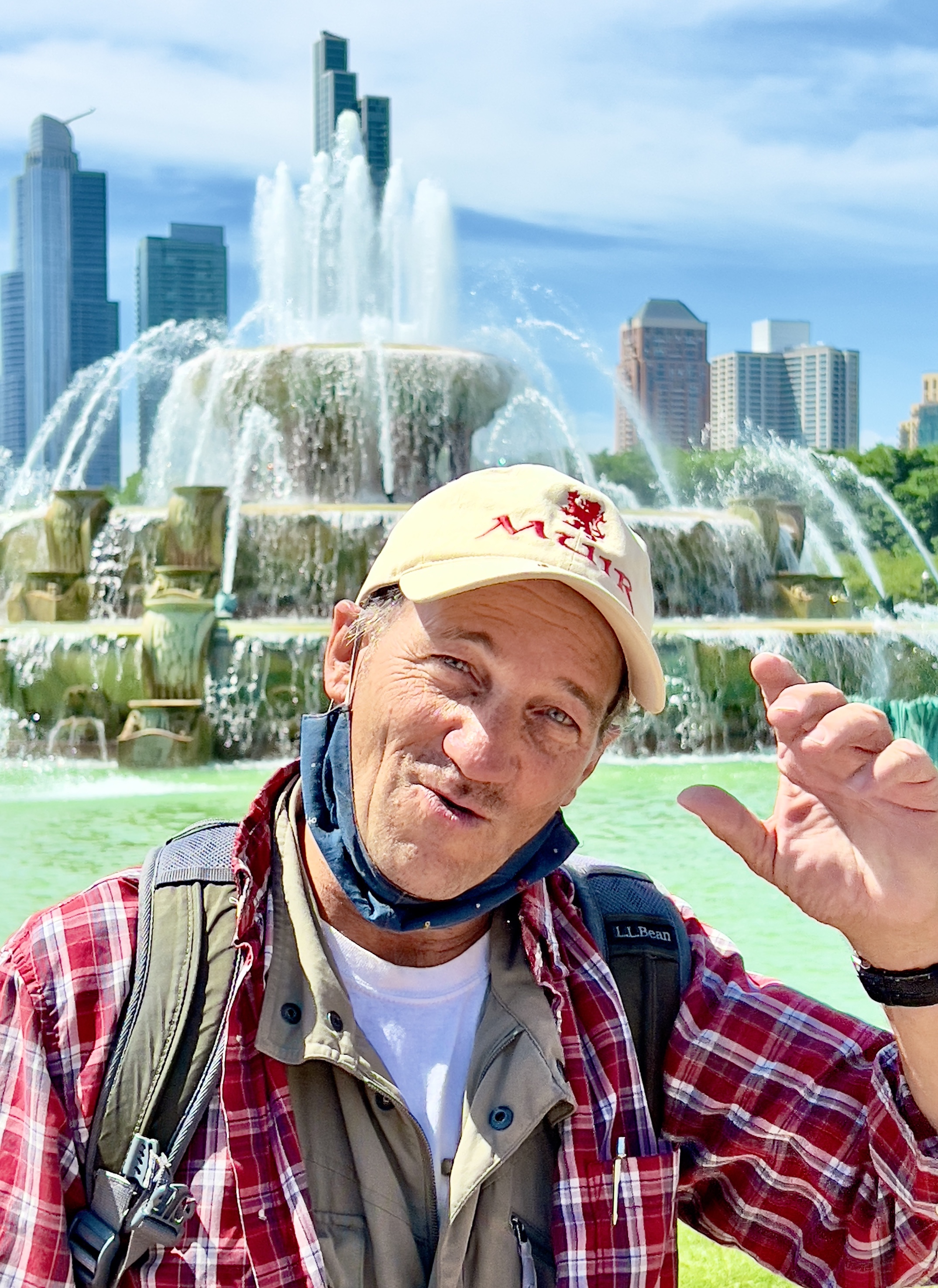
By the time I got back to the Art Institute and had bought my ticket on line, no sales at the door, I was completely worn out. I went to see the French Impressionists first since the Art Institute claims to have the largest collection of Impressionist paintings in the United States. But a strange thing happened here and in all of these museums.
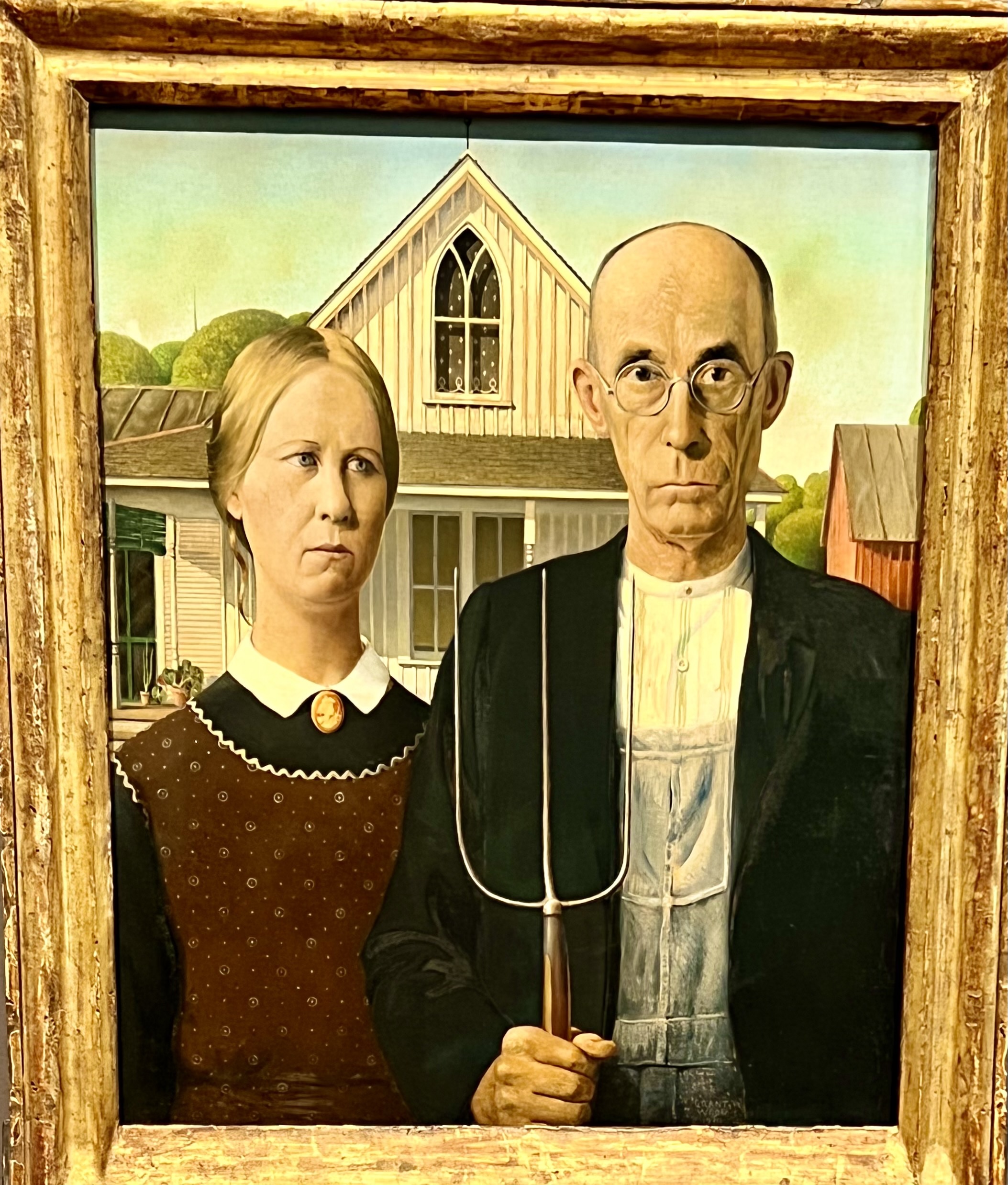
I would come upon a painting that I really liked and had seen a hundred times, a painting that was completely familiar to me, and here I was seeing it in person for the first time. I’ve had that feeling with books that I have read. I almost only read ebooks and have thousands of them with me on this trip. But I am always surprised when I see the same book that I’ve just enjoyed sitting in a bookstore window, printed book. It seens odd to me that a virtual book can be an actual printed on paper book. I have seen these paintings so often that it is hard to believe that this is the actual painting that the artist sat in front of and painted and then revised and finally came up with this version. The odd thing is that the original doesn’t look any different than the copies. Something similar must happen with NFT’s, art works that are created on a computer with the original identified in some way and the copies, which, when digital, are all exactly the same in every way are considered to be less valuable copies. The original has great value and the endlessly reproduced copies much less, even though they are exactly the same.
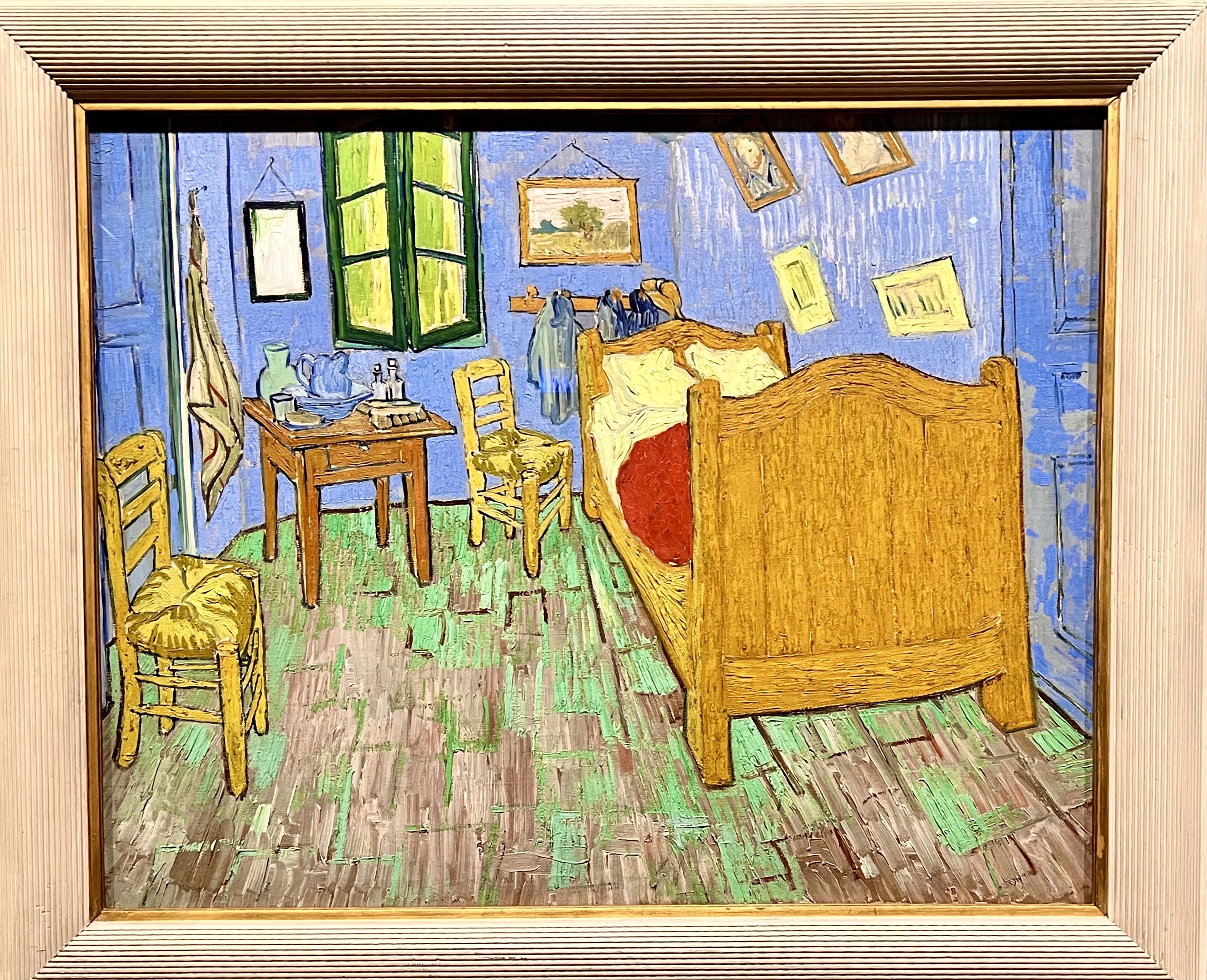
So when I see original of these actual paintings I like the idea of seeing the original and realizing there is an actual original, but but the pleasure I get from seeing the painting while real and intense, is no more real and intense than seeing a digital copy being played on my television screen or a printed reproduction in a book. When I was a boy and first got hooked on looking at paintings of all kinds, the reproductions in the famous Skira series of art books were good but now great. But now printing has improved and the digital age has arrived and the reproductions are very good.

So that is one of the things that I notice in the Art Institute. But several other things were also happening, all enhanced or made more intense because I was grouchy and sore. One of the things that rankled a little is the contrast between the lives of the painters, almost all of whom were neither rich nor famous during their lifetimes, and the elegance of the museum itself. Each of these museums had grand staircases and huge atriums with fountains in the center. There is a kind of hushed, worshipful attitude among the awed throngs going through, most of whon never look at art except when it is on the list of things to do. I took phtographs of a number of paintings, my own reproductions (museums only a few years ago were possessive of their paintings and allowed no photographs, but now in the digital age they do, in fact they encourage it. And some people take photographs but most people glance at painting after painting and then go home and think of something else.
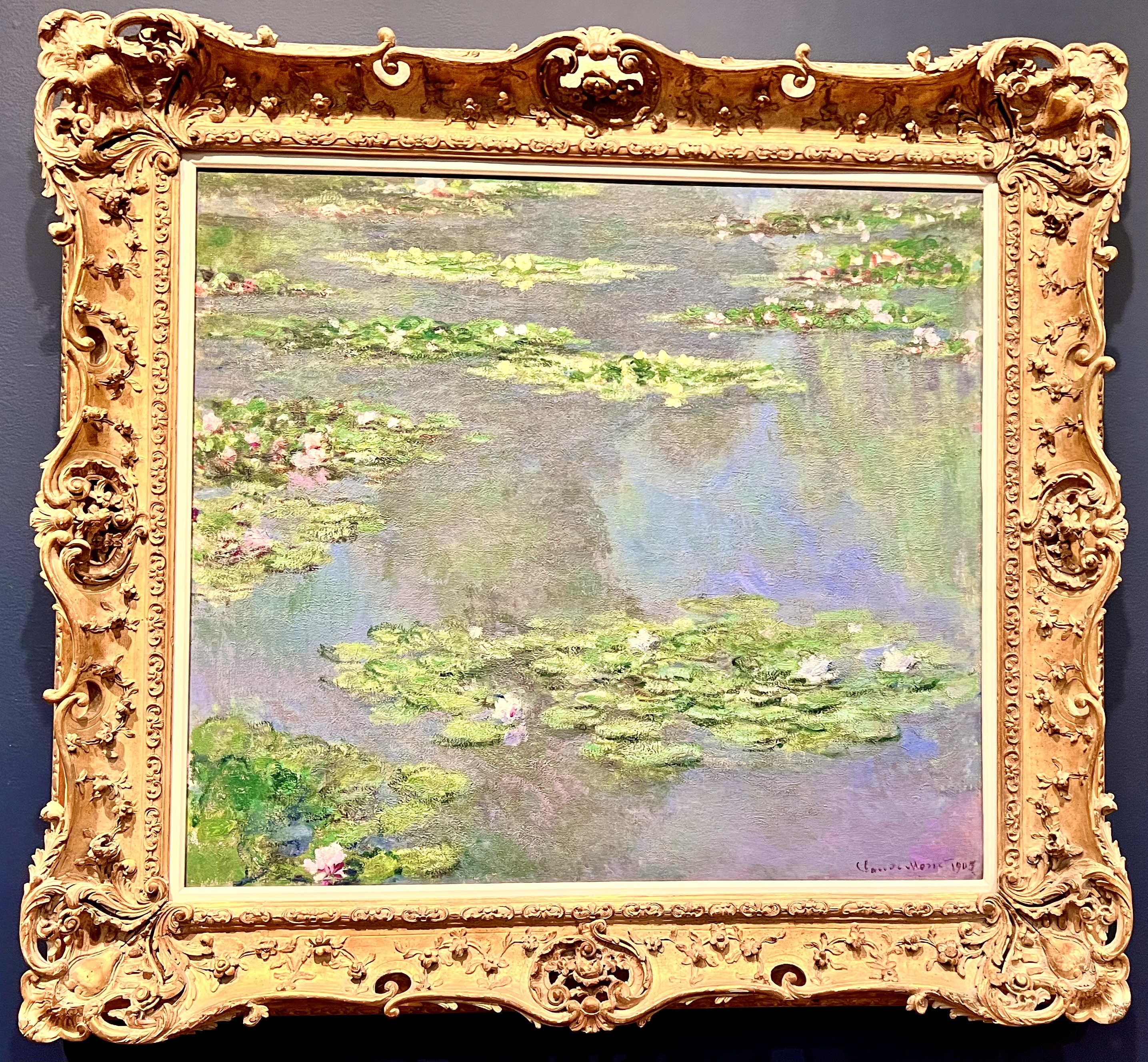
The other thing that seems very odd to me is the very elegant frames that all of the paintings are encased in. Photographs are mounted with plain white matting and the a simple black frame. When the paintings were painted they were painted on stretched canvas over a wooden frame with no picture frame at all. The paintings were complete in themselves. Where did these fantastically ornate foot wide plaster frames come from? It must have been the museums that dreamed them up and they must have been intended to match the ornate museum buildings that they are housed in. Maybe the are intended to amplify or at least recognize the great value that these paintings have today.
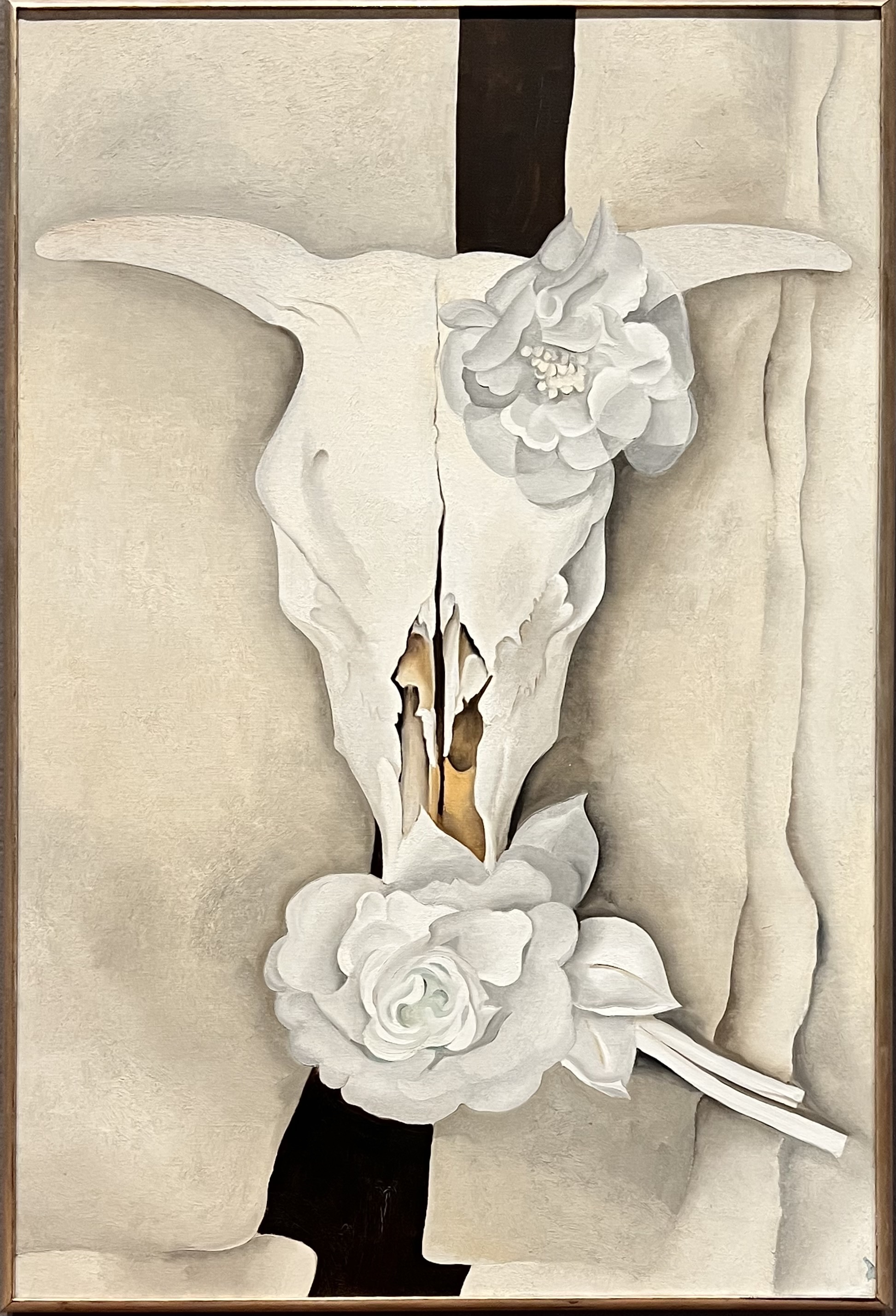
Almost every one of these museums has gallery rooms paid for by some very rich donor who is honored by having their name on the gallery room. It is a way that the very rich, often rich because of something mundane like owning a railroad or a steamship company that has nothing to do painting or the kind of artistic dedication that these penniless painters had who were not trying to get rich, but who needed to paint more than anything else and yet needed to earn something in order to get by on. The only way to be financially successful as a painter was to get rich by painting portraits of the very rich who then hung them on the walls of their homes to honor themselves or put in their private chapels.
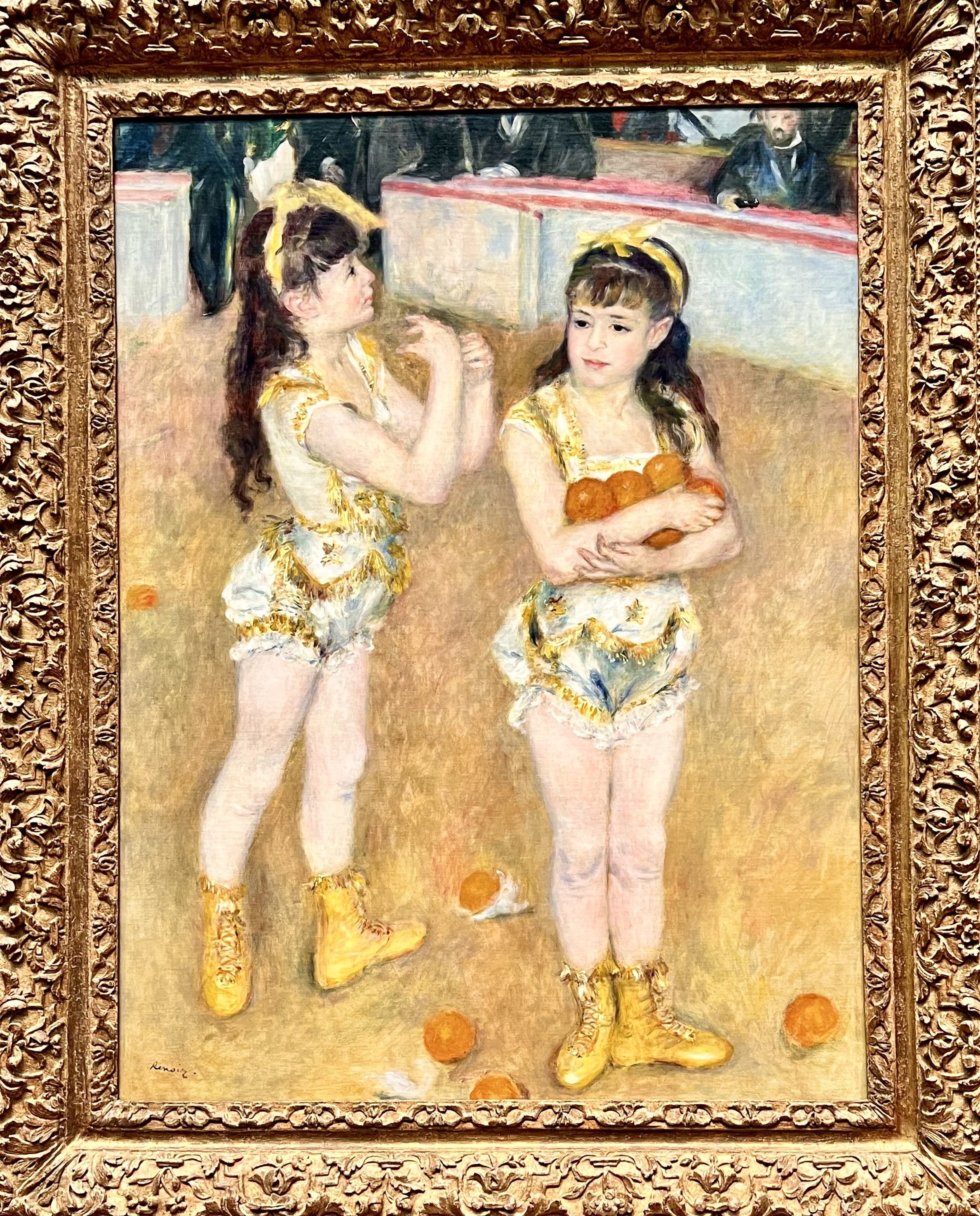
I didn’t mean to wander into this, maybe just the grouchiness of an old man whose brain got addled by the hot sun. Or the addled brain of an old man who gets more pleasure looking at a painting in his own living room while drinking coffee than in the presence of hundreds of other gawkers in museums so elegant that it needs $19 or more from every visitor, keeping anyone who can’t afford $19 out. I am a member of the Asheville Art Museum because even our little collection allows the museum to charge $15 a visit so if I am going to visit more than four times a year the $50 senior pass is worth it. But along with membership comes all kinds of invitations to galas of one kind or another where donors are honored and the rich of Asheville, no steamship or railway owners, can mingle with the other rich and know and be known. What that has to do with the lives of the painters or the paintings collected by the museum is a mystery to me.
This is what you think about when your knees hurt and your hips hurt and you’ve been out in the hot sun too long.
 BILLYBABA’S WANDERING