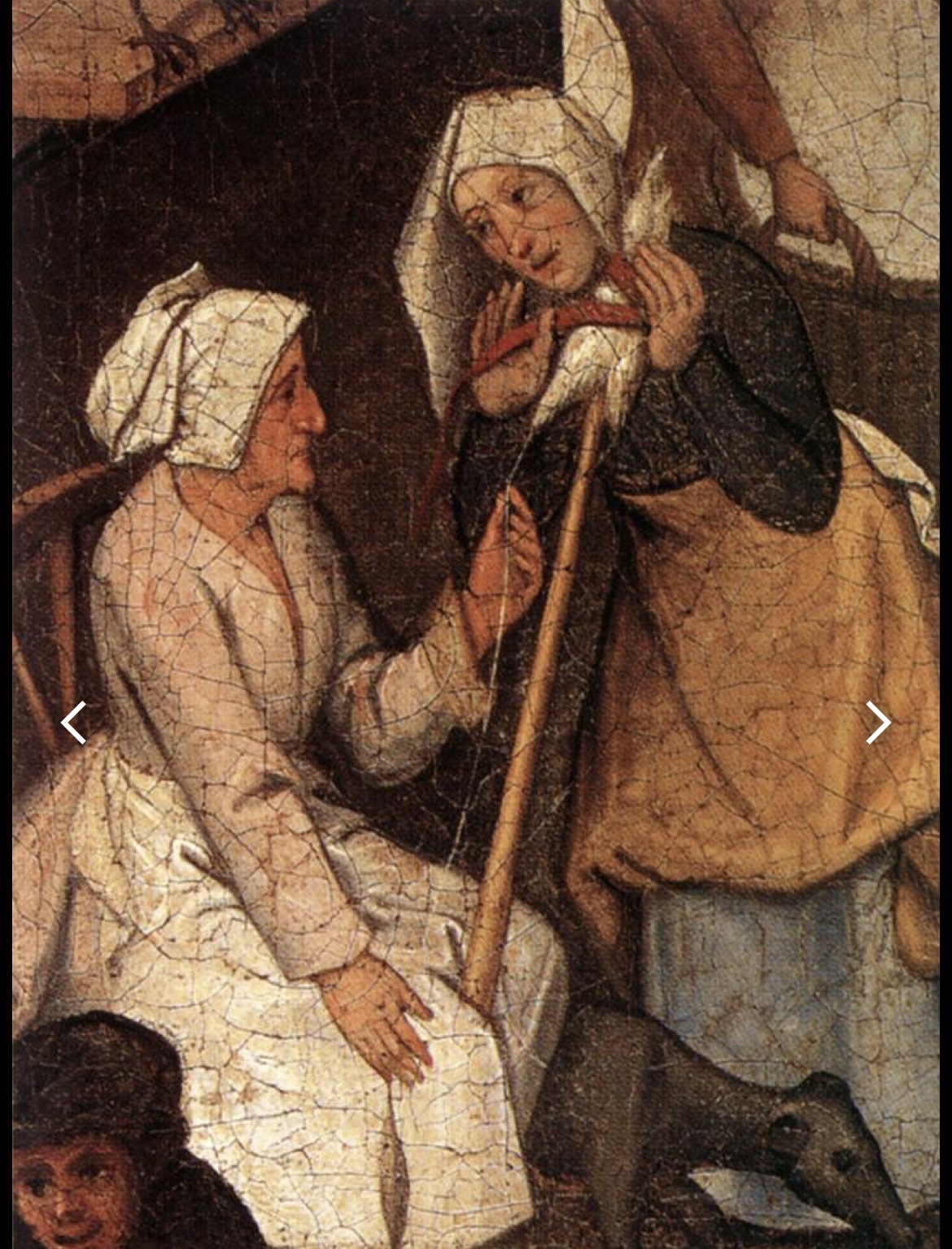
GOSSIP (GOD+SIBB) AND PRACTICAL ADVICE
The other day I wondered about Sheila Heti’s book Motherhood. One of the things I wondered about was about whether it was autofiction or not. I wondered whether stories of actual events seem most real to me or whether imagined stories of what could be seem most real to me. The key words there are “to me”. Because I have the feeling that while my conscious self knows what is actual and what is made up, my unconscious instinctive self, the hidden side of “to me”, doesn’t care whether the event is actual or made up. More important, I think, is how intensely the person telling the story responds in words. Intense response by a person or narrator who seems to be touched by events is what makes me feel most alive, even if that narrator is also imagined and I know it.
One example of this is video games which I am not an expert on since I don’t play them. But people who do feel their way through video games can become completely addicted to them. These people must get an adrenaline rush from making their way through an entirely made up digital world. Their inner visceral self treats this world as being completely real.
I would like to come at this from a different angle. It is the issue of autobiography which is very similar to autofiction. A great number of friends my age, old people with not long to live, are writing one kind of autobiography or another. There is one kind, usually by men, that tell the stories of the the major events of their life focused on their work and their achievements. My father wrote this kind of autobiography in his early 70’s as he was in the first stages of Parkinson’s disease and dementia. So it was fairly short. It was titled, appropriately, The Life and Work of Arthur T. Mosher and was self published (XLibris) by my brother, Ted. It included the story of my father’s work along with some things he had written earlier. It included his reasons for going to India as an agricultural missionary, his achievements in India, and then his achievements with the Agricultural Development Council, a small organization with the Rockefeller Foundation. It was his life’s biggest achievement of which he was very proud. But he hardly mentions me or the rest of my family. We were incidental to the story he was telling. I am grateful to have the story of his life to understand him better but I don‘t know the things that touched him emotionally.
In contrast I have recently read Neither Here Nor There: Growing Up Around the World (Bookshop Santa Cruz Publishing) by Ruth Kesselring Royal, a woman who went to the same school as I did in India, Woodstock. She was several years behind me in school. Her book is entirely about memories of events and people in her life which touched her emotionally. Most are about family life or the places where she lived or events, often personal and unnoticed by others, which mattered a great deal to her. It was written in an episodic way, not in chronological order, an incident at a time, with a writing group of other former Woodstock students. In it we have a sense of what her father did as a missionary in Costa Rica and Malaya but have much more of a sense who he was as a loving father than as a missionary school administrator.
Using these two life stories as an example I wonder what the significance of each of these forms of writing are. First of all, my father‘s approach and that of many men, is, I think, masculine. Many men, I feel, think of themselves more in terms of what they have achieved than what they feel. And many women, I feel, think of themselves in terms of what they are attached to emotionally, usually family, rather than their accomplishments. But both kinds of story say this is my life and this is what mattered to me then and matters to me now.
The question really is, I guess, why anyone else would want to know about what mattered and what matters to you or me. Of course, that is a much bigger question than simply whether a person writes an autobiography or not. Does our passage through the world matter to anyone besides us and does anyone want to hear about it. Will our having been here matter at all? Do the things I have put effort into matter at all, do the things that have touched me and made me feel alive matter at all, do I matter at all?
The fact is that we care most about ourselves and our own passage. But my father‘s account is something that I am really interested in and my children, who knew him are interested in as well. While Ruth Royal‘s story touches me emotionally, partly because she writes about experience in India and at Woodstock School, both of which matter emotionally to me.
But I think something else is going on which touches me about both forms of story. All of us have to feel our way through life, achieving some things and failing to achieve others. We learn as we go, but we can also learn from the experience of other people. The more we learn about how other people have made their way through life the more models we have to make our own way through with examples of what we should avoid and and what we could do. That is the effect of my father’s life story.
But with Ruth Royal‘s story I think the effect is different. When I read her story I am touched by her emotional presence, by the poetic way that she writes, which conveys her response to the world. And this makes me feel more alive. It is just being in her presence that makes me feel alive. That is the reason that restaurants are so noisy, why people talk to each other so much of the time, probably why birds chirp away at each other. Stories are our way of sharing what matters to us and we want to hear stories as much as we want to tell them. Gossip is telling stories about people, gossip is something that women do more than men, but on line I read that gossip comes from old English, God+sibb or literally “a person related to one in God”, a divine connection. I think of it as a connection with another person that makes us feel more alive by bringing us into the presence of the divine. So by this definition, telling our personal stories of what touches us most deeply, is a way to make other people feel more alive. Stories about how to achieve, masculine stories, are about the profane, how to get along in the everyday practical world. Stories that share feelings and relationships to people, feminine stories, are about the sacred, being in touch with what makes us feel fully alive, epiphany, openness to the divine.
 BILLYBABA’S WANDERING