MOTHERHOOD 2
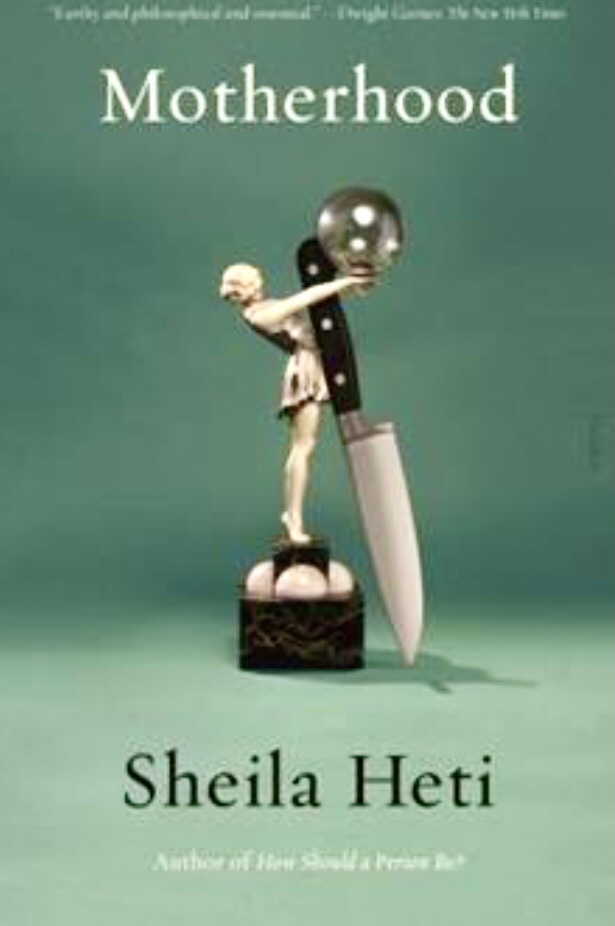
And this brings me to the other reason that Motherhood touches me intensely.
In the journals of young women the central factor is almost always relationships: relationships with parents, relationships with friends, relationships with lovers, relationships leading to commitment and family life. This is the young woman’s mythical passage, the shift from being a girl playing with dolls to a woman giving birth to children and maintaining a loving family. That is the conventional passage. That is almost the princess in the fairytale passage leading to happily ever after. But what the journals reveal and what Heti is adament about is that women have choices every step of the way, or have choices made for them every step of the way by their bodies and their culture. The internal visceral mythical passage is making these choices, often leading to pain or disappointment and then having to make them again and again. Her family or culture suggest or imposes the proper choice, but in the end, all alone or with the help of friends who are going through the same thing, she has to make her choices.
Men have to make their own similar choices and their path is just as fraught. The dominant cultural mythic pattern, The Hero With A Thousand Faces, is clearer to young man, but often just as misleading and sometimes not right for him, either. But what touches me about Motherhood and many novels by women is that the feminine choices are different than the choices that men make and the biggest choice of all, whether to have a child, whether to have a second child and a third is a huge, huge choice that men, since they are on a different path ignore or at least don’t pay as much attention to. What Motherhood does is explore this issue in a personal way (somehow stronger than fiction) from every angle. She goes round and round, but at the end of the book I feel as if I have been through the wringer and finally have a little sense of what every woman goes through whether they choose to have a child or more children or not. That is Sheila Heti’s gift to me.
What Sheila Heti doesn’t focus on is the growing up as a girl and woman in Canada or the United States that leads up to this decision of whether to have a child or not. The choice wouldn’t be the same in India or China or Germany or Kenya or Egypt. In every culture the pressures of society and the choices that must be made are different.
But women’s experience is different from men’s from birth through death in any culture. And the passage from playing with dolls to exploring the world to having a body that prepares for childbearing with a monthly rhythm of ovulation and the passage from sexual attraction to mating to nurturing a family, or not nurturing a family, is a passage that I, as a man, with my own passage to adulthood and my own insecurities and drives have not paid enough attention to. I haven’t been entirely clueless as a man, but I admit to having large blind spots. Living the experience of the narrator in Motherhood and going round and round with her as she wrestles with the issue of whether to have a child or not helps me to understand one part of a woman’s passage through life.
 BILLYBABA’S WANDERING