
THE GOTT FAMILY

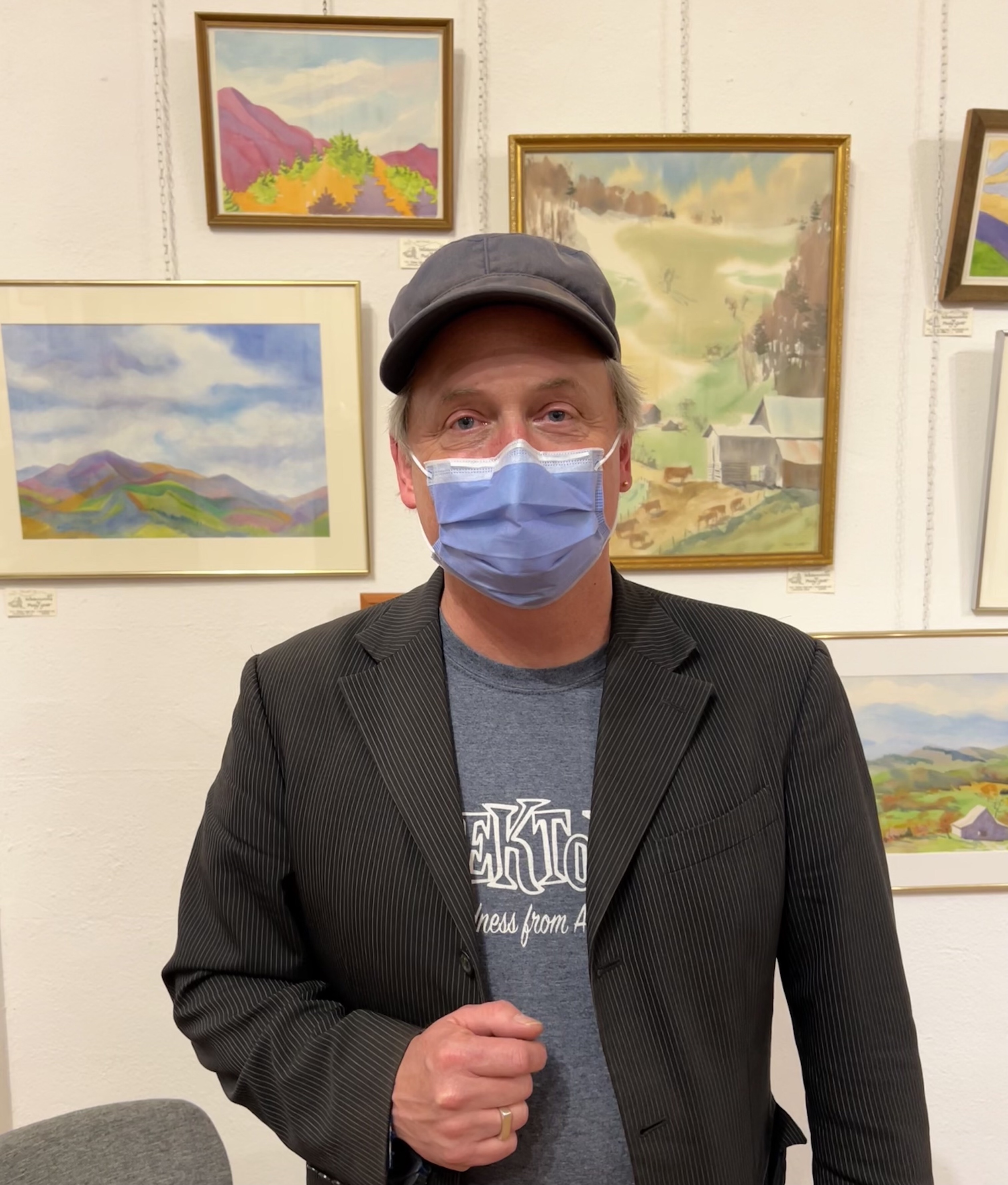
Last night I met the Gott family. The grown up children, Tim and Susi, had been students at Warren Wilson College and I knew of them but never had them in class. And Peter Gott had built the log garden cabin at Warren Wilson College. But I had never met them. Now I have met them, but I realize that I still don’t really know them. But bouncing off of them was the high point of my day.

Polly Gott had lived near my parents house in Ithaca, New York. Our whole family built a large house on North Sunset Drive and the Gott’s house was on the way down the hill to the high school and the town of Ithaca. We lived in Cayuga Heights where many Cornell faculty lived. The houses were bigger, the views better, the neighbors all white and educated and congenial. We were a little snooty. Not far from where we lived was the estate of Duncan Hines, the very rich packaged dessert king, a palatial home. He put us in our place. When my mother moved here to North Carolina in her old age she recognized Polly as belonging to the family she knew in Ithaca.
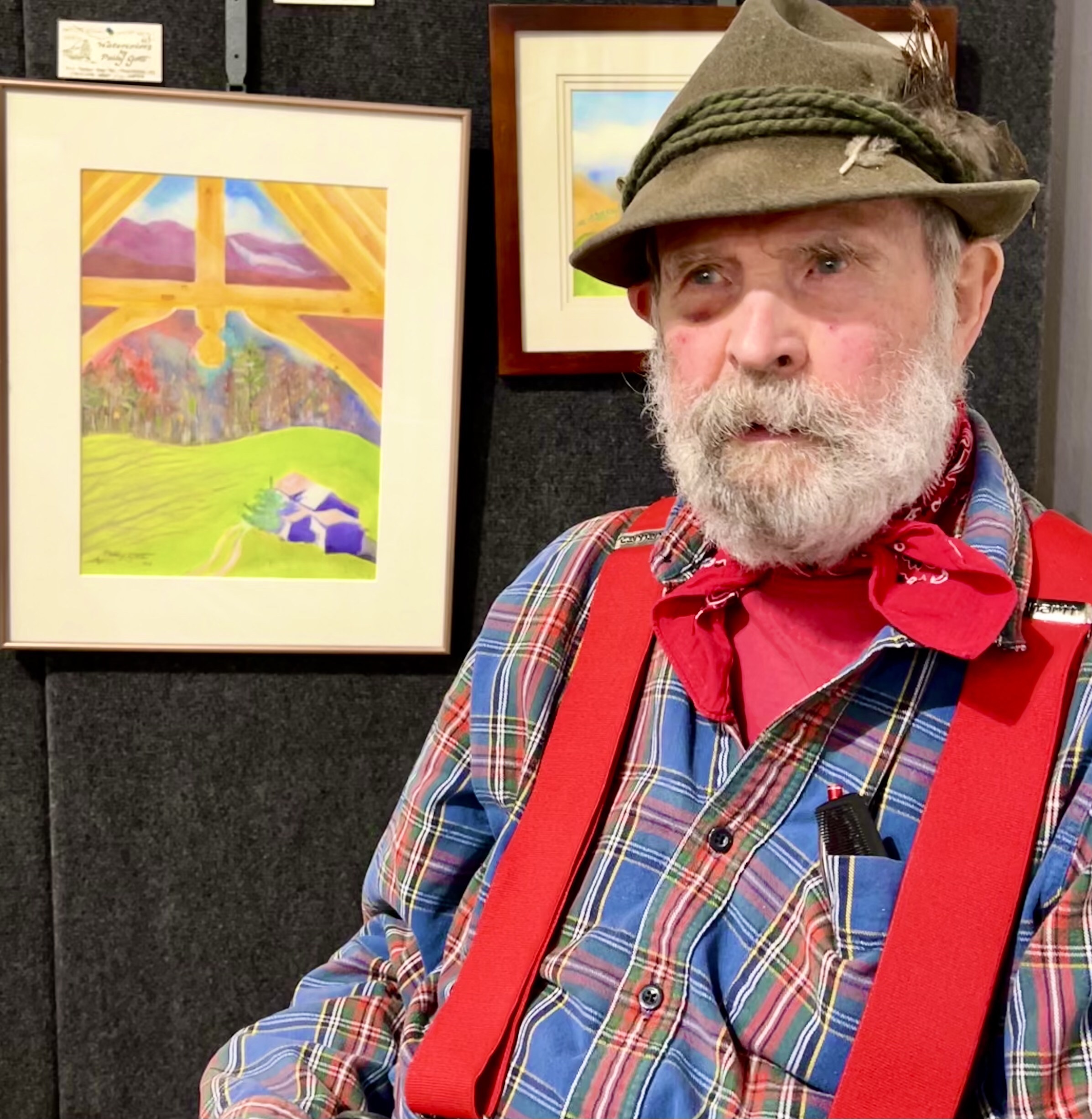
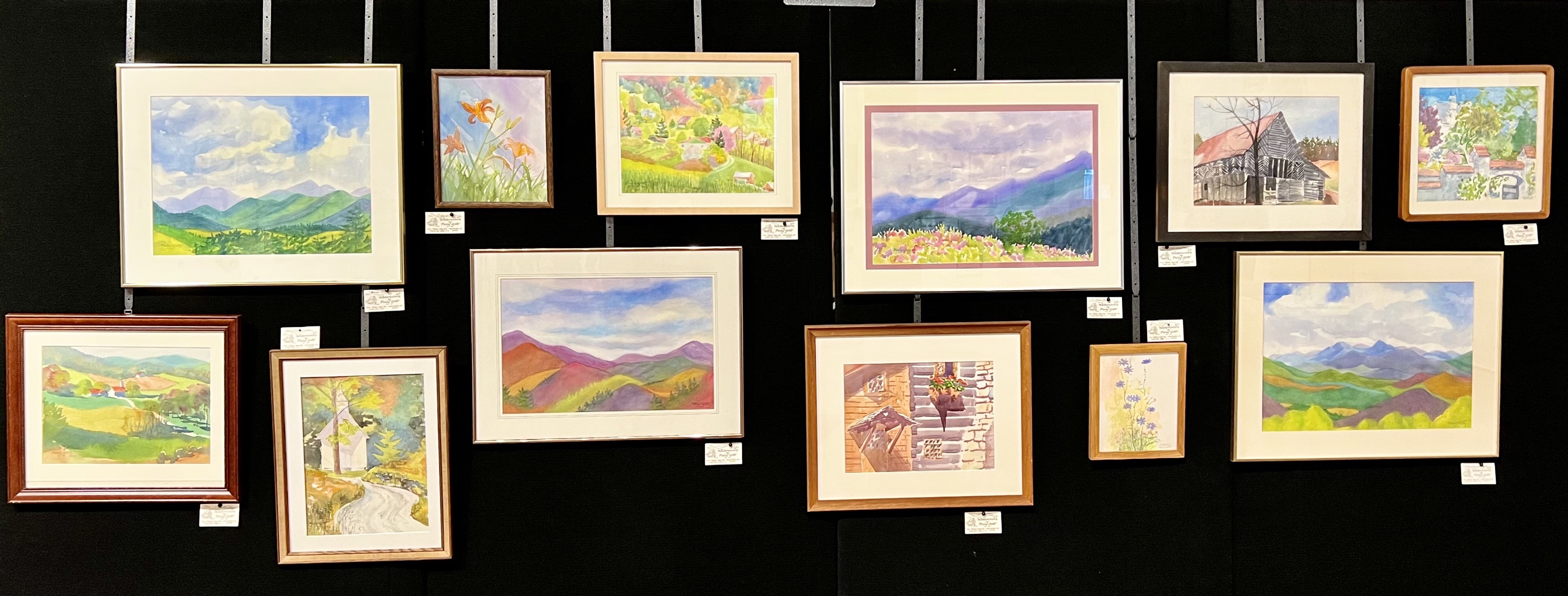
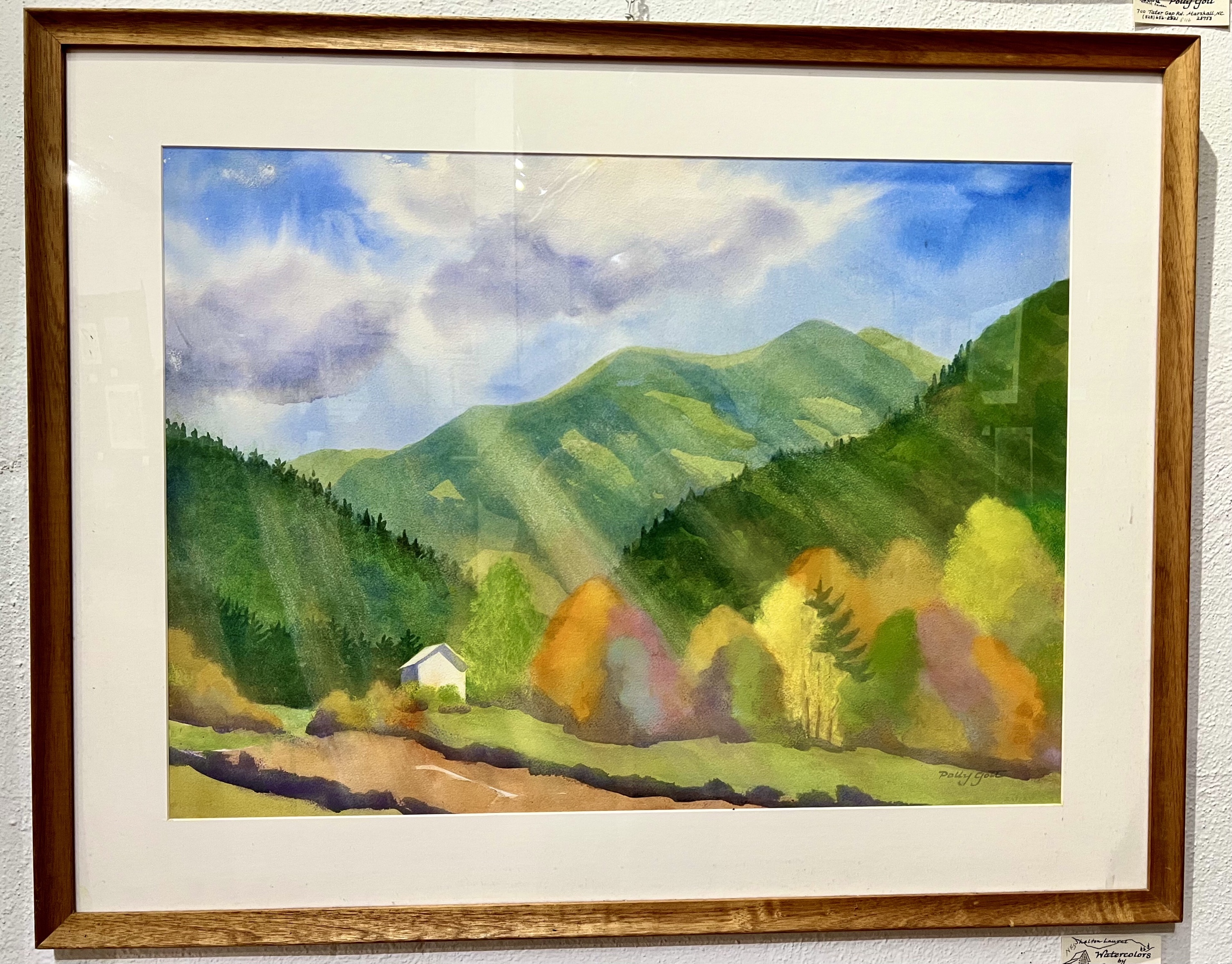
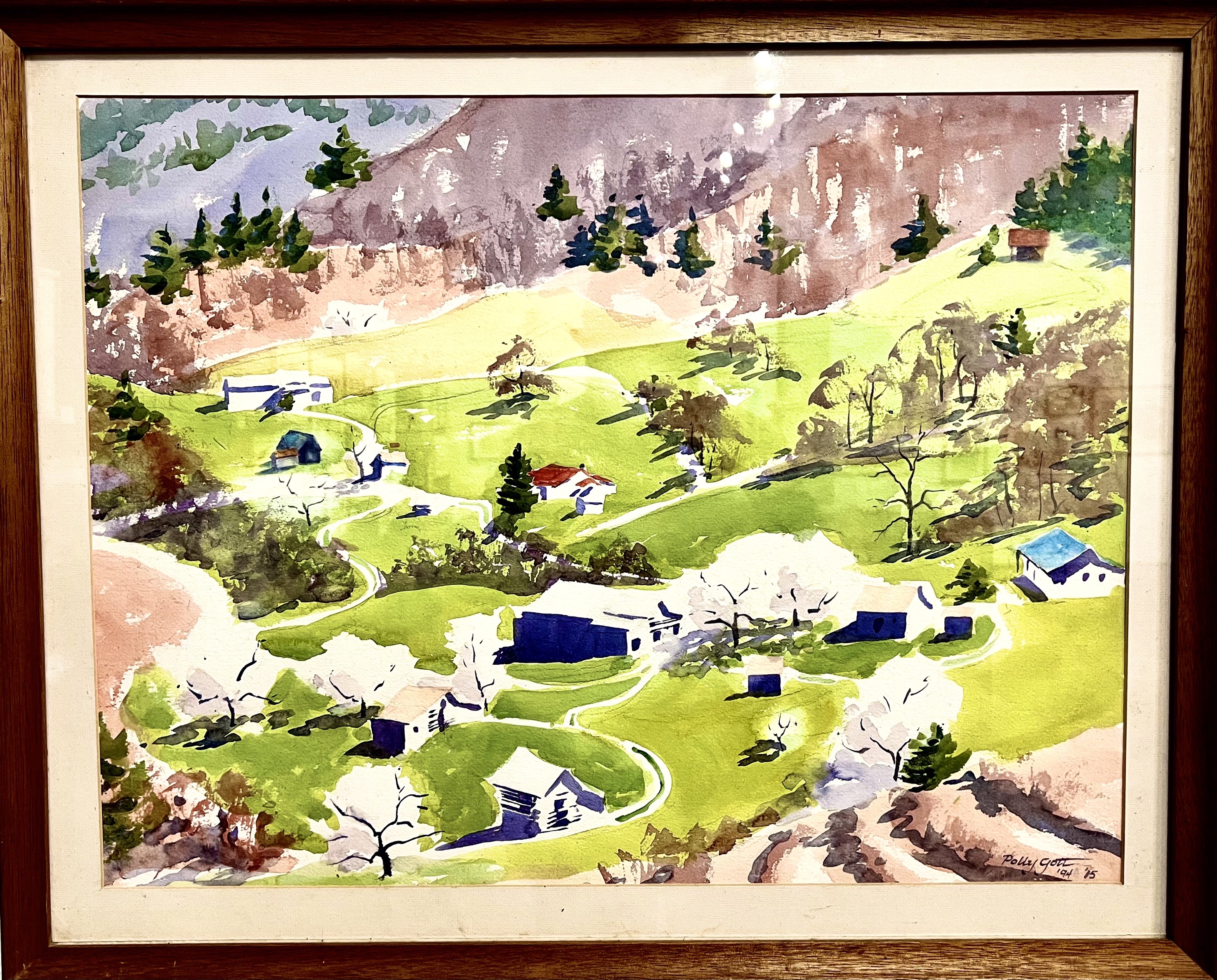
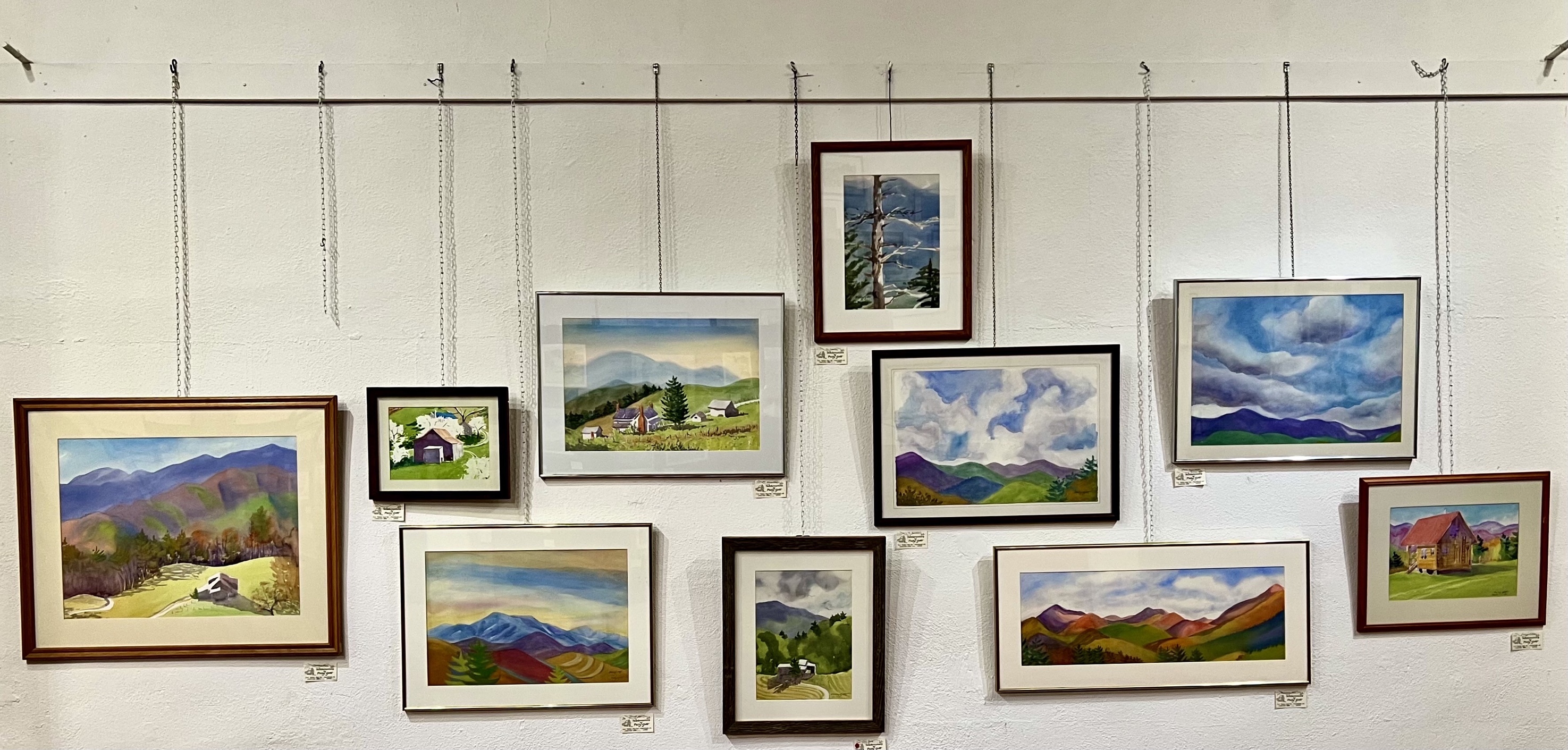
Polly Gott wasn’t snooty in Ithaca or here. She got a Master’s degree in art at Cornell, sketched for a year in France, studied sculpture in Brooklyn and then married Peter Gott and moved to rural Madison county and homesteaded here. When her children left home she shifted from pottery to painting water colors, which are much easier to store. She has a house full of water colors a portion of them were at the Madison County Art’s Council gallery to look at and to buy.

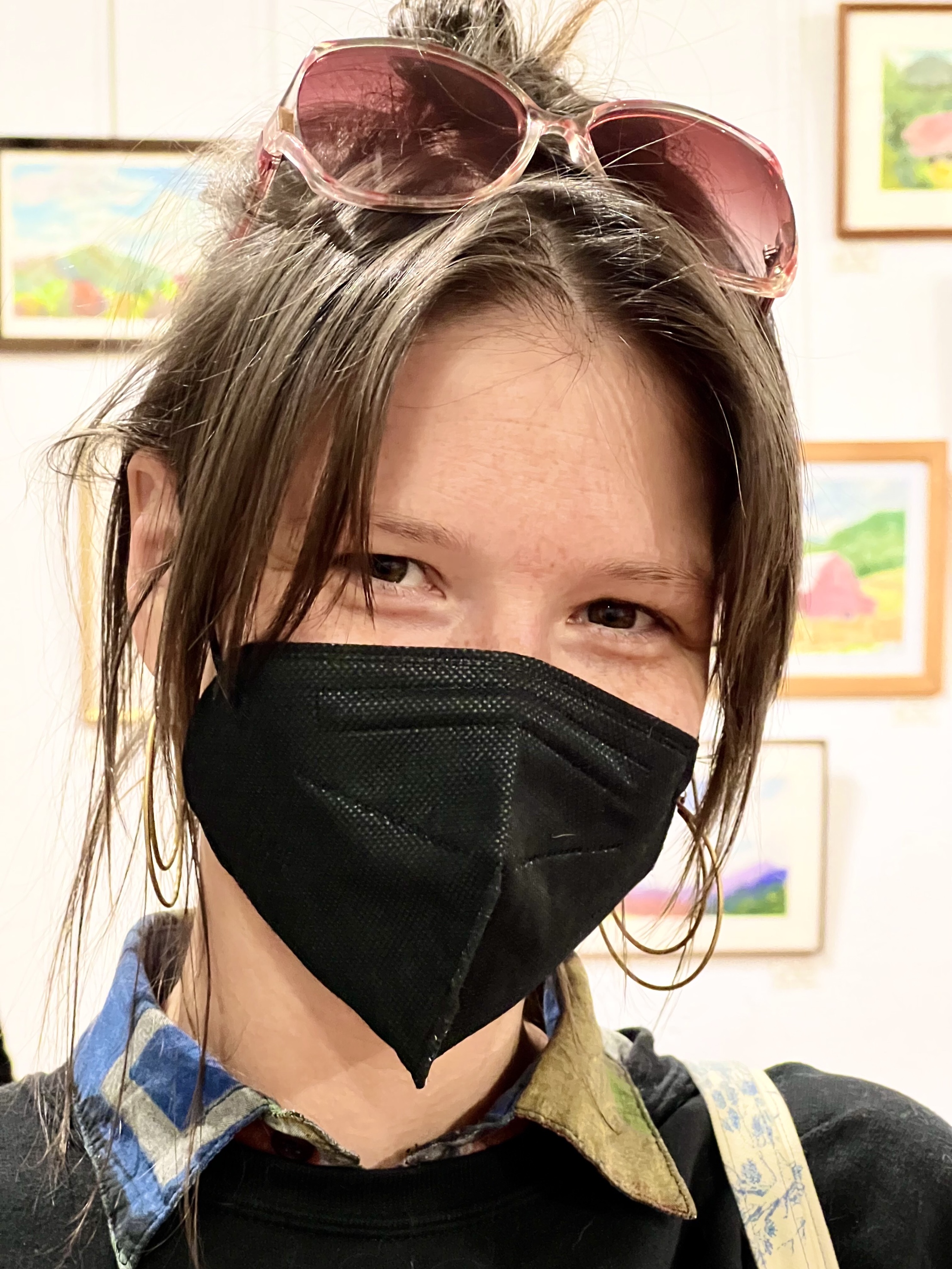
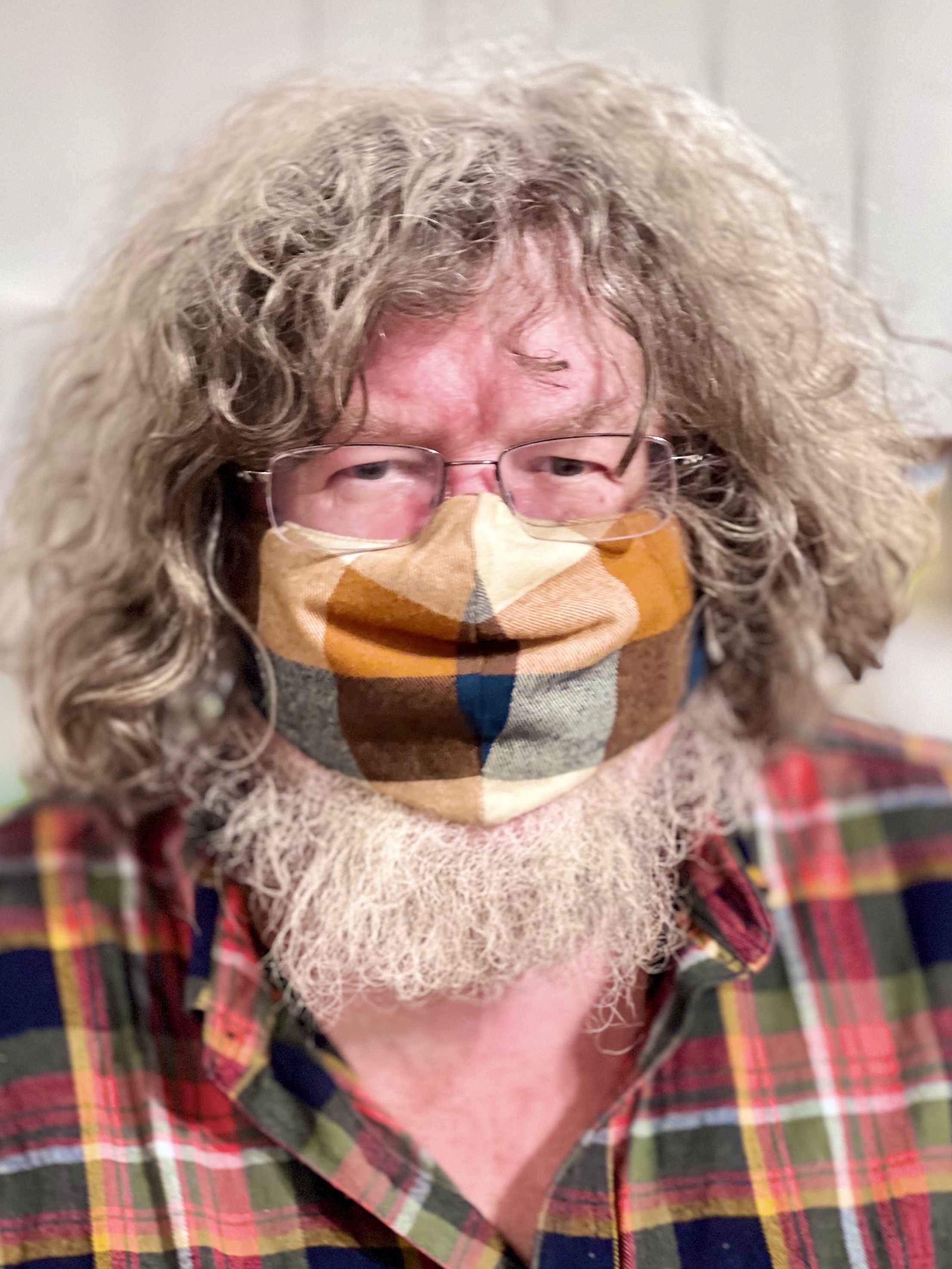
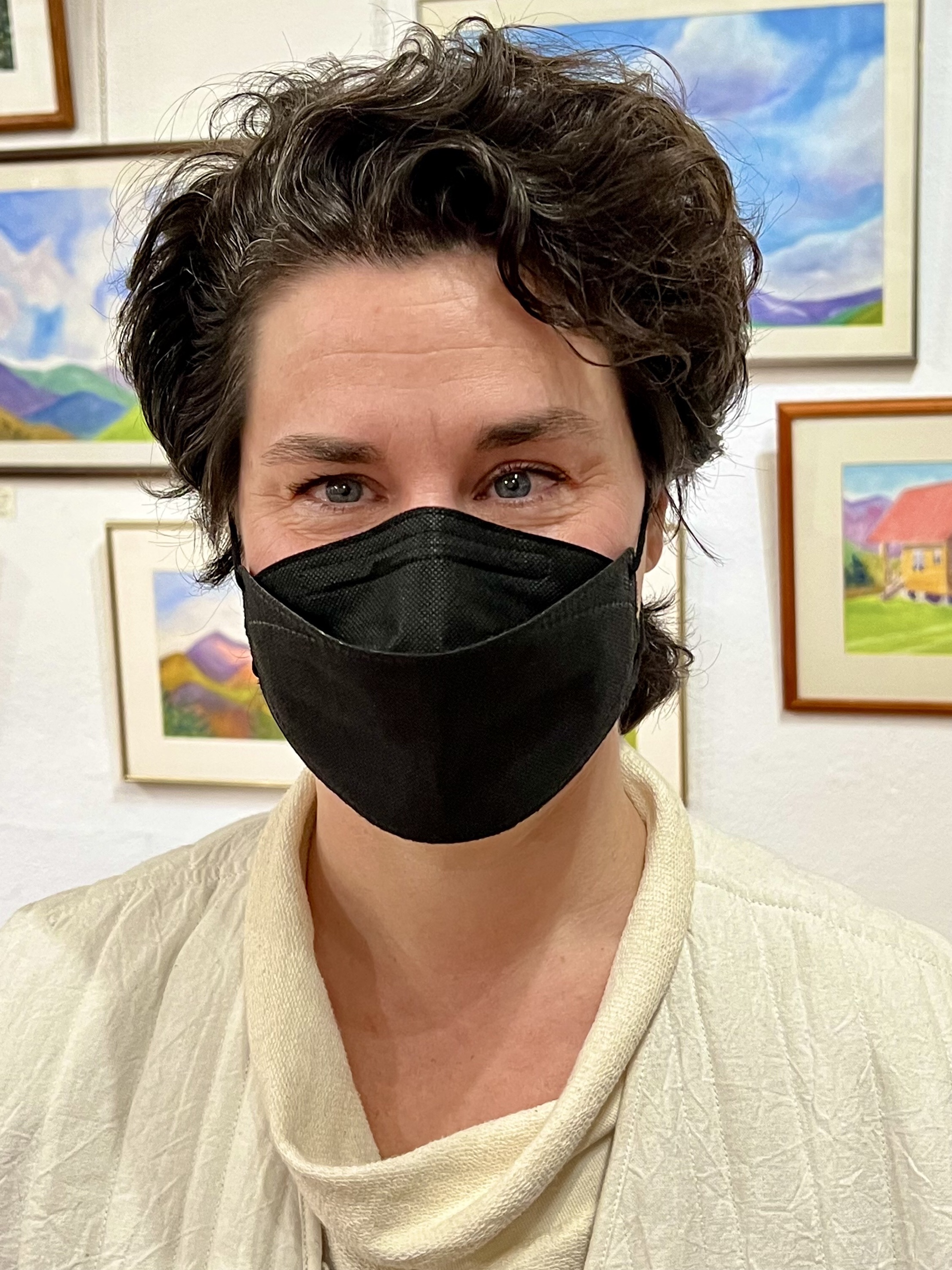
Tim, the son, was there, tall and handsome, and his wife Muffie Brown and Susi Gott Seguret. Susi married a Frenchman and lived twenty years in France, then divorced and returned home with her half French, half American children. She writes cookbooks and organizes cooking events where she teaches one kind of culinary art or another. She also supports her parents, who are aging. Peter, dapper in red and blue, was there, cheerful but a little vacant as his mind slides away. Polly was friendly and must have basked in the delight that people expressed about her paintings.
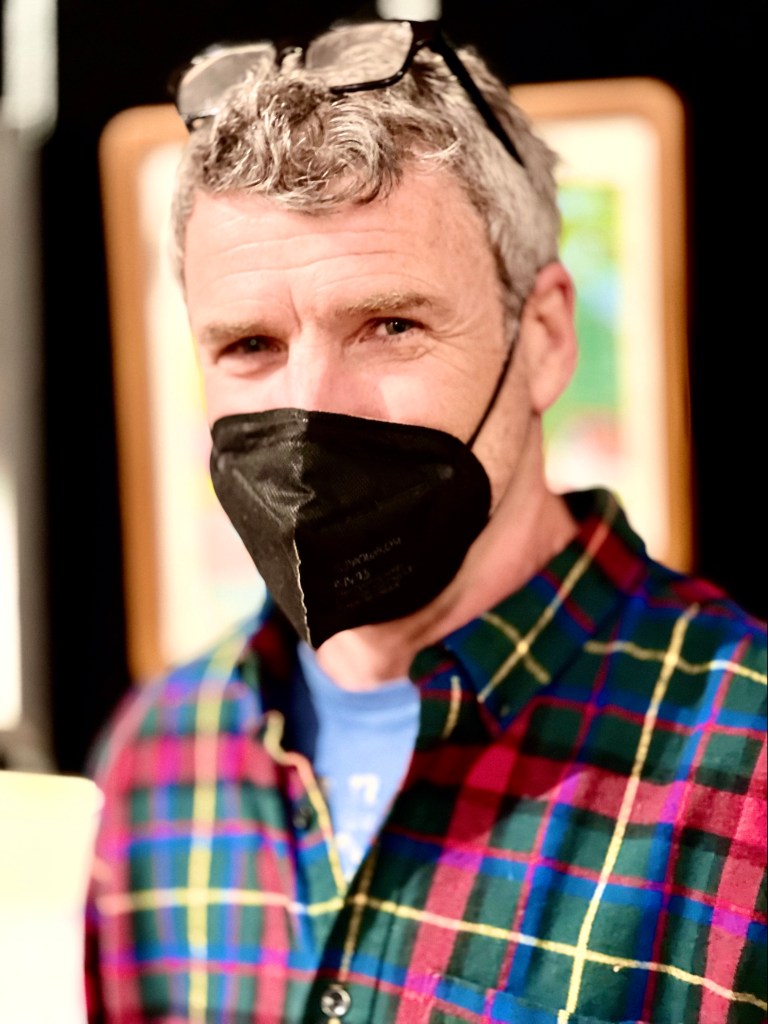
When I first came to Warren Wilson, the college was a junior college and before that had been a boarding high school for mountain children who couldn’t get a good education at home. It was first a boys only high school. All the boys worked on farms at home and then when they came to Warren Wilson worked on the Warren Wilson farm on the flatland along the Swannanoa River. Most of the boys came from places like Madison County, rural, white, tobacco growing, Scotch Irish, Appalachia. Harvard educated Henry Jensen, the Dean at Warren Wilson was a folk singer and song writer. He often sang for the whole school at assemblies. Many of his songs were mournful songs about Madison County, about Lonesome Mountain and Laurel where the Gotts live.
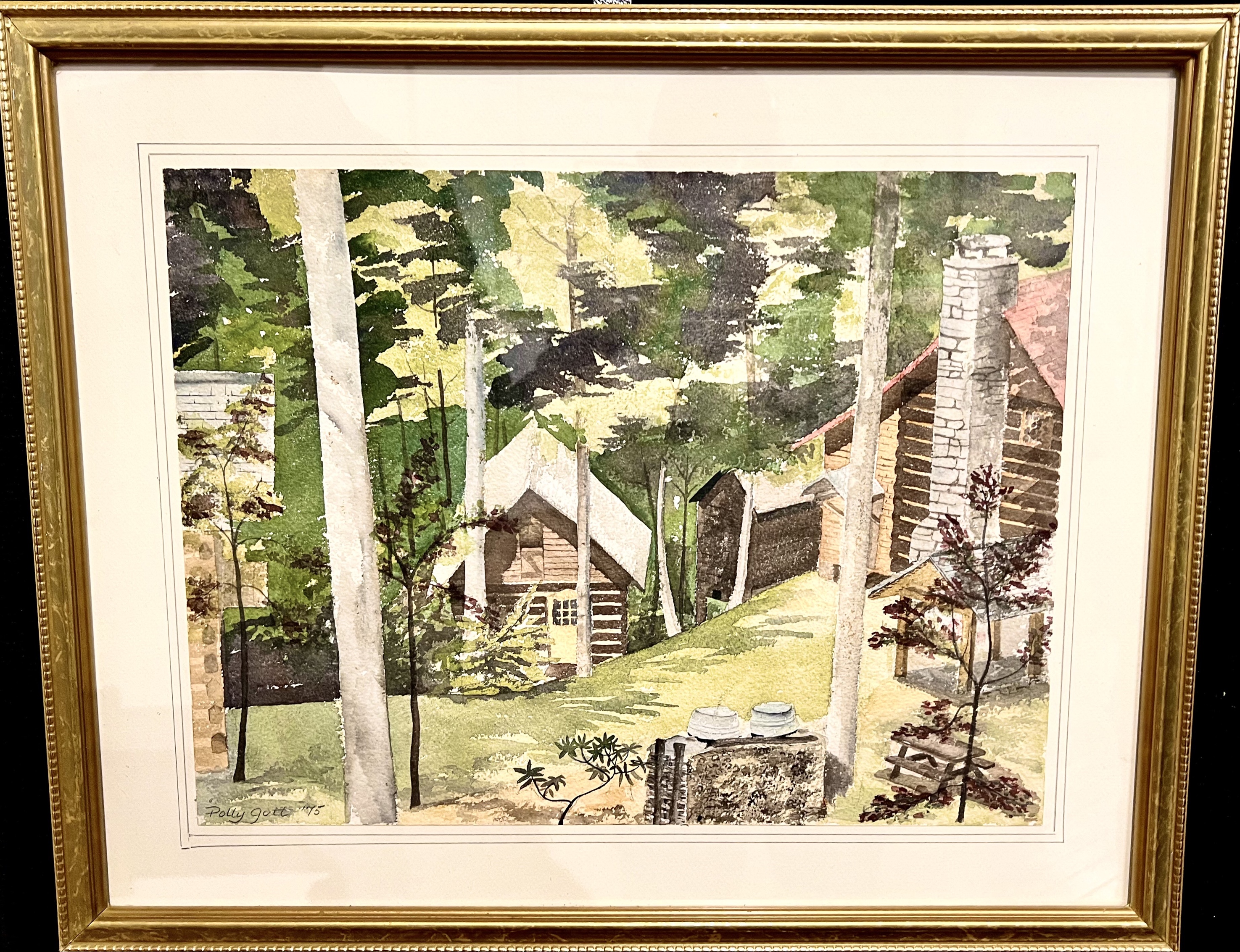
Now Madison county, with its beautiful forest and mountains, is home to three types of people. There are the descendents of the original settlers with their tobacco barns, now falling, and fields no longer growing tobacco, and derelict cars and hound dogs and cows. There are the new Northern educated homesteaders trying to flee city life to live in the country like my daughter Susie and Todd. And then there are the rich from hot, humid Florida who have elegant houses with excellent views who live in gated communities which they visit in the cool summer months when Florida is unbearable. The rich folks weren’t at this exhibit and neither were the former tobacco farmers. The new homesteaders, like Polly herself, were. But most of Polly’s paintings were of the falling barns and churches and forests of old Appalachia. The exhibit was in the little town of Marshall, the administrative center of Madison County with a gold domed court house, squeezed between the wide French Broad River and the steep bluffs through which the river had carved its way as it streams toward the Mississippi delta in the Gulf of Mexico. Marshall still celebrates the old mountain music, banjos and guitars, in the abandoned train depot once a week, but the rest of the town is rapidly gentrifying with a brewery and elegant restaurants and beautiful stores as Northern outsiders and tourists come to town. Some of these outsiders were there last night And I had a great time getting to know some of them a little bit as we visited old Appalachia in Polly’s paintings.




For a full article on Polly written by Susi click here. https://www.citizen-times.com/story/news/madison/2022/01/22/madison-county-arts-council-marshall-local-artist-featured/6594579001/
 BILLYBABA’S WANDERING