BLIND FAITH
Today I went to see my financial advisor. So this is my attempt to be a little bit coherent about something that I rarely think about, my finances, I didn’t appear to be an 84 year old dunce as I sat there so I think about it. But even as I think about it I realize how much I am living by faith in an economic system that I and others accept on faith, a social economic system that allows us to cooperate with each other as we work more or less cooperatively to take care of our basic needs and get along together.
It is a little odd that I even have a financial advisor or think that I need one. It is Tom and Kathy, my son and his wife, who thought Kathe and I should have one. If I died first Kathe wanted someone she could trust making sure that she didn’t run out of money. She also didn’t want me asking embarrassing questions when we went in for our yearly meeting, questions I could ask now that I won’t upset her.
I was not quite sure what a financial advisor did, although we have had one for twenty years and met our financial guide once a year. This year we have a new person overseeing our account, Kathryn, since Scott Boatwright, who has done it for ten years or so has moved on, probably to start his own business.
Starks Financial Group was started by a young woman, now middle aged, Dawn Starks, twenty or thirty years ago. Dawn was our first guide but her business expanded and we were moved on to Scott and now to Kathryn. I know that Stark’s Financial Services is doing well because they moved from a little building on Clayton Street to a much larger building in Montfort with many more well paid people. And what I learned today was that I do need a guide, and that the 1.25% of our retirement money paid to them actually insures that we earn a good deal more than that quite securely. But I also learned how clueless I was.
Stark’s Financial Services is connected with a huge national company, Raymond James, one of the biggest financial services companies in the United States. Raymond James is headquartered in St. Petersburg, Florida.
As I understand it Raymond James has a group of people who keep track of stocks and bonds and offers financial advice to Stark’s Financial which actually has a committee that decides how to suggest that clients invest their money depending on their clients’ life circumstances and how much risk they can run and whether they are thinking short term and long term. I learned all of that today.
I know that I don’t want to make these decisions myself for several reasons. One is that this is a very complicated business and I would have to dedicate my waking hours to mastering it. Some people like to invest and are willing to spend hours and hours keeping up with things and probably make pretty good choices. The process of doing this not only makes them feel very alive but it can also make them rich. What they actually do with their money is a different thing because if they spend all their time making money and don’t spend much time wondering what makes them most alive they probably spend their money on things that are not only not satisfying but are probably simply contributing to income inequality and waste.
So the first reason I don’t want to spend my time being a good investor is because this isn’t something that I like to do and get satisfaction from. I am willing to pay someone I trust to do it, so I can’t complain about the fees.
Raymond James and Stark’s Financial Group takes out a fee for investing my money, not based on how much they help or hurt me but on how much of my money they supervise.
I assume I am paying a fair fee, and I do feel quite secure. But I also realize that I am accepting what Starks Financial Group and Kathryn decide on almost with blind faith and with very little knowledge of what is going on. Every three months or so I get a record of the many stocks and bonds Stark’s Financial Group have invested my money in and I get yearly reports from individual companies about how well they are doing. Since I know nothing about any of these companies or their workings these reports are as opaque as if they were written in Chinese and I throw them in the wastebasket. I discover that I am operating with Stark’s Financial completely on complete faith that they know what they are doing. All I can go by is the chart that I get every three months or so telling me whether my invested money is going up or down.
The second reason I don’t want to manage my own money is that I think much of investment is voodoo economics. It depends on psychic feelings by investors. When I read that the stock market went up for a certain definite reason, war somewhere, or a drought, as if the stock market had a mind of its own, I don’t believe it. It goes up and down as much by what people feel as what they think because that is how human beings function. We are impelled along by our feelings in almost everything we do whether it is figuring out the risks of getting Omicron or who we marry or how we spend our money or whom we worship. We now appear to be in a bubble in which prices for everything are going up, up and up because we feel they will keep going up, up and up because we want to make money before they start going down. It is our group herd feelings that will take us up and drop us down. This to me is voodoo economics. I am not sure that my advisors know exactly how to maneuver this psychic landscape but they certainly have more experience and can make better guesses than I can.
I do know that soon after we invested our retirement savings with Stark’s Financial Group the bottom dropped out of the stock market and our worth was down 40% for a while. Nobody, not Stark’s Financial or Raymond James with all their well trained and smart people, saw it coming. So I realize Stark’s Financial can’t predict the future, but I have more faith in them than I have in myself.
I have two fears. One that inflation could make my money be worth less and less and the second one is that the bottom will drop out of the stock market and I would be safer having my money under a mattress. A mattress will only make the effect of inflation worse however, and I would be better off with gold, so I can’t have it both ways. I found out that Kathryn and Stark’s Financial keeps careful track of inflation and will do what they can do to mitigate it.
The second worry is we are in a bubble and are heading toward another precipitous drop. Since I am likely to live only 2 to 10 years, I want to avoid the drop because there might not be time for it to go back up before my kids inherit whatever I have left. Kathryn could only half way reassure me that by spreading out investments and balancing betweeen stocks and bonds the drop, when it comes, and it will won’t affect me too severely. Balancing stocks is something I am totally incapable of doing, so I am grateful.
But beyond these question I am left with the feeling that I am embedded in an economic social system that is almost beyond my control and understanding and that I am living almost by faith alone.
First of all I am lucky to live in a country that has paid me comparatively well simply because everyone with education is paid comparatively well in the United States. As American college teachers go I was paid at the lower end, but as college teachers are paid world wide and particularly as they are paid in India or Africa or much of the rest of the world I am paid on the high end. My good fortune, my privilege, is not a dependent on my judgment but on the good luck of being born an American.
Some of this money that Stark’s is managing was put into my Warren Wilson retirement account over which I had no control, but in the end this retirement income for 30 years work brings in less than a Presbyterian pension I was given for the first five years that I worked under the Board of National Missions as a missionary to Appalachia at Warren Wilson. Five years of a pension plan brings a better income than 30 years of a retirement plan that both I and Warren Wilson contributed to. The pension plan gave me no choices, the company that handled the Warren Wilson retirement income gave me five choices based on level of security balanced against higher returns with more risk. How was I to know which to choose? I chose to be secure over making money. And I know that my colleagues who chose to make money and had great fun doing it, were very glum after every huge drop in the stock market. I don’t know who came out better. But I know all of us were operating blindly. Kathryn explained that my example is why there are almost no pension plans any more and why so many have gone bust, but I also realized that I had been told back then that the transition would be better for me, and it wasn’t. Luck, not choice.
In addition to retirement income I live in a country with social security retirement income which many countries don’t have. And this modest amount is very important to me, as is Medicare, which in a country where health costs are astronomical is great insurance and worth a great deal to me.
And I was lucky that my parents, who benefitted from all the same things, and were able to leave me a chunk of money which is invested through Stark’s Financial Group. Pure luck.
But I have had time, unlike some of the very rich, to figure out what matters to me. And because of this, on a modest income and because of good luck with health with few needs, I am able to do all the things I enjoy doing because I have found I can do these things—living costs, travel and electronic connections—on not very much money. So I feel as well off as anyone even though I have less money than some and but also more than many.
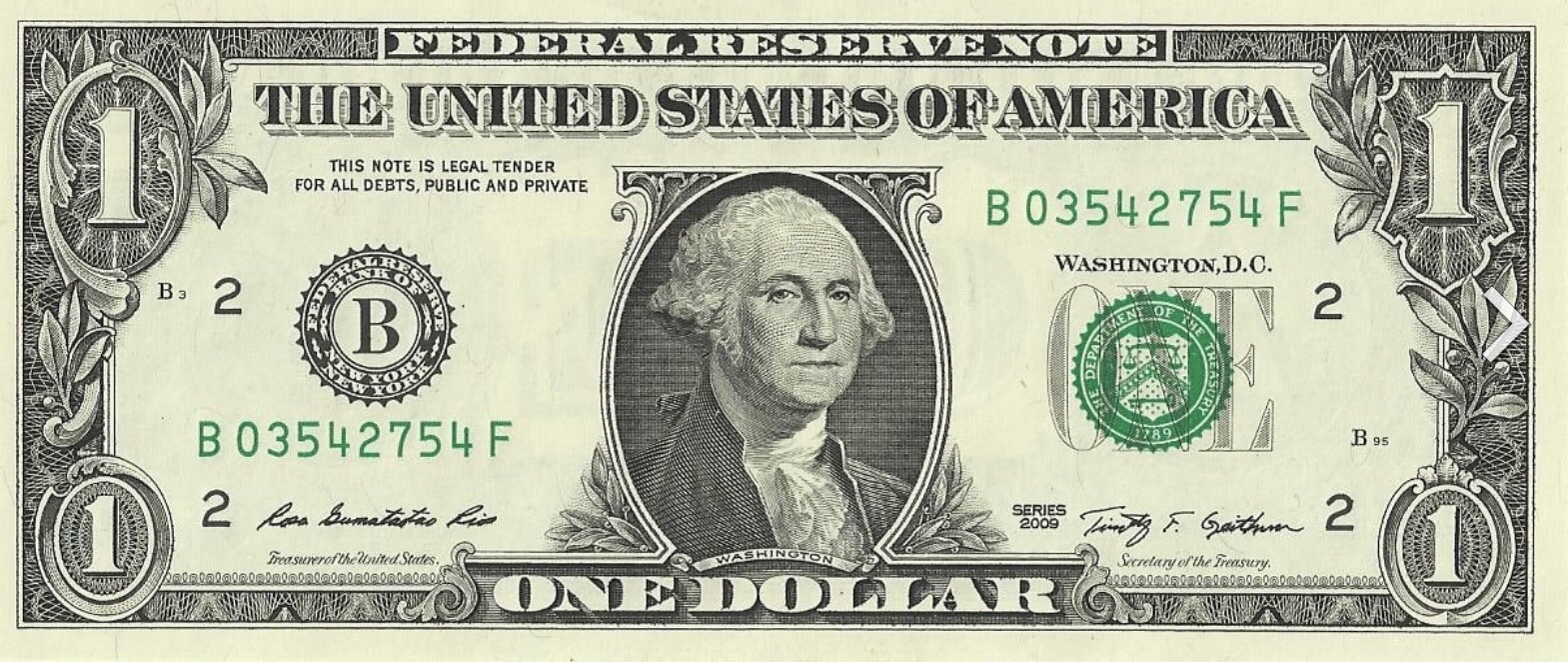
But in most ways I am living without understanding, living by faith that everything will work out. One example is my faith in the value of currency. I have faith, amazingly enough, in a printed piece of paper, faith that a paper dollar of any denomination has value just by the printing on it and can be exchanged for goods and services. There are times in places like Germany and other countries when that value vanishes and people are left with nothing but a wheelbarrow full of paper. When I travel the exchange rate fluctuates daily. The value of the dollar goes up and down, almost like magic, for no reason that I can discern except that faith that the United States will back up their currency. If other people lose trust in American currency, such as if we couldn’t pay our debts, it could drop precipitously. I have no contol over that and don’t understand it, either. We all have faith. We could each demand something tangible in exchange for something tangible, three heads of cauliflower for a bottle of milk. But we don’t. We have faith in a piece of paper.
So it seems magic to me that I can go to an ATM in India and know how much money in rupees I have in my bank account in the United States or wherever in the cloud the virtual money is, X’s and O’s, voodoo economics. My actual money is no where tangible, I have faith in money very much like I have faith in god, whom I haven’t met either, faith is a herd belief, very much like faith in ivermectin, which you have faith in until something goes wrong. I didn’t mention faith in money to Kathryn because she would think I was losing my marbles. Who doesn’t know that a dollar is a dollar?
So this is what I thought about on a day when Kathryn gave me confidence that everything would be all right financially into the future and that I wasn’t doing anything dumb. It was very reassuring.
But at the same time as we talked I knew that I was floating through life relying on good luck and chance and complete faith in things that I didn’t much understand and had little control over, thinking that I knew what was going on and in was control. I drove home feeling good and secure and clueless.
 BILLYBABA’S WANDERING