FOR OCTOGENARIANS (and quite a few others) ONLY
I have a number of rules of thumb for dealing with the rapidly changing world of technology and just experienced again how uncomfortable my rules make me feel. I recently decided that to leave my laptop at home and to use my iPad as my computer when traveling I need to upgrade to an iPad that will allow me to attach a portable hard drive in order to permanently store the photographs I take. That was my reason for buying a new laptop and the difficulty in connecting a hard drive was what disappointed me.
My personal first rule of digital technology is that devices need to be replaced every third year, and often sooner. The iPad Pro 10.5 inch screen which I bought on Craig‘s List for $400, half the new price of a new one a year before, was now nearing three years old. The tripping point was that it wouldn‘t let me attach a portable drive. So it was time to upgrade.
This first rule of digital technology runs exactly counter to the accepted wisdom octogenarians, that if it isn‘t broke don‘t fix it, if it does things the way it always has stick with it. The problem with this is that it is based on the false premiss, that octogenarians have relied all their lives, that experience is the best teacher, something they now can‘t shake. At a time of rapid change the accepted wisdom is not only often not useful, it is often dead wrong. An example is the recent way I have begun to travel. I have probably made forty extended trips overseas and what I have discovered is that all my assumptions about travel, based on my extensive experience, are now wrong. The way you plan trips, buy tickets, find places to stay, spend your time while on the trip have all been upended. The technology changed how people travel, wiped out ticket agents, transformed hotels, shifted the duration of travel and on and on. Every time I go on a trip I almost have to start all over and learn a new way of traveling as if I‘ve never traveled before. I have to unlearn everything I know. And now the pandemic is transforming travel again and everything is in flux.
Same thing with technology. The tried and true ways to take photographs, to store photographs, to share photographs which I learned three years ago have all been upended and transformed.
I had an iPad that was great three years ago and now it is only useful for word processing. The screen, the sound system, the storage options have all been changed. When I began searching for a new iPad I found I was almost clueless.
This causes me as an octogenarian great difficulty in several ways.
The first is that I really don‘t want to start all over learning a new system. Like all octogenarians I want to dig in my heels and refuse with the octogenarian argument that what was good enough last year for what I want to do is good enough this year. Relying on the way I have always done things really means, in the digital age, the last three years because before that all of us octogenarians were forced to learn to send an email, to use cell phone, to text, to use Facetime, even to use a debit card, in fact it turns out that there are no old, just recent ways. I‘ve been forced to change so often that, as an octogenarian, I am sick of it and this time I wasn‘t going to budge.
There is a big problem with this that is two fold. One is that by refusing to budge I (all of us) miss out on marvelous things that the new technology will let me do. I am cutting off my nose to spite my face. The only person that gets hurt is myself. My sister refused to ever use a computer or a cell phone or an iPad. She was righteous about it. She lived alone in an empty house and cut herself off from the world. No email, no photographs sent to her by text, no Netflix movies, no streaming anything, no reading of the news she could have gotten over the Internet (and politics consumed her). And proud of it.
Film photographers mocked digital photography until they finally realized the marvelous things they could do and reluctantly switched.
The second problem is that by refusing new technology we are marginalizing ourselves and are unable to fit into the world around us. We are left behind and unable to function.
Many of us refused to have a cell phone as the world was passing us by and we became more and more unreachable. People refusing a computer were unreachable by email and left out, wondering why no one ever told them anything. We were set on the old ways and didn‘t want to learn a new one. We can become, as young people would describe us, out of it. And the problem with being out of it is that almost every time we turn around we run into something that we don‘t know how to do and are, as a result, constantly irritated.
So all of this was true for me as an octogenarian, three years out of sync, who was trying to buy a new iPad.
I bought it and when it arrived was immediately dissatisfied. It wouldn‘t easily attach a portable hard drive, in fact none of the drives I have would work. I was tempted to dismiss as an expensive piece of junk.
Unfortunately there was a learning curve and I wasn‘t willing to slowly figure out how to use the iPad. Hard drives had also changed in three years (and when I discovered why I realized that they were now much better and had eliminated features that irritated me before). The USB connectors had changed and had a new form and made my old devices difficult to connect (until I realized that the new connectors were much faster and more useful). The button on the iPad was gone and I didn‘t know how to shift from one app to another (until I discovered that a flick of my finger could take me from place to place).
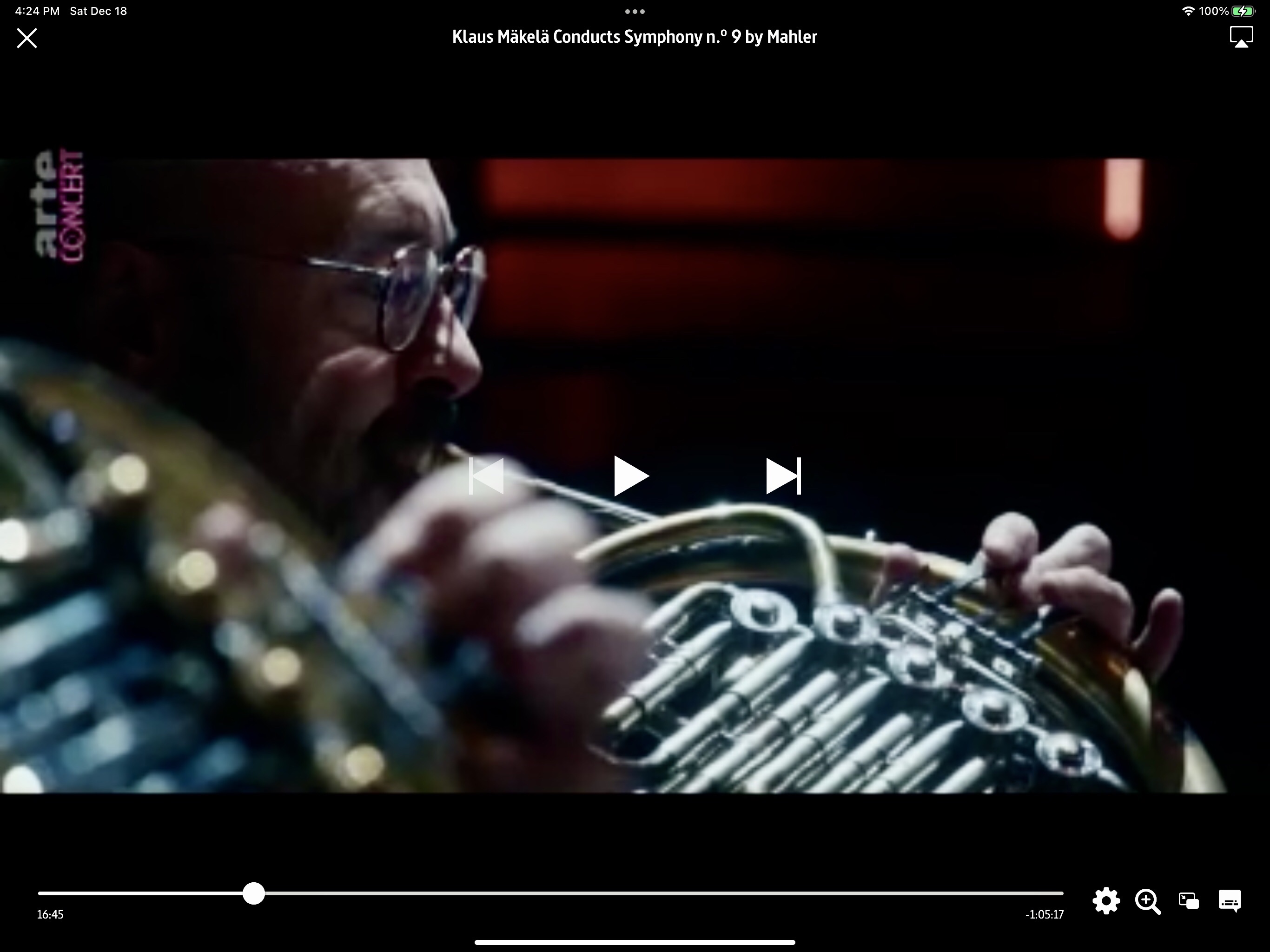
So to make a long story short. The day my iPad arrived and the next day I thought I had made an over priced $1000 mistake. But on the second day I began to discover things that interested me and by the third day I had discovered that when I walked through the Louvre on my iPad the new large screen made the paintings brilliantly beautiful, when I played my niece Maria Schrader‘s latest movie I AM A Man the new screen pulled me right in and the sound system was marvelous, when I FaceTimed Susie and Todd they were right there in the room across from me and whenever I squirmed around the camera kept me front and center, when I use the pencil to scrawl in cursive the letters turned to type, when I typed in PBS I found an app that linked me to all of their shows including many by Ken Burns, I attended a baroque music concert in a church in France with closeups of the players and marvelous sound, Babble started me out on learning French for my next trip and on and on and on. As I explored I realized that I hadn‘t been paying attention lately and that much more was offered me than had been there last year and it was more beautifully presented.
I learned again the realization that every octogenarian should learn as they sit alone at home. There is a marvelous, rapidly exanding world out there and the price of experiencing it is not so much cash as the willingness to learn. Many of us octogenarians were teachers in our past life, introducing reluctant students to new and marvelous things that it often took us and them a great deal of time to learn. What has happened to us? Learning technology, how to do new things, opens the world to us, learning new things through technology opens up all kinds of pleasures as we sit on our couches. And all of this can be with us wherever we go. I have a thousand Kindle books to read, a world of classical music to listen to, a dozen languages to learn, how to make anything that I could want to make by hand on You Tube and on and on and on.
So my advice to myself and to other octogenarians, including some who are 40 or 50 or 60 years old, is to stop grumping, stop resisting, to realize that the inventors of all these new ways of doing things know that unless it is simple no one will do it, but that it does take some learning and that all we have to do is to be willing to let go of the past and learn and then have a great time.
My personal first rule of digital technology is that devices need to be replaced every third year, and often sooner. The iPad Pro 10.5 inch screen which I bought on Craig‘s List for $400, half the new price of a new one a year before, was now nearing three years old. The tripping point was that it wouldn‘t let me attach a portable drive. So it was time to upgrade.
This first rule of digital technology runs exactly counter to the accepted wisdom octogenarians, that if it isn‘t broke don‘t fix it, if it does things the way it always has stick with it. The problem with this is that it is based on the false premiss, that octogenarians have relied all their lives, that experience is the best teacher, something they now can‘t shake. At a time of rapid change the accepted wisdom is not only often not useful, it is often dead wrong. An example is the recent way I have begun to travel. I have probably made forty extended trips overseas and what I have discovered is that all my assumptions about travel, based on my extensive experience, are now wrong. The way you plan trips, buy tickets, find places to stay, spend your time while on the trip have all been upended. The technology changed how people travel, wiped out ticket agents, transformed hotels, shifted the duration of travel and on and on. Every time I go on a trip I almost have to start all over and learn a new way of traveling as if I‘ve never traveled before. I have to unlearn everything I know. And now the pandemic is transforming travel again and everything is in flux.
Same thing with technology. The tried and true ways to take photographs, to store photographs, to share photographs which I learned three years ago have all been upended and transformed.
I had an iPad that was great three years ago and now it is only useful for word processing. The screen, the sound system, the storage options have all been changed. When I began searching for a new iPad I found I was almost clueless.
This causes me as an octogenarian great difficulty in several ways.
The first is that I really don‘t want to start all over learning a new system. Like all octogenarians I want to dig in my heels and refuse with the octogenarian argument that what was good enough last year for what I want to do is good enough this year. Relying on the way I have always done things really means, in the digital age, the last three years because before that all of us octogenarians were forced to learn to send an email, to use cell phone, to text, to use Facetime, even to use a debit card, in fact it turns out that there are no old, just recent ways. I‘ve been forced to change so often that, as an octogenarian, I am sick of it and this time I wasn‘t going to budge.
There is a big problem with this that is two fold. One is that by refusing to budge I (all of us) miss out on marvelous things that the new technology will let me do. I am cutting off my nose to spite my face. The only person that gets hurt is myself. My sister refused to ever use a computer or a cell phone or an iPad. She was righteous about it. She lived alone in an empty house and cut herself off from the world. No email, no photographs sent to her by text, no Netflix movies, no streaming anything, no reading of the news she could have gotten over the Internet (and politics consumed her). And proud of it.
Film photographers mocked digital photography until they finally realized the marvelous things they could do and reluctantly switched.
The second problem is that by refusing new technology we are marginalizing ourselves and are unable to fit into the world around us. We are left behind and unable to function.
Many of us refused to have a cell phone as the world was passing us by and we became more and more unreachable. People refusing a computer were unreachable by email and left out, wondering why no one ever told them anything. We were set on the old ways and didn‘t want to learn a new one. We can become, as young people would describe us, out of it. And the problem with being out of it is that almost every time we turn around we run into something that we don‘t know how to do and are, as a result, constantly irritated.
So all of this was true for me as an octogenarian, three years out of sync, who was trying to buy a new iPad.
I bought it and when it arrived was immediately dissatisfied. It wouldn‘t easily attach a portable hard drive, in fact none of the drives I have would work. I was tempted to dismiss as an expensive piece of junk.
Unfortunately there was a learning curve and I wasn‘t willing to slowly figure out how to use the iPad. Hard drives had also changed in three years (and when I discovered why I realized that they were now much better and had eliminated features that irritated me before). The USB connectors had changed and had a new form and made my old devices difficult to connect (until I realized that the new connectors were much faster and more useful). The button on the iPad was gone and I didn‘t know how to shift from one app to another (until I discovered that a flick of my finger could take me from place to place).
So to make a long story short. The day my iPad arrived and the next day I thought I had made an over priced $1000 mistake. But on the second day I began to discover things that interested me and by the third day I had discovered that when I walked through the Louvre on my iPad the new large screen made the paintings brilliantly beautiful, when I played my niece Maria Schrader‘s latest movie I AM A Man the new screen pulled me right in and the sound system was marvelous, when I FaceTimed Susie and Todd they were right there in the room across from me and whenever I squirmed around the camera kept me front and center, when I use the pencil to scrawl in cursive the letters turned to type, when I typed in PBS I found an app that linked me to all of their shows including many by Ken Burns, I attended a baroque music concert in a church in France with closeups of the players and marvelous sound, Babble started me out on learning French for my next trip and on and on and on. As I explored I realized that I hadn‘t been paying attention lately and that much more was offered me than had been there last year and it was more beautifully presented.
I learned again the realization that every octogenarian should learn as they sit alone at home. There is a marvelous, rapidly exanding world out there and the price of experiencing it is not so much cash as the willingness to learn. Many of us octogenarians were teachers in our past life, introducing reluctant students to new and marvelous things that it often took us and them a great deal of time to learn. What has happened to us? Learning technology, how to do new things, opens the world to us, learning new things through technology opens up all kinds of pleasures as we sit on our couches. And all of this can be with us wherever we go. I have a thousand Kindle books to read, a world of classical music to listen to, a dozen languages to learn, how to make anything that I could want to make by hand on You Tube and on and on and on.
So my advice to myself and to other octogenarians, including some who are 40 or 50 or 60 years old, is to stop grumping, stop resisting, to realize that the inventors of all these new ways of doing things know that unless it is simple no one will do it, but that it does take some learning and that all we have to do is to be willing to let go of the past and learn and then have a great time.
 BILLYBABA’S WANDERING