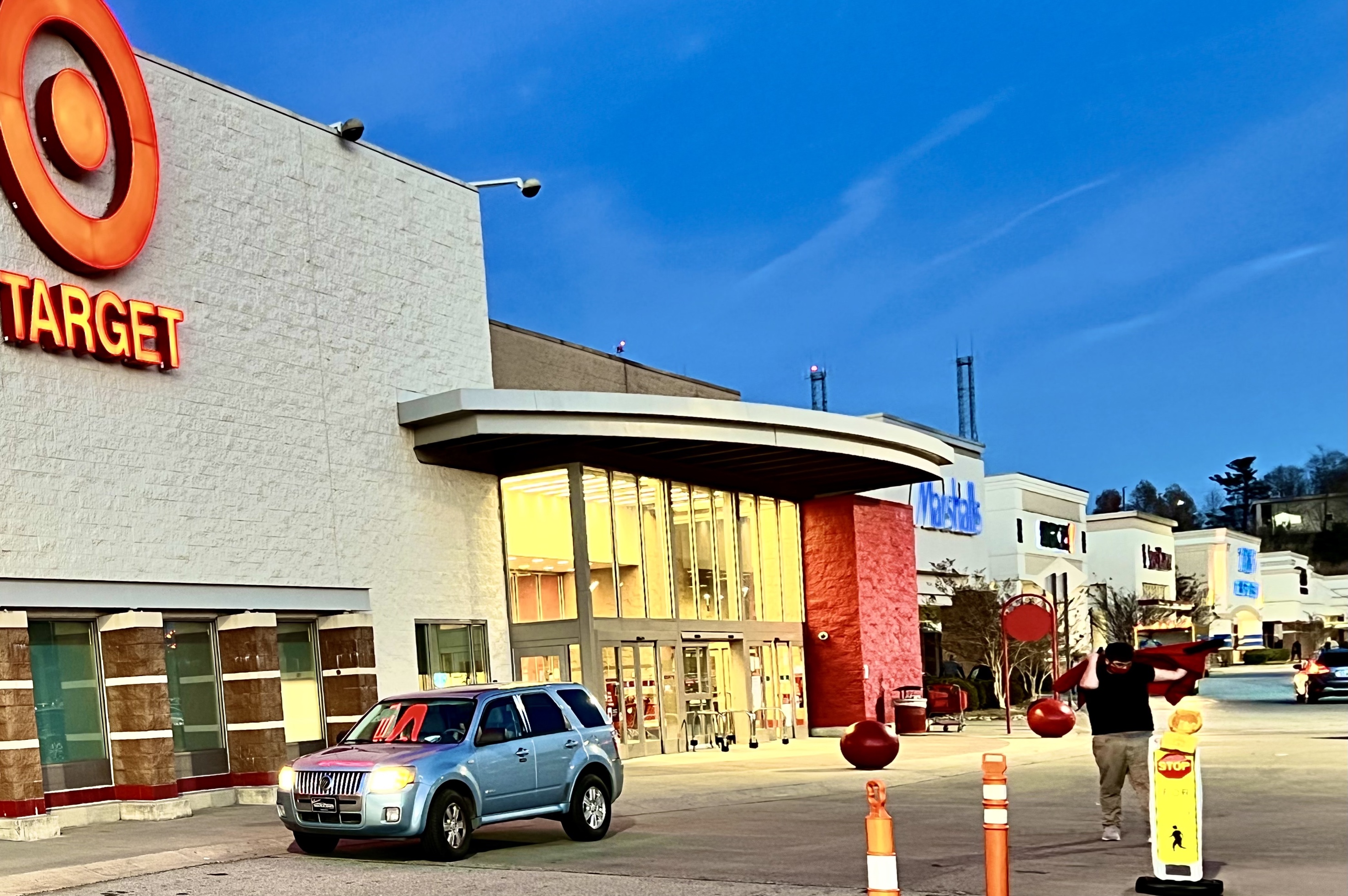
BIG BOXES
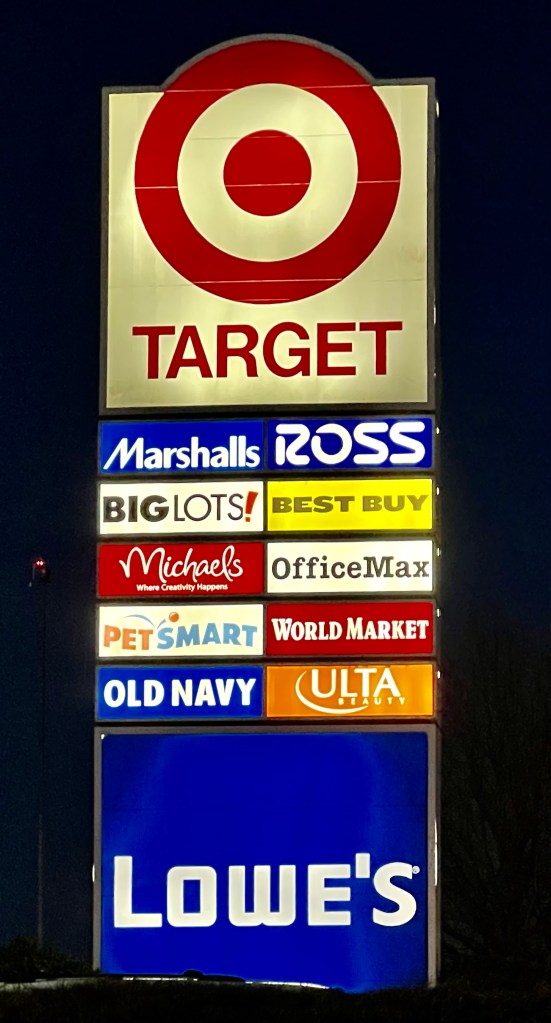
Yesterday evening I went to South Ashville to get some carry out crispy chicken from a place called Typhoon, because crispy chicken reminds me of a Chinese restaurant, run by Chinese, in the South Extension market of New Delhi. Typhoon is in South Asheville and like almost all the stores in South Asheville it is a chain store with a corporate menu and without a Chinese person in sight. South Asheville is the fastest growing part of Asheville with all kinds of housing going up ranging from retirement communities to condominiums for the well to do and housing developments for the well to do with forest names—the Oaks at Sweeten Creek, Royal Pines, Spring Forest, Oak Forest, Pebble Creek, the Ramble, Biltmore Forest—as well as a few affordable housing complexes for the not so lucky. The shopping for these instant communities are the stores that for ten miles or so line Hendersonville Road, the main thoroughfare all the way to the airport.

I picked up my crispy chicken and then, still under the spell of Celle, Germany and Naousa, Paros, Greece I felt like I was looking at Hendersonville Road for the first time. For me, and for any American, the strip of stores along Hendersonville Road is so familiar, so unremarkable, so ordinary, so expected that is is almost impossible for an American to be surprised or to wonder about it at all. Every town in America has a strip of stores just like the ones on Hendersonville Road with the same names—Burger King, Chick-Fil-E, Rite Aid, Best Buy, Papa John’s Pizza—names invented by the same marketing experts who named the mostly treeless forest housing developments.
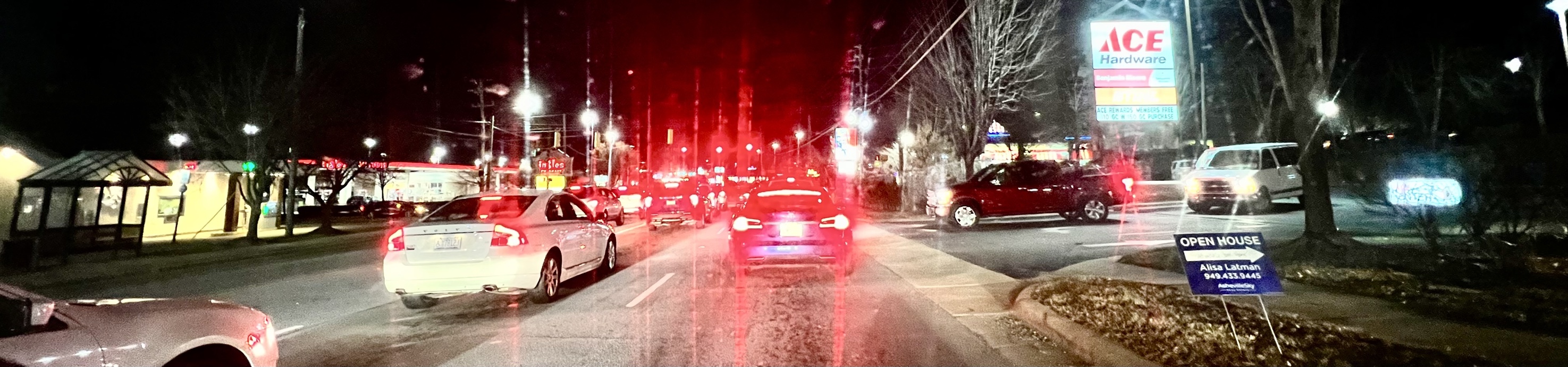
At 6 p.m. Hendersonville Road was bumper to bumper all the way to the airport. People were trying to get home or were out for the evening. There was plenty of time to look around, in fact, I got so fascinated that I stopped to take photographs. What have we dreamed up in the USA and how can we live this way so contentedly, even proudly.
Very simply the buildings are all the same, little boxes for little stores, big boxes for big stores, not quite made of cardboard, but almost. Each box is a shell of iron girders with flimsy walls and flat ceiling/roofs of metal girders with a thin metal roof tarred on the top to keep out the rain. If a tornado hits they disintegrate in an instant, sucked into the sky, as a candle factory recently did in Kentucky with great loss of life. The purpose of these boxes is to be a place where as many goods can be displayed as brightly as possible and sold as cheaply as possible.

Generally the smaller stores are built by developers in a long row, a strip of stores, sharing walls, under one roof, with large plate glass windows, a wide sidewalk in front and a large parking lot in front of that. The stores are cheap to build, cheap to maintain, and of so little value that when the neighborhood changes and the customers move away they can be abandoned. Before that they are occupied by shabbier and shabbier businesses until in twenty or thirty years then are bulldozed and vanish or remain as derelict eyesores.
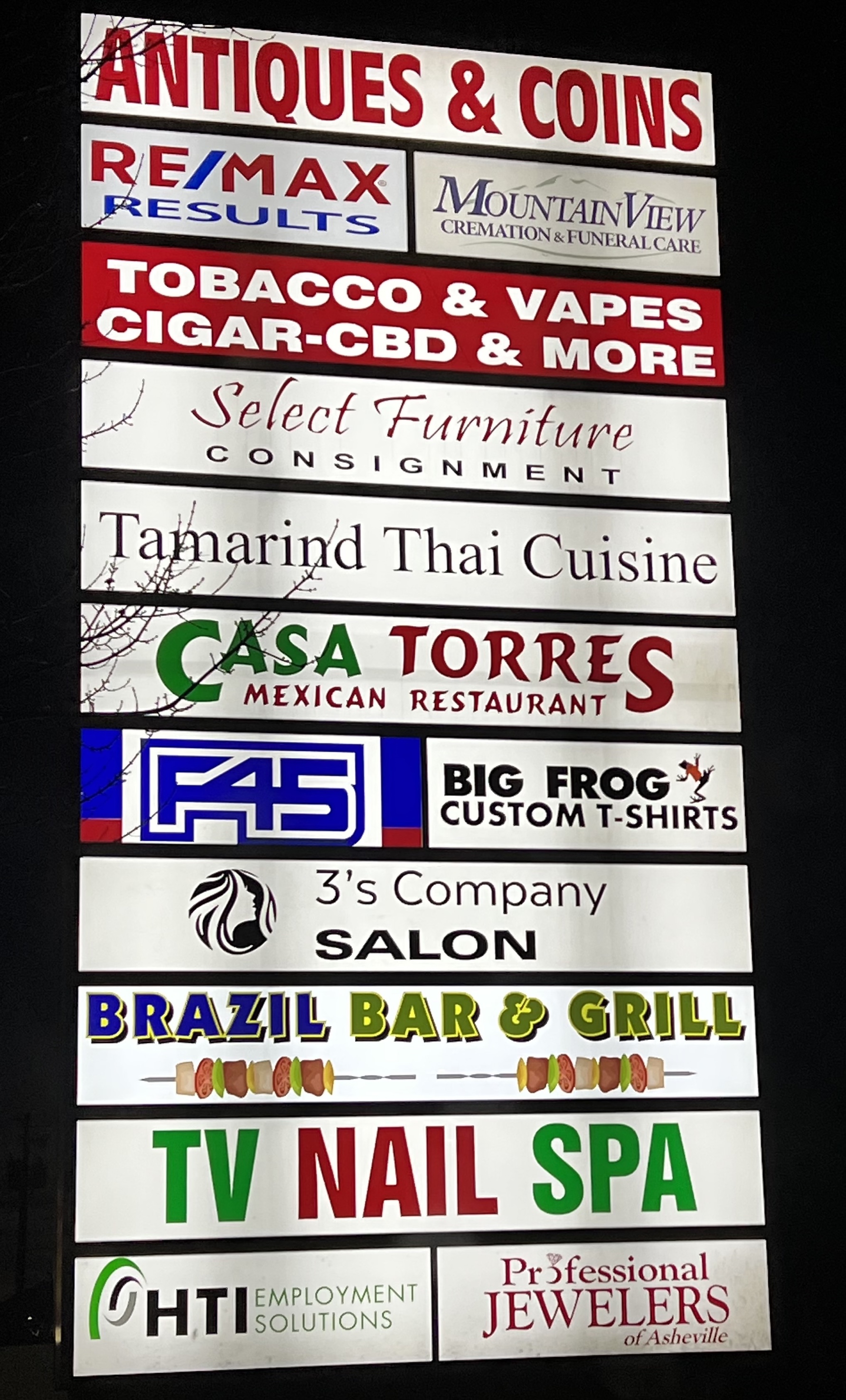
After feeling the permanence and beautiful construction of Greek and German buildings, carefully preserved, these strips of businesses seem like dream houses, there in the spring and in the autumn dried up and blown away. But all of this is disguised by the facades of the buildings, the only attempt to make them attractive, and by the neon lighting, both outside in brilliant colors, and inside with lighting making the goods for sale sparkle. The best time to photograph these stores to their advantage, hiding the full parking lots around them, is in the evening.
Inherited from the Wild West where oridinary saloons or business were given a two story fake facade to make them look twice as impressive, the same effort is given to the facade of every one of these big box and little box stores.
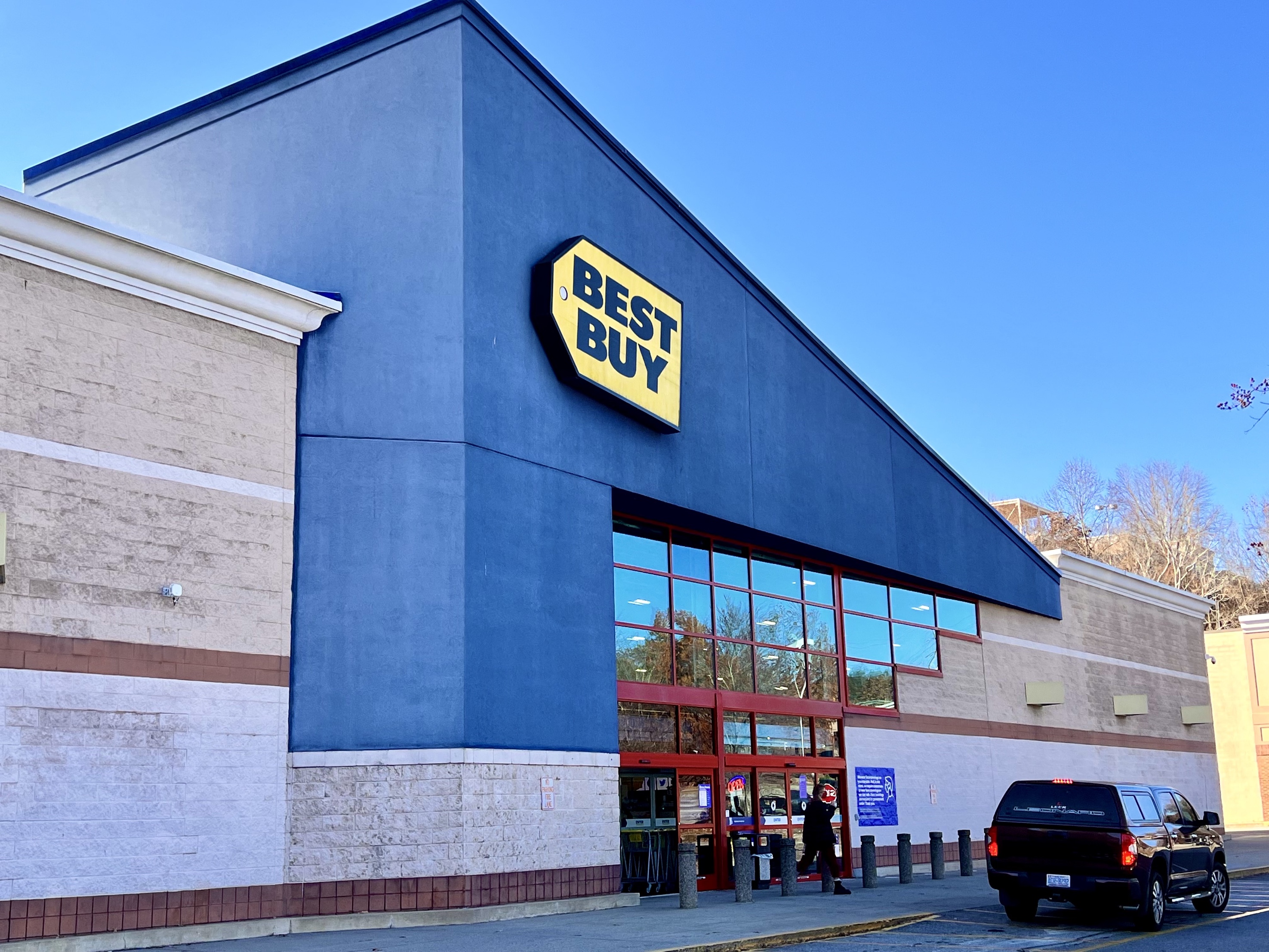
Best Buy is an electronics store and is a favorite of mine. Big Box stores are organized to display the maximum amount of shiny electronic devices in the showiest of ways with as few salespeople, often untrained, as possible. Best Buy used to have enough sales people that you only had to wait minutes for them to finish with a customer for them to help you. But now when you need help you are put into an electronic queue which somehow identifies you so that when your turn comes after ten or fifteen minutes you will finally be approached. Best Buy represents all big box stores. Look at the lighting, the ceiling the facade on the front of the building or at Bed, Bath and Beyond next door. And I’m not complaining or if I do I am a hypocrite, because the biggest box stores are the least expensive place to shop with someone to help you.
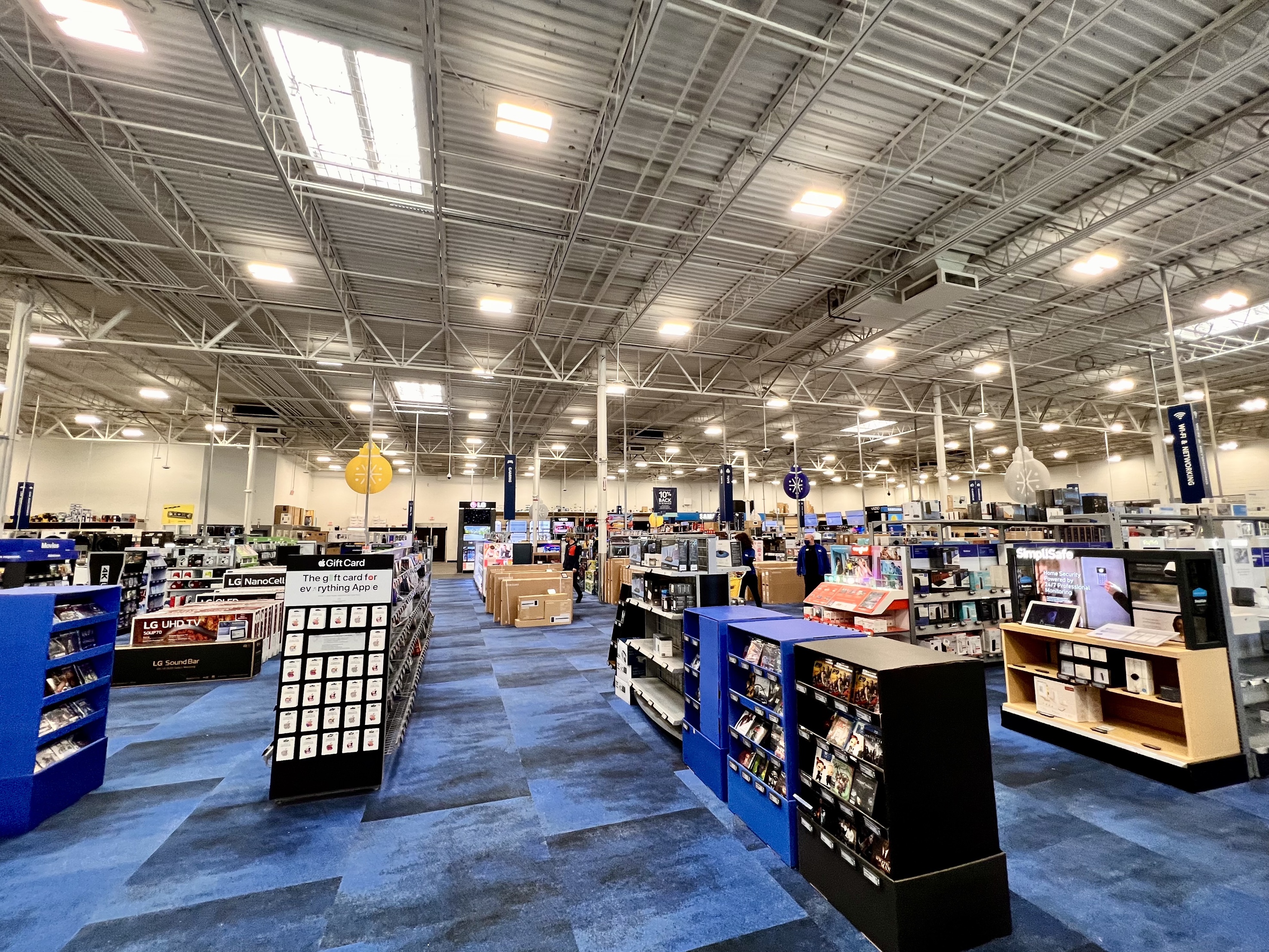
Since South Asheville is the newest and wealthiest part of town the big box stores are new and well laid out and the strip of stores that extends ten miles are all shiny and inviting. But in bigger cities that have had strip malls for longer, the strips have become shabbier and shabbier. South Asheville still beckons us with the American Dream of being a cornucopia, come and get it, with something for everyone.
The stores in Winsen, even similar chain stores like Aldi and Lidl and Rossmann, are embedded in a village with houses all around and a church and library and town hall at the center and schools within walking or bicycling distance. There is a feeling of community and belonging in Winsen, which the big and little box stores requiring a ride by car, will never contribute to.

And of course, hanging heavily over all of these chain stores and their glitter, even over the biggest of them of all, Walmart, is the invisible presence—no facade, no bright lights, no parking lot, just a computer screen—of Amazon and the Amazon Prime trucks darting everywhere in Asheville with free one or two day delivery.
 BILLYBABA’S WANDERING