18537 ARKEO
In wondering about my own experience of changes in forms of communication since I was born and how it connects with changes that are turning the world upside down I looked at my baby book to see how things were back then.
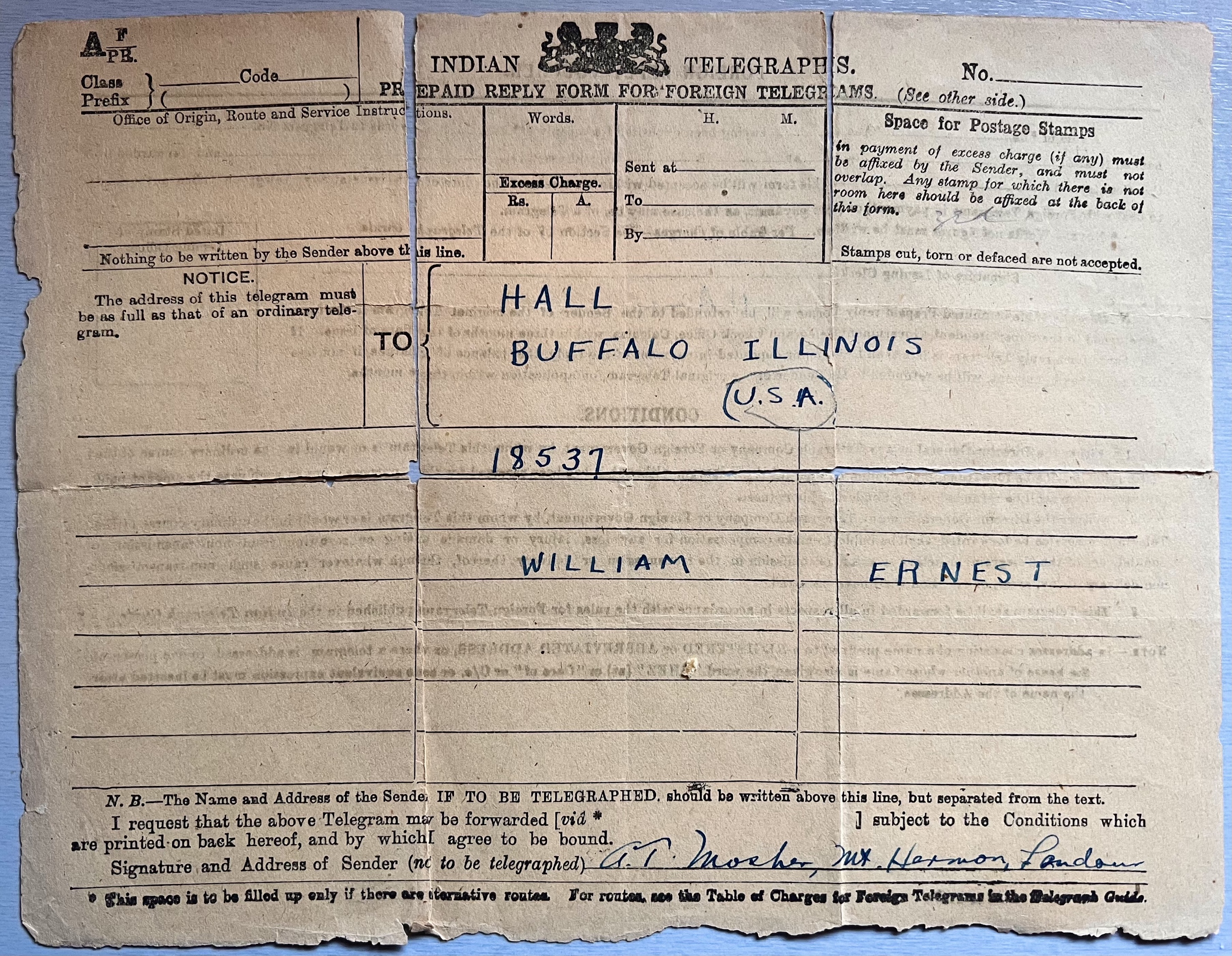
When I was born on August 11, 1937 in the Landour Community Hospital in Landour, Mussoorie, United Provinces, India, under the British Raj, my parents sent a telegram to my mother’s parents in Buffalo, Illinois announcing my birth. Apparently it was very expensive to send a telegram in those days because they paid by the word and there were only seven words in the telegram, four in the address and three in the body with no sender listed. The address had to include USA and Illinois but the rest was abbreviated, my grandparents last name, Hall, and the town, Buffalo. There was no mailing address which saved a few words. The body included my first and middle name, William Ernest, and the message contained one word only, 18537. 1 indicated I was a boy; 8 indicated I was Husky, full of life, lots of hair; 5 indicated I was 8 pounds; 3 indicated instrumental delivery, A.W. (My mother) recovering nicely, Arthur (my father) present; 7 indicated born between 3 and 6 p.m. today. There was no need to sign it.

It was the only way to let my grandparents in the USA, who alerted my extended family by mail, know I was born and the details of my birth. There was no telephone connection and no air mail. A letter would have taken weeks. The telegram must have arrived within a day.
This was the first communication from India in which I was involvedl On my last trip to India we could call Swannanoa using Facetime, free, talk for as long as we wanted, face to face, only constrained by a 10 1/2 hour time difference which meant that much of the time people on one end or the other were asleep.
In between there have been continual changes in communication beginning with airmail forms, then the telephone (calls had to be booked eight hours in advance, were very expensive and often fizzled out when connected, very few people in India had a telephone), then years later FAX messages, then low cost telephone from special STD phone booths and finally expensive cell phone calls, and only lately free cell phone calls, Skype calls and then Facetime. In 1984 I missed the plane carrying a group of Warren Wilson students to Sri Lanka with the next flight two days later. The students got along fine at the Sarvodaya guest house until I arrived. There was no way to communicate home and no one at Warren Wilson knew, there was also no way to easily communicate with the students. Today there would have been panic within minutes with every parent alerted and a crisis situation that might have upended the whole trip. Instant communication has its drawbacks. But for most of the thirty years that I took students to India our main way of communicating was by low cost airmail forms that took about ten days in each direction.

The flights were a little slower on the early trips, in fact on the first student trip there were no overseas flights except from a few major cities. We had to go by train to New York in order to catch a flight to India. But the thing that separated us from home was the way in which we got the news. There were no daily American newspapers in India as there are now. We would get our news from Time magazine or Newsweek, which essentially summarized the news, a week at a time. These days the news comes instantly on our Apple Watch or iPhone and Time is left to respond to the news and comment on it.
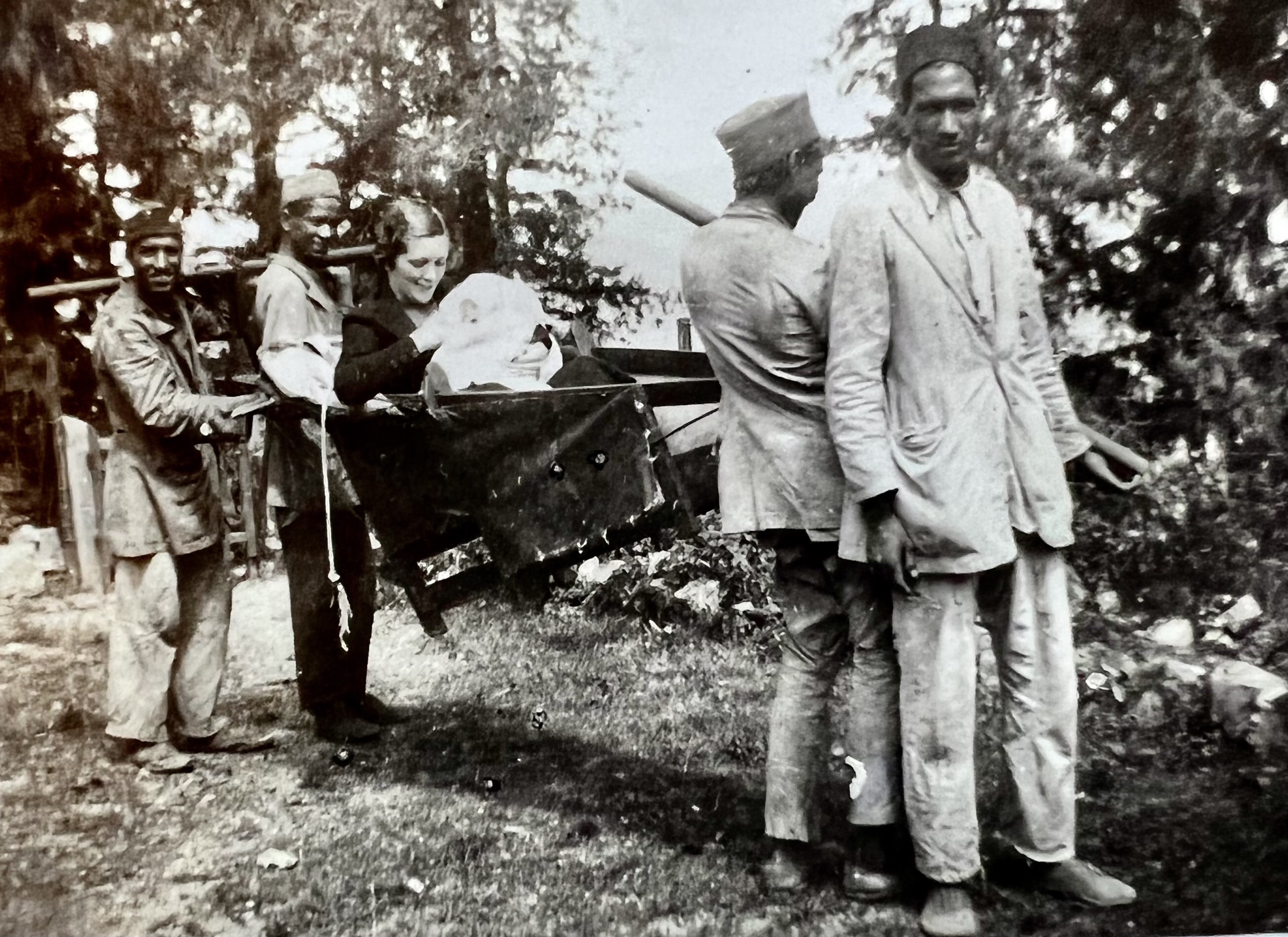
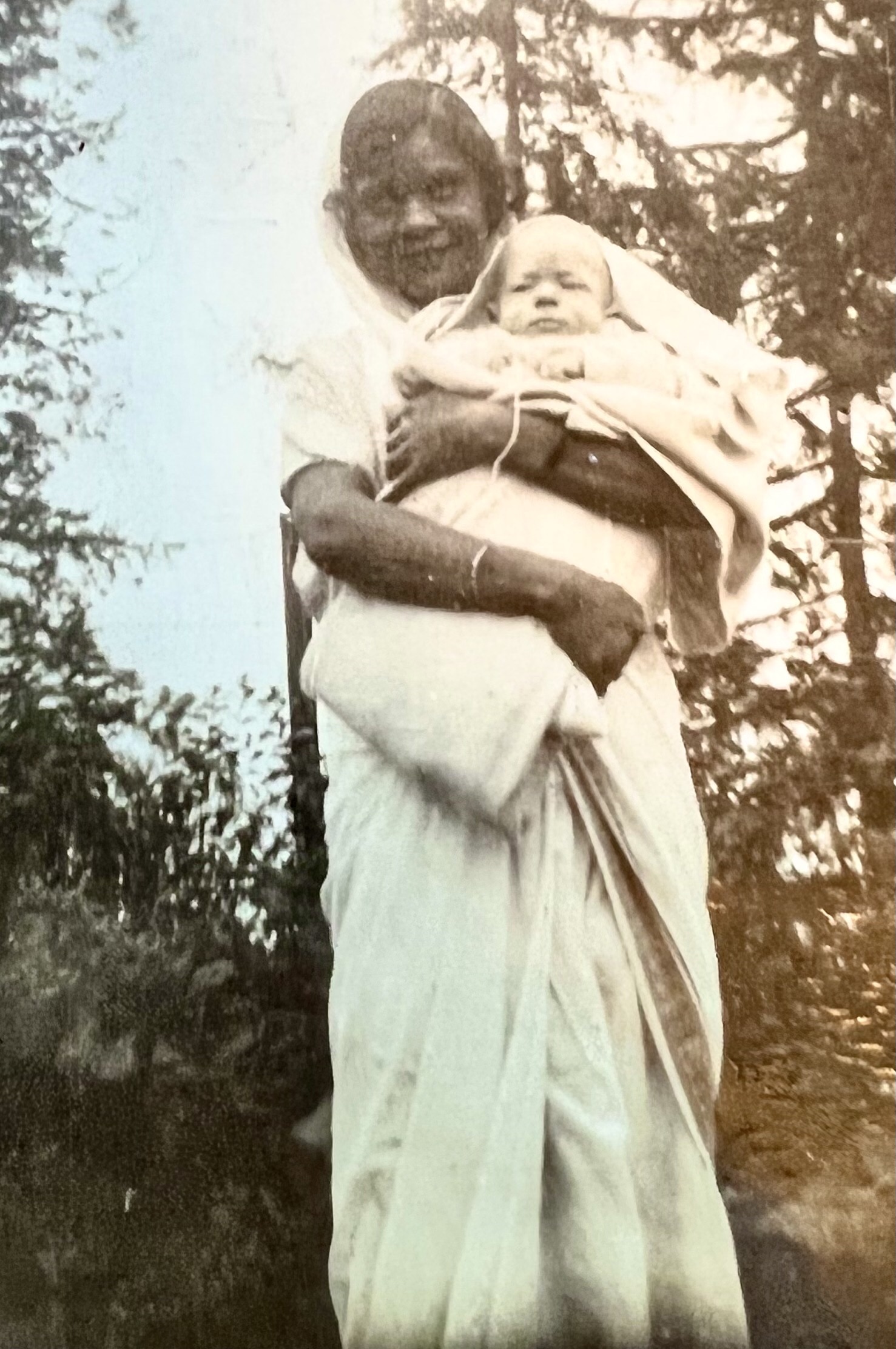
When I was born, India was two months away by boat and when missionaries went to India they were expected to stay six years before coming home for a year’s furlough. We were a world away as the photographs show, in a place only a few Americans could experience, in a land that was impossible to explain.
But over the years the United States and India have moved closer and closer until now they are side by side and often overlapping because of changes in communication. When you call customer service of any big American company you are likely to be helped, with a slight accent, from Bangalore, India and thanked profusely for choosing T-Mobile.
The huge change, of course, was caused by the computer. It is the computer that makes the Internet possible, global production possible, news to travel instantly, goods to travel instantly, an ATM in India tell you instantly how many rupees you have in the Swannanoa bank. We are all wrapped together by the computer, chafing against each other. Technological change in Bangalore means instant technological change in Asheville. When my barber is furious at the Democrats for encouraging jobs to vanish from Swannanoa, he is really mad at the computer. The Democrats are as bewildered as he is and have no idea how to placate his anger. Trump does, he promises to return the jobs, but he is really promising to banish the computer and go back to the good old days when 18537 was all you could afford in a telegram and you couldn’t even imagine connecting with India in any way.

 BILLYBABA’S WANDERING