
Yesterday Heinrich and Elke took me to the Deutsches Erdolmuseum, the German Oil Museum, in Wietze, to the village close by where we visited the Stechinelli chapel last week. I didn’t expect much. I knew that oil had been discovered here and that a number of farmers had gotten very rich and built huge houses in the center of town.

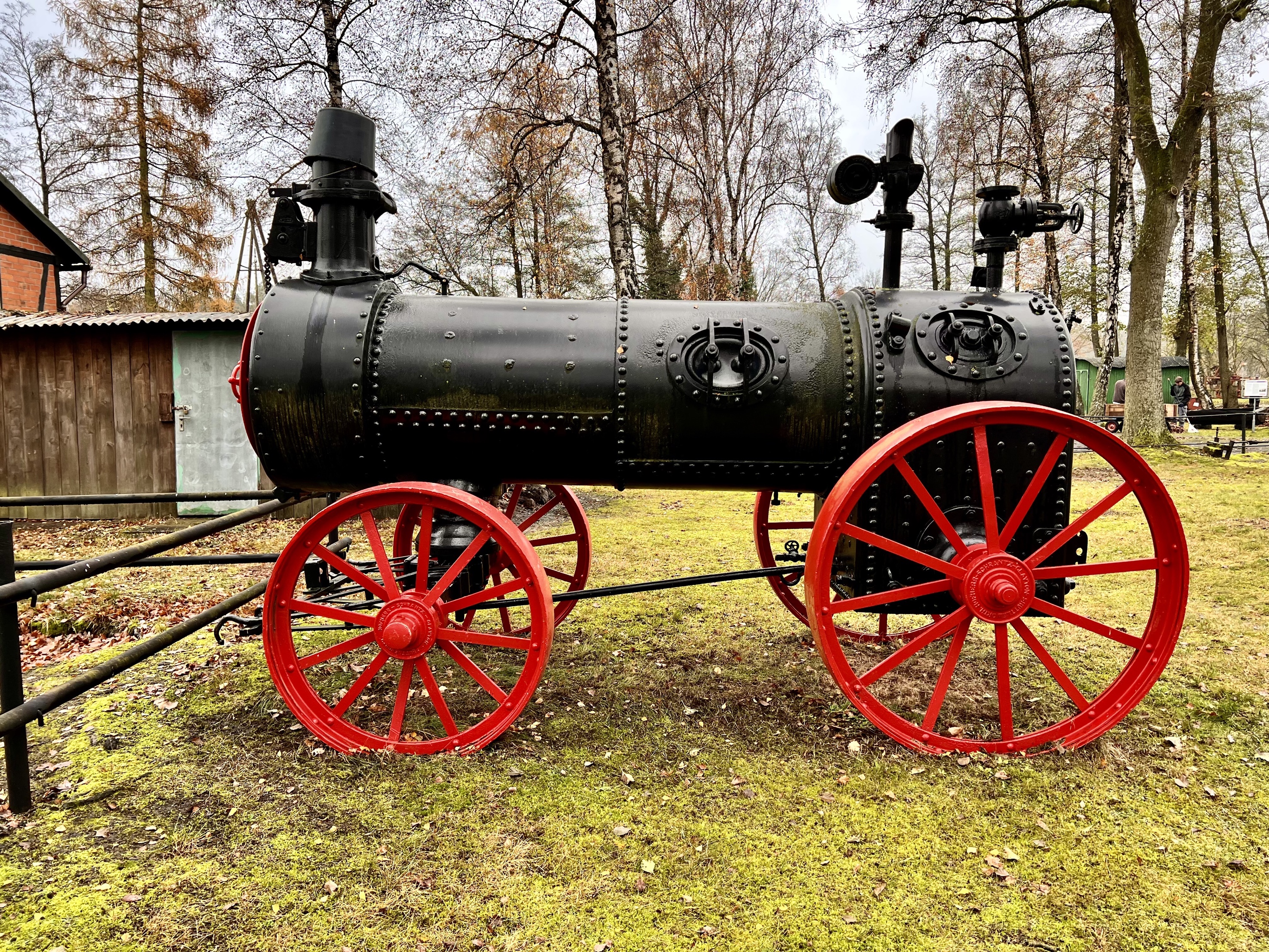
But what the museum did with hundreds of models and all kinds of exhibits including outdoor examples of the different kinds of oil rigs was to give a history of the oil industry in Germany and in the world.
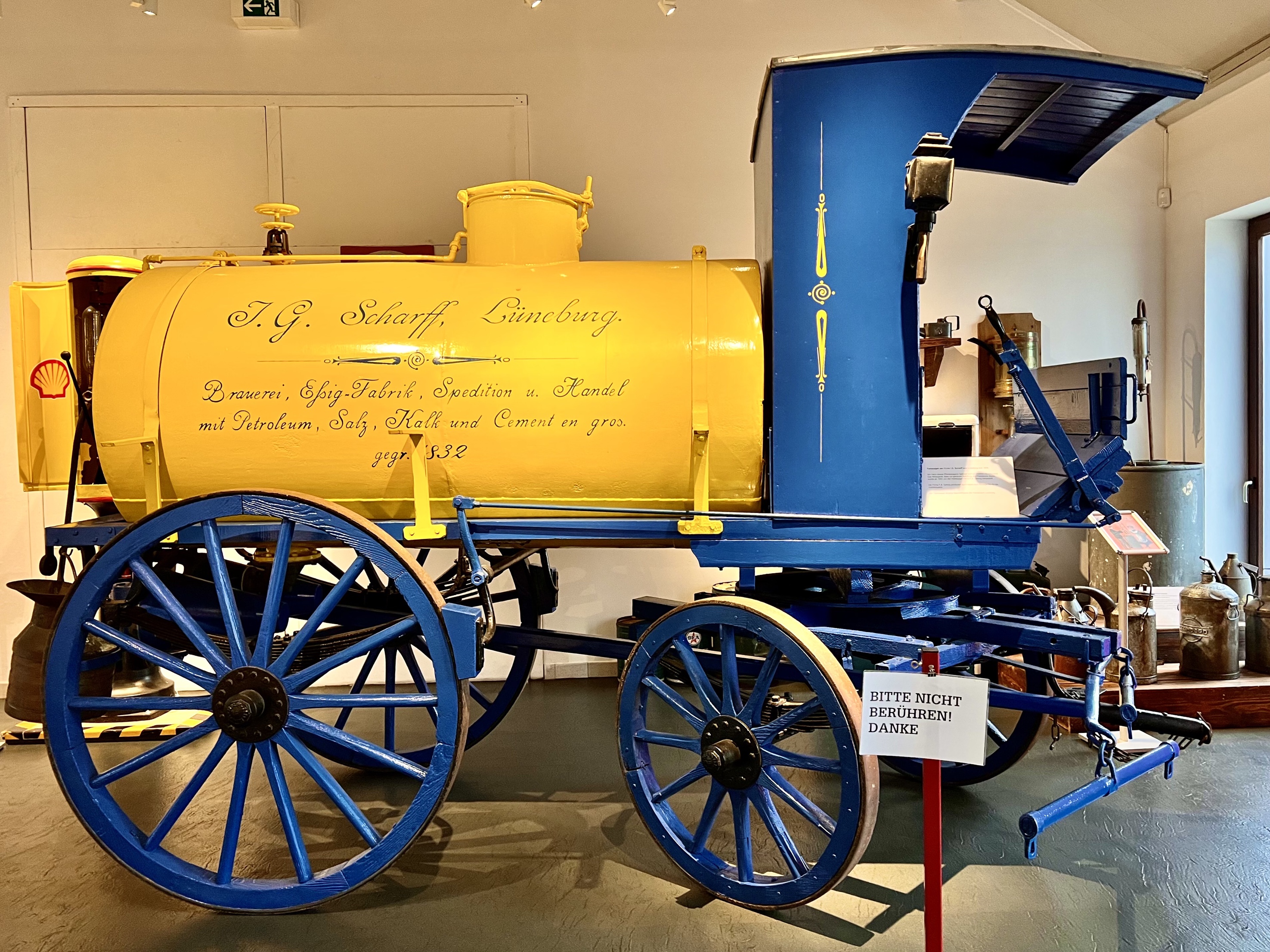
Oil was found seeping out of the ground around Wietze long before there was any known use for it. In fact, the first use of the oil that was collected seeping up in pools was as a quack medicine for countless ailments. Oil’s first practical use in the late 1800’s was in oil lamps and then for lubrication before the internal combustion engine was invented and the thousands of uses of oil for the making of plastics and countless other items was invented.

And the first real collection of oil was not through oil wells but from digging tunnels deep underground in a form of mining with oil collected in little carts similar to those used to mine coal and then was wheeled to the surface. Working deep in the mines was filthy, hot, laborious work with black oil coating everything.
The collection of oil in Wietze began at the same time as oil was discovered and processed in Pennsylvania and done in a very crude way. Soon in the early 1900’s there were thousands of oil wells around Wietze. Heinrich says that many of the workers in these oil mines came from Winsen by bicycle and that school children were conscripted to remove roots and rocks on the bicycle paths so the Winsen workers could get to work quickly.
In a movie in German at the museum there were still elderly people people alive at the making of the movie who had worked in this oil mines.
But then, of course, technology for every aspect of the search for oil, new and deeper wells of every sort, and processing and transport of oil rapidly changed year after year and eventually oil production moved to the far ends of the earth. There is still oil below Wietze, but the last profitable production of oil ended in 1962.
But two things struck me about the museum. One was that the discovery and processing of oil began right here next to Winsen and then rapidly spread world wide. The second was how informative and beautifully presented this history was right here in the little town next to us, funded largely, I think, by the oil industry itself. It is a fascinating museum and for some reason after all my visits to Winsen I was unaware of it.
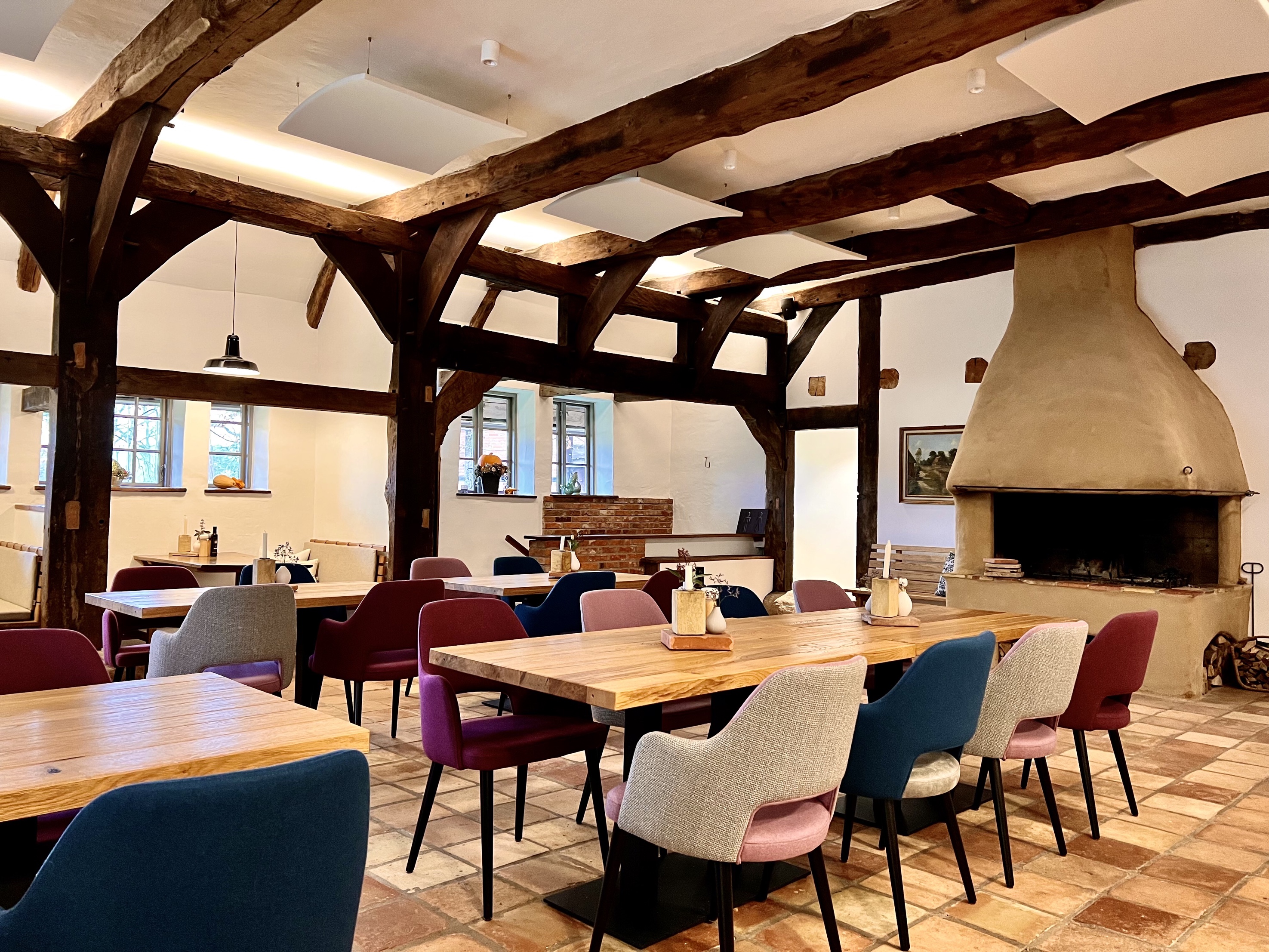
Then we went out to eat an another marvelous Bauernhof restaurant, expensive but beautiful, right here in Wietze.

And then following that we went to see what Elke called Niedersachen’s Niagara Falls, a dam in the Aller river that backs up the river and then drops about 15 feet over a dam with a trout stream around the dam giving the trout a way to go up the river to spawn.

All three of these sights combined with the Stechinelli chapel give the village of Winsen a richness of history and fascinating places that strike me, an American, as being pretty amazing for a small village.
So that is what happened today and is where you can stop reading and go back to what you were just doing unless you really want to follow my tortured attempt to deal with vaxxers and antivaxxers which I started on yesterday. Thanks for dropping by.
ADDENDUM
In my mind all of us are impelled along by emotion, by what makes us feel most intensely alive and what threatens our identity. This is true for me of vaxxers like myself and for antivaxxers. Vaxxers trust science and the doctors who protect us with vaccinations. We don’t know how vaccinations work, we just trust the scientists who do know how they work and the government that provides the medicines and advice. Anti vaxxers don’t trust the government or experts and don’t want to be pushed around.
For you who are still here, in the back of my mind all day was this tension between vaxxers and antivaxxers and how, personally, I can find a way out of our whacking each other over the head.
But what intensifies this divide, I feel, has little to do with science and everything to do with tribalism. Tribalism puzzles me. I like belonging to a group of people who share my values. One of the things that makes me feel good is belonging. But the problem with belonging to a tribe is that in order to belong to tribe you have to profess to believe all of the things that the tribe believes. If you don‘t, if you have doubts about some of the values that unites the tribe, you become a heretic.
That was true for me when I was a college teacher and belonged to the academic tribe. To belong in the academic tribe I had to believe, or profess to believe, a number of things. I had to believe in academic credits as a measure of learning, I had to be accredited in certain ways even if what I was accredited to teach isn‘t what I was teaching, I had to believe in a grading system that separates the sheep from the goats, I had to give lectures and tests and on and on. I was a teacher but many of those those things were a mystery to me. But I couldn‘t talk about it if I wanted to a member of the academic tribe. I went along and kept my mouth shut.
I think that is true for the MAGA tribe as well and the Progressive tribe. If you are MAGA you have to oppose abortion, if you are Progressive you champion it. If you are MAGA you wear red, white and blue and wave a flag, if you are Progressive you frown and look down on anyone who does. And I think a similar thing is true for vaccinations. Whether you get a vaccination or not depends upon which tribe you belong to. If you are in the distrust government camp you are proud of not being vaccinated, if you are in the trust government camp you do get a vaccination and are proud of it.
But beyond indicating which camp you are in so that you can belong, just belonging to one camp or the other has the effect of making you partisan. The more each camp marches together the greater the feeling of belonging and this belonging has the same effect as attending a high school football game. The more you cheer together and slap hands together the more intensely alive you feel until you get so high that you are ready to do whatever the tribe wants you to do. The reason soldiers march in uniform is because marching together creates this high, this feeling of belonging to a tribe. But so does going to church and repeating the Apostle‘s creed, or going to a basketball game or going to a Trump rally or going to a rock concert.
A person who may not care one way or the other about getting vaccinated or whether someone gets an abortion or whether someone sits or stands during the national anthem or whether there was a virgin birth will get carried along by whatever tribe he is in until it is impossible to think clearly about any particular issue which he, I, didn‘t much care about to begin with.
So tribalism clearly draws the lines over any issue, including vaccination, and then intensifies our feelings about the particular issue until it is impossible for anyone to listen to the other side and makes it impossible to change your mind or the other person‘s mind. All you end up doing is confronting each other.
The problem for me is that to be human is to be tribal. We are social and want to belong to a group that will sustain and support us and make us feel important. Cultures are tribal groups with ways of dressing, communicating, eating, worshipping, telling stories and on and on. Tribalism is central to feeling fully alive. Tribalism impels us along. But tribalism also creates tremendous tensions with those tribes which believe the opposite from what we believe.
So how am I going to deal with tribe who has made antivaxxing a sign of belonging, and how are antivaxxers going to deal with those of us who make vaccination a requirement to eat in a restaurant, to go to church, to attend a concert or to do any of the ordinary pleasures of life?
But for me there seem to be, in addition, changes happening in the world which intensify tribalism such as changes in technology and methods of communication, which I may wonder about tomorrow if I can get my head straight enough to do it because my head wasn‘t on quite straight today.
 BILLYBABA’S WANDERING