FISCHERHUDE AND WORPSWEDE AND BIRCH TREES
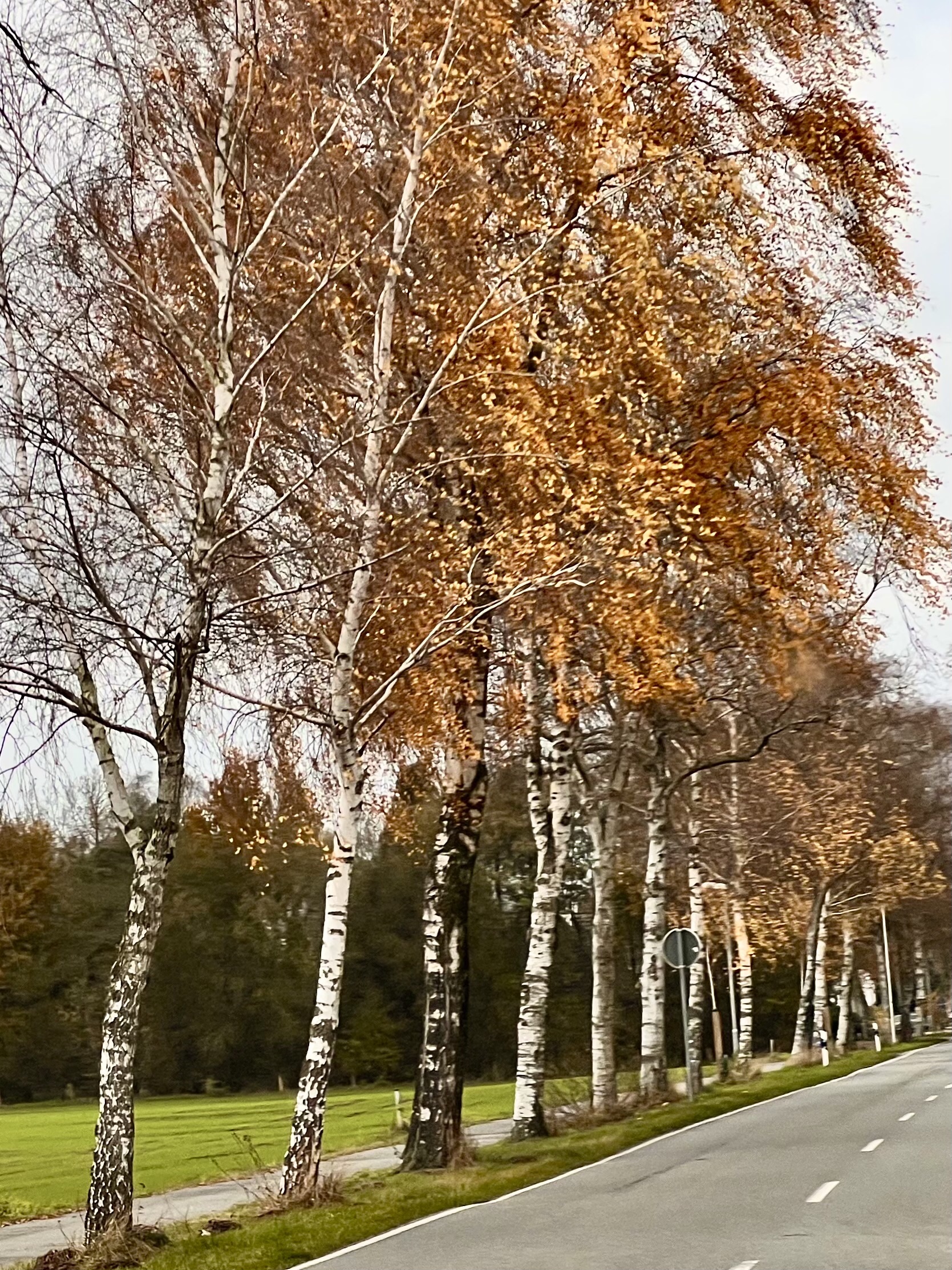
We drove to Fischerhude on our last big adventure ride, stopping at Vatter along the way for Spiegeleier (fried eggs) and brotchen.
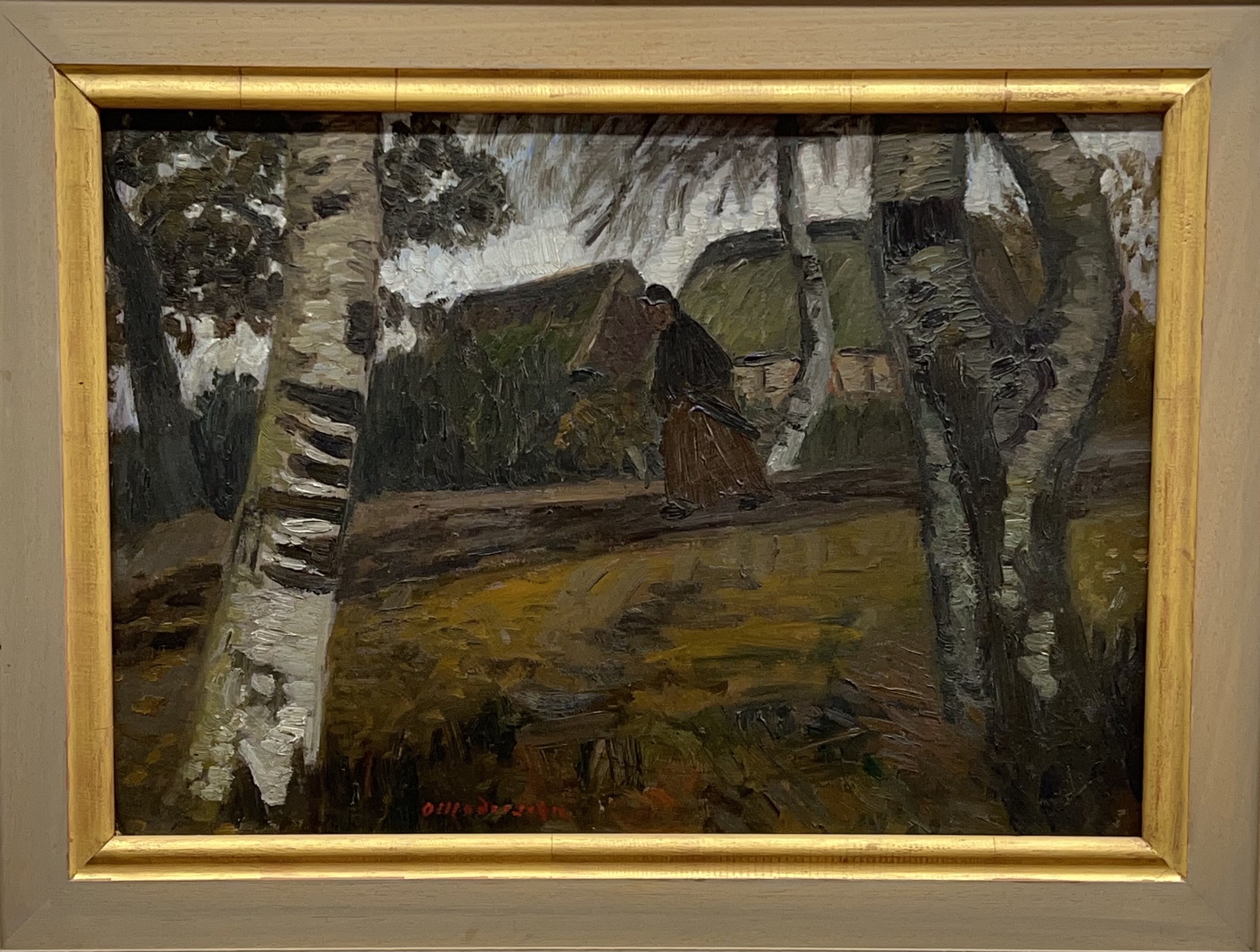
It was a gloomy day, almost every day in Germany has been a dark day, not raining but without sunshine day after day.
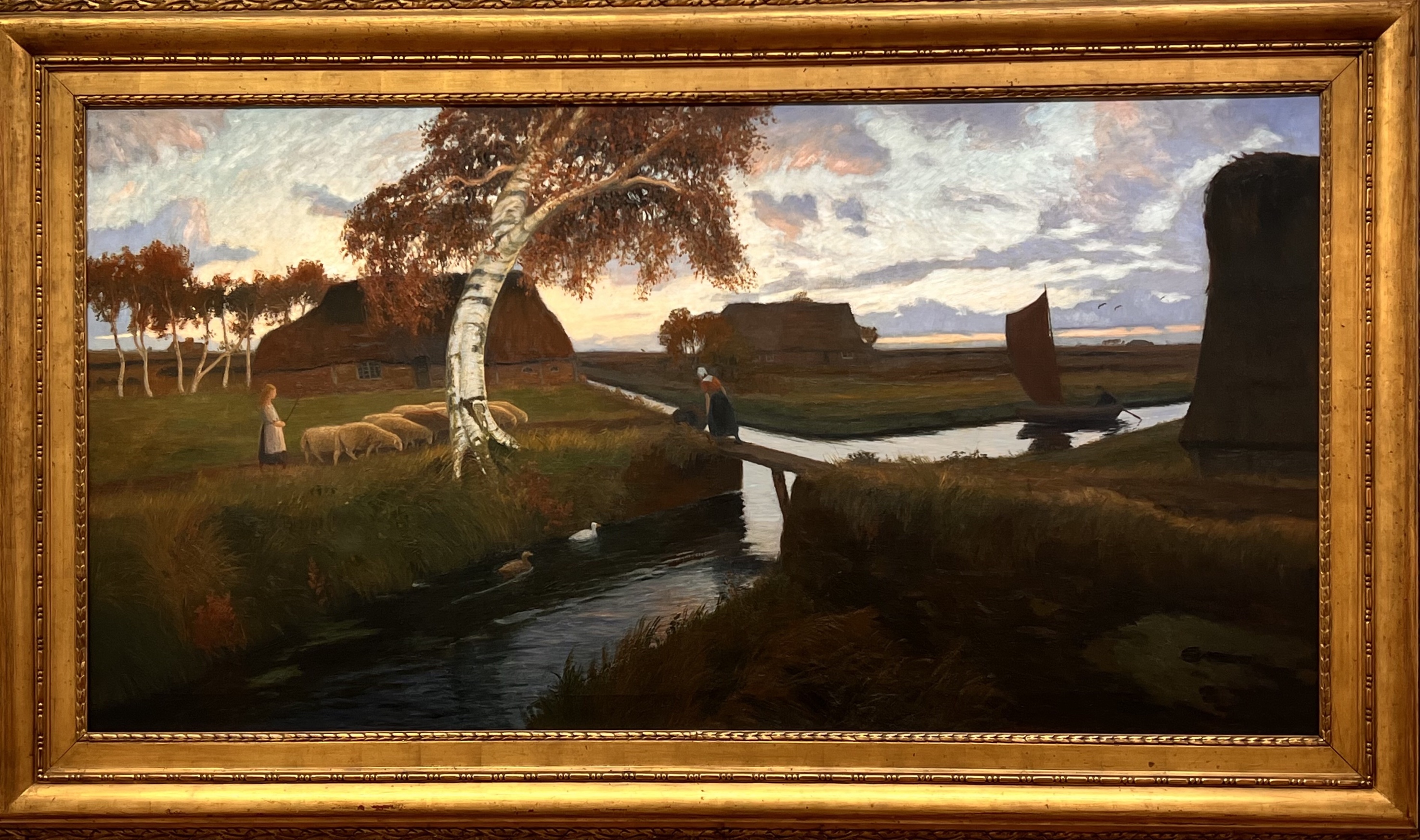
Fischerhude is an artist‘s colony to which Otto Modersohn moved after he helped found the artist‘s colony at Worpswede and after the death of his second wife, Paula Modersohn Becker whose museum in Worpswede we had come to see. In Fischerhude we looked through the large Otto Modersohn museum with several rooms full of his paintings.
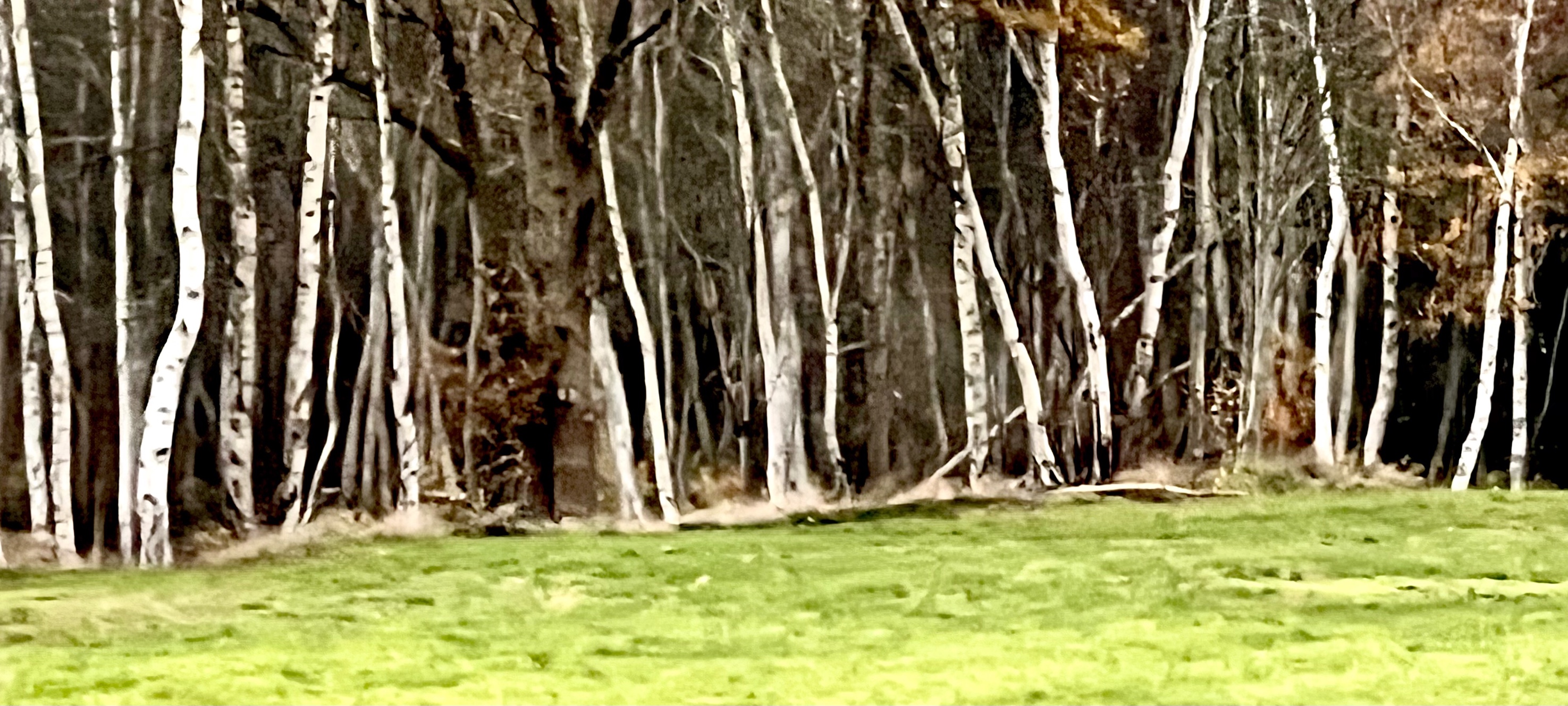
What struck us most was that his paintings were of the same clouded landscape that we had been driving through, with the same birch trees that lined the roads also in his paintings. He liked to paint on cloudy days.
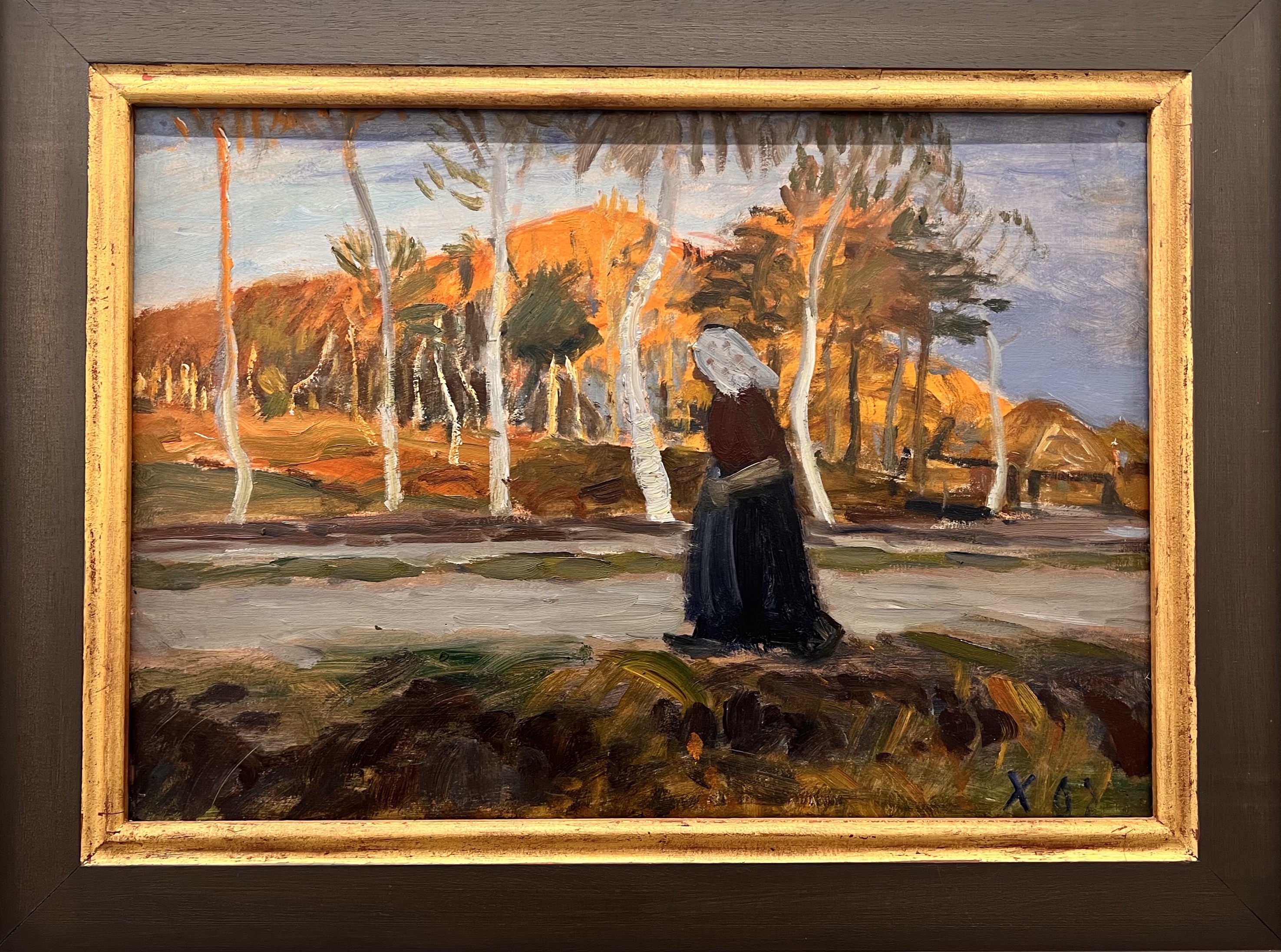
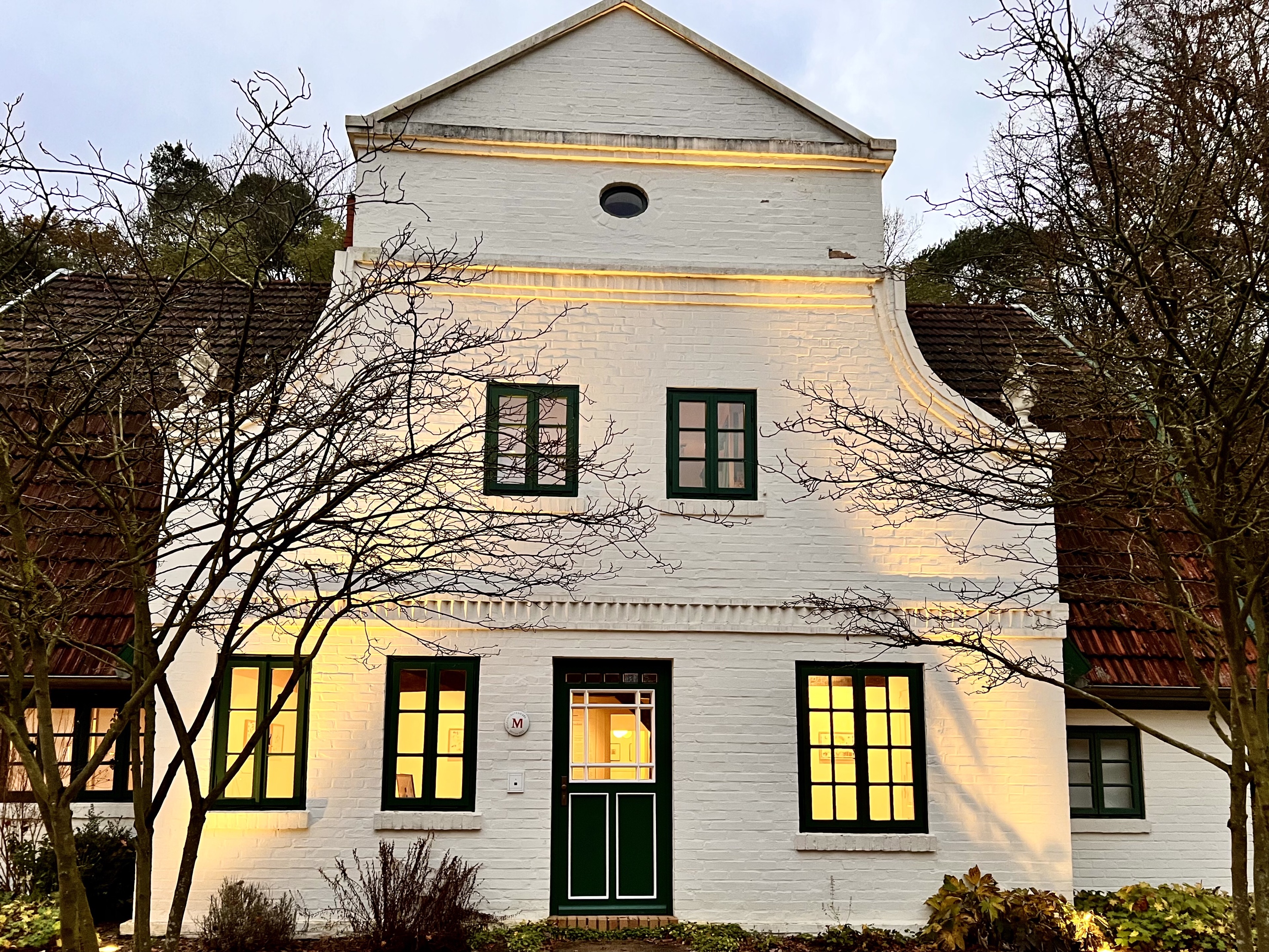
After browsing his museum we drove on to Worpswede which around 1900 attracted a number of German artists who were painting in a new, less formal, naturalistic style than that taught in art schools where the most interesting museum was Barkenhof, birch farm, organized by Heinrich Vogeler which was the artistic center of Worpswede, often visited by Rilke.

Heinrich Vogeler inherited enough money to be able to transform a farm cottage into a beautiful house and garden.
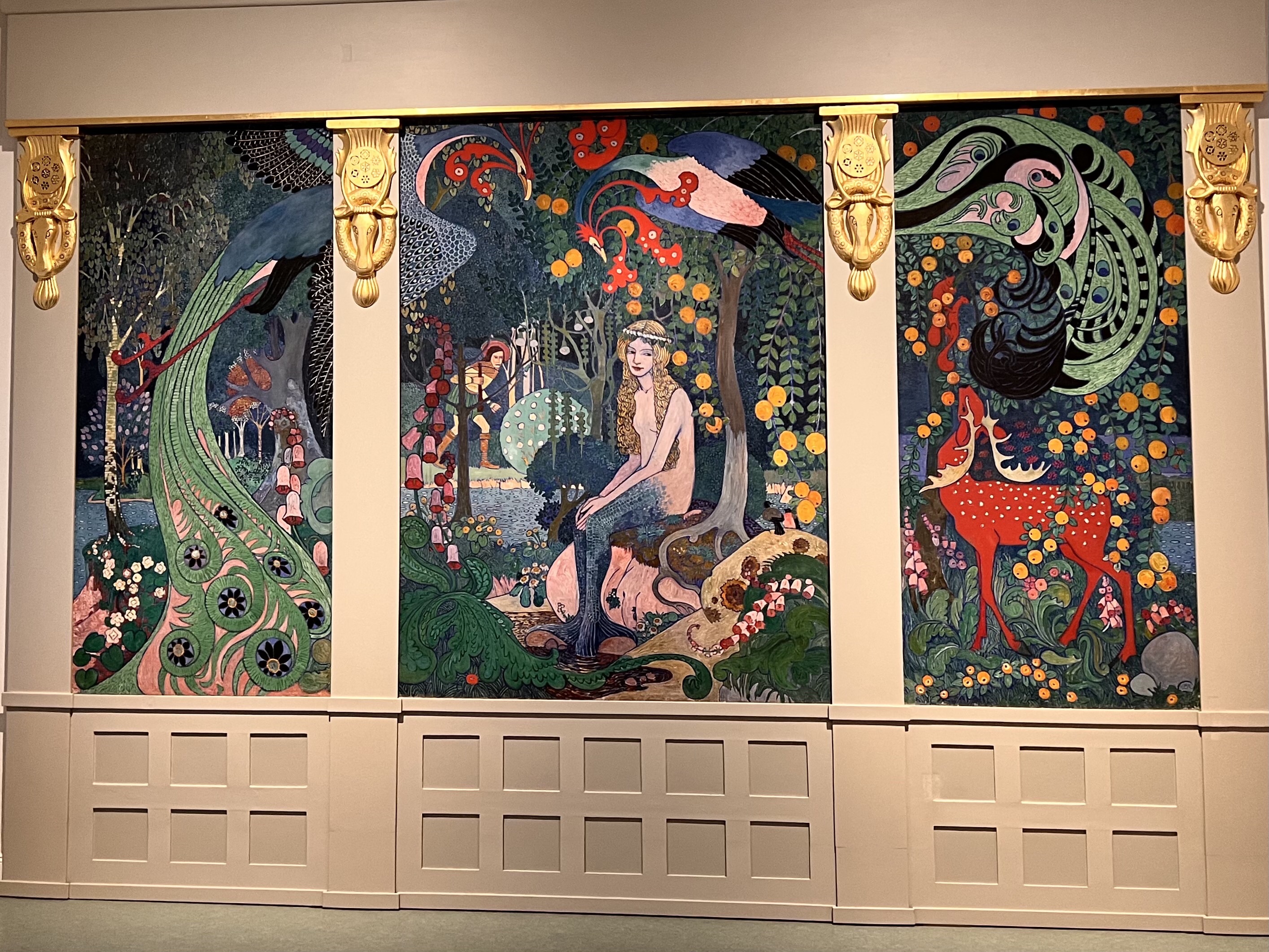
He was a renaissance man who painted in several styles from impressionistic landscapes to art nouveau book illustrations, designed rugs and furniture, was an architect and also designed all kinds of practical things. The house, now a museum exhibits all sides of him including his transition from art for art‘s sake to art as a moral force. He was much influenced by the Russian communist revolution and moved to Moscow preaching and illustrating the socialist equality and simple living of the ordinary man.
Our goal had been to see the Paula Modersohn Becker museum but it is only open on the weekend. She was the second wife of Otto Modersohn, dying shortly after childbirth at the age of 31. We did see some of her paintings and are bringing a number of reproductions home.

For both Susie and me these two weeks have been a slow dawning of how much and how deep German culture is for us through reconnecting on our own, without Kathe, with German cousins and friends and with the rich German heritage of food, games, art, poetry, and celebrations of all kinds which enrich both of our lives, a heritage that has come to us through Kathe and her life experience, but which we are now experiencing and accepting on our own, which will bring us back to Germany again and again and keep us connected when apart. Yesterday this awareness came to us through the white birch trees lining the country roads and in the paintings at Worpswede and Fischerhude. It was a very full and good day.
 BILLYBABA’S WANDERING