BEING LIBERATED IN GERMANY
Today was going to be an off day, a quiet day, with only one event planned, an invitation by Heinrich and Elke to Hartman, the former name of Restaurant Stadt Bremen, a Café where Kathe and I celebrated our 50th Wedding Anniversary 8 years ago. When we married Kathe was in the United States. We married in Ithaca, New York in a chapel at Cornell University with a number of my relatives there and some friends of my mother and father, but no friend my age that I knew and with none of Kathe‘s family or friends present. It was a small wedding followed by an abysmal honeymoon with a number of small disasters in the rain and Kathe sick the whole time. In 2013, fifty years later we had a proper honeymoon in Paris for a week and then a cruise around Norway for ten days with Heinrich and Elke and then the anniversary dinner in her hometown with those relatives and friends still here in attendance. It was a very special time for Kathe. This was my first time back since then.
But before lunch, since we now had a car, we decided to have breakfast, in Garssen, the little village mentioned in Kathe‘s autobiography where there is a photograph of Kathe‘s mother holding Kathe by a well in Garssen.

We had no more information than that and had never been there. GPS, which on our car gave us three choices of a route: most beautiful, most businesses and the quickest, guided us. We chose the green colored most beautiful route through the countryside.
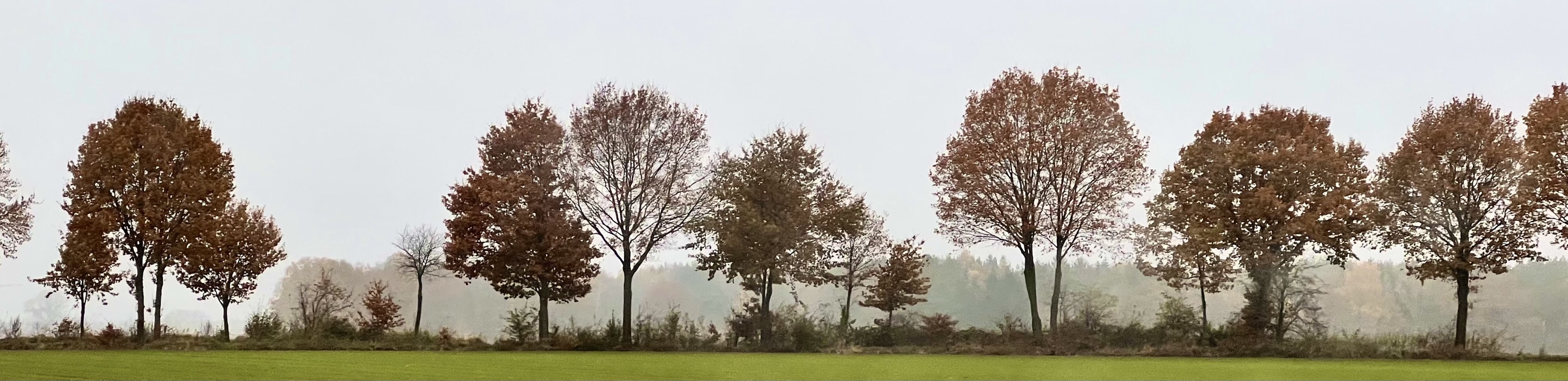
When we arrived we were in the modern part of the village of Garssen by the highway and then over the shrill objections of the English accented GPS lady with very poor German pronunciation of street names, we rode around until we found older houses on a narrow cobblestone street.

We happened on a small church and stopped to take photos, circling the church and being asked by a very nice man in German if we were there to sing in the choir.
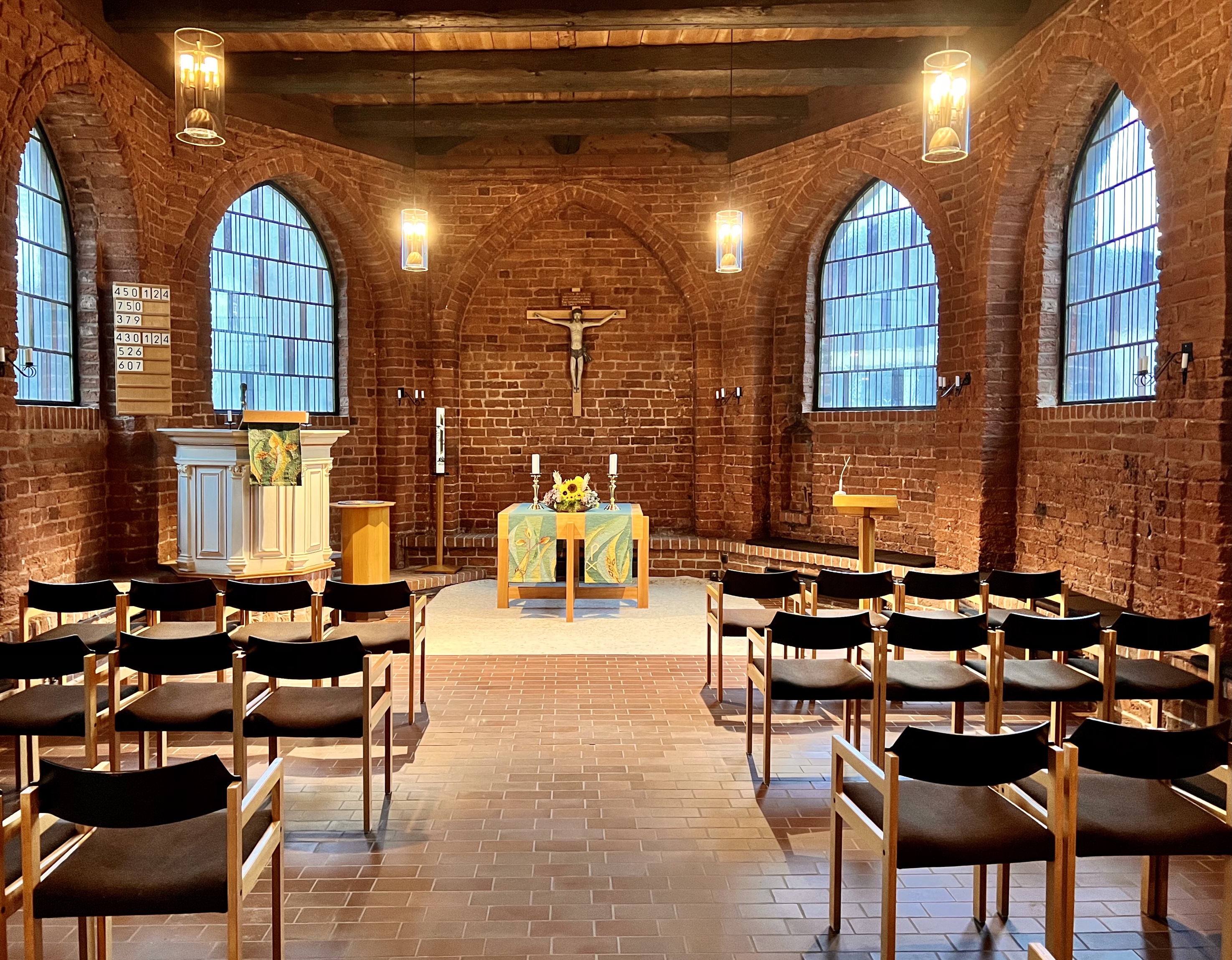
No, we just wanted to look around. He took us into the tiny church, rebuilt in 1980, and told us its history. It was small with maybe thirty chairs, but beautiful with modern paintings. Behind a closed scree was a larger extension of the church which could seat 150 people where we could hear the choir practicing.
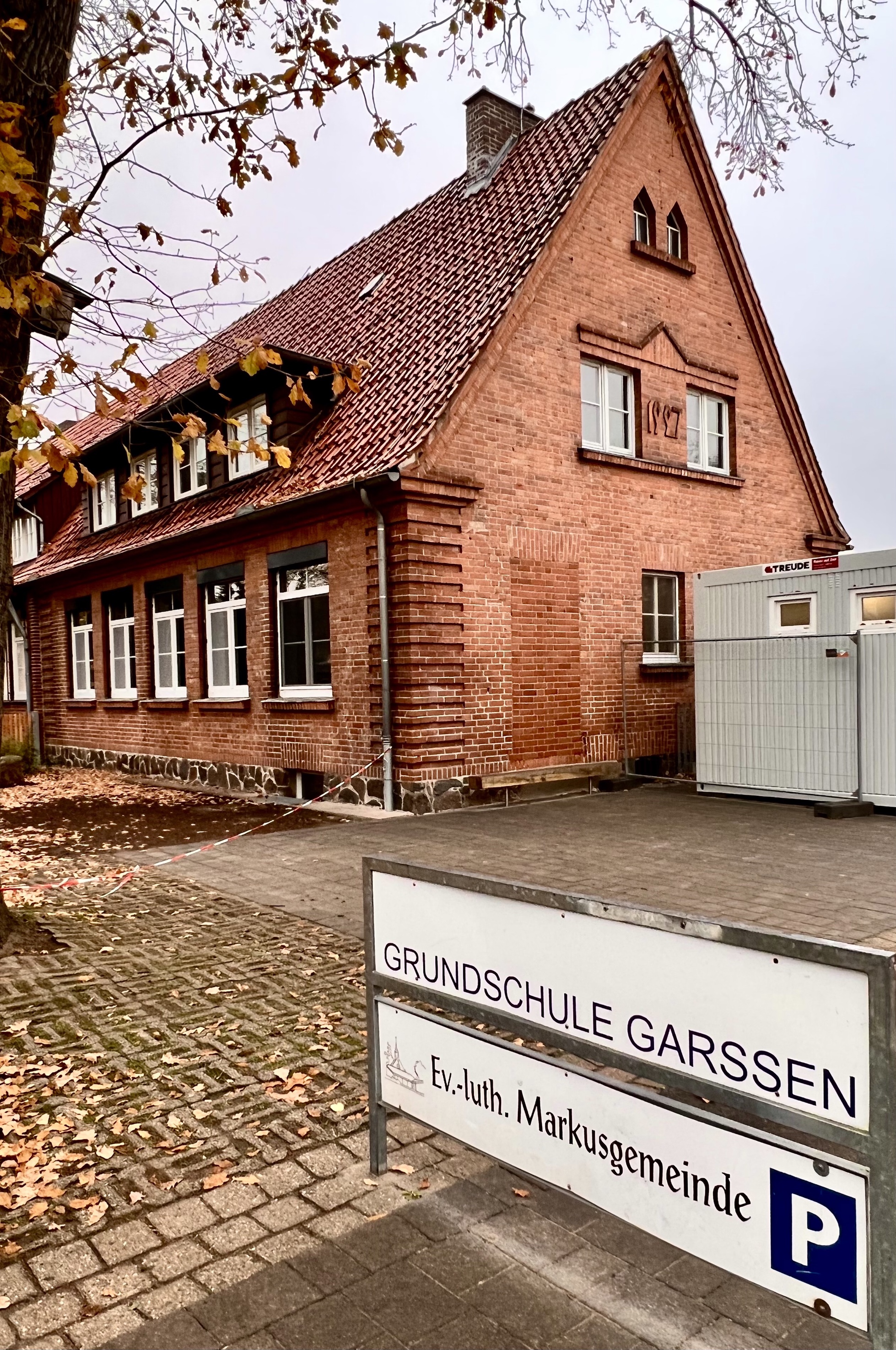
We took photographs, thanked the man, and asked about the school next door. It was the old Grundschule, the primary school of the town. And then it dawned on us that this was probably the school where her father had first taught. It was in session so took photographs of it as well from the outside. There was the original Fachwerk building and attached to it a new modern school with a modern playground. We were delighted to have found the school but didn‘t know where the family lived. But during the course of the day from Heinrich we learned that almost certainly the school teacher and family lived in an upper floor of the school as the family later did in Winsen where I got to know Kathe. And almost certainly Kathe had been baptized in the little church that we had discovered by accident and photographed and that there must be records of the baptism. When we got back to our apartment I looked in Kathe‘s autobiography and there was her birth certificate with a Nazi stamp on it the the names of her Pateneltern, godparents, and Kathe‘s mention that when her father played the organ during the baptism ceremony in that little chapel Kathe smiled and Johannes Sebastian Bach slipped into her heart.
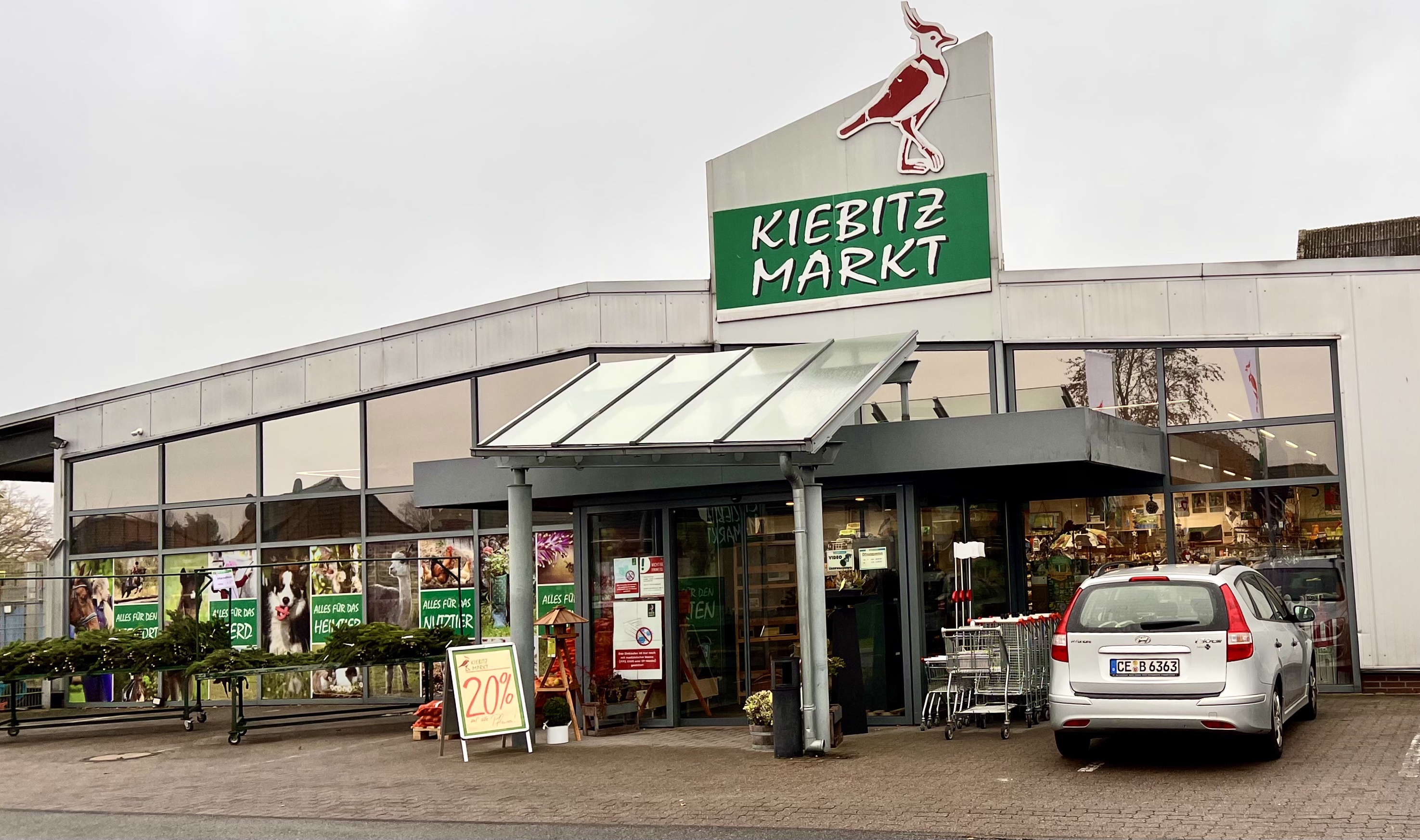
We had a little time left before meeting Heinrich and Elke and so drove to Bergen where the family moved during the war and where her father taught. The address of their house, Deichend 25, we knew from Google Maps was now a large store with a parking lot. But Susie was delighted find that the store, Kiebitz Markt, was one of a chain of garden stores.

Susie bought a yellow raincoat, I bought a stylish rain hat in the store where Kathe had once lived.
And then we drove to Winsen, arriving properly on time with our new German sense of punctuality and drove to Restaurant Stadt Bremen, named for the town of Bremen because in the old days large logs was floated down the Aller in large wooden rafts to Bremen where they were cut up into house materials and furniture.
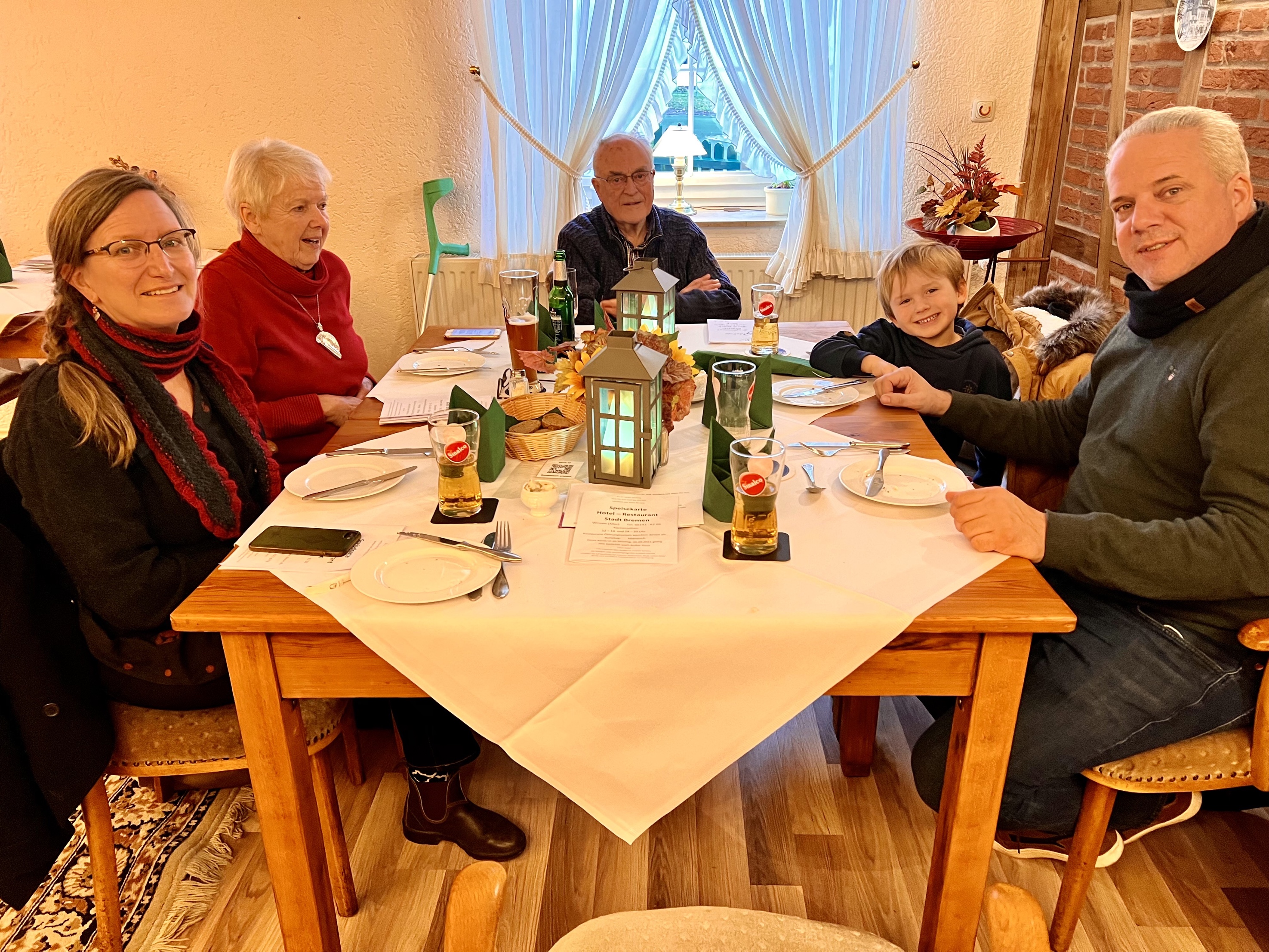
We had each had a delicious meal, with enough left over to take home for another meal. We got to see the room where the wedding anniversary celebration had taken place.

But then I asked to see the bottle collection of Peter, the husband of the owner, Claudia, who brought us our meal, because there were some little bottles in cases in the hall and the bottles had been discussed at dinner.
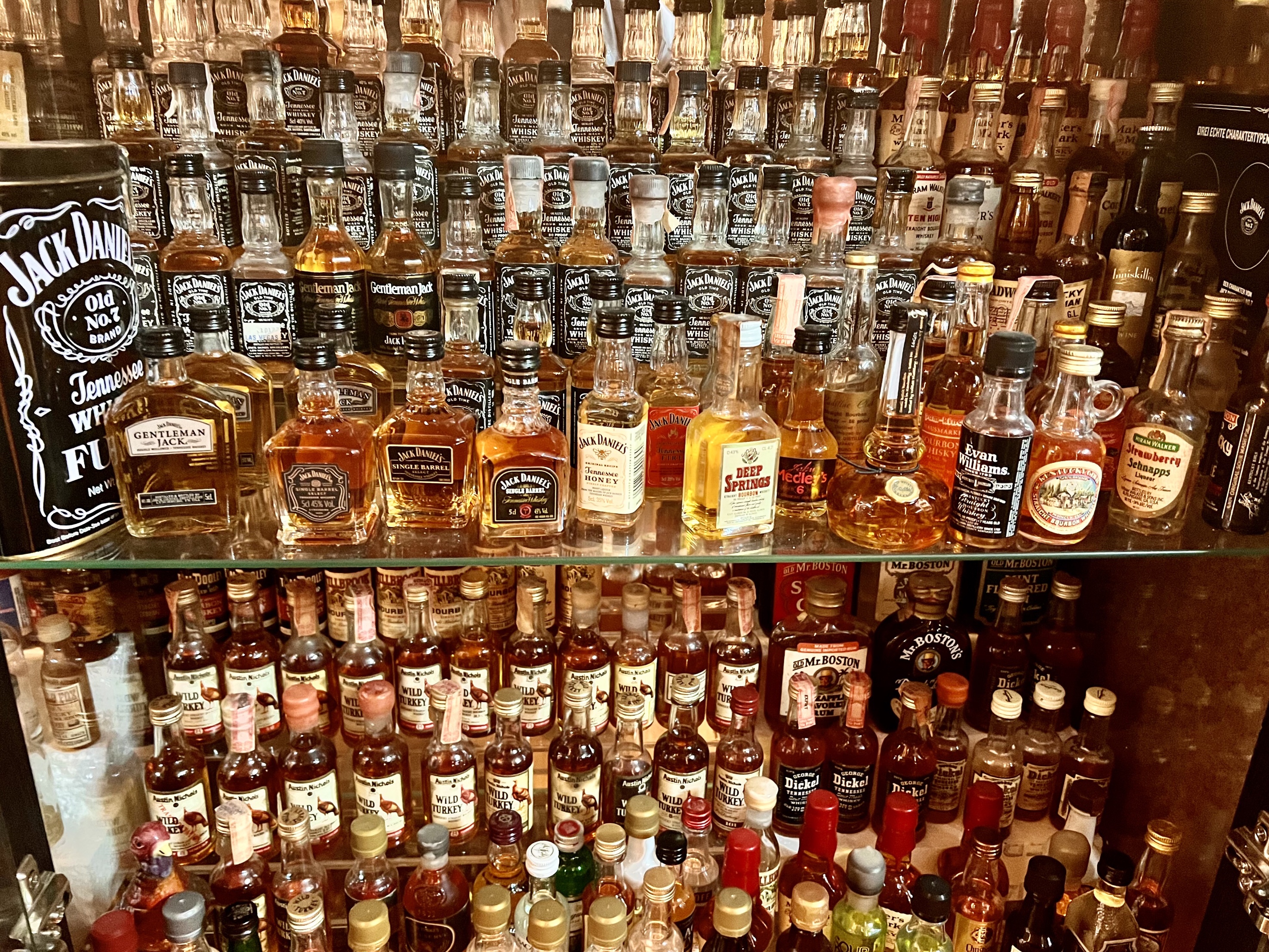
Olaf, Elke‘s son, gave me a link to a news story about the bottle collection so I asked to see the bottles not knowing there was usually a charge to do so. Peter took me, without asking for an entrance fee and with great enthusiasm, past the kitchen through a courtyard filled with restaurant paraphernalia through a locked door, and there they were,

175,000 small bottles from countries around the world, only 6 from India but two cases of small American whiskey and Coca Cola bottles, the largest collection of tiny bottles in the world according to the newspaper article. So again I took many photographs as Peter explained the bottles.
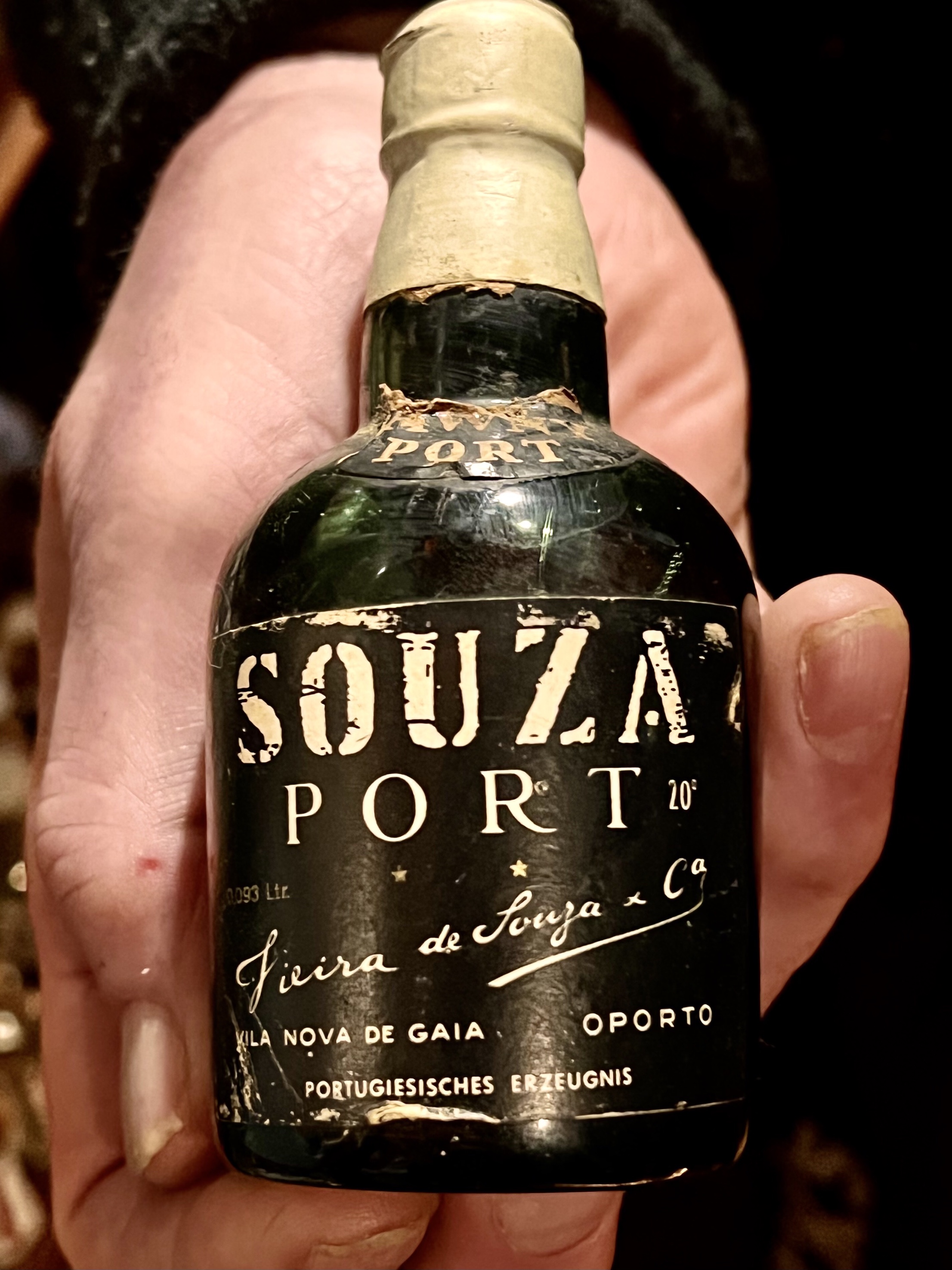
He even had bottles from Hitler‘s private wine company, tiny bottles with the Nazi cross broken off by the police in an attempt to eradicate any remnant of Hitler.
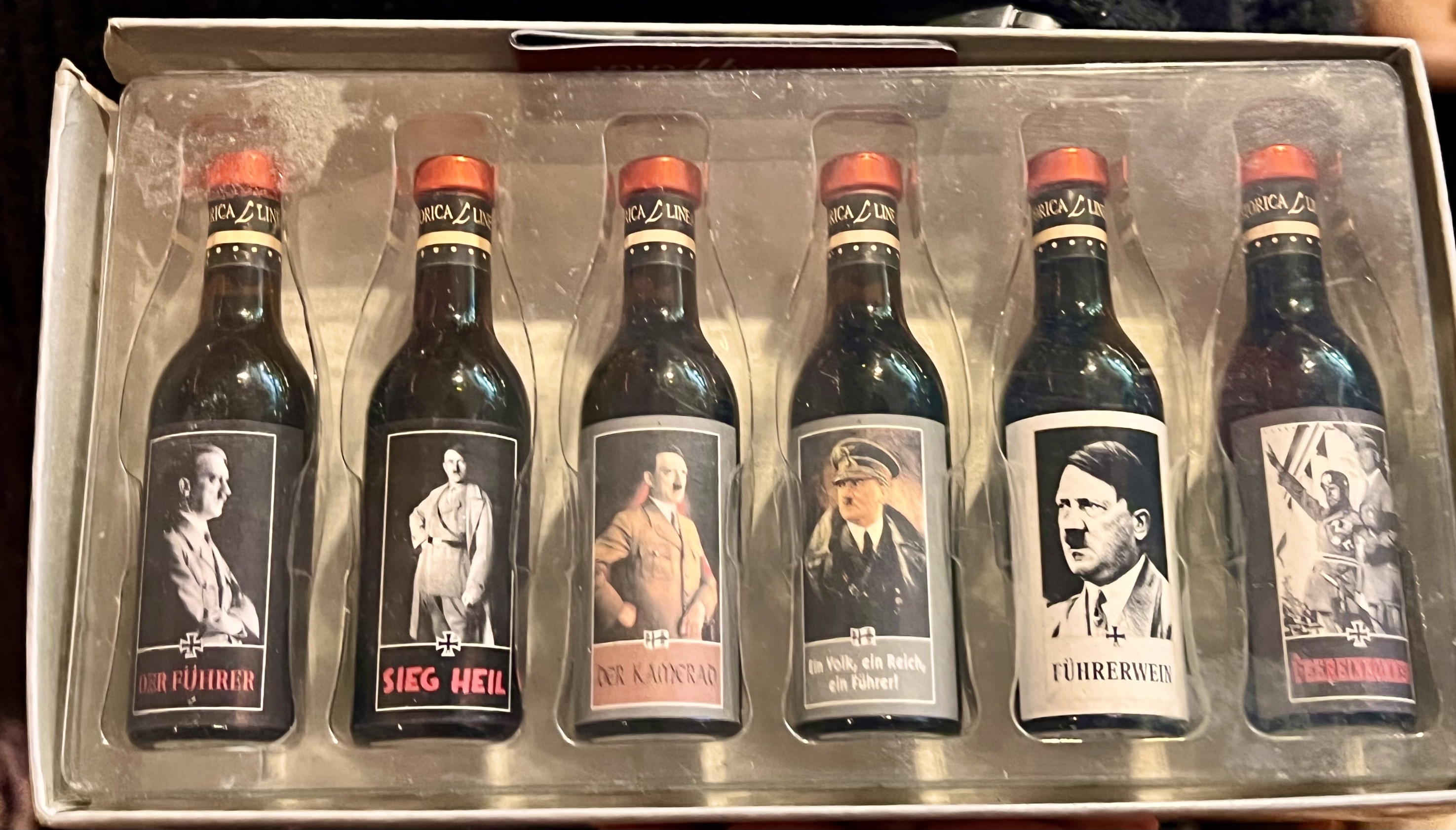
Beside the Hitler bottles were the Mussolini bottles.
And then Claudia launched into story after story about her grand daughter Jasmin who went to Goa when she was 14 after being given a choice of Goa, India; Florida; South Africa or England. Jasmin chose Goa and spent a month there. Jasmin was a material girl, a Madonna follower. But the discovery of the poverty in Goa, of fresh, safe water being a precious commodity, of the difficulties other people in the world have, changed her life. At first after her return she didn‘t speak about India but a couple of months later she told her mother, „God must love me very much to have had me be born Geramn.
At that point with our stomachs full, the rest of our meal packed up, full of visions of colored bottles and the stories that Claudia told us about her own visit to Florida and discovery of an alligator just behind her (Claudia is a born story teller who loves to tell about the liberating effect of travel) we got in the car and drove home. Susie, still full of life drove to Celle, and I went to bed, slept for an hour and then started writing so that I wouldn‘t forget what had happened on another memorable day.
 BILLYBABA’S WANDERING