Cruising North Germany
Yesterday we drove all day in the shiny white Skoda that Marie rented for us. We got started a little late, at 9:30 or so, and got only as far as Wilhelm‘s Bakery in Winsen where we had the simplest breakfast we have had yet, two halves of a brotchen with cheese on one and wurst on the other, both topped with lettuce and tomato, with a cup of coffee for about 4 euros.

We decided to visit Worpswede, an artists colony where Paula Modersohn Becker painted and where Rilke sometimes visited. It is outside Bremen. Museums are closed on Monday in Germany. We knew that but Susie thought one would be open, an American hope and assumption, something had to be open, but it wasn‘t so we determined to come back another day, maybe.
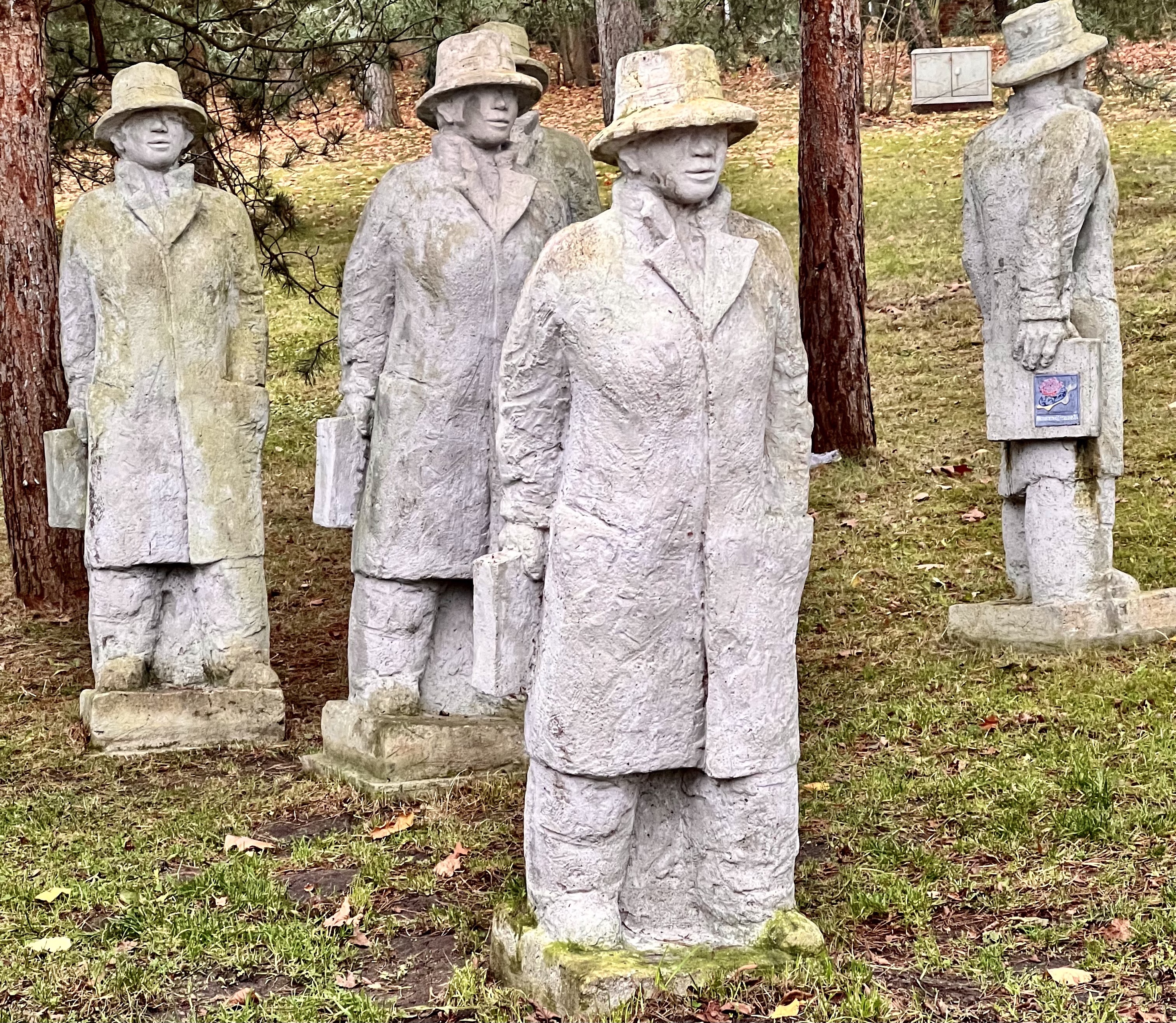
But that wasn‘t the event of the day. At Susie’s insistence we decided to take back roads all of the way and to go to Worpswede by a triangle route by way of the Luneburger Heidi, the Lunburger moors covered with pink Heidi flowers because they were mentioned everytime we visited Winsen over the years. For years, after the other children had left home and before she left for America at 22, Kathe and her father would go on Sunday drives in different directions from Winsen, often toward the Heide.

That is what we were doing except that I was now the father, twenty five years older than Kathe‘s father at the time, who had a deep voice and was a wonderful public speaker and who has a gentle presence that drew people to him.
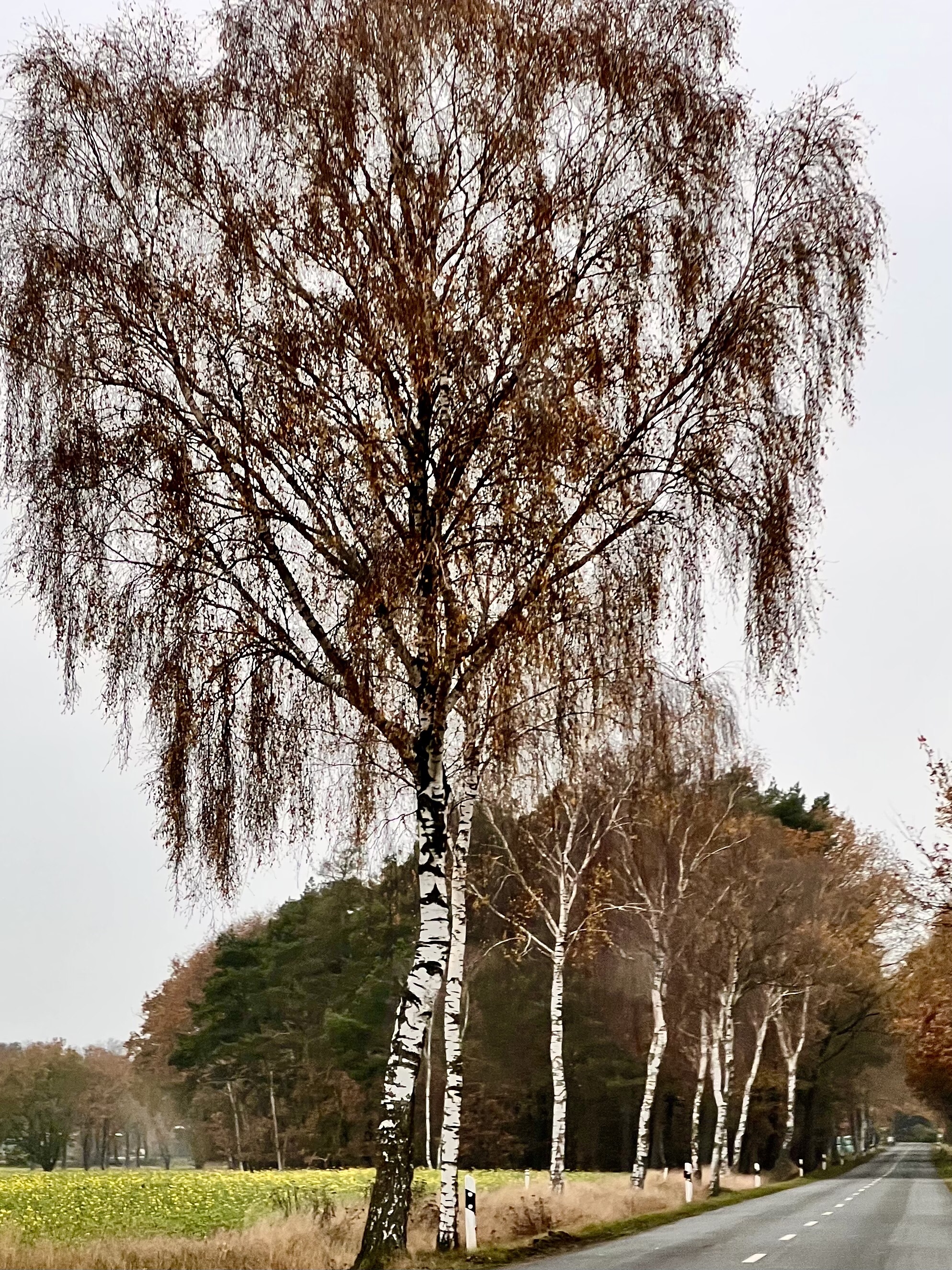
And Susie was now the daughter, and the driver, thirty years older than her mother was on those drives.
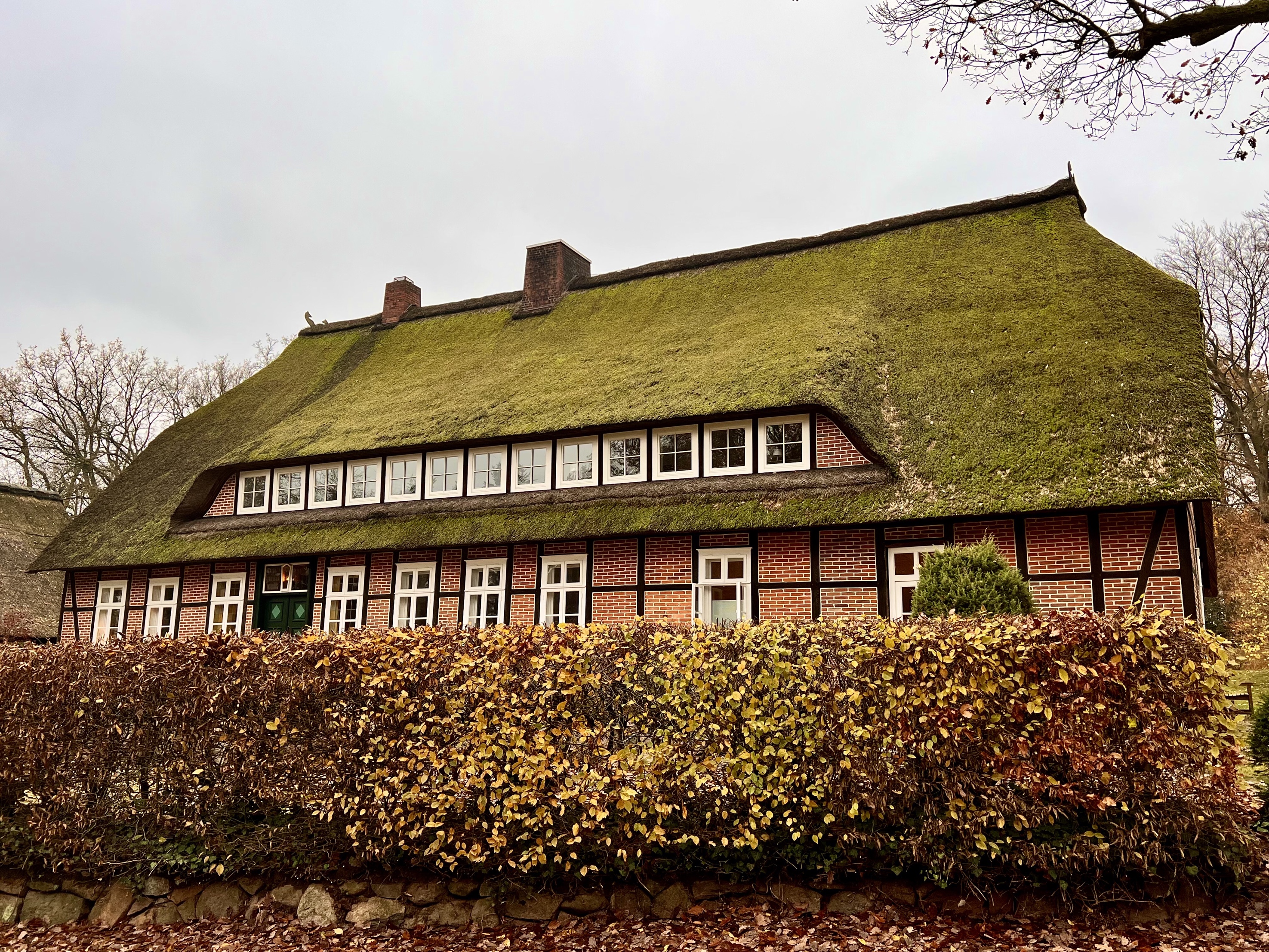
We didn‘t know what we would find on the ride but it was enough to be on back roads and to be riding through village after village with huge farm houses, houses that had formerly farm houses with a huge barn on one side filled with cattle and chickens guarded by a dog, and a multifamily house on the other end with a door in between just like the one that Kathe‘s father, Ewald, lived in as a boy in Vollbuttel, which we are now going to visit later this week since we have a car.
Slowly it dawned on me why the speed limit changes so often in Germany, seemingly every hundred yards. It is because the road almost never goes around a village. By living in compact villages with the farms and forest beginning at the edge of the village, which I have so admired, Germans haven‘t used farmland for roads around the village. Everyone has a car but the automobile doesn‘t dominate.
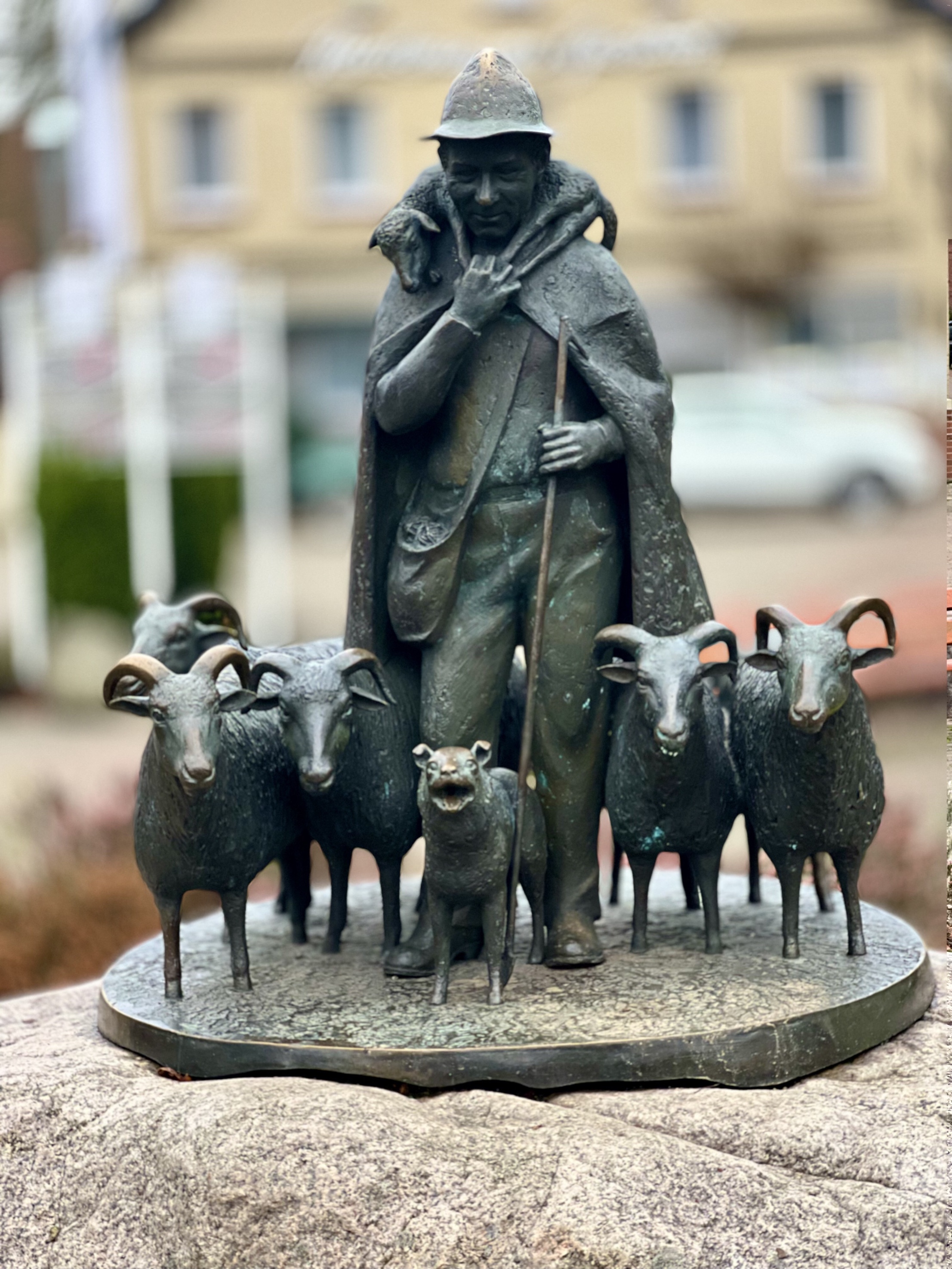
The main road through the village is a little wider and from the advent of the automobile has had a bicycle path running along it which leaves the road narrow but means that people can get around by bicycle in their compact village with a grocery store, restaurants, drug store, bank at the center of the village in the same huge houses that formerly had barns in one end.
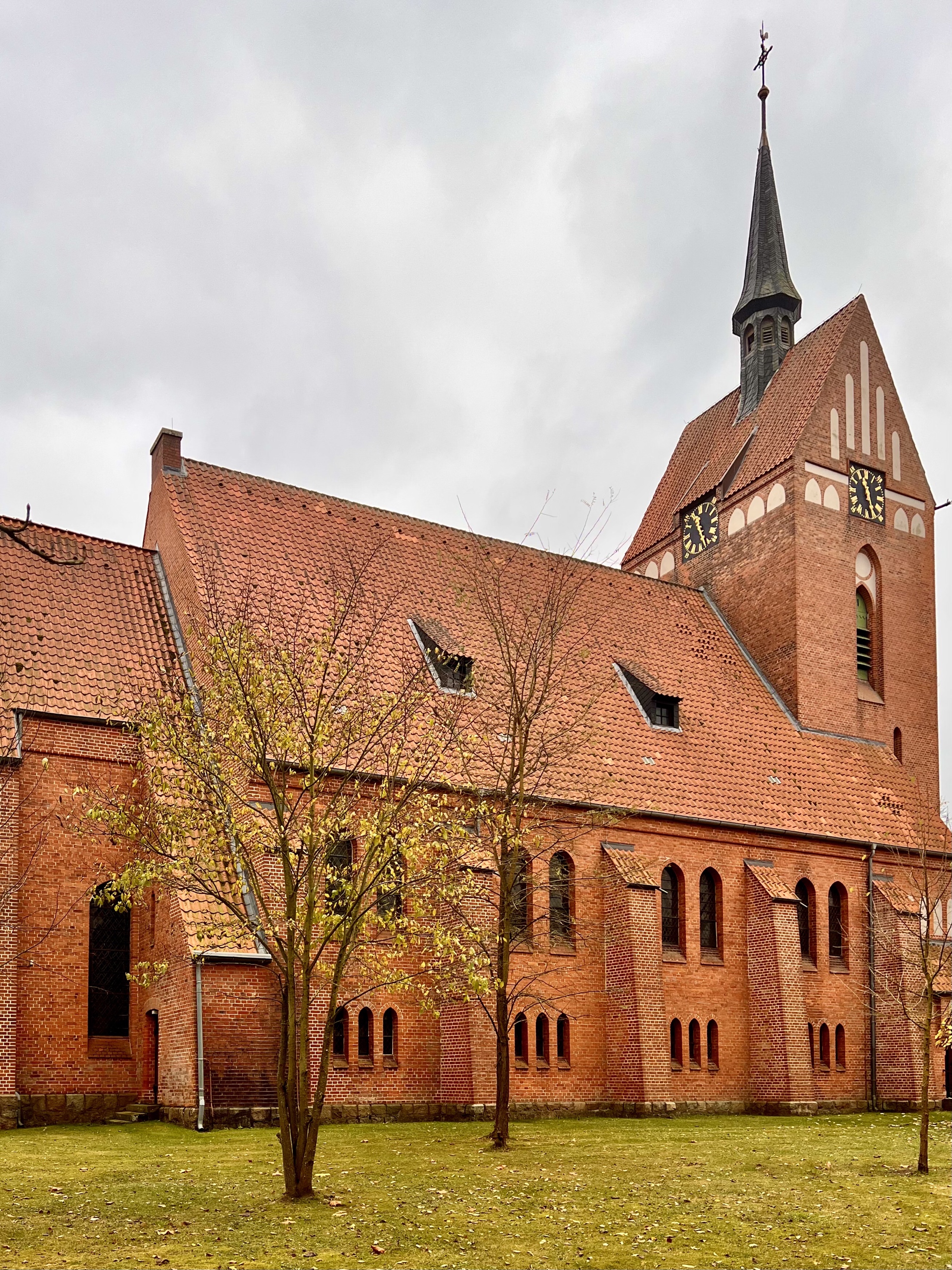
Everything is accessible by bicycle, even the next village, because every road has a bicycle path running along side it often several yards off the road and paved and flat and perfectly safe with ordinary people, often old people, not dressed up in the get up of slim tight pants and tight jackets and knobbed special shoes that Americans put on to show how serious they are in an America where there are almost no bike paths and naked bicyclists with flaming orange and red wet suits ride at their peril hoping that „share the road“ signs will protect them. We skipped the bicycle age and now have great difficulty going back. Germans seem to have embraced the automobile but not let it dominate. And one way it doesn‘t dominate is through roads cutting through villages rather than around them with malls and big box stores strip malls at the edge of every American town. So in Germany there is the necessity of slowing down from 100 km an hour to 50 to 30 to 50 to 70 to 100 to 50 to 100 to 50 every hundred yards. The automobile is under control here and the bicycle really does share the road and is the way that many people move around in the village, sometimes with loose brightly colored jackets for protection but not for showing off. Sometimes people wear helmets but often grandmothers slowly pedaling to the local small grocery store with no get up at all, don‘t.
This meant that we got to get the feel of the center of village after village and could enjoy the birch trees lining the road and the wide fields of cover crops of yellow mustard and green oats.
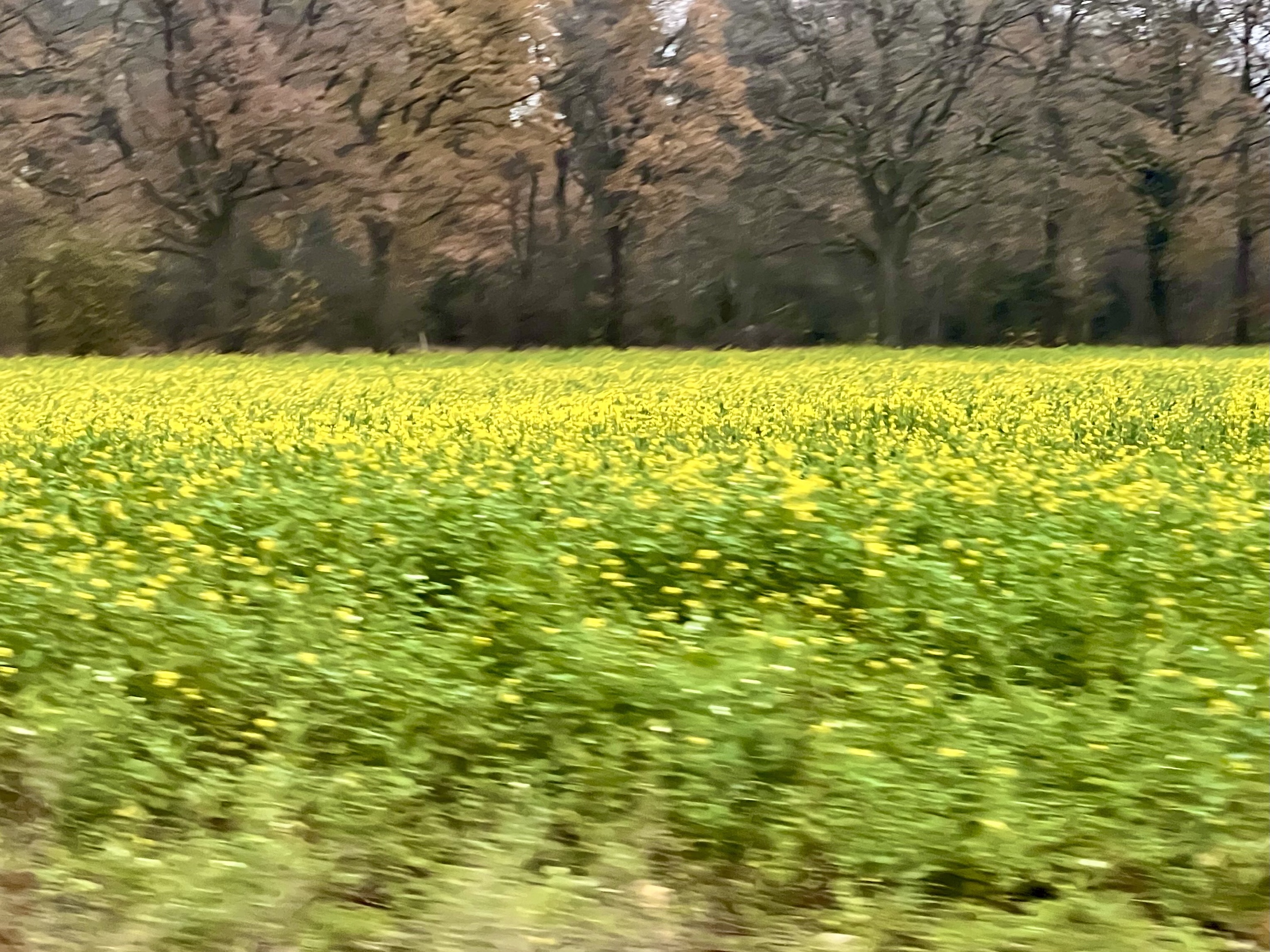
But it also meant that we spent all morning driving the 70 miles to the Luneburger Heide and then to Worpswede probably averaging about 20 miles an hour.
And when we got to the Luneburger Heide we discovered that it was famous, but quite small, and well cared for with large hotels, probably converted barns on narrow even unpaved roads, many of which were closed to cars and motorcycles and were designated for riders on horses or horse drawn carriages.
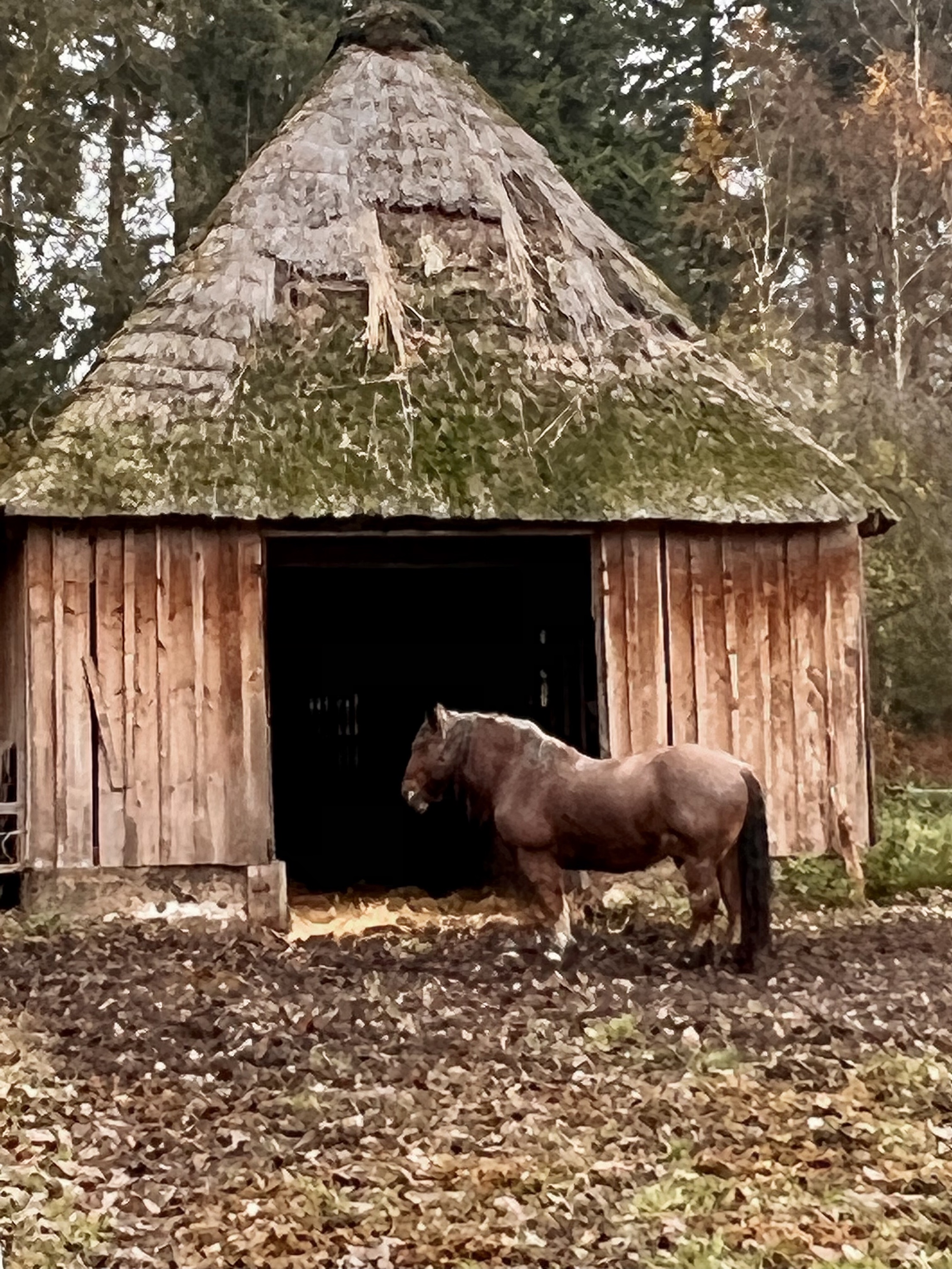
There were a couple of huge meadows of the pink Heide flowers.

One hotel in a Fachwerk building with an inviting restaurant and porches everywhere that we stopped by had a list of conditions that people had to agree to before being given a room including being as silent as possible.

German trains are silent, except for the kids, restaurants have a low murmer and everyone keeps the Covid 6 foot distance. It is an orderly, quiet, beautifully kept country with every hedge manicured with shaved flat tops and sides and people out on Sunday morning sweeping the leaves from the streets.

As we were riding along I remember reading an article that explained why crows in one half of Europe have similarly covered markings on their wings and the other half don‘t. The two species can mate with each other but they don‘t very often. The reason they became two species may have been separation caused by the ice age and the Alps. They evolved in different directions, but the reason that they stay separate is by choice, they mate their own kind. They are tribal, just as we are. And I have the feeling that cultures do the same. The reason that German culture has evolved in one direction, language and silence and roads and farm houses and forests and fields is because Germans like their own kind and do what everyone else does to fit in. And that is why Americans have the culture that they do. It started with the separation caused by the Atlantic and the wide open spaces with enough land to build roads wherever you want. But the cultural patterns continue because everyone fits in by doing just what everyone else does which includes peaked roofs or solar water heaters or bicycle paths or strip malls or central malls. And once a culture has evolved in one direction, with bike paths as an example, it is very, very hard to change.
One change that I have noticed is the size of the fields. They seem to have become larger and more consolidated than they were 60 years ago, but this consolidation is partly through mechanization and partly because the oldest son inherited the farm and so farms weren‘t split up as they are in India into narrower and narrower strips which are also now being consolidated because of mechanization which means that scale makes larger equipment more practical. But even here in Germany tractor trailers and farm equipment all seem to be smaller and more efficient than in American farmland. But at this point I am probably out of my depth and just blathering, or rather, giving my idiosyncratic view of Germany or America rather than a social science perspective. This is just the way it seems to me.
The way you get around fast in Germany is by the autobahns which seem to be everywhere. They do cut directly through what was once farmland and often have no speed limit at all. You can drive 100 miles a hour or more, blipping past ordinarily traffic toddling alongin the right hand lane as if it were standing still, but have to be very careful that one slower vehicle doesn‘t pass another slower vehicle filling both lanes and causing a pileup of fast blipping speeders. In this case it is Americans with their upper speed limits of 70 that seem to be old fashioned. Another variable is the cost of gasoline, which has been kept very low in America and is very high in Europe. Between the high cost of gasoline and the smaller roads, American SUV‘s seem like gas guzzling impractical behemoths on European roads, something that is helping Europeans to downsize during global warming. Another thing that is already in place is a sleek train system of gliding modern trains and a wonderful bus system that means that many fewer cars are needed. All kinds of people get around by train or bus, or in the villages or small towns by bicycle. We could learn from Europe, but is very hard to change the American way, American exceptionalism.
So all of this was going on in my head as we circled through northern Germany in our lovely Skoda with the speed limit indicator and navigation system (which we haven‘t figured out) showing on the dashboard.
It was a beautiful and very interesting ride even with the museums of Worpswede (and all of Germany) being closed. We were back at 6, an eight hour drive of maybe 120 miles that was endlessly interesting. We stopped at Aldi and bought delicious potato pancakes and creamy apple sauce for supper and I went to bed, exhausted at 7:30 p.m. and then up at 12:30 a.m. rested to write this report before I forget and while it is still fun to write it, with a nap planned from 3 to 7.
 BILLYBABA’S WANDERING